 Semiahmoo Siding
 Why California Creek Roofs Wear Differently
Homes in the California Creek area sit close enough to Semiahmoo Bay and the open water of the Strait of Georgia that the air itself works against a roof, not just the weather. Salt-laden marine air, wind-driven rain off the water, and a wet season that can stretch from October well into spring all combine to age a roof faster here than they would twenty or thirty miles inland. A roof that would hold up fine in a dry interior Washington town can show granule loss, moss colonization, and fastener corrosion years ahead of schedule out here.
That's not a reason to over-build or overspend. It's a reason to install a roof correctly the first time, with materials and details chosen for this specific exposure, instead of installing a generic package and hoping it holds.
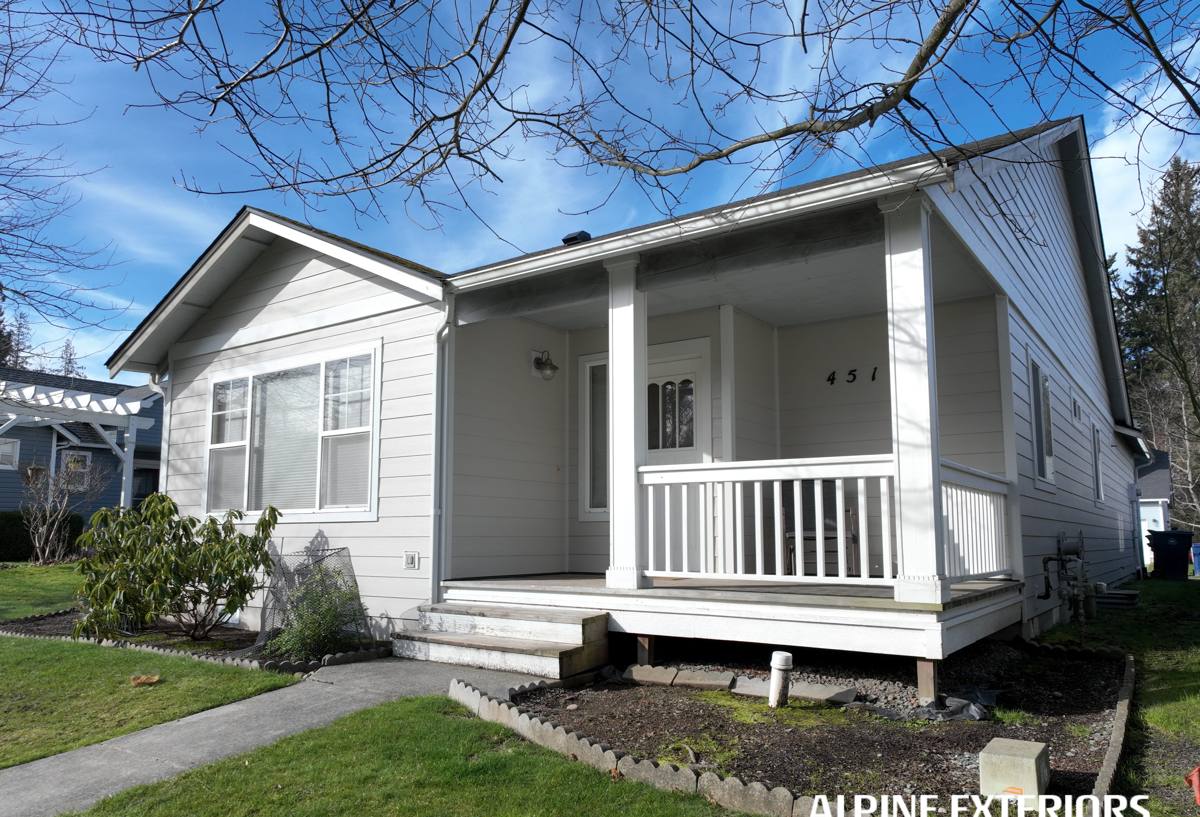
What a Correct New Roof Installation Actually Involves
A new roof is more than shingles nailed over the old ones. In Whatcom County's climate, the layers underneath the visible roofing do most of the work of keeping a house dry over the next 20-30 years.
Tear-off and deck inspection
We remove the old roofing down to the deck rather than layering over it. This lets us actually see the plywood or plank sheathing underneath — moisture-damaged, delaminated, or soft sections get replaced before anything new goes down. Covering over a compromised deck is one of the most common shortcuts that leads to early failure, and it's invisible from the ground once the new roof is on.
Underlayment built for driving rain
Standard felt underlayment is not our default here. With the amount of wind-driven rain this area sees off the bay, we use synthetic or self-adhered underlayment products rated for high-wind, high-moisture exposure, with extra attention at valleys, eaves, and any place water can be pushed sideways or backward under the roofing.
Ice and water protection at vulnerable points
Even without heavy snow loads, this area gets enough cold snaps and freeze-thaw cycles that ice-dam-prone areas — eaves, valleys, and low-slope transitions — get self-adhering ice-and-water membrane, not just standard underlayment.
Choosing a Roofing Material for This Climate
There's no single "best" roofing material — the right choice depends on the home's roof pitch, budget, and how much long-term maintenance the owner wants to take on. Here's how the common options actually perform under California Creek conditions:
| Material | Salt air / coastal performance | Moss resistance | Typical lifespan here |
|---|---|---|---|
| Architectural asphalt shingle | Good, with corrosion-resistant fasteners and flashing | Moderate — needs periodic cleaning and treatment | 20-30 years |
| Standing seam metal | Very good with proper coating/finish; sheds debris and dries fast | Excellent — little for moss to grip | 40-50+ years |
| Cedar shake | Requires more upkeep in salt air and constant moisture | Poor without regular treatment; retains moisture | 20-25 years with diligent maintenance |
| Synthetic composite shingle | Good; resists salt corrosion since it's not metal-fastener-dependent at the surface | Good to moderate depending on product | 30-50 years |
We install asphalt, metal, and synthetic systems and will tell you honestly which one fits your roof's pitch, your budget, and how much moss upkeep you're willing to do. Cedar shake can look great, but on a shaded, damp California Creek lot it holds moisture against the wood far longer than an open, sun-exposed roof inland — that's a maintenance and moisture reality of the product itself, not a knock on it as a material.
Building In Moss Resistance From the Start
Moss isn't just cosmetic. Once it colonizes a roof surface, it holds moisture against the roofing material, lifts shingle edges, and works its way toward the deck over a long wet season. In the Semiahmoo area, moss pressure is constant enough that we treat it as a design factor during installation, not an afterthought for the homeowner to deal with later.
What we build in
- Zinc or copper strips installed near the ridge on shaded or north-facing slopes, where rain wash carries trace metal down the roof and discourages moss growth
- Attention to tree canopy and shade patterns on the property so we can flag areas that will need more frequent cleaning regardless of material
- Proper shingle or panel spacing and fastening so debris and needles don't collect and hold moisture against the surface
- A roofing material recommendation that matches how much shade the roof actually sees, not a one-size-fits-all pitch
None of this eliminates the need for periodic roof cleaning in a moss-heavy climate — nothing does — but it meaningfully slows how fast moss re-establishes after cleaning.
Salt Air and Coastal Corrosion
Proximity to Semiahmoo Bay means airborne salt is a real factor for anything metal on a roof — fasteners, flashing, vents, and drip edge. Standard galvanized fasteners can start showing rust streaks and weakening well before the roofing material itself is due for replacement.
What we use instead
We install stainless steel or coated corrosion-resistant fasteners and flashing on homes in this exposure zone, and we pay particular attention to any exposed metal at valleys, chimneys, skylights, and roof-to-wall transitions — these are the spots where a cheap fastener choice shows up first as a leak, sometimes years after the roof looks fine from the driveway.
Flashing details matter more here than elsewhere
Flashing is where the majority of roof leaks actually originate, not out in the open field of the roof. Around chimneys, dormers, and wall intersections, we use step flashing and counter-flashing sized and lapped correctly for this rainfall volume, not the minimum a code inspector will pass.
Ventilation and Attic Moisture Control
A new roof installed without correcting ventilation problems is a roof installed to fail early from the inside. In a climate this wet, trapped attic moisture condenses on the underside of the deck, promotes rot, and can void material warranties that require balanced intake and exhaust ventilation.
As part of a new roof installation, we evaluate:
- Whether soffit intake vents are present, unobstructed, and sized correctly for the attic volume
- Ridge or roof-mounted exhaust venting, and whether it's balanced against intake
- Signs of existing moisture damage, mold, or rot in the attic that point to a ventilation problem predating the new roof
- Insulation that may be blocking soffit airflow
Fixing ventilation at the same time as the roofing work costs far less than discovering rot in the deck five years later and having to open the roof back up.
Our Installation Process
1. On-site assessment and honest scope
We walk the roof, check the attic, and give you a written scope that separates what's actually needed from what's optional. If the deck is sound and ventilation is fine, we won't invent work.
2. Material selection based on your roof, not a default package
We walk through the material comparison above against your specific pitch, shade exposure, and budget, and give you a straight recommendation.
3. Tear-off, deck repair, and dry-in
Full tear-off, deck inspection and repair, then underlayment and ice-and-water membrane installed the same day where possible so the deck isn't left exposed to weather overnight.
4. Installation with coastal-grade fasteners and flashing
Corrosion-resistant materials throughout, with extra care at every penetration and transition point.
5. Final walkthrough
We walk the finished roof and the ground perimeter with you, cover ventilation and maintenance basics, and answer questions before we consider the job done.
Why a Crew Familiar With California Creek Matters
A roofing crew that regularly works this specific stretch of Whatcom County already knows which slopes on a given lot tend to hold moss, how far wind-driven rain travels under an eave in a coastal storm, and which fastener and flashing choices actually hold up against salt air over a decade rather than a season. That local pattern recognition doesn't show up on a quote sheet, but it shows up in how few callbacks a roof needs. It also means we're a known, reachable local crew if a warranty question or a storm-damage concern comes up later — not a name from an out-of-area lead-generation site.
Cost Factors to Understand Before You Get Quotes
Roofing quotes can vary widely, and the reasons usually come down to a short list of real factors rather than one contractor simply being "cheaper."
| Factor | Why it moves the price |
|---|---|
| Deck condition | Rotted or delaminated sheathing found during tear-off requires replacement before roofing can go on |
| Roof pitch and access | Steeper roofs and difficult access require more labor time and safety equipment |
| Material choice | Metal and premium synthetic systems cost more upfront but less over the roof's life |
| Number of penetrations | Chimneys, skylights, and vents each require careful flashing work, which adds labor |
| Ventilation corrections | Adding or fixing intake/exhaust venting is inexpensive during a re-roof, costly after |
Ask any contractor to break their quote down along these lines. A number with no explanation behind it makes it hard to know what you're actually paying for.
Questions Worth Asking Before You Sign
- Will you do a full tear-off, or install over the existing roof?
- What underlayment and ice-and-water protection are included, and where specifically will they be installed?
- What fastener and flashing materials will you use, given the salt air here?
- Will you inspect and correct attic ventilation as part of the job?
- What does the manufacturer's warranty require in terms of installation and ventilation, and will this installation meet those terms?
- Is the estimate written out by scope, or is it a single lump number?
A contractor who works this area regularly should be able to answer every one of these without hesitation.
If your California Creek home is due for a new roof, we're glad to come take a look, walk the attic, and give you a straightforward, written estimate — no pressure, no pushy sales pitch, just an honest read on what your roof actually needs. The form below gets you started.