 Semiahmoo Siding
 Windows Built for the California Creek Climate
Homes in the California Creek area near Semiahmoo sit close enough to the water that salt air, wind-driven rain, and long stretches of overcast, moss-friendly dampness are just part of owning a house here. Windows take more abuse from that combination than almost any other part of the exterior. They're penetrations in the wall, they have moving parts and seals, and they're the first thing to show a problem when moisture or air is getting where it shouldn't.
A window that's a poor fit for this climate doesn't usually fail all at once. It shows up gradually — a cold draft near the sash on windy nights, fogging between the panes, a soft spot in the sill, or a heating bill that creeps up every winter. By the time it's obvious, the frame or the wall assembly behind it may already be compromised. Getting the product and the installation right the first time matters more here than in a drier, calmer climate.
Salt Air and Corrosion
Proximity to Semiahmoo Bay means airborne salt settles on everything outdoors, including window hardware, weep holes, and metal fasteners. Cheaper hardware and untreated aluminum components corrode faster in this environment than manufacturer literature written for inland climates would suggest. Weep holes that clog with salt residue and debris stop draining properly, which lets water sit against the frame instead of shedding away.
Driving Rain and Water Intrusion
Wind off the water doesn't just drop rain straight down — it drives it sideways into the wall, which puts real pressure on every seam around a window opening. A window that would perform fine in a sheltered inland yard can leak here if the flashing, sill pan, and sealant details weren't done correctly. Most water problems we find at windows in this area trace back to installation gaps, not the window unit itself.
Long Moss Season and Prolonged Dampness
Whatcom County's extended wet season means wood trim, sills, and shaded wall sections stay damp for long stretches at a time, which is exactly the environment moss and mildew need to take hold. On older wood-framed windows, that sustained moisture is what leads to soft, rotting sills and frames well before the glass or hardware itself gives out.
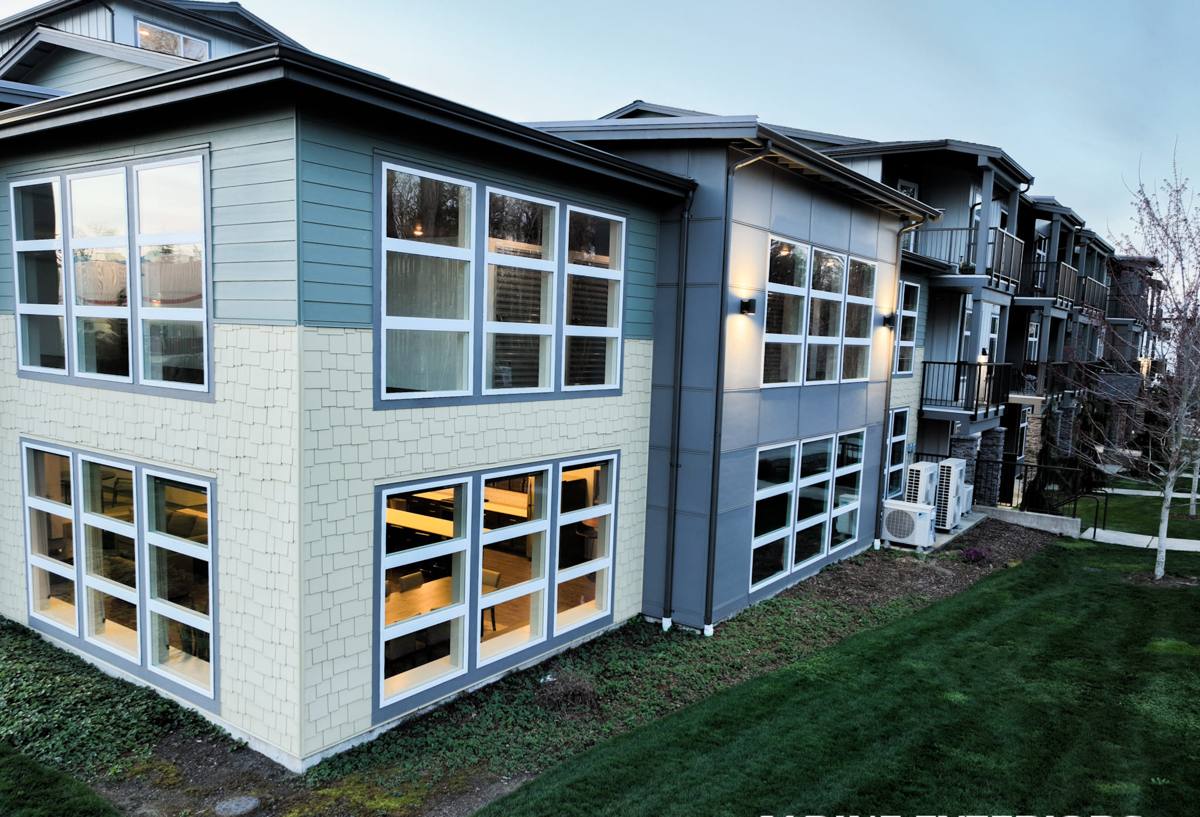
What "Energy-Efficient" Actually Means Here
Energy-efficient window marketing throws around a lot of numbers. In a marine climate like this one, three of them matter more than the rest: U-factor (how much heat escapes through the window), condensation resistance (how well the window handles our humidity swings without fogging or sweating), and air leakage (how much outside air sneaks past the seals in wind-driven rain conditions). Solar heat gain coefficient (SHGC) matters less here than it does in sunnier climates, since Whatcom County doesn't get the intense summer sun load that drives SHGC decisions further south.
| Rating | What It Measures | Why It Matters in This Climate |
|---|---|---|
| U-Factor | Rate of heat loss through the window | Lower numbers cut heating costs during our long, cool, wet winters |
| Condensation Resistance | Ability to resist interior fogging/sweating | High humidity and cool glass surfaces make this a real everyday issue here, not a theoretical one |
| Air Leakage | Air movement through the assembly under pressure | Wind-driven rain finds any gap; lower leakage also means fewer cold drafts on windy days |
| SHGC | Solar heat let through the glass | Secondary priority here compared to hotter, sunnier climates |
Any window we recommend carries NFRC-certified ratings so those numbers are independently verified, not just a manufacturer's claim on a brochure.
Frame Material: Trade-Offs for a Coastal Property
There's no single "best" frame material for every house — it depends on your budget, how exposed the house is to wind and salt spray, and how much upkeep you want to take on. Here's how the common options actually compare in this environment, based on what we see holding up over time.
| Material | Salt Air / Moisture Behavior | Maintenance | General Cost Position |
|---|---|---|---|
| Vinyl | Doesn't corrode or rot; performs well near salt air | Low — no painting or sealing | Most affordable |
| Fiberglass | Very stable in temperature swings and moisture; excellent long-term durability | Low | Mid to upper range |
| Wood-Clad | Good insulator, but the cladding seams are a moisture entry point if not detailed carefully | Moderate to high — exterior cladding needs monitoring, interior wood needs occasional attention | Upper range |
| Bare Aluminum | Conducts cold and is prone to corrosion pitting in salt air over time | Moderate | Lower to mid, but poor thermal performance |
For most California Creek homes, we steer clients toward vinyl or fiberglass because they simply ask less of the homeowner over the next 15-20 years in this environment. Wood-clad windows can still be the right call on a home where the look matters most, but we're upfront that they carry a higher maintenance commitment near the water — that's a trade-off decision for you to make, not a defect in the product.
The Installation Details That Actually Determine Performance
The window unit itself is maybe half the story. How it's installed determines whether it performs like its rating suggests or leaks and drafts within a couple of years. This is the part of the job that's easy to rush and hard to inspect once the trim is back on.
Sill Pan and Flashing
A proper sill pan directs any water that gets past the outer seal back outside instead of into the wall cavity. Flashing tape has to integrate with the house's weather-resistive barrier in the correct shingle-lap order — done wrong, it can actually funnel water into the wall instead of away from it.
Sealant and Backer Rod
Exterior sealant needs the right backer rod behind it and has to be tooled correctly to handle the expansion and contraction this climate's temperature and humidity swings put on it. A bead of caulk slapped over a gap without backer rod tends to crack and fail early, especially under repeated wet-dry cycling.
Shimming and Squaring
A window that isn't shimmed level and square will bind, won't seal evenly along all four sides, and puts uneven stress on the frame. This is also what causes some replacement windows to feel harder to open a year or two after install.
Our Process for a California Creek Window Job
- On-site assessment of existing windows, sills, and surrounding wall condition — including checking for hidden moisture or soft framing before we quote anything
- Product recommendation based on your home's exposure, budget, and the performance ratings that matter for this climate
- Careful removal of old units with inspection of the rough opening for rot or prior water damage
- Sill pan, flashing, and weather barrier integration done to manufacturer and code specification
- Window installation, shimmed and squared, with correctly tooled interior and exterior sealant
- Final walkthrough and operation check on every window before we consider the job done
Signs Your Current Windows Are Costing You
Not every window problem means full replacement — sometimes it's a hardware or sealant fix. But these are the signs worth having looked at:
- Condensation or fogging between the panes (a sign the seal has failed and the insulating gas is gone)
- Persistent drafts near the frame on windy days, even with the window latched
- Visible gaps, cracked caulk, or soft trim around the window exterior
- Difficulty opening, closing, or latching that didn't used to be there
- Moss or dark staining building up on the sill or surrounding trim
- A noticeable difference in room temperature near the window compared to the rest of the house
- Rising heating costs without another clear explanation
Why Hire a Crew That Already Works This Area
Window installation looks similar on paper everywhere, but a crew that regularly works Semiahmoo and the surrounding Whatcom County coastline knows what actually holds up here versus what's fine two hours inland. That means defaulting to frame materials and hardware that tolerate salt air, building in flashing details sized for wind-driven rain rather than the bare code minimum, and knowing which parts of a wall assembly on an older coastal home are likely to need attention once the old window comes out. It also means understanding the local permitting process so a straightforward replacement doesn't get held up by paperwork surprises.
What Affects the Cost of Your Project
| Factor | How It Affects Price |
|---|---|
| Window size and quantity | Larger openings and whole-house jobs cost more per unit but often see better pricing per window |
| Frame material | Vinyl is typically the most affordable; fiberglass and wood-clad run higher |
| Glass package | Double-pane vs. triple-pane, and any additional coatings, add to the base cost |
| Condition of existing opening | Rot or water damage found during removal adds repair time and material |
| Access and site conditions | Second-story or hard-to-reach windows take more labor time |
As a very general guide, homeowners in this area typically see somewhere in the range of $700-$1,500+ installed per window depending on the factors above — but the only way to get a real number for your house is a walkthrough, since existing opening condition and product choice move that range quite a bit in either direction.
Ready for a Straight Answer on Your Windows?
If your California Creek home has windows that are drafty, fogging, or just past their working life, we're happy to take a look and give you an honest assessment — including telling you if a repair makes more sense than full replacement. There's a free, no-pressure estimate form below whenever you're ready.