 Semiahmoo Siding
 Why Wiser Lake Roofs Wear Differently
Homes around Wiser Lake sit in a stretch of Whatcom County that takes weather from two directions at once: marine air pushing inland off the Salish Sea and Semiahmoo Bay, and the wetter, cooler microclimate that settles over the lowland lake basins between Lynden and Ferndale. That combination means roofs here rarely get a real dry-out period. Even in months without heavy rain, humidity off the water and shade from mature trees around the lake keep roof surfaces damp longer than roofs closer to open, sunny ground.
Over years, that constant dampness shows up as three predictable problems: moss and algae staining that spreads fastest on north-facing and shaded slopes, granule loss on asphalt shingles that have been sitting wet instead of drying between storms, and slow water intrusion at flashing points that were sealed correctly the day they were installed but were never built to shed water fast enough for how long this area actually stays wet. A new roof installation done for Wiser Lake needs to be planned around that reality from the first layer up, not treated as a generic reroof.
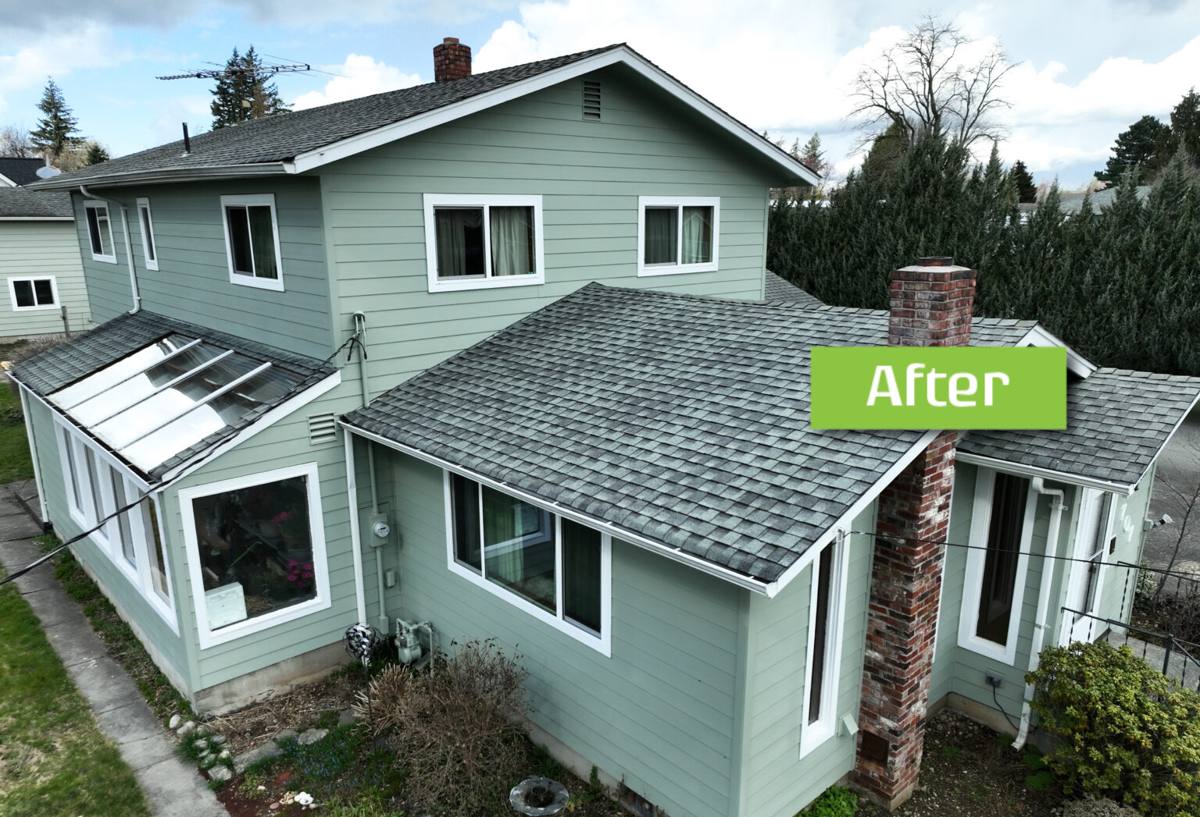
What a Correct New Roof Installation Actually Involves
"New roof" covers a lot of ground, and the quality of the job is decided by steps that are invisible once the shingles or panels go down. A correct installation for this area includes:
Full Tear-Off and Deck Inspection
We don't install over old roofing. A full tear-off lets us see the actual condition of the roof deck, which is the part that matters most for long-term performance. In a lake-adjacent, high-moisture area, it's common to find sections of plywood or plank decking that have softened from years of slow moisture intrusion, especially near valleys, chimneys, and old vent boots. Any soft or delaminated decking gets replaced before anything else happens — installing new roofing over a compromised deck just hides the problem until it fails from underneath.
Underlayment Built for a Wet Climate
Underlayment is your roof's backup layer if wind-driven rain gets past the surface material, and in this area it earns its keep. We use synthetic underlayment across the field for its water resistance and tear strength, with self-adhering ice-and-water shield at the eaves, valleys, and any roof-to-wall transitions — the spots where standing water and wind-driven rain concentrate.
Flashing Details
Most roof leaks in this region don't start in the open field of the roof — they start at flashing: chimneys, skylights, dormers, and sidewall step flashing. We install new metal flashing at every penetration and transition rather than reusing old pieces, because flashing that's been through several wet seasons has usually lost the seal and shape it needs to keep working.
Ventilation That Matches the Roof
A roof that can't breathe traps moisture underneath the decking, which speeds up rot and shortens shingle life from the inside out. We balance intake (soffit vents) with exhaust (ridge or roof vents) so the attic space can actually dry out between wet stretches instead of staying damp year-round.
Roofing Materials That Hold Up Around Wiser Lake
There's no single "best" roofing material — the right choice depends on your home's slope, budget, and how much moss and moisture exposure the site gets. Here's how the common options actually perform in this climate:
| Material | Moisture & Moss Resistance | Typical Lifespan Here | Trade-Offs |
|---|---|---|---|
| Architectural asphalt shingles | Good with proper ventilation and periodic moss treatment | 20-30 years | Most affordable; needs occasional roof cleaning in shaded areas |
| Standing seam metal | Excellent — smooth surface sheds water and resists moss | 40-50+ years | Higher upfront cost; requires a crew experienced with metal detailing |
| Synthetic/composite shakes | Very good; won't rot like wood but can still collect surface debris | 30-50 years | Mid-to-upper cost; limited color/texture options versus asphalt |
| Cedar shake | Fair — attractive but the most moisture- and moss-sensitive option without diligent upkeep | 20-30 years with maintenance | Highest maintenance burden in a wet, shaded lake environment |
For most Wiser Lake homes we recommend architectural asphalt or standing seam metal as the practical choices — both give predictable performance against this area's rain and moss without demanding constant upkeep. Cedar can still be the right call on the right home, but we're upfront that it asks more of the homeowner in a climate this wet.
Moss, Algae, and the Long Wet Season
Moss isn't just cosmetic — once it establishes on a roof, it holds moisture against the surface and lifts shingle edges as it grows, which accelerates wear and opens the door to leaks. Around Wiser Lake, tree cover and shaded northern exposures mean moss pressure is higher than in more open parts of Whatcom County, so we build moss prevention into the installation itself rather than treating it as an afterthought:
- Zinc or copper strips installed near the ridge on shingle and shake roofs, so rain carries trace metal ions down the slope and inhibits moss regrowth
- Keeping gutters and valleys clear of debris, since trapped organic matter is what gives moss and algae a foothold in the first place
- Trimming back overhanging branches where possible to cut down on shade and debris load over the roof
- Choosing algae-resistant shingle products in areas with heavy tree cover
None of this eliminates the need for occasional roof cleaning over the life of the roof, but a properly installed, well-ventilated roof with moss-inhibiting details will need far less intervention than one installed without them.
Our Installation Process
1. On-Site Assessment
We start with a full roof and attic inspection — slope, decking condition, existing ventilation, and any trouble spots we can see from the ground and from the attic side. This is also when we talk through material options based on your home and budget.
2. Written Estimate and Material Selection
You get a clear, itemized estimate before any work starts — materials, scope, and timeline in writing, no surprise line items added mid-project.
3. Tear-Off and Deck Repair
Old roofing comes off down to the deck, damaged sheathing is replaced, and the deck is inspected and prepped before any new material goes down.
4. Underlayment, Flashing, and Ventilation Installed
Ice-and-water shield at vulnerable areas, synthetic underlayment across the field, new flashing at every penetration, and balanced intake/exhaust ventilation.
5. Roofing Material Installation
Installed to manufacturer specification for wind and moisture exposure typical of this region — proper nailing patterns, exposure, and sealing at every transition.
6. Final Walkthrough and Cleanup
We walk the finished roof with you, cover warranty details, and do a magnetic sweep of the property for stray nails and debris before we consider the job done.
Cost Factors for a New Roof at Wiser Lake
Every roof is priced individually, but the variables that move the number the most are consistent:
| Factor | Why It Matters |
|---|---|
| Roof size and pitch | Steeper or larger roofs take more material and labor time, and steep pitches require added safety measures |
| Deck condition | Rotted or soft decking found during tear-off adds material and labor to replace before roofing can proceed |
| Material choice | Asphalt, metal, and composite products carry different material and installation costs |
| Number of penetrations | Chimneys, skylights, and vents each require custom flashing work |
| Access and site conditions | Tree cover, driveway access, and lake-adjacent lot layouts can affect staging and disposal logistics |
| Tear-off layers | Roofs with more than one existing layer take longer to remove and dispose of |
Broadly, a straightforward asphalt shingle reroof on an average-size home runs in the low-to-mid five figures, with metal roofing and larger or more complex rooflines pushing higher. We'll give you an exact number in writing after we've actually seen your roof — we don't quote sight-unseen.
Warranty and What Happens After Installation
Manufacturer material warranties and our installation workmanship warranty are two different things, and we make sure you understand both before we start. Material warranties cover defects in the shingles, metal, or underlayment itself; our workmanship warranty covers the installation work — flashing, sealing, and fastening — which is where most preventable leaks actually originate. We'll walk you through the specific warranty terms tied to the material you choose so there are no surprises later.
After installation, the main thing a Wiser Lake homeowner should keep up with is gutter and valley maintenance, since this area's tree cover and rainfall load gutters faster than drier parts of the county. Beyond that, a properly installed roof with correct ventilation shouldn't need attention beyond periodic visual checks and occasional moss treatment.
Why Hire a Crew That Already Works Wiser Lake
Roofing crews who mostly work drier, more open parts of Washington don't always build in the margin this area needs — the extra ice-and-water coverage, the moss-inhibiting details, the ventilation balance that accounts for shade and standing humidity. A crew that already works the Wiser Lake and broader Whatcom County area knows which slopes and exposures around here actually need the extra attention, understands local permitting, and isn't guessing at how a roof will hold up through a full wet season because they've already seen it happen on roofs nearby.
Signs it's time to look seriously at a new roof rather than another round of patch repairs:
- Shingles that are curling, cracking, or losing granules across large areas rather than one isolated spot
- Moss or algae growth that keeps returning within a season or two of cleaning
- Daylight visible through the roof deck from inside the attic
- Water stains on interior ceilings, especially after wind-driven rain
- A roof approaching or past the manufacturer's expected service life for its material
- Multiple past repairs at the same flashing points or valleys
If your roof is showing any of these signs, or you'd simply rather plan ahead of a failure than react to one, we're happy to take a look. Reach out for a free, no-pressure estimate — we'll assess your roof honestly and give you a clear picture of what it actually needs, using the form below.