 Semiahmoo Siding
 Decks Near California Creek Take a Different Kind of Beating
A deck built inland and a deck built near California Creek are not the same project, even if the plans look identical on paper. Homes in this part of Whatcom County sit close to the Semiahmoo shoreline and often back up against creekside tree cover, which means the deck is dealing with two problems at once: salt-laden air moving off the water, and prolonged shade and dampness from the surrounding trees. Add in the region's long stretch of driving rain and a moss season that can run from early fall through late spring, and you have a structure that ages faster than the same deck would twenty or thirty miles inland.
None of this means a deck near California Creek is doomed to constant problems. It means the repair work has to account for the actual conditions on site, not just the general rules of thumb that apply to deck maintenance everywhere. That's the difference between a repair that holds up for another decade and one that has you calling a contractor back in two years.
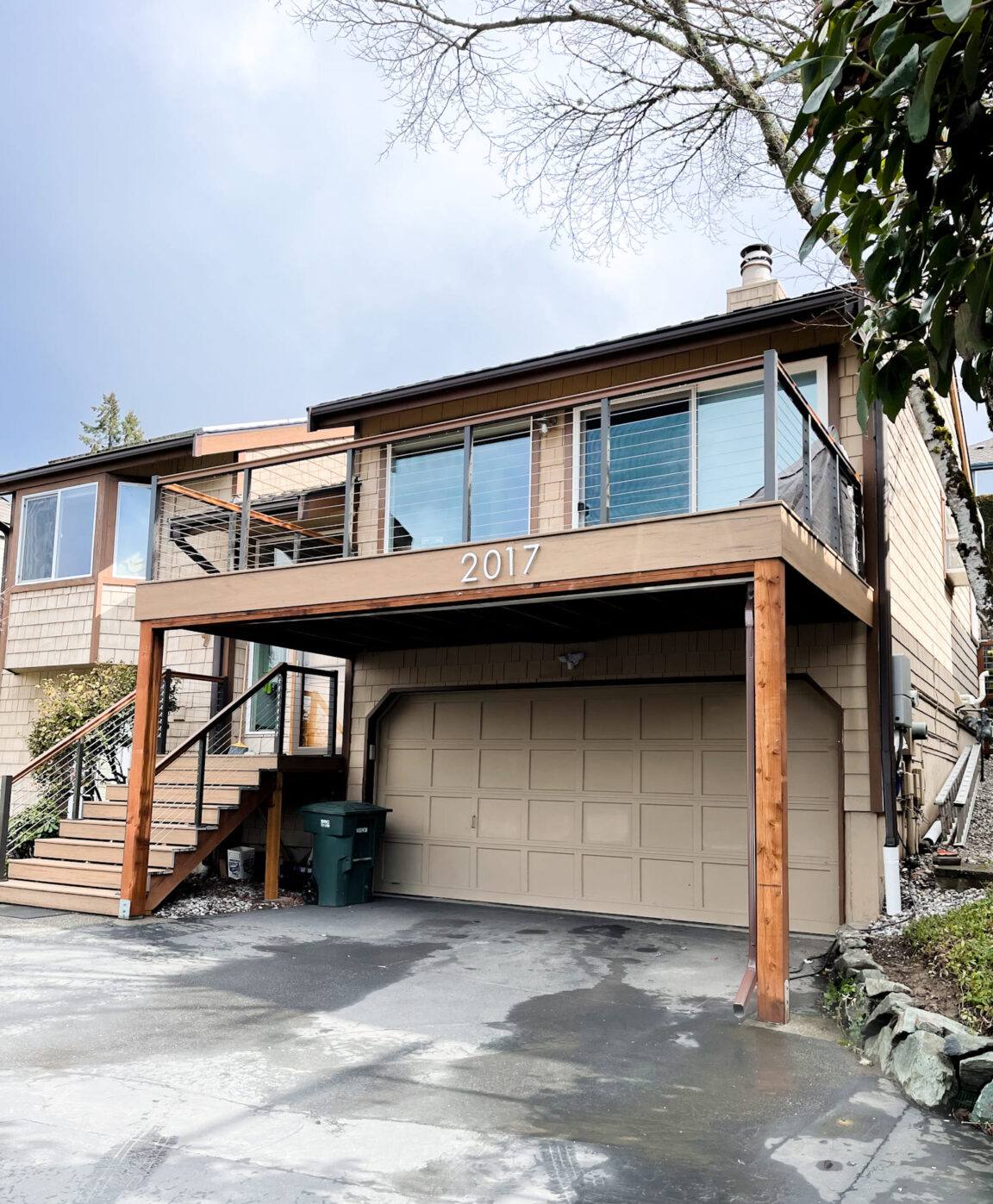
The Damage Pattern We See in This Area
Every region has its own signature failure points on a deck. Near California Creek, the pattern is fairly consistent from house to house:
- Fastener corrosion. Salt air accelerates rust on standard fasteners, and once a nail or screw starts to corrode, it loses grip and can streak the surrounding wood with rust stains.
- Ledger board moisture intrusion. The ledger is the board that bolts the deck to the house, and it's the single most common source of hidden rot because water gets behind it and never fully dries between storms.
- Moss and algae buildup. Shaded decking near tree cover and moving water stays damp far longer than open, sun-exposed decking, which gives moss and algae the conditions they need to take hold.
- Joist and beam softening. Once moisture works its way under the decking boards, the framing underneath can stay wet for days, and repeated soak-dry cycles break down the wood fiber over time.
- Cupped or warped boards. Decking that absorbs moisture unevenly — wet underneath, dry on top from occasional sun — will cup, crack, or lift at the fastener points.
Most of these issues are gradual. A deck can look structurally fine on the surface for years while the framing underneath quietly loses strength. That's why an honest inspection has to go past the decking boards themselves and check what's holding the whole thing up.
What a Proper Deck Repair Actually Involves
Structural Inspection First
Before any board gets pulled or replaced, we check the load-bearing components: posts, beams, joists, and the ledger connection to the house. This usually means probing suspect wood with an awl or screwdriver to feel for soft spots, checking post bases for ground contact rot, and looking at joist hangers for rust or loosening. Cosmetic problems on the surface are often a symptom of a structural issue underneath, and repairing the surface without addressing the frame is a short-term fix at best.
Ledger Board and Flashing
If the ledger board doesn't have proper flashing — a metal or self-adhering membrane that directs water away from the house-to-deck connection — water will find its way behind the board over time no matter how well everything else is built. Correcting flashing at the ledger is one of the highest-value repairs on a deck in this climate, because it addresses the source of moisture rather than just the symptom.
Fasteners and Hardware
Given the salt air near the water, we don't use standard zinc-coated fasteners on repair work in this area. Stainless steel or high-grade hot-dip galvanized fasteners cost more up front, but they hold up against corrosion in a way that basic hardware simply doesn't, and replacing rusted fasteners twice is more expensive than doing it right the first time.
Decking Surface Repair
Individual boards that are cupped, split, or soft get replaced rather than patched — a patched board is still a weak point. Where moss or algae staining has taken hold, the surface gets cleaned and treated before any new boards go in, so the new material isn't sitting against a damp, organic film that will just migrate upward again.
Railings and Guardrails
Loose railings and guardrails are a safety issue, not a cosmetic one. Posts that have shifted or rotted at their base get re-anchored or replaced to meet current structural standards, and we check baluster spacing and rail height against code requirements while we're already on site.
Repair or Replace? How We Help You Decide
Not every deck near California Creek needs a full rebuild, and we're not going to recommend one just because it's a bigger job. The honest answer usually comes down to how much of the frame is still sound.
| Factor | Repair Is Usually Enough | Replacement Makes More Sense |
|---|---|---|
| Framing condition | Posts, beams, and joists probe solid with only isolated soft spots | Widespread soft or rotted framing found in multiple areas |
| Decking surface | A handful of boards are cupped, cracked, or stained | Most of the decking shows cupping, splitting, or persistent moss staining |
| Ledger connection | Flashing can be corrected without disturbing the whole ledger | Ledger board itself is soft or the flashing failure is extensive |
| Age of the structure | Deck is under 15-20 years old with regular past maintenance | Deck is original to an older home with no documented upkeep |
| Hardware and fasteners | Isolated corrosion at a few connection points | Rust bleed and loose fasteners throughout the structure |
We walk every deck with this kind of checklist in mind and give you a straight answer — if repair will genuinely hold up, we say so. If a rebuild is the more honest recommendation, we explain exactly why before you commit to anything.
How Our Repair Process Works
- On-site inspection. We walk the full deck, probe the framing, and check the ledger, posts, and hardware.
- Moisture and structural assessment. We identify which problems are cosmetic and which affect load-bearing capacity.
- Written scope and estimate. You get a clear breakdown of what needs to happen and why, with no vague line items.
- Repair work. Framing, flashing, and fastener corrections happen before any new decking goes down.
- Surface and railing finish. Decking boards and railing components are replaced or repaired to match the rest of the structure as closely as possible.
- Final walkthrough. We go over the completed work with you so you know exactly what was done and what to watch for going forward.
Materials We Use, and the Trade-Offs Behind Them
Material choice matters more near the water than it does in a drier, inland setting. We're upfront about the trade-offs rather than pushing one product as a cure-all:
Pressure-Treated Wood
Still the most common and budget-friendly decking material. It holds up well when properly sealed and maintained, but it does require periodic staining or sealing to resist moisture absorption, especially in a shaded, damp location like a creekside lot.
Cedar
Naturally more rot-resistant than standard framing lumber and holds up well to weather, but it's a softer wood that shows scratches and wear more easily, and it still benefits from regular sealing near salt air.
Composite Decking
Composite resists rot and doesn't need staining, which appeals to a lot of homeowners dealing with a low-maintenance mindset. The honest trade-off: in a shaded, damp spot near a creek, composite can still develop surface mold or algae film, and because it doesn't absorb sealant, cleaning it requires a different approach than wood — usually a soft wash rather than a pressure wash, which can damage the surface texture.
Fasteners and Flashing
As mentioned above, we use corrosion-resistant fasteners and self-adhering flashing membrane at every ledger connection on repair work in this area. It's a small added cost relative to the overall job, and it's the single detail most likely to determine whether a repair lasts five years or fifteen.
Living With Moss and Algae Between Visits
Even a well-repaired deck near California Creek will need some ongoing attention, simply because of the shade and moisture the location naturally gets. A few habits go a long way between professional inspections:
- Sweep leaves, needles, and debris off the deck surface regularly, especially in fall — trapped organic material holds moisture against the boards.
- Keep gutters and downspouts near the deck clear so runoff isn't draining directly onto or under the decking.
- Clean visible moss or algae promptly with a soft-bristle brush and a deck-safe cleaner rather than letting it spread.
- Check under the deck once or twice a year for standing water or soft framing, particularly after a wet winter.
- Reseal wood decking on the manufacturer's recommended schedule rather than waiting until it visibly needs it.
- Watch for rust streaking around fasteners, which is often the first visible sign of hardware corrosion.
Why Hiring a Crew That Already Works This Area Matters
A contractor who mostly works drier, inland properties will often underestimate how aggressively salt air and shaded moisture affect a deck near the water. We've seen the specific failure points that show up on California Creek homes enough times to know where to look first, which fasteners actually hold up, and how much flashing detail is worth the extra time. That familiarity shortens the inspection, sharpens the estimate, and means less guesswork once repair work is underway.
It also matters for something less visible: knowing which repairs are genuinely necessary versus which are being oversold. A deck near the water doesn't need every board replaced just because it shows some weathering — but it does need the framing and ledger connection checked seriously, every time.
If you have a deck near California Creek that's showing signs of wear — soft spots, rust staining, moss buildup, or boards that just don't feel right underfoot — we're glad to take a look and give you a straight, no-pressure estimate using the form below.