 Semiahmoo Siding
 Board & Batten in a Wiser Lake Microclimate
Wiser Lake sits inland from the water but still lives inside the same weather system that shapes exterior work across Whatcom County: long wet winters, a marine air layer that carries salt even away from the immediate shoreline, and shoulder seasons where damp shade turns into a moss farm on anything that stays wet too long. Board and batten siding is a strong architectural fit for the area's mix of rural acreage homes, lake-adjacent cabins, and newer builds that want a vertical, farmhouse-modern look without looking like every other subdivision. But the style only works long-term if the material underneath it can handle the moisture load this area throws at it every year.
That's the real story of board and batten in a climate like this. The look is simple — wide vertical boards with narrow battens covering the seams — but the physics behind a durable installation are not. Get the water management wrong and a board and batten wall will trap moisture behind the battens faster than almost any other siding profile, because every batten seam is a potential water channel if it's not detailed correctly.
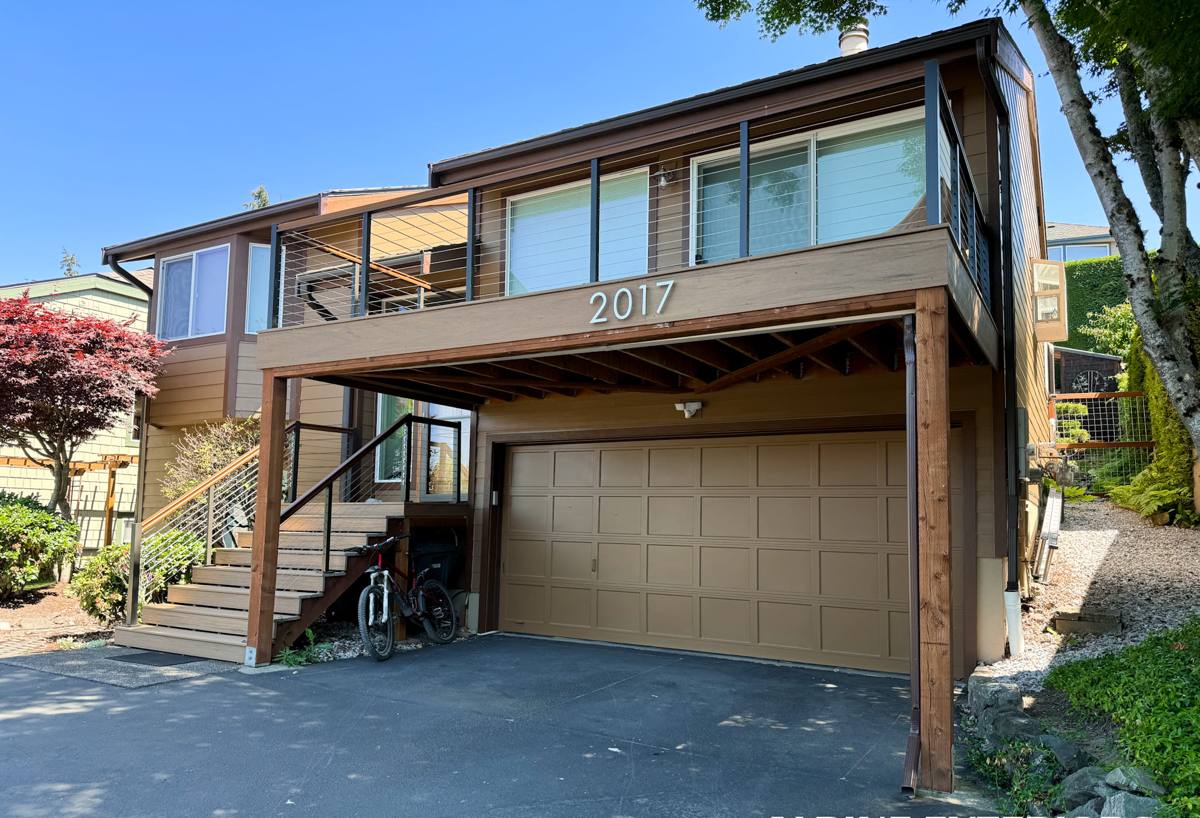
What Driving Rain and Moss Season Actually Do to a Wall
Homes around Wiser Lake and the broader Semiahmoo area deal with three distinct stresses on their siding, often at the same time:
- Driving rain: wind-driven storms push water sideways into vertical seams and batten joints, not just straight down the wall.
- Salt-laden air: proximity to Semiahmoo Bay and the Strait means airborne salt reaches inland properties, accelerating corrosion on fasteners, flashing, and any metal trim.
- Extended damp shade: tree cover and lake humidity keep north and west-facing walls wet for days after a storm, which is exactly the condition moss and mildew need to establish.
None of these individually is unusual for Western Washington. Together, over years, they punish any siding material that swells, wicks, or holds water — and they punish sloppy installation details even on good material. A board and batten wall with a poorly lapped house wrap, undersized rain screen gap, or unsealed cut end will show it within a few winters: staining, soft spots at the base of boards, and moss creeping up from grade.
Why We Only Install Board & Batten in James Hardie Fiber Cement
We install James Hardie exclusively — we don't do board and batten in vinyl, LP SmartSide, primed spruce, or cedar, and that's a deliberate standard, not a sales pitch. Each of those alternatives has a real weak point in exactly the conditions Wiser Lake sees most:
Wood battens and boards (cedar or primed spruce) look beautiful on day one, but wood is dimensionally reactive to moisture. In a climate with this much seasonal wet-dry cycling, wood board and batten wants to cup, check, and pull fasteners loose at the battens — the narrowest, most exposed part of the whole system. Vinyl board and batten profiles exist, but vinyl expands and contracts significantly with temperature and doesn't hold paint, which limits color life and repair options over a 20-plus year horizon. Engineered wood products like LP SmartSide perform better than raw wood but are still wood-fiber based, meaning any breach in the factory treatment or field-cut edge sealing opens a path for moisture absorption.
James Hardie fiber cement doesn't share that vulnerability. It's cement, sand, and cellulose fiber — non-combustible, dimensionally stable, and engineered specifically for wet climates through Hardie's HZ5 product line, which is the version we spec for this region. The ColorPlus factory finish is baked on rather than field-applied, so the color layer isn't relying on a site-applied coat to hold up against salt air and UV. For a profile like board and batten, where narrow battens are the first thing to fail on a lesser material, that stability matters more than it does on a plain lap siding wall.
What a Correct Board & Batten Installation Actually Involves
The visible boards and battens are the easy part. The installation quality lives in what's underneath, and it's where most of the long-term failures start:
Water Management Layer
A weather-resistant barrier installed and lapped correctly — top over bottom, properly taped at seams — is the first line of defense. Every penetration, window, and door needs correct flashing integrated into that barrier before a single board goes up.
Rain Screen Gap
Board and batten performs best with a drainage gap (furring strips or a purpose-built rain screen product) between the siding and the water-resistant barrier. This gives any water that gets past the boards a path to drain and dry instead of sitting against the wall sheathing — critical in a climate where walls stay damp for days at a time.
Fastening and Batten Placement
Battens need to land over solid backing, not just over the seam for looks. Fastener spacing, type, and depth all follow Hardie's published specs — over-driven or under-driven nails are one of the most common causes of early siding failure, and it's a detail that's invisible once the job looks "done."
Trim, Corners, and Base Detail
The bottom of a board and batten wall is the most exposed point on the house — closest to splashback, grade moisture, and standing water after storms. Correct clearance from grade/hardscape, properly flashed base trim, and sealed (not just caulked) end cuts are what keep that zone from being the first place the wall fails.
Our Process for a Wiser Lake Board & Batten Project
| Stage | What Happens |
|---|---|
| Site walk | We assess wall exposure — which elevations take the most driving rain, shade, and salt air — and identify problem spots on the existing siding. |
| Detail plan | Rain screen approach, flashing plan, and batten layout are worked out before material is ordered, not improvised mid-install. |
| Tear-off and prep | Old siding removed, sheathing inspected for hidden rot or moisture damage, repairs made before anything new goes up. |
| Water barrier and rain screen | Weather-resistant barrier and furring/rain screen installed and inspected before boards begin. |
| Board and batten install | James Hardie boards hung to spec, battens fastened into solid backing, trim and flashing detailed at every penetration. |
| Final walk-through | We walk the finished job with the homeowner and point out where the water management details are, since they're invisible once complete. |
Cost Factors for Board & Batten in This Area
Every property is different, but the line items that move the price on a Wiser Lake board and batten project are consistent:
| Factor | Why It Matters |
|---|---|
| Existing wall condition | Hidden rot or moisture damage found during tear-off adds repair scope before new siding can go on. |
| Wall height and complexity | Gables, dormers, and multiple stories increase labor time and staging needs. |
| Rain screen approach | A full rain screen system costs more upfront than direct-to-sheathing installation but pays back in wall longevity. |
| Board width and batten spacing | Wider reveals use less material but change the visual proportion; narrower spacing uses more boards and battens. |
| Access and site conditions | Lake-adjacent lots, slopes, and tree cover can affect staging, scaffolding, and equipment access. |
We give straightforward, itemized estimates rather than vague lump sums, so homeowners can see what's driving the number.
What to Check Before Hiring a Crew for This Work
- Ask specifically how they handle the rain screen gap and drainage plane — not just "we install James Hardie."
- Confirm they're following Hardie's published fastening and clearance specs, not general carpentry judgment.
- Ask how they flash the base of the wall and any horizontal trim, since that's the highest-failure zone.
- Get a written scope that separates tear-off, repair, water barrier, and finish siding as distinct line items.
- Ask how they handle hidden sheathing damage if it's found once old siding comes off.
Why a Crew That Already Works Wiser Lake Matters
Board and batten failures in this region are rarely about the product — they're about details that don't account for local exposure. A crew that already works Whatcom County properties knows which elevations on a given lot layout typically take the worst driving rain, how much shade a tree line creates through the wet months, and how far salt air travels inland from Semiahmoo Bay on a given property's aspect. That local pattern recognition shows up in small decisions — where to add extra flashing attention, which corners need tighter sealing, how the rain screen gap performs against a specific wall's sun and wind exposure — that a crew unfamiliar with the area might not think to make.
It also matters for the long run. A siding job installed to spec should last decades, and having a local, accountable contractor who installed it means a straightforward conversation if something ever needs attention, rather than chasing down a company that worked the area once and moved on.
Maintenance After Installation
James Hardie board and batten is low-maintenance compared to wood, but "low" isn't "none" in this climate. A simple annual routine keeps it performing as designed:
- Rinse the exterior once or twice a year, focusing on shaded and north-facing walls where moss and mildew establish first.
- Check caulking at trim joints and penetrations annually — caulk is a maintenance item, not a permanent seal.
- Keep gutters clear and downspouts directed away from the wall base to avoid saturating the bottom courses.
- Trim back vegetation that shades a wall continuously, since that shade is what keeps moss establishing.
- Have any impact damage or fastener pops addressed promptly rather than left through a wet season.
If you're weighing board and batten for a home in the Wiser Lake area, we're happy to walk the property, talk through exposure and detailing specific to your lot, and put together a clear, no-pressure estimate using the form below.