 Semiahmoo Siding
 Blaine's Coastal Climate Is Hard on Roofs
Blaine sits right on Semiahmoo Bay, at the northern edge of Whatcom County, which means local roofs deal with a combination few inland homes ever face: salt-laden air off the water, wind-driven rain that gets pushed sideways under flashing and shingle tabs, and a moss season that can run most of the year in shaded, north-facing sections of a roof. None of these problems are dramatic on their own. What they do is work slowly, underneath the surface, until a roof that looks fine from the driveway is actually failing at the seams, the valleys, and the places where the roof meets the walls of the house.
We're a Semiahmoo-based exterior contractor, and roofing and siding overlap more than most homeowners realize — the roof-to-wall transition is one of the most common places water actually gets into a house. That's part of why our approach to roof replacement in Blaine pays as much attention to flashing and drainage details as it does to the shingles or panels on top.
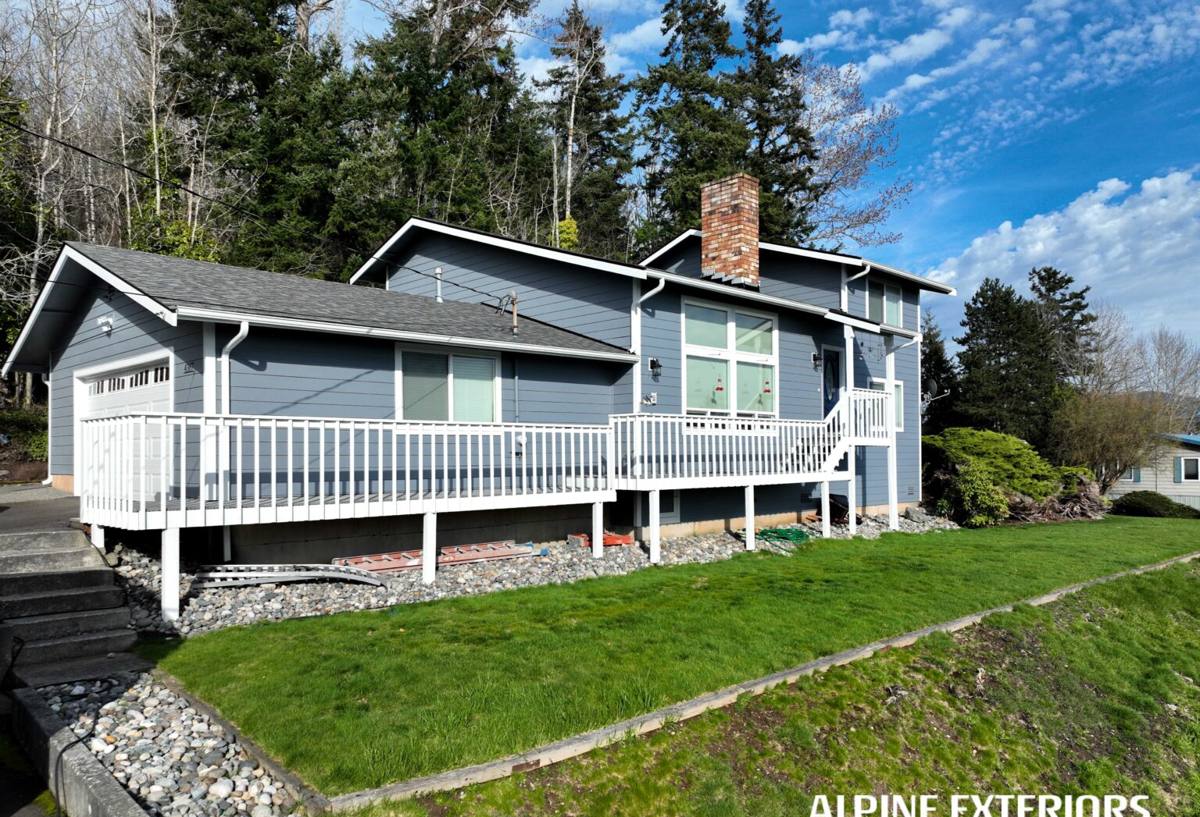
Signs a Blaine Roof Needs Replacement, Not Another Repair
Roof repairs make sense when a problem is isolated — a cracked pipe boot, a few lifted shingles after a windstorm, a small flashing leak. Replacement becomes the right call when the roof's underlying protection is failing broadly, even if the surface still looks passable from the ground. In a marine climate like Blaine's, that distinction matters more than it does elsewhere, because moisture damage under an aging roof tends to be further along than it appears.
What we look for during an inspection
- Granule loss heavy enough that the asphalt mat is visible, especially on south- and west-facing slopes that take the most weather
- Soft or spongy decking underfoot, usually found near valleys, chimneys, or roof-wall intersections
- Persistent moss growth that keeps returning within a season or two of cleaning, a sign the roof surface is staying damp longer than it should
- Curling, cracked, or brittle shingles, particularly on a roof past 18-20 years old
- Rusted, lifted, or improperly lapped flashing at chimneys, skylights, and sidewalls
- Daylight or water staining visible in the attic along the roof deck or rafters
- Multiple past repairs in different areas, which usually means the roof as a whole is at the end of its service life
If only one or two of these show up in a single spot, a repair is often the honest recommendation — we'll tell you that. Replacement makes sense when the issues are spread across the roof or tied to the underlayment and decking rather than just the surface material.
What a Correct Roof Replacement Actually Involves
A roof replacement is more than swapping old shingles for new ones. In a location like Blaine, where wind-driven rain and salt exposure are constant factors, the parts of the job you don't see afterward matter as much as the parts you do.
Tear-off and deck inspection
We remove the existing roofing down to the deck rather than layering over it. That's the only way to actually see the plywood or planking underneath, catch soft spots or rot early, and replace only the sections that need it instead of guessing at what's hidden.
Underlayment as the real weather barrier
Shingles or panels shed most of the water, but the underlayment is what protects the house when wind pushes rain up and under the surface layer — which happens regularly during Whatcom County storms coming off the water. We use synthetic underlayment across the field and self-adhered ice-and-water membrane in vulnerable spots: eaves, valleys, and around every roof penetration.
Flashing at every transition
Chimneys, skylights, vent pipes, and — critically for a siding-and-roofing crew — the points where a roof meets a sidewall or a lower roof tucks under siding, are where leaks actually start. Step flashing and kickout flashing at these junctions have to be installed in the correct sequence with the underlayment and, where applicable, the siding above it, not just caulked and hoped for. Caulk is a backup, not a waterproofing plan.
Ventilation
A roof that can't breathe traps moisture in the attic, which shortens the life of the decking and can encourage moss and mildew from the inside out. We check intake at the eaves and exhaust at the ridge and correct imbalances as part of the replacement, not as an afterthought.
Choosing Materials for a Bay-Front Climate
There's no single "best" roofing material for Blaine — the right choice depends on your home's exposure, roof pitch, budget, and how much long-term maintenance you're willing to take on. Here's how the common options hold up against salt air, driving rain, and moss pressure specifically.
| Material | Salt air exposure | Moss resistance | Maintenance |
|---|---|---|---|
| Architectural asphalt shingle | Good with proper fasteners and flashing | Moderate — benefits from periodic cleaning | Low to moderate |
| Standing seam metal | Very good when coated fasteners and finishes are used | Excellent — moss struggles to hold on smooth metal | Low |
| Cedar shake | Fair — needs consistent upkeep near salt air | Poor without regular treatment | High |
| Composite/synthetic shake | Good | Good | Low to moderate |
We don't install cedar shake as a standard recommendation on homes close to the water. It's not that cedar is a bad material in the right setting — it's that in a shaded, damp, salt-air environment it demands a level of ongoing maintenance most homeowners underestimate, and the moisture and moss issues that come with neglect show up faster here than inland. We'll talk through the honest trade-offs of any material you're considering rather than steering you toward what's easiest for us to install.
Our Roof Replacement Process
- On-site inspection and estimate — we walk the roof and attic, document existing conditions, and explain what we find in plain terms before recommending replacement over repair.
- Material and scope selection — we go over material options, ventilation needs, and flashing details specific to your roof's layout, including any sidewall or roof-to-siding transitions.
- Scheduling around weather — in Whatcom County, timing matters. We plan tear-off and dry-in around forecast windows so your home isn't left exposed to a rain system.
- Tear-off, deck repair, and dry-in — old material comes off, the deck gets inspected and repaired where needed, and underlayment goes down the same day whenever possible.
- Installation — shingles, panels, or shakes installed to manufacturer specification, with flashing integrated at every penetration and transition.
- Final walkthrough — we review the completed roof with you, including ventilation, flashing points, and basic care going forward.
Moss, Algae, and Keeping a New Roof Performing
Even a correctly installed roof in this climate benefits from a little routine attention. A long moss season doesn't mean your roof is failing — it means the region's shade, humidity, and rainfall give moss and algae the conditions they need, especially on north-facing slopes and under overhanging trees.
- Keep gutters and valleys clear of needles and debris where moss spores tend to collect and take hold
- Trim back tree limbs that shade sections of the roof for most of the day
- Have moss physically removed rather than left to spread — scraping and low-pressure rinsing, not power washing, which can strip granules
- Ask about zinc or copper strips near the ridge on shingle roofs, which help suppress regrowth over time
- Schedule a walk-on inspection every few years, particularly after major windstorms off the bay
Why a Crew That Already Works Blaine Matters
Roofing crews that don't work this area regularly tend to under-spec for it — standard inland underlayment coverage, minimal flashing at wall transitions, ventilation sized for a drier climate. None of those shortcuts show up as a problem on day one. They show up two or three winters later, after a few seasons of driving rain and salt exposure have found the weak points.
Working roofs and siding together in Whatcom County day to day means we're already thinking about how the two systems interact — where a roof edge meets a wall, how water sheds off a roof and onto siding below it, and which details actually hold up through a full Pacific Northwest storm season rather than just looking finished on installation day.
What Drives the Cost of a Roof Replacement
Every roof is different, so an accurate number only comes from an on-site look — but the main factors that move the price are consistent across jobs:
| Factor | Why it matters |
|---|---|
| Roof size and pitch | More surface area and steeper slopes mean more material and labor time |
| Number of layers to remove | Tear-off of multiple existing layers adds time and disposal cost |
| Deck condition | Rotted or soft decking found during tear-off requires repair before new material goes down |
| Material choice | Asphalt, metal, and composite products vary in material cost and installation time |
| Roof complexity | Valleys, dormers, skylights, and multiple roof-wall transitions all add flashing work |
| Ventilation upgrades | Correcting intake or exhaust imbalance is often bundled into a replacement |
We'd rather walk your roof and give you real numbers than throw out a range that doesn't reflect your actual home.
If your roof is showing its age, or you'd just like an honest read on whether repair or replacement makes more sense for your Blaine home, we're happy to take a look. Fill out the form below for a free, no-pressure estimate.