 Semiahmoo Siding
 Blaine's Coastal Climate Is Hard on Siding
Blaine sits right at the edge of the Salish Sea, close enough to Semiahmoo Bay and Drayton Harbor that salt-laden air is a daily fact of life, not an occasional nuisance. That salt air settles on every exterior surface, works into seams and fastener heads, and accelerates corrosion and finish breakdown on materials that aren't built to handle it. Add Whatcom County's long, wet winters, driving rain off the water, and a moss season that can stretch from fall through spring, and you have a climate that punishes weak siding systems faster than almost anywhere else in the state.
Homes in Blaine don't fail because owners neglect them. They fail because the siding installed on them was never engineered for this specific combination of salt exposure, sustained moisture, and biological growth. That's the starting point for any honest conversation about what siding actually belongs on a Blaine home.
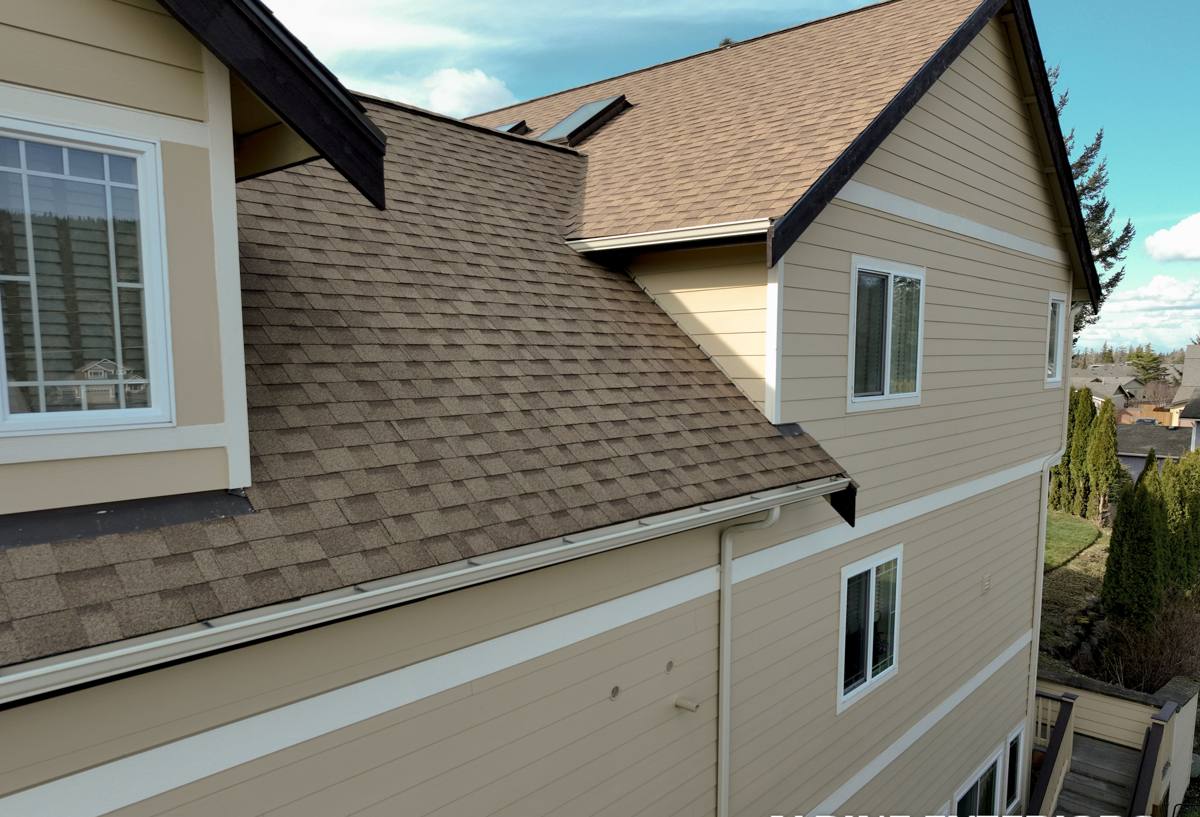
What Blaine Homes Specifically Need From Their Siding
Resistance to Salt Air Corrosion
Salt air doesn't just sit on the surface — it migrates into any exposed wood fiber, unsealed cut edge, or gap around fasteners and trim. Over years, that constant low-level exposure degrades paint film, softens caulking, and corrodes metal fasteners and flashing if they aren't rated for coastal use. Siding near Semiahmoo Bay needs a factory finish that's bonded to the substrate, not just brushed on, and it needs every cut edge sealed at installation.
Standing Up to Driving Rain
Wind off the water pushes rain sideways into wall assemblies, not just straight down. That means water management — proper flashing, correct overlaps, a functioning weather-resistant barrier behind the siding, and enough of a rain screen gap for water to drain and the wall to dry — matters as much as the siding material itself. A great product installed without correct water management will still let moisture behind the wall.
Shedding Moss Instead of Feeding It
Moss needs shade, moisture, and a surface it can grip. North-facing walls, areas under tree cover, and anywhere siding stays damp longer than it should are moss magnets in this climate. Porous or textured surfaces give moss and algae something to root into; a dense, factory-sealed surface gives them far less to hold onto and is much easier to clean when it does appear.
Why We Only Install James Hardie in This Climate
We install James Hardie fiber cement exclusively — not vinyl, not LP SmartSide, not cedar or primed wood products. That's a deliberate standard, not a sales preference, and it comes directly from what this climate does to siding over a full ownership cycle.
James Hardie is fiber cement: sand, cement, and cellulose fibers, non-combustible and dimensionally stable. It doesn't absorb water the way wood-based products do, so it isn't feeding rot or swelling at cut edges the way engineered wood siding can when a seal fails. Hardie's ColorPlus factory finish is baked on under controlled conditions, giving a more consistent, better-adhered topcoat than most field-applied paint jobs achieve, which matters directly for salt air resistance and long-term color retention.
The HZ5 Engineering Angle
James Hardie engineers its products in regional formulations — HZ5 for the colder, wetter climate zone that includes Northwest Washington. That's not a marketing label; it reflects a formulation intended to perform in freeze-thaw cycles and sustained damp conditions rather than a one-size-fits-all national product. For a town like Blaine, sitting right on the water, that regional engineering is part of why we don't substitute a generic product and call it equivalent.
Being Honest About the Trade-offs
Fiber cement isn't the cheapest option up front, and it's heavier and more particular to install correctly than vinyl or engineered wood. We're upfront about that. What it buys back is a non-combustible product that doesn't warp, doesn't rot, holds paint and factory finish far longer in salt air, and carries a strong transferable warranty when installed to manufacturer spec. For a coastal property in Blaine, that trade-off consistently favors Hardie over the life of the home.
What a Correct James Hardie Installation Involves
The product is only half the equation. A large share of siding failures we get called out to inspect in this area trace back to installation shortcuts, not the material itself. A correct job includes:
- A properly lapped, continuous weather-resistant barrier behind the siding — no gaps, no shortcuts at penetrations
- Correct flashing at every window, door, and roof-to-wall intersection, detailed for wind-driven rain
- A rain screen gap or drainage plane so water that gets behind the cladding can actually drain and the wall can dry
- Fasteners rated for coastal, corrosion-prone conditions, driven to Hardie's specified depth and pattern — not overdriven, not underdriven
- All field-cut edges sealed per manufacturer instructions before installation, not caulked over afterward
- Correct clearances at grade, decks, and roof lines so siding never sits in standing water or constant shade-moisture
- Manufacturer-specified caulking and sealant at joints, compatible with the ColorPlus finish
Skip any one of these and you can still end up with moisture intrusion, premature finish failure, or a voided warranty — even with the right product on the wall.
Our Process for a Blaine Home
Assessment and Planning
We start by walking the exterior and looking specifically at what this site is dealing with: wind exposure toward the water, shaded or moss-prone walls, existing moisture damage, and how the current siding and trim have held up. That assessment shapes the flashing details, product line, and profile recommendations, not a generic template.
Tear-Off and Substrate Check
Removing the old siding is also our chance to check the sheathing and framing underneath for hidden rot or past water intrusion — common in older coastal homes where a failed seal went unnoticed for years. Any damaged substrate gets addressed before new siding goes on; covering a compromised wall with new siding just hides the problem.
Weather Barrier and Flashing
We install a continuous weather-resistant barrier and detail flashing at every penetration and transition before a single piece of Hardie board goes up. This is the step that determines whether the wall stays dry for the next thirty years, and it's the step most often rushed on lower-bid jobs.
Installation to Manufacturer Spec
Hardie boards, panels, or shingles go up per James Hardie's published installation guidelines — correct fastener spacing and depth, sealed cut edges, proper overlaps, and correct clearances. This is also what keeps the manufacturer warranty intact; installations that deviate from spec can void coverage even on a premium product.
Final Detailing and Cleanup
Trim, caulking, and touch-up finish work close out the job, followed by a full site cleanup. We walk the completed exterior with the homeowner before calling the job done.
Why a Crew That Already Works Blaine Matters
A contractor who works Whatcom County's coastal properties regularly already knows how far wind-driven rain reaches up a wall on an exposed lot, which orientations in this area stay damp long enough to grow moss, and how salt air changes fastener and flashing choices compared to an inland job forty miles away. That's not something a crew coming from a different climate zone picks up on their first pass — and it shows up later as callbacks, premature finish failure, or moisture problems that trace straight back to details that a locally experienced crew treats as standard practice.
Local experience also means straightforward answers about permitting norms, realistic scheduling around this area's wet-season weather windows, and a crew that isn't guessing at code requirements specific to Whatcom County.
Cost Factors for Blaine James Hardie Projects
Every home is different, and we don't quote sight-unseen numbers — but these are the variables that most affect the scope and cost of a James Hardie project on a Blaine home:
| Factor | Why It Matters Here |
|---|---|
| Substrate condition | Hidden rot from past moisture intrusion adds repair scope before new siding can go on |
| Product line and profile | Lap siding, panel systems, and shingle-style profiles carry different material and labor costs |
| Wall exposure | Walls facing prevailing wind and rain off the water often need more detailed flashing work |
| Trim and detail complexity | Dormers, multiple roof lines, and custom trim add labor time |
| Access and site conditions | Lot slope, landscaping, and staging space affect crew efficiency |
| Color and finish | Factory ColorPlus finishes vs. field-painted options affect both cost and long-term maintenance |
Keeping Your Siding Performing Long-Term
A correct James Hardie installation is built to be low-maintenance, not zero-maintenance. A short annual routine keeps it performing the way it's designed to in this climate:
- Rinse salt residue and general grime off exterior walls once or twice a year, especially on sides facing the water
- Check and clear gutters and downspouts before the wet season so water isn't overflowing onto siding
- Look at shaded, moss-prone walls in late winter and gently clean early growth before it spreads
- Inspect caulking at trim and joints yearly and have any cracked or separated sealant redone promptly
- Keep landscaping trimmed back from walls so siding can dry fully after rain
- Address any paint chips or damage quickly so bare edges aren't exposed to salt air and moisture
Ready to Talk About Your Blaine Home
If your current siding is showing chalking, moss buildup, soft spots, or paint failure, or you're planning ahead for a home near Semiahmoo Bay, we're happy to take a look and give you a straightforward assessment — no pressure, no generic estimate pulled from a formula. Use the form below to request a free evaluation, and we'll walk your home's specific exposure and needs with you in person.