 Semiahmoo Siding
 Roof Repair for a Coastal Whatcom County Neighborhood
Blaine Harbor sits right where Semiahmoo Bay meets the rest of Whatcom County, and that location shapes what a roof has to survive here. Homes and waterfront properties in this stretch deal with a combination that inland roofs rarely see all at once: salt-laden air blowing off the water, wind-driven rain that finds its way under loose or aging materials, and a moss season that runs longer than most homeowners expect. A roof repair here isn't just patching a leak — it's addressing the specific way this climate wears materials down.
We work on roofs throughout Blaine and the surrounding Whatcom County coastline regularly, which means we're not guessing at how a Blaine Harbor roof ages. We've seen the pattern: flashing that corrodes faster than it should, shingles that hold moisture longer because moss traps it against the surface, and gutters that back up right when the fall rains hit hardest. This page is about what a correct repair looks like for a home in this specific environment.
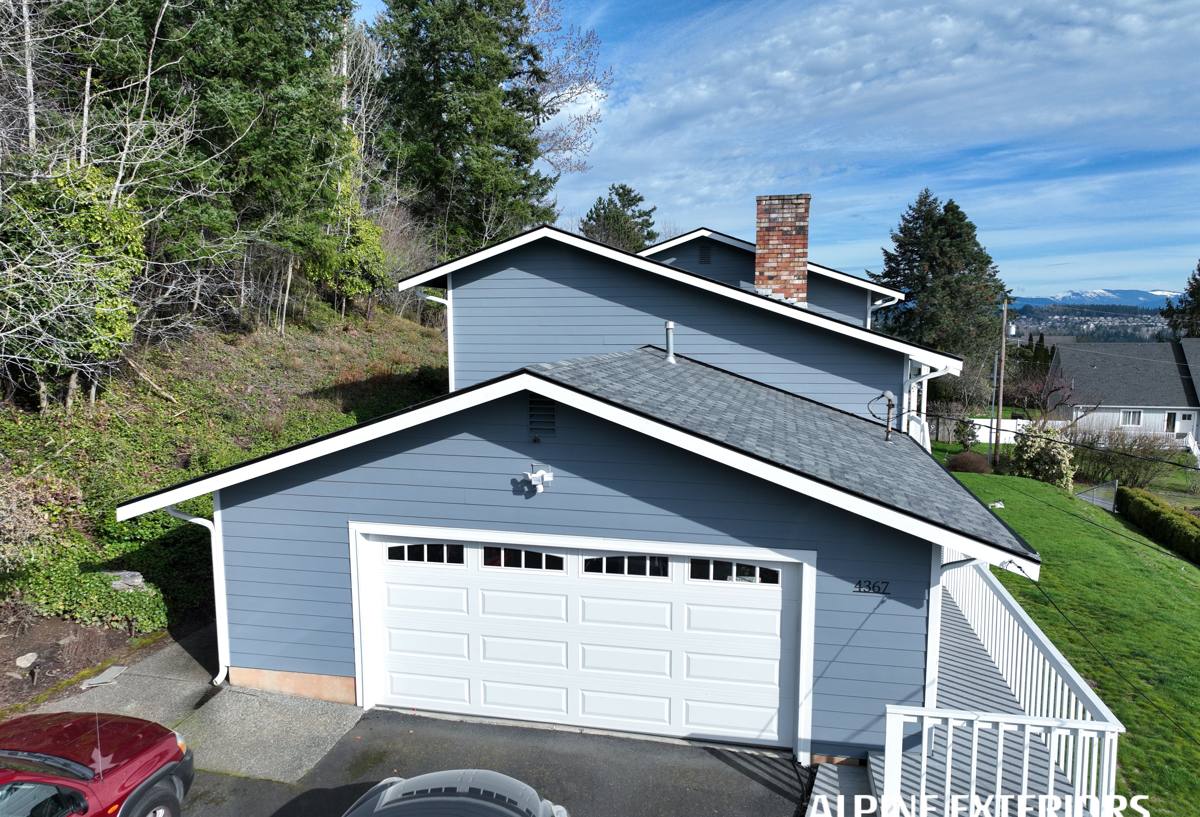
What Salt Air, Rain, and Moss Actually Do to a Roof
Salt Air and Corrosion
Airborne salt from Semiahmoo Bay settles on every exterior surface, including the roof. Over time it accelerates corrosion on exposed metal — nail heads, flashing, gutter hangers, and any fasteners that aren't rated for coastal exposure. A fastener or flashing piece that would last decades a few miles inland can start failing years earlier here. When we repair a roof in this area, we're checking metal components as closely as the shingles themselves, because a rusted flashing seam is often the real source of a leak that looks like it's coming from somewhere else.
Driving Rain and Wind
Storms off the water don't just drop rain straight down — wind pushes it sideways and up under laps, ridge caps, and flashing that would otherwise shed water fine in calmer weather. This is why repairs done without attention to wind direction and water path often fail again within a season or two. A patch that only covers the visible gap, without accounting for where wind-driven rain actually travels, is a temporary fix at best.
Moss and Algae Season
Whatcom County's mild, wet winters give moss a long growing window, and Blaine Harbor's shaded, moisture-holding spots are exactly where it thrives. Moss doesn't just look bad — it lifts shingle edges as it grows, holds water against the roofing material, and creates a path for water to work underneath. Left unaddressed, a moss problem turns into a leak problem, usually not on the same schedule you'd expect from a dry-climate roof.
Signs a Blaine Harbor Roof Needs Repair
Some roof problems are obvious. Others build slowly and only show up once water has already gotten past the surface. Here's what we tell homeowners to watch for between inspections:
- Moss or thick algae growth on shingles, especially on north-facing or shaded slopes
- Granules collecting in gutters or at downspout outlets
- Shingles that are curling, cracked, or visibly lifted at the edges
- Rust streaks below flashing, vents, or metal valleys
- Water stains on interior ceilings or in the attic, even faint ones
- Daylight visible through the roof deck from inside the attic
- Missing or displaced shingles after a windstorm
- Soft or spongy spots when walked on the roof (a sign of trapped moisture)
Any one of these on its own might be minor. Two or three together usually mean the roof has been dealing with moisture longer than it should have, and it's worth having someone look before the next big rain.
Common Roof Repair Issues We Handle in Blaine Harbor
| Issue | What's Usually Involved | Typical Cost Range | Urgency |
|---|---|---|---|
| Moss and algae removal/treatment | Soft wash, hand removal, and a treatment application to slow regrowth | $300 – $800 | Moderate — before it lifts shingles |
| Flashing repair (chimney, valley, vent) | Removing corroded flashing and re-flashing with properly lapped, sealed material | $400 – $1,200 | High if actively leaking |
| Localized shingle replacement | Tear-out of damaged section, deck check, matched replacement shingles | $500 – $1,500 | Moderate to high |
| Gutter and downspout repair | Re-securing, resealing joints, correcting pitch so water actually drains | $200 – $700 | Moderate |
| Storm damage patch | Emergency tarping followed by permanent repair once weather allows | $300 – $1,000+ | Urgent |
These are broad ranges, not quotes — the actual cost depends on roof pitch, access, how far moisture has traveled under the surface, and what we find once we're actually up there. We'll always tell you what we see before we start, not after.
What a Correct Roof Repair Actually Involves
Inspection and Diagnosis First
Every repair starts with figuring out where the water is actually coming from, not just where it's showing up. A stain on a ceiling can trace back to a flashing failure several feet away, since water travels along the roof deck before it drips through. We check the roof surface, the flashing at every penetration, the gutters, and — when accessible — the attic side, so the repair addresses the actual source instead of just the symptom.
Flashing and Roof-Siding Intersections
As a company that works on both siding and roofing, we pay particular attention to the places where the two meet — step flashing along walls, kickout flashing at roof-to-wall transitions, and the areas where a roofline ties into siding or trim. These transition points are one of the most common leak sources on coastal homes, and they're also one of the most commonly overlooked spots in a rushed repair. Getting the flashing right here protects both the roof and the wall assembly behind the siding.
Matching Materials, Not Just Covering Gaps
When we replace a section of shingles or shake, we match the existing material as closely as possible for both appearance and how it interacts with the surrounding roof. Mixing incompatible materials or profiles can create new water paths instead of closing old ones. If an exact match isn't available, we'll tell you that up front and talk through the best option rather than installing something that technically covers the hole but doesn't perform the same way.
Treating the Moss, Not Just Removing It
Removing moss without addressing why it grew back in the first place is a short-term fix. Depending on the roof's exposure and shading, we may recommend a treatment application, zinc or copper strips at the ridge, or trimming back vegetation that's keeping a section of roof shaded and damp. The goal is stretching the time between cleanings, not just resetting the clock.
Repair vs. Replacement: Making the Honest Call
Not every roof problem in Blaine Harbor needs a full replacement, and we're not going to tell you it does. A roof with isolated damage, a sound deck, and shingles that still have useful life left is usually a good repair candidate. A roof with widespread granule loss, multiple past patch jobs, or moisture that's clearly gotten into the deck in more than one spot is a different conversation — repairing that kind of roof piecemeal often costs more over a few years than addressing it properly once.
We'll give you a straight answer on which situation yours is, including what happens if you choose to repair now and hold off on replacement — that's your call to make, but we want you making it with accurate information about the roof's actual condition.
Our Repair Process
- On-site inspection of the roof, flashing, and any interior signs of water intrusion
- Clear explanation of what we found, in plain language, before any work begins
- A written scope and price for the repair — no vague verbal estimates
- Repair work using materials matched to your existing roof where possible
- Cleanup of the work area, including moss and debris removal from gutters if that was part of the job
- A final walkthrough so you can see what was done and ask questions
For active leaks or storm damage, we prioritize getting a temporary fix in place quickly, then follow up with the permanent repair once materials and weather allow it.
Why a Crew That Already Works Blaine Harbor Matters
Roofing advice that works for a dry inland climate doesn't always hold up on a bay-front property in Whatcom County. A crew unfamiliar with this area might under-spec fasteners for salt exposure, miss how far moss has already worked under a shingle edge, or not account for how wind off the water hits a particular roof slope. Working this stretch of coastline regularly means we've already seen how these roofs age, which makes diagnosis faster and repairs more likely to actually hold.
Local also means practical things: knowing typical permit requirements for the City of Blaine and Whatcom County when a repair crosses into replacement territory, and being able to respond quickly when a storm knocks something loose and you need someone out before the next system rolls in.
Get a Straight Answer on Your Roof
If you're seeing moss buildup, a stain that wasn't there last season, or damage from a recent windstorm, it's worth having someone take an honest look before it turns into a bigger repair. We'll walk the roof, tell you what we find, and give you a clear, written scope — no pressure either way. Fill out the form below for a free estimate on roof repair for your Blaine Harbor property.