 Semiahmoo Siding
 Blaine Harbor sits right where Semiahmoo's marine exposure is at its most direct — open water on one side, wind with nothing to slow it down before it hits the house, and a damp, gray stretch of the year that runs longer here than it does even a few miles inland. Windows take the brunt of that. They're the weakest thermal link in almost any wall assembly to begin with, and in a harbor-facing home that weak link gets tested by salt air, driving rain, and condensation on a near-daily basis for a good chunk of the year.
"Energy-efficient" gets used as a catch-all marketing term, but on a house like this it has a specific, practical meaning: windows that hold their seal against wind-driven moisture, don't fog or ice on the interior in a cold snap, and keep conditioned air where it belongs instead of leaking it out around a tired frame. That's a different job than a straightforward swap somewhere calmer, and it's worth understanding what actually goes into it before you start comparing quotes.
What Blaine Harbor's Climate Actually Does to Windows
Three things stack up against windows in this location. Salt-laden air off the water accelerates corrosion on hardware, fasteners, and lower-grade frame components faster than it would a few miles inland — hinges stiffen, latches pit, and aluminum components in particular show wear early. Wind-driven rain off the harbor doesn't fall straight down; it gets pushed sideways into wall assemblies and window flashing, which means water finds gaps and seams that would never get tested in a sheltered yard. And Whatcom County's long wet season keeps north- and water-facing walls damp for months at a stretch, which is exactly the condition moss and mildew need to take hold on frames, sills, and the siding around them.
None of that means windows here are doomed to fail early. It means the installation has to assume harsher conditions than the manufacturer's baseline guidance, which is usually written for an average climate, not a harbor-front one.
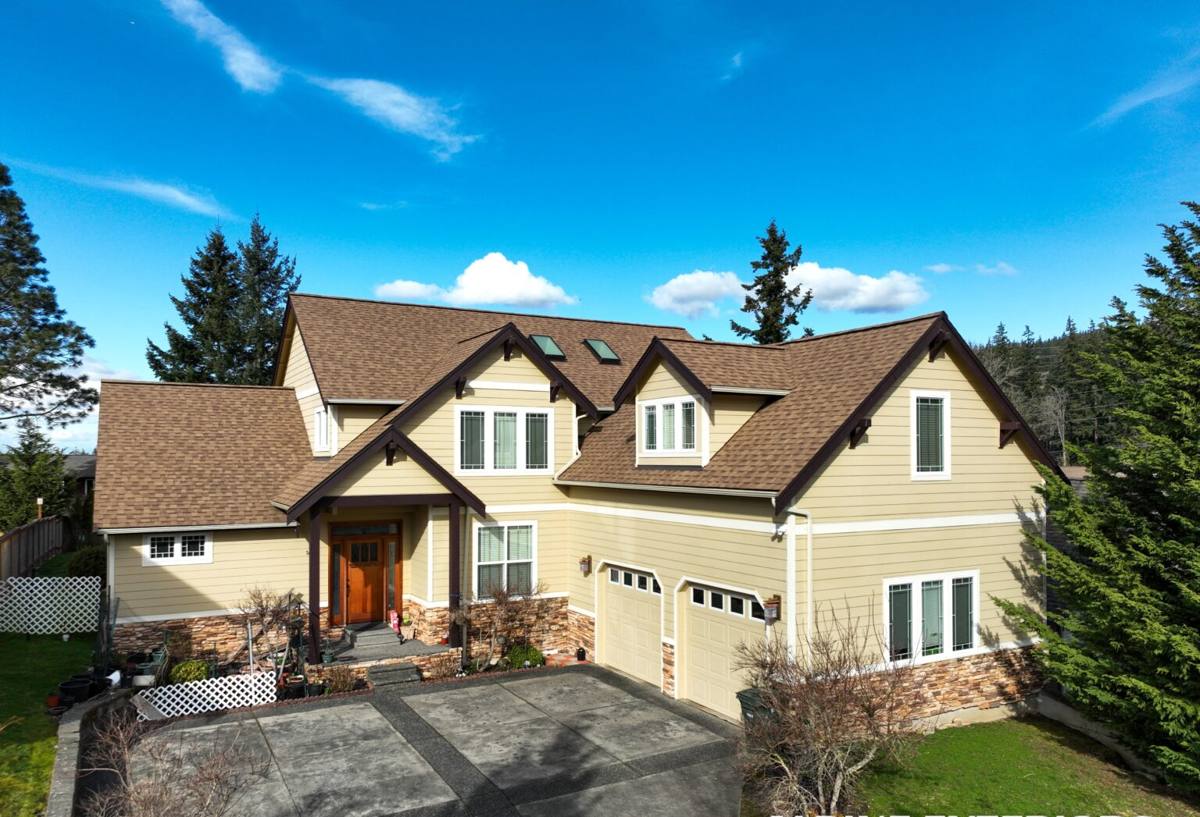
What "Energy-Efficient" Means for This Specific Climate
Semiahmoo doesn't deal with brutal summer heat, so a window's ability to block solar heat gain matters less here than it would in a hot inland climate. What matters more is how well the unit resists air infiltration, how it performs against sustained cold, damp wind, and whether it manages interior condensation instead of fogging or sweating on cold mornings. A window can carry an efficient rating on paper and still perform poorly here if it was selected for the wrong climate profile.
Reading the Label: U-Factor, Air Leakage, and Condensation Resistance
Every code-compliant window carries an NFRC label with a handful of numbers worth understanding rather than skipping past. U-factor measures how well the unit resists heat transfer — lower is better, and it's the number that matters most in a marine climate like this one. Air leakage measures how much outside air sneaks past the frame and sash under pressure — again, lower is better, and it's directly tied to how well a window holds up against wind off the water. Condensation resistance isn't always on the label, but it's worth asking about directly, since interior fogging on a cold, wet morning is one of the most common complaints we hear about older or poorly chosen windows in this area.
Where Older Blaine Harbor Homes Lose the Most Energy
On homes we've worked on in this area, energy loss around windows rarely comes from the glass itself. It comes from what's around it. Original wood-frame windows from decades past have often swollen, shrunk, or warped with repeated wet-dry cycles, leaving gaps that no amount of weatherstripping fully solves. Storm-damaged or improperly repaired flashing lets moisture behind the frame, which both wastes energy and sets up rot. And single-pane or early dual-pane glass, common on older harbor-area homes, simply doesn't hold a thermal break the way current glazing does. Add in aging caulk and sealant, which breaks down faster under constant salt-air exposure than it would inland, and you get a frame that looks intact from a few feet away but is leaking conditioned air and letting moisture creep in at the same time.
What a Correct Installation Involves
Replacing a window is straightforward in theory. Doing it correctly on a harbor-exposed home takes more discipline, because the parts you can't see after the trim goes back on are the parts that determine whether the job holds up.
Flashing and Weatherproofing First
This is the step that matters most given the exposure here. Every opening gets a weather-resistive barrier integrated correctly with the flashing, lapped so water sheds outward and down rather than getting trapped behind the frame. On a wind-driven-rain site like this, we don't treat flashing as a formality — it's the difference between a window that stays dry for decades and one that starts showing hidden rot in five years.
Air Sealing Around the Frame
A high-efficiency window installed with a sloppy air seal performs like a mediocre one. We seal the gap between the frame and the rough opening with low-expansion foam or backer rod and sealant rated for exterior use, not just a bead of caulk around the trim. This is also where a lot of the U-factor and air-leakage numbers on the label actually get realized — or lost — depending on how carefully it's done.
Practical Checklist Before You Sign a Contract
- Ask what NFRC U-factor and air-leakage ratings the proposed window carries, and whether they fit a marine climate, not just a national average
- Confirm how the flashing will be sequenced and integrated with your existing weather-resistive barrier
- Ask what air-sealing method will be used between the frame and the rough opening
- Get a written scope that separates the window unit warranty from the installation labor warranty
- Ask how the crew handles a rotted or out-of-square opening if one turns up during removal
- Confirm current Washington contractor licensing and insurance before any deposit changes hands
Frame and Glass Options for a Marine Climate
Frame material and glazing choice both affect how a window holds up to sustained salt air and moisture, and the right answer depends on your budget, the exposure of the specific opening, and how much upkeep you're willing to take on.
| Option | How It Holds Up Here | Trade-Off |
|---|---|---|
| Vinyl frame | Doesn't corrode or rot; handles sustained moisture with low upkeep | Less rigid on very large openings; color choices are more limited |
| Fiberglass frame | Very stable in temperature swings and moisture; strong resistance to warping | Higher upfront cost than vinyl |
| Aluminum frame | Strong, but conducts cold and is more prone to corrosion in salt air without a quality finish | Generally our least-recommended option for direct harbor exposure |
| Wood-clad frame | Attractive interior look; exterior cladding protects the wood if properly installed | Any breach in the cladding exposes wood to the wet season |
| Double-pane, low-E glass | Solid baseline performance for this climate at a moderate cost | Slightly less thermal performance than triple-pane in a hard freeze |
| Triple-pane glass | Best condensation resistance and thermal performance available | Added cost and weight; not always necessary given our relatively mild winters |
We won't default to the most expensive option out of habit. For most Blaine Harbor homes, a quality vinyl or fiberglass frame with double-pane low-E glass covers the climate demands here without over-building the job. Triple-pane and premium cladding options make sense on specific openings — a north-facing wall that struggles with condensation, or a room where noise off the water is a concern — and we'll walk through where that upgrade is worth it for your specific house rather than upselling across the board.
Our Process, Start to Finish
- On-site assessment — we inspect each opening, check the condition of the existing frame and flashing, and note any moisture or rot issues before quoting anything
- Honest product recommendation — frame material and glazing matched to your budget and the specific exposure of each opening, explained in plain terms
- Written scope and timeline — what's included, what's separate, and a realistic schedule before any work starts
- Careful removal — old units come out without unnecessary damage to surrounding siding or trim, and hidden rot or flashing issues get flagged before the new window goes in
- Installation, flashing, and air sealing — the new unit is set square, shimmed, flashed to shed water outward, and sealed against air infiltration
- Trim and finish — exterior trim integrated to match the surrounding siding, with attention to keeping water moving away from the new seams
Why a Local Blaine Harbor Crew Matters
Manufacturer installation instructions are written for typical, moderate conditions. A harbor-facing home in Semiahmoo isn't typical — the salt air, the wind-driven rain, and the length of the wet season here all push past what a generic install sheet accounts for. A crew that has actually flashed windows on this stretch of Whatcom County coastline knows where the manufacturer's minimum standard isn't enough, and where it's worth spending extra time even when a homeowner wouldn't notice the difference until years later.
That shows up in small decisions that don't come up in a sales pitch — how much flashing lap is enough on a wall that takes rain sideways, which sealant actually holds up to repeated wet-dry cycles instead of just the manufacturer's lab test, and when a sill needs a sloped detail instead of relying on caulk to keep water from pooling. Those choices are what decide whether a window installation is still airtight and dry in fifteen years or starting to show drafts and soft trim in five.
What to Ask Before Hiring for Window Work Here
- Ask how many window jobs they've done specifically in Blaine, Semiahmoo, or comparable harbor-front conditions
- Ask them to walk through their flashing sequence for a wind-driven-rain site, not just a generic answer
- Confirm they'll inspect for hidden rot or moisture damage before quoting a final price
- Get references or examples of completed work in similar coastal conditions
- Confirm licensing, insurance, and how warranty claims are actually handled if something needs a callback
If you're weighing new windows for a Blaine Harbor home — whether it's a full-house replacement or a few problem openings that are drafty, foggy, or showing wear — it's worth having someone look at the actual conditions before you start comparing prices. We offer free, no-pressure estimates for window projects in Blaine Harbor and the surrounding Semiahmoo area; use the form below to get a time on the schedule.