 Semiahmoo Siding
 Why Birch Bay Siding Ages Differently Than Homes Farther Inland
Birch Bay sits right where the wind comes off the water, and that changes what siding has to survive year after year. Homes a few miles inland deal with rain and cold. Homes in Birch Bay deal with rain, cold, salt-laden air, and long stretches of shade and dampness that never fully dry out between storms. We see the difference in the repair calls we get from this part of Whatcom County versus elsewhere: more fastener corrosion, more moisture trapped behind trim, more moss holding water against the wall longer than it should.
None of that means Birch Bay homes need more repair work than they should — it means the repairs need to be done correctly the first time, with materials and methods matched to what the site actually throws at the wall. A patch that would hold up fine in a drier, more sheltered neighborhood can fail within a season or two out here if it doesn't account for salt air, driving rain, and moss.
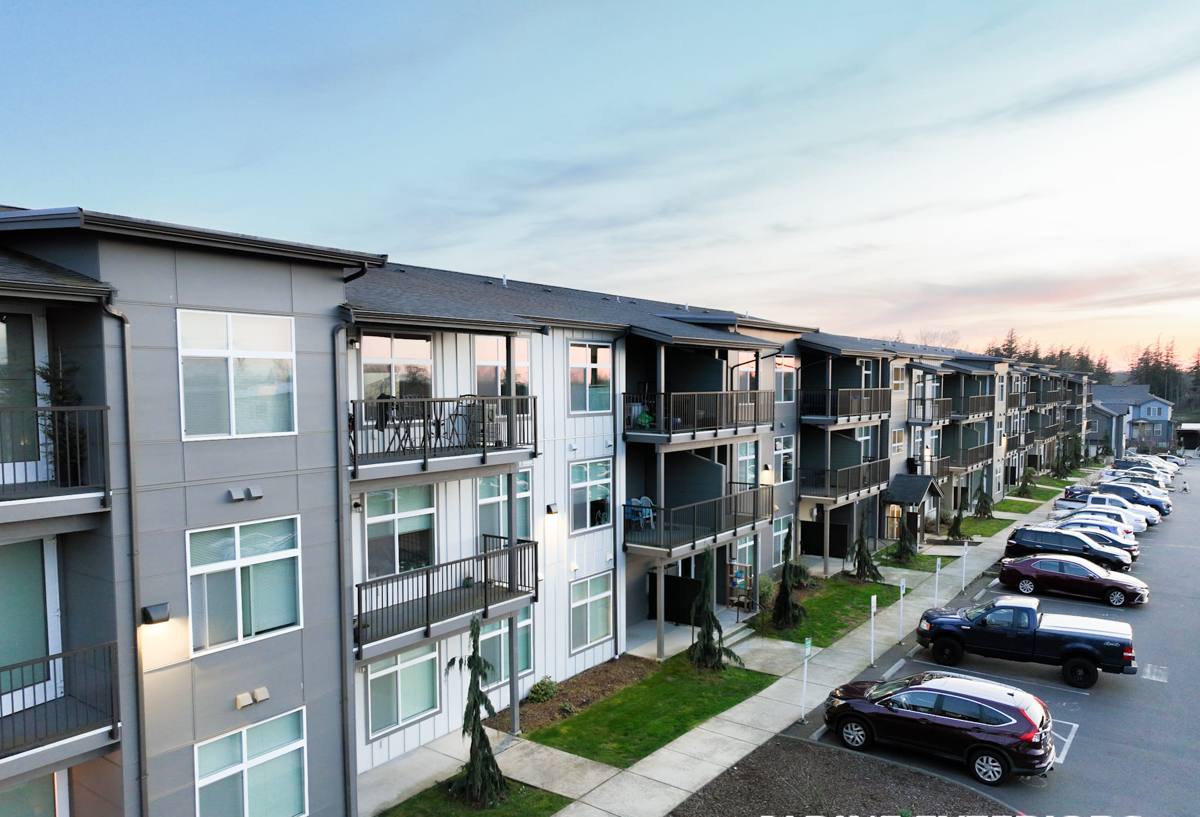
The Three Forces Working Against Your Siding
Salt Air and Fastener Corrosion
Airborne salt doesn't just affect metal that's directly exposed to the water — it travels on the wind and settles on anything facing the bay, including siding, trim, and the fasteners holding them on. Over time it accelerates corrosion in lower-grade nails and staples, which loosens boards, opens gaps at seams, and lets water get behind the siding where it can do real damage. A repair that reuses corroded fasteners or ignores the cause of the loosening is a repair that will need to be redone.
Driving Rain and Wind-Driven Moisture
Rain that falls straight down is relatively easy for siding to shed. Rain that's being pushed sideways by wind off the water is a different problem — it finds its way into butt joints, around window and door trim, and under poorly lapped boards. Once moisture gets behind siding, it can sit there for weeks in our climate, feeding rot in the sheathing and framing long before anything looks wrong from the street.
Moss, Shade, and Extended Dampness
Birch Bay's tree cover and marine layer mean a lot of north- and west-facing walls stay shaded and damp for extended periods, especially through the fall and winter. Moss and algae take hold on siding that doesn't dry out quickly, and once established they hold moisture against the surface almost constantly. On wood-based products, that's a direct path to rot. Even on more moisture-resistant materials, heavy moss buildup traps debris, blocks drainage at laps, and accelerates finish wear.
Signs a Birch Bay Home May Need Siding Repair
Most siding failures don't announce themselves with an obvious hole. They show up as small, easy-to-miss signals first. Worth checking for:
- Soft or spongy spots when you press on siding, especially near the bottom courses or below windows
- Visible gaps opening up at butt joints or where boards meet trim
- Streaking, dark staining, or persistent green/black growth that doesn't clean off easily
- Paint or finish that's bubbling, peeling, or failing in patches rather than evenly across a wall
- Nail heads that look rusted, are backing out, or leave rust streaks below them
- Warping, cupping, or visible separation between boards
- A musty smell near exterior walls inside the home, which often points to moisture already behind the siding
Any one of these on its own might be minor. Two or three together, especially on a wall that faces the water or stays shaded most of the day, usually means it's time for a real inspection rather than a wait-and-see approach.
What a Correct Siding Repair Actually Involves
A lot of "siding repair" in this region amounts to caulking a gap or nailing a loose board back down. That approach treats the symptom and leaves the cause in place. A repair worth doing addresses three things every time: what let the damage happen, how far it's actually spread, and whether the materials going back up are suited to the wall they're on.
That means opening up the area enough to see the sheathing and framing behind the visible damage, not just the section that looks bad from outside. Rot and moisture rarely stay confined to the exact spot where the siding failed — water travels, and by the time a board looks soft, the framing underneath may already be affected. Skipping that step is the single most common reason a "repaired" section fails again within a year or two.
It also means matching the repair to the cause. A section damaged by wind-driven rain at a trim joint needs correct flashing and lapping, not just new caulk. A section that failed from prolonged moss coverage needs the underlying moisture dealt with, and often some attention to airflow or shading, or the same growth returns within a season.
Repair or Replace? How We Help You Decide
Not every damaged section needs full replacement, and not every damaged section should just be patched. The right call depends on how contained the damage is and what's happening behind the siding.
| Factor | Points Toward Repair | Points Toward Replacement |
|---|---|---|
| Extent of damage | Isolated to one or two boards or a single wall section | Spread across multiple walls or recurring in the same spots |
| Sheathing condition | Dry, solid framing found once opened up | Soft sheathing, rot, or staining found behind the siding |
| Age of existing siding | Newer siding, well within its expected service life | Siding near or past the manufacturer's expected lifespan |
| Root cause | A fixable, one-time issue (a failed flashing detail, one bad joint) | A systemic issue affecting the whole installation |
| Cost pattern | Repair cost is a small fraction of full replacement | Repeated repairs are adding up close to replacement cost |
We'll always tell you honestly which side of that table your home falls on. If a targeted repair will hold up given what Birch Bay's climate throws at that wall, that's what we recommend. If the damage points to a broader problem, we'll explain why and what your options are — without pushing a full replacement a home doesn't need yet.
Our Siding Repair Process
- Inspection. We look at the visible damage and the areas most likely to be affected around it — corners, joints, anywhere water tends to collect — not just the spot you called about.
- Opening it up. We remove enough siding to see the sheathing, framing, and any existing moisture barrier behind the damage, so we're repairing based on what's actually there rather than a guess.
- Addressing the cause. Corroded fasteners get replaced with corrosion-resistant hardware, failed flashing gets corrected, and any rot in the substrate gets properly addressed before new siding goes back on.
- Matching materials. Repairs are made with James Hardie fiber cement, factory-matched in profile and finish where possible so the repaired section reads as part of the wall, not a patch.
- Correct installation. Proper lapping, fastening, and clearances go back in per manufacturer specification — the same standard we install to on full jobs, not a shortcut because it's "just a repair."
Why We Repair With James Hardie Fiber Cement
We install James Hardie fiber cement siding exclusively, and that applies to repair work as much as full siding jobs. We don't carry vinyl, LP SmartSide, Cemplank, Allura, or unfinished wood siding, and we won't patch a damaged section with a mismatched product just because it's on hand. Fiber cement is non-combustible, holds up to sustained moisture exposure far better than wood-based siding, and Hardie's ColorPlus factory finish is engineered to resist the fading and moisture penetration that plain field-applied paint struggles with in a marine climate.
Hardie's HZ5 product line is specifically engineered for regions with heavier moisture exposure, which describes Birch Bay well. For repair work, that matters because a patch is only as good as its weakest material — mixing a moisture-sensitive product into a wall that's already shown it can't handle local conditions just sets up the next repair call. Hardie also backs its product with a strong transferable warranty, which carries forward on repaired sections done to spec, giving you documentation that matters if you sell the home down the road.
Why Local Experience in Birch Bay Matters
A repair crew that mostly works drier, more sheltered areas of Whatcom County will diagnose Birch Bay damage the same way they diagnose damage anywhere else — and that's exactly how a repair ends up failing again within a season. Salt-driven fastener corrosion, wind-driven rain at trim joints, and moss-fed rot on shaded walls aren't hypothetical concerns here; they're the normal, recurring reasons we get called out to this neighborhood specifically.
Working this area regularly means we already know which details tend to fail first, which walls take the worst of the weather off the water, and what a repair actually needs to hold up through a full Pacific Northwest wet season rather than just look fixed for a few months. That's the difference between a repair that's genuinely done and one that's just deferred.
Get an Honest Look at Your Siding
If you're seeing soft spots, gaps, staining, or persistent moss on your Birch Bay home's siding, it's worth having someone look at it before the damage spreads further behind the wall. We'll give you a straight assessment of what's actually going on, what it will take to fix it correctly, and whether repair or replacement makes more sense for your situation — no pressure, no upsell. Request a free estimate using the form below and we'll take it from there.