 Semiahmoo Siding
 Bellingham Roofs Take a Beating in a Way Most Roofs Never Have To
A roof in Bellingham isn't just shedding rain a few months a year — it's dealing with near-constant moisture, salt-laden air rolling in off the Strait of Georgia and Bellingham Bay, and a moss season that can run eight months or longer in a shaded, north-facing yard. None of that is dramatic on its own. It's the accumulation that causes problems: a little granule loss here, a little trapped moisture there, a flashing seam that was fine in July and is letting water in by November. Roof repair in this area isn't about chasing one big storm event most of the time. It's about staying ahead of slow, steady wear before it turns into a ceiling stain or a rotted deck.
We work on roofs throughout Whatcom County, and Bellingham's mix of older homes with mature tree cover and newer construction on open lots means we see the full range of what this climate does to a roof — from moss bridging shingle tabs to corrosion on old metal flashing. A repair that's done right accounts for what's actually happening in this environment, not just what's visible from the ground.
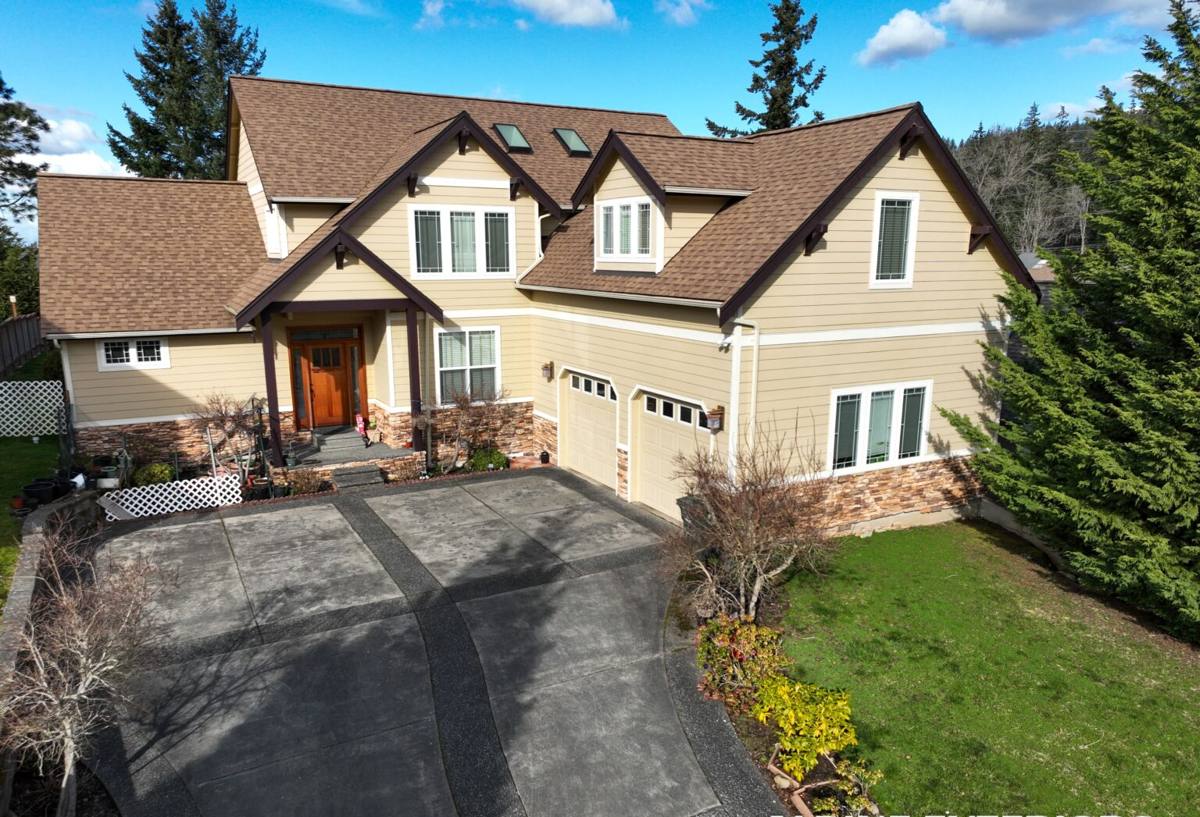
Signs Your Roof Needs Repair, Not Just a Cleaning
Homeowners often call us thinking they need a moss treatment when the real issue is underneath the moss, or they assume a small ceiling stain will dry out on its own. Here's what tends to separate a minor issue from one that needs prompt attention:
- Granules collecting in gutters or at downspout outlets — a sign the shingle surface is wearing thin
- Dark streaking or a spongy feel underfoot in one section of the roof (often moisture already in the decking)
- Visible daylight or gaps around chimney flashing, vent pipes, or skylight curbs
- Moss growth thick enough that you can't see the shingle surface underneath it
- Ceiling stains, especially ones that reappear after rain but were "fixed" with paint
- Curling, cracked, or missing shingles, particularly on the roof faces that get the most weather
- Rust streaks below metal flashing or exposed fasteners
- Sagging in the roofline or soft spots near valleys and eaves
Any one of these is worth a look. Several at once usually means water has already found a way past the surface layer, and the repair needs to address the cause, not just patch the symptom.
What's Actually Wearing Down Roofs Here
Salt Air
Being close to the water means airborne salt settles on exposed metal — flashing, fasteners, gutter hardware, vent caps — and speeds up corrosion compared to homes further inland. Once a fastener or flashing edge starts rusting, it stops sealing the way it should, and that's exactly the kind of small failure that lets water travel under shingles during a hard rain.
Driving Rain
Storms coming off the water don't fall straight down — wind pushes rain sideways and up under shingle tabs, laps, and flashing edges that would stay dry in a calmer climate. Roofs here need every seam, lap, and penetration sealed with that wind-driven pattern in mind, not just standard vertical drainage.
Moss and Prolonged Dampness
Shade, humidity, and mild temperatures are ideal moss conditions, and moss doesn't just sit on top of a roof — its root structure lifts shingle edges and holds moisture directly against the surface, which accelerates rot in the decking below. A roof that stays damp for weeks at a stretch simply ages faster than one that dries out between rains.
What a Correct Roof Repair Actually Involves
Finding the Real Source, Not the Visible Symptom
Water doesn't always show up directly below where it entered — it can travel along rafters or sheathing before dripping somewhere inside the attic or ceiling. A repair that just patches the spot below a stain, without tracing the path upstream, tends to fail again within a season or two.
Matching Materials, Not Just Covering the Gap
Shingle color, profile, and granule blend change over time, and a patch using mismatched material stands out and can behave differently in weather than the surrounding roof. We match as closely as the existing roof allows, and when a close match isn't available, we're upfront about that before starting.
Flashing and Underlayment Get Priority
Most leaks in this region trace back to flashing — around chimneys, skylights, vent stacks, and roof-to-wall transitions — rather than shingle failure in the open field of the roof. A proper repair replaces compromised flashing and underlayment in that area rather than sealing over it, since sealant alone is a short-term fix on a long-term problem.
Addressing Moss and Moisture, Not Just the Leak
If moss contributed to the damage, removing it and treating the area is part of the repair, not a separate upsell. Leaving moss in place after a repair just sets up the same failure again.
Roof Repair Cost Factors in This Area
Every roof and every leak is different, so we won't quote a number without seeing the roof, but these are the factors that most often move a repair estimate up or down:
| Factor | How It Affects the Job |
|---|---|
| Roof pitch and access | Steeper roofs and higher stories require more safety setup and time |
| Extent of decking damage | Surface-level fixes cost far less than replacing rotted sheathing underneath |
| Material match availability | Older or discontinued shingle lines can require sourcing time or a larger patch area |
| Flashing scope | A single vent boot is a small job; a full chimney or skylight flashing rebuild is larger |
| Moss and debris removal | Heavy moss buildup adds cleaning time before the repair itself can start |
| Roof age and material type | Older composition roofs may need broader repair to blend safely with brittle surrounding shingles |
Small, contained repairs — a section of flashing, a handful of shingles, a resealed vent boot — are typically the most affordable category of roof work. Repairs involving decking replacement or a full flashing rebuild cost more because they involve more labor and material, but they're also what actually stops water from coming back.
How We Approach a Repair Visit
- Inspection first. We look at the roof surface, attic (when accessible), flashing points, and gutter condition before recommending anything.
- Honest scope. We tell you what's actually wrong, what's optional, and what can wait — not everything found needs to be fixed today.
- Written estimate. You get a clear description of the work and cost range before anything is scheduled.
- Repair performed. Work is done with materials matched to your roof and flashing details built for this climate's wind-driven rain.
- Cleanup and walkthrough. We clear debris and show you what was done and why.
Repair or Replace? A Straight Answer
Most roofs with isolated leaks, a handful of damaged shingles, or aging flashing are good repair candidates — there's no reason to replace an otherwise sound roof over a contained problem. Replacement becomes the more honest recommendation when the roof is widely worn (granule loss across most of the surface, multiple leak points, or decking damage in several areas), because at that point repeated repairs cost more over a few years than one replacement, and a patched-together older roof rarely holds up as well through a full Whatcom County winter. We'll always tell you which category your roof falls into and explain why, rather than defaulting to the bigger job.
Why Hiring a Crew That Already Works in Bellingham Matters
A roof repair here isn't the same job as a roof repair in a dry inland climate, and it shows in the details — how flashing laps are oriented against prevailing wind, how much moss buildup is normal versus a warning sign, and how salt exposure changes which fasteners and metals hold up over time. A crew that works this area regularly has already seen how local roofs age and knows where problems tend to start before they're visible from the ground. That familiarity means fewer surprises, a more accurate first estimate, and a repair built for the weather your roof will actually face for the next twenty or thirty years, not a generic fix.
Simple Maintenance That Extends the Life of a Repair
Keep Gutters Clear
Clogged gutters back water up under the roof edge, which undoes the benefit of even a well-done repair. Checking gutters after major storms and before winter is one of the cheapest things a homeowner can do here.
Stay Ahead of Moss
Removing moss while it's still light, rather than waiting until it's thick and rooted, protects both the shingles and any recent repair work. Shaded, north-facing roof sections need more frequent attention than sun-exposed ones.
Watch for Recurring Stains
If a ceiling stain shows up again after a repair, don't assume it's normal — it usually means the source wasn't fully addressed or a new issue has developed nearby. Catching that early keeps a small callback from becoming a bigger job.
If you're seeing any of the warning signs above, or just want an honest opinion on what your roof actually needs, we're happy to take a look. Fill out the form below for a free, no-pressure estimate on your Bellingham roof repair.