 Semiahmoo Siding
 New Construction Is a Different Job Than a Window Replacement
Homeowners sometimes assume window work is window work. It isn't. Replacing an old window means working inside an opening that's already flashed, trimmed, and weather-tight — you're matching what's there. New construction is the opposite: there is no existing water management to lean on. The rough opening, the flashing sequence, and the seal between the window and the wall assembly all get built from scratch, and whatever we do at that stage is what the house lives with for the next 20-plus years.
On a new build in Bellingham, that first installation is the whole ballgame. There's no siding to pull back and fix a bad flashing detail five years later without real demolition. Get it right once, or pay for it later in rot repair, mold remediation, or a full re-side.
Working From the Rough Opening Out
New-construction windows are installed with a nailing flange (or "nail fin") set directly to the sheathing, then integrated into the weather-resistive barrier (WRB) in the correct shingle-lap order — flashing tape or membrane at the sill first, then the sides, then the head, each layer lapping over the one below it so water sheds outward and down, never in.
One Shot to Get the Flashing Right
Because the siding and trim go on after the windows, the flashing details are permanently buried once the job is finished. That's why we treat every rough opening the same way regardless of how small the window is — a bathroom window gets the same sill pan and flashing discipline as a big living room unit. Skipping a step doesn't show up as a problem for months or years, and by then it's a siding tear-off to fix.
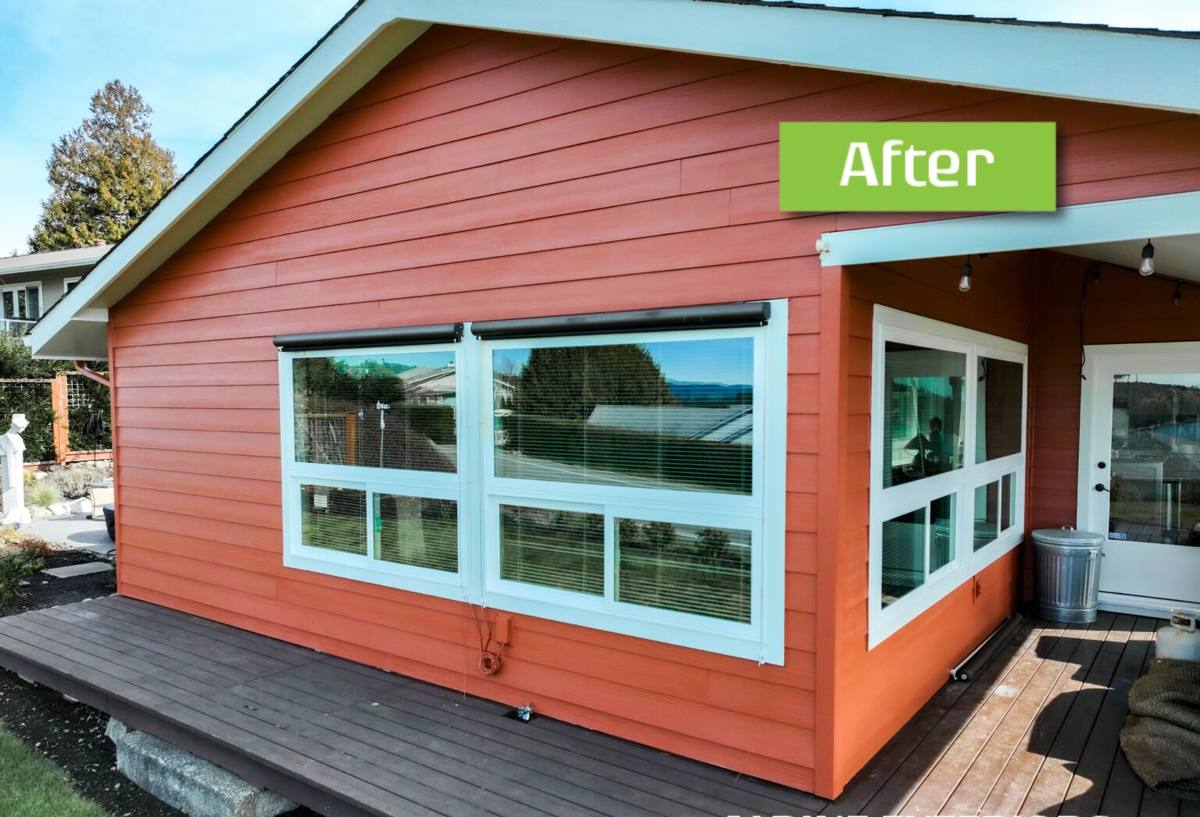
What Bellingham's Climate Actually Demands From a New Window
Bellingham sits in a stretch of Whatcom County where three things wear on a house year-round: salt-laden air off the water, sustained wind-driven rain, and a long stretch of damp, low-sun months that keep moss and mildew active on north- and west-facing walls far longer than in drier climates. None of that is exotic — it's just persistent, and persistent is what breaks corners cut during construction.
- Salt air accelerates corrosion on exposed fasteners, hinges, and cheap hardware — window components need finishes and metals rated for coastal exposure, not just standard interior-grade hardware.
- Driving rain off the water pushes water sideways into wall assemblies under wind loads that a purely vertical rain doesn't create — flashing laps and sealant joints have to hold under pressure, not just gravity.
- Moss and moisture season runs long here. Any spot where water can pool — a poorly pitched sill, a missing weep path — stays wet longer each year than it would in a drier region, and wet wood plus organic growth is how rot starts.
A window that's correctly flashed and sealed shrugs all of this off. One that's rushed or installed with shortcuts will show it — usually as staining, soft trim, or interior sill damage within a few winters.
Choosing the Right Window Assembly for New Construction
Frame material matters more in a coastal, wet climate than in a mild inland one, because it affects how the window handles years of moisture cycling and salt exposure, not just how it looks on day one.
Frame Material Trade-Offs
| Frame Type | Moisture Behavior | Maintenance | Best Fit |
|---|---|---|---|
| Vinyl | Won't rot; seams need proper welding to stay watertight | Low — occasional cleaning | Most budget-conscious new builds |
| Fiberglass | Dimensionally stable, resists warping in temperature/humidity swings | Low | Larger openings, exposed elevations |
| Wood-clad | Interior wood needs a sound exterior clad seal to stay protected long-term | Moderate to higher | Homeowners prioritizing interior wood look |
| Aluminum | Conducts cold and can promote interior condensation in wet climates | Low | Limited use — mostly commercial or specific architectural needs |
For most Bellingham new-construction projects, we steer clients toward vinyl or fiberglass on exposed, weather-facing walls simply because they hold up to salt and moisture cycling with the least long-term maintenance burden. We'll still install wood-clad or other options when that's the look a homeowner wants — we just make sure the exterior seal detail is done properly so the wood is genuinely protected, not just cosmetically clad.
Glass Packages Worth Paying For Here
Double-pane, Low-E glass with argon fill is the practical baseline for this climate — it manages heat loss through our long gray winters and keeps interior condensation down, which matters when humidity is already high outside. Triple-pane adds cost and weight for a modest additional performance gain; we'll talk through whether it's worth it for a given elevation or room rather than upselling it across the board.
Flashing and Water Management: Where Jobs Actually Fail or Succeed
Every window failure we've been called to fix traces back to water management, not the window unit itself. The window is usually fine — the flashing around it wasn't.
Sill Pan Flashing
A sloped, sealed sill pan under the window is non-negotiable on new construction. It's the last line of defense if any water does get past the window itself, directing it back out instead of letting it sit against the sheathing.
Head Flashing and Drip Caps
Above the window, flashing needs to divert water around the opening and out past the siding line below — not just sit flat and rely on caulk. Caulk is a backup seal, not a primary water management strategy, especially under driving rain conditions.
Integrating With the WRB
The window flashing has to shingle-lap correctly into the house wrap or building paper — sides over the sill flashing, head flashing over the sides. Get the order wrong and you've built a funnel instead of a shield.
Our New-Construction Window Process
- Plan review — we look at window schedules, elevations, and rough opening sizes before the walls are even framed, catching sizing or spec issues early.
- Rough opening check — verify openings are square, plumb, and sized correctly before any window goes in; a bad opening gets fixed now, not worked around later.
- Sill pan and flashing install — sloped sill pan, proper flashing tape sequence, integrated with the WRB.
- Window set and shim — window is leveled, plumbed, and squared, then fastened per manufacturer spec (not just "nailed until it feels tight").
- Insulation and air-sealing — low-expansion foam or backer rod around the frame to stop air and moisture infiltration without bowing the frame.
- Exterior trim and final flashing — head flashing, trim, and integration with the siding plan that follows.
- Final walk-through — operation check on every window, seal check, and a review with the builder or homeowner before we move on.
Coordinating With Builders, Framers, and Siding Crews
New-construction windows don't get installed in isolation — they sit in the sequence between framing, the WRB, and siding. We coordinate directly with general contractors and framers on timing so windows go in once openings are truly ready, and we hand off clean, properly flashed openings to whoever installs the siding next, whether that's us or another crew. Miscommunication at these handoff points is where a lot of new-build water problems start, so we treat that coordination as part of the job, not an afterthought.
Mistakes We See on New Builds in This Area
- Sill flashing skipped or replaced with caulk alone
- Flashing lapped in the wrong order, directing water inward instead of out
- Openings that are out of square, forcing the window frame to compensate and stressing seals
- Standard-grade hardware and fasteners used on salt-exposed elevations, leading to early corrosion
- Foam or insulation packed too tightly around the frame, bowing it out of square after install
- No coordination between window and siding trades, leaving gaps in the water management plan
Cost Factors for New-Construction Window Installation
| Factor | Why It Affects Cost |
|---|---|
| Frame material | Vinyl is generally the most economical; fiberglass and wood-clad cost more upfront |
| Number and size of openings | More windows and larger units mean more labor and material |
| Glass package | Low-E/argon double-pane vs. triple-pane changes unit cost per window |
| Elevation exposure | Water- and wind-facing walls may warrant upgraded flashing details or hardware |
| Site access and timing | Coordinating around framing schedules and weather windows affects labor efficiency |
We'll walk through these factors specific to your plans before giving you a number — every new build is a different mix of openings, exposure, and finish goals.
Why It Matters to Hire a Crew That Already Works in Bellingham
A crew that's only worked inland or in drier markets doesn't always carry the same habits around flashing sequence, hardware selection, or sill detailing that this coastline demands — and those habits are exactly what determines whether a new build stays dry for decades or starts showing water stains in year three. Working new construction in and around Bellingham and the rest of Whatcom County day in and day out means we're not guessing at what this climate does to a house — we're building around it as a matter of routine, on every opening, on every job.
If you're planning a new build or have windows going in soon, we'd be glad to walk your plans and openings with you and put together a straightforward, no-pressure estimate — just fill out the form below to get started.