 Semiahmoo Siding
 Siding Repair at Wiser Lake: What This Lake Community Puts Siding Through
Wiser Lake sits inland in Whatcom County, away from the open coastline but still well inside the same wet, marine-influenced climate that shapes exterior work across this part of Washington. Add a body of water right at the edge of the property line and mature tree cover around much of the lake, and you get a specific combination of sustained humidity, shade, and driving rain that keeps siding damp longer than it would be on a typical dry, open lot. That combination is exactly what accelerates the kind of siding problems we get called out to fix: soft trim, failing caulk joints, moss creeping up from the base of a wall, and finish damage that started small and got worse every wet season it went unaddressed.
Siding repair at Wiser Lake isn't a different trade than siding repair anywhere else in the county, but it does reward knowing which failure points show up first on a lake lot and which fixes actually hold up under that kind of sustained moisture exposure. This page covers what actually damages siding around the lake, how to tell a cosmetic issue from a real one, what a correct repair involves, and why we install and repair James Hardie fiber cement exclusively rather than offering a cheaper patch with whatever material happens to be on the truck.
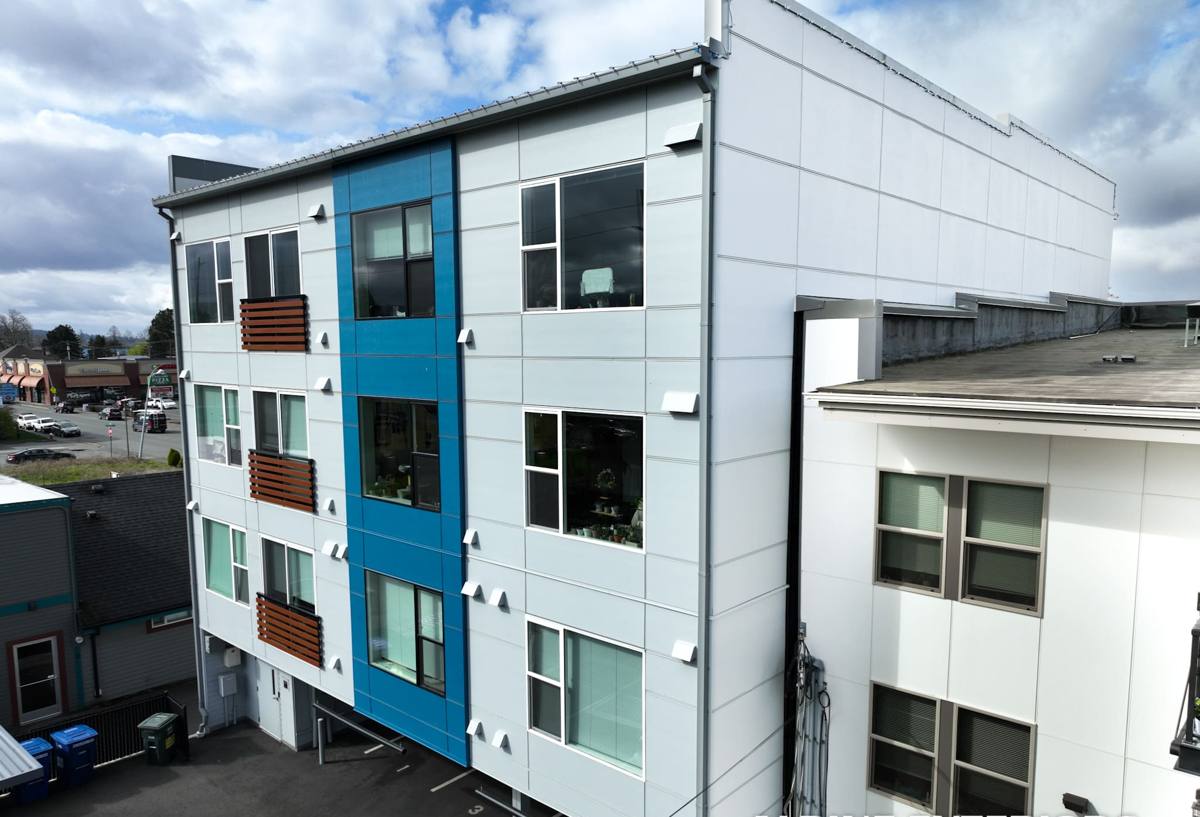
What Actually Damages Siding Around the Lake
Sustained Humidity Off the Water
A lake at the edge of a property keeps the air around a house measurably more humid than a dry inland lot sees, especially on still mornings and through the fall and winter months when evaporation off the water lingers close to the ground. Siding that stays damp longer dries out slower between rain events, and any material with even a little surface porosity or an aging finish absorbs more of that moisture over time. It's a slow, cumulative effect rather than a single storm event, which is part of why it often goes unnoticed until a repair is already overdue.
Driving Rain and Wind-Pushed Moisture
Whatcom County's weather pattern brings sustained, wind-driven rain through fall and winter rather than short, straight-down bursts, and that sideways-moving water finds its way into lap joints, trim seams, and fastener penetrations that a calmer climate would never test. On a lake lot, open water in front of the house can also mean less windbreak than a tightly built neighborhood a few blocks away, so wind-driven rain sometimes hits harder here than the county average would suggest.
A Long Moss and Mildew Season Under Tree Cover
Mild temperatures, steady moisture, and shaded, tree-lined lots are a near-perfect setup for moss and mildew, and a lot of homes around Wiser Lake sit under exactly that kind of tree cover. Moss doesn't just look bad — it holds moisture against the siding surface underneath it, which extends the amount of time that section of wall stays wet after a storm passes. Left alone, that organic growth is one of the more common things we find sitting directly on top of a repair issue that's already underway underneath.
Cosmetic Wear vs. Real Damage
Not every mark on a wall means the same thing, and telling the difference correctly is the actual job of a repair estimate, not just naming a price.
| Symptom | Usually Cosmetic | Often Real Damage |
|---|---|---|
| Faded or chalky paint on an older panel | Yes — finish wear from sun and moisture cycling | Only if the panel is also soft or delaminating |
| Moss or algae streaking on a shaded wall | Cosmetic if the surface underneath is firm | Often — indicates prolonged trapped moisture |
| Cracked or shrinking caulk at joints and trim | Rarely on its own | Usually — an open path for water intrusion |
| Soft, spongy, or bulging siding | No | Yes — moisture damage to the panel or substrate |
| Rust streaking below fasteners or trim | Cosmetic if isolated to the fastener head | Can indicate corroding hardware underneath |
| Gaps opening at butt joints or corner trim | No | Yes — needs resealing or replacement before winter |
Cosmetic wear affects how a wall looks and can usually wait for routine maintenance. Real damage affects how well the wall keeps water out, and the longer it sits, the more of the wall assembly behind the siding it tends to reach.
How We Diagnose Siding Before Recommending a Repair
A repair estimate that's actually worth trusting starts with a real inspection, not a guess from the driveway. On a Wiser Lake home, that typically includes:
- Checking panels near grade and around the lake-facing side of the house first, since those areas usually take the most sustained moisture exposure
- Probing suspect boards or panel edges for softness, which is a more reliable sign of moisture damage than surface appearance alone
- Inspecting caulked joints, butt joints, and trim transitions for cracking, shrinkage, or gaps that are letting water behind the siding
- Looking closely at fastener heads and any exposed metal trim for early corrosion, which shows up faster under sustained humid conditions
- Checking for moss or organic growth that's holding moisture against the wall longer than it would otherwise sit
- Assessing whether water has reached the house wrap or sheathing behind the siding, which changes the scope from a surface repair to something deeper
We walk through what we actually find before recommending a scope of work — what needs attention now, what can be watched, and what's purely cosmetic.
Repair vs. Replace: How That Call Gets Made
A siding problem doesn't automatically mean a full re-side, and it doesn't automatically mean a quick patch will hold either. The honest factors that drive this decision:
- How far the moisture has traveled. Damage isolated to a few panels or a single wall section is usually a straightforward repair. Moisture that's tracked into the house wrap or sheathing across multiple areas often isn't worth chasing panel by panel.
- What the existing siding is made of. Fiber cement in reasonably sound condition is a strong repair candidate. Wood-based or engineered wood siding that's already swelling or delaminating from sustained lake-side moisture is often past the point where a patch is the better value.
- Age and remaining service life. A wall nearing the end of its practical life may only have one or two more repair cycles left before replacement is the more cost-effective path.
- Whether the original installation was done correctly. Some older siding jobs weren't detailed for this kind of sustained humidity in the first place, and repairing those in place without correcting the underlying flashing or drainage just delays the same failure.
We give a straight answer on which category a given repair falls into, including when replacement is genuinely the smarter call, rather than defaulting to whichever job is bigger.
What a Correct James Hardie Repair Involves
We install and repair James Hardie fiber cement exclusively. On a repair, that means working within Hardie's own installation spec rather than treating a fix as a quick patch that only needs to look right from the street.
Matching the ColorPlus Finish
Hardie's ColorPlus finish is baked on at the factory, which gives it a longer service life than field-applied paint but also means an exact color and sheen match on a repair panel takes real attention, especially if the original siding has weathered over several years. We match as closely as the current product line allows and are upfront if an older color has been discontinued, rather than installing a visibly mismatched panel and hoping it blends in.
Correct Fastening and Flashing at the Repair
A repaired section needs the same fastener spacing, fastener type, and flashing detail as new installation — not a shortcut because it's a smaller job. Around a lake lot especially, that means making sure any new flashing correctly laps over the layer below it, so water sheds outward and downward exactly the way it would on a brand-new wall.
Fixing the Cause, Not Just the Symptom
A soft panel or an open joint is a symptom. Trapped moisture from a gap in the house wrap, a poorly lapped seam, or moss holding water against the wall is usually the actual cause. A repair that swaps the visible damage without correcting what let the water in tends to fail again in the same spot, often faster the second time, because the underlying path for water was never closed off.
When the Existing Siding Isn't Hardie
Not every home around Wiser Lake already has James Hardie siding, and we do get called out to look at damage on vinyl, engineered wood, or cedar siding that's showing the kind of moisture wear this climate causes. We'll assess and repair what's reasonable to repair. But if the damage is widespread, or if the underlying product is the kind that struggles with sustained lake-side humidity by nature of how it's built, we'll say so plainly rather than stringing together patches on a product we wouldn't install new. That's the same standard we hold on every job: an honest read on what will actually last, not just what gets us to the next invoice.
Cost Factors for Wiser Lake Siding Repair
| Factor | What Drives Cost | Lake-Specific Consideration |
|---|---|---|
| Extent of damage | Number of panels affected, isolated vs. spread across a wall | Moisture that's tracked further under sustained humidity than expected |
| Substrate condition | Whether house wrap or sheathing needs repair, not just the siding | More likely on lake-facing walls with prolonged moisture exposure |
| Color and material match | Availability of a matching ColorPlus finish and panel profile | Older, weathered siding can be harder to match closely |
| Access and site conditions | Landscaping, tree cover, and grade around the repair area | Tree-shaded lake lots can mean more setup and cleanup around growth |
These are general drivers, not a quote. We inspect the actual wall before putting a real number on the work, since two homes with similar symptoms from the street can need very different scopes once panels come off.
Why Hiring a Crew That Already Works Wiser Lake Matters
A contractor who mostly works dry, open inland lots can still do competent siding repair, but a lake property has patterns that come up more often here than elsewhere in the county — moisture that lingers longer near the water, moss that reestablishes faster under tree cover, and repair details that need to account for humidity most homes a few miles away don't deal with year-round. Working this area regularly means we're not guessing at those patterns or learning them mid-job. We know which walls around a lake lot tend to hold moisture longest, which fastener and flashing choices actually hold up under that exposure, and what an honest repair scope looks like on a property like yours, because we've handled it before.
That experience also means a more accurate first estimate, with less back-and-forth once the work is underway, because the inspection already accounts for how this environment behaves rather than applying a generic checklist built for a drier lot.
Get a Free, No-Pressure Estimate
Whether you're dealing with a specific problem on your Wiser Lake home — a soft panel, cracked caulk, moss creeping up a shaded wall — or just want a straight assessment of where your siding stands, we're glad to take a look and explain what we find plainly, including if the honest answer is that it doesn't need much yet. Reach out using the form below to schedule a free, no-pressure estimate.