 Semiahmoo Siding
 Why Wiser Lake Homes Need Siding Built for This Climate
Wiser Lake sits inland from the water, but it doesn't escape what makes Whatcom County exteriors work harder than siding in drier parts of the state. Wind off the Strait of Georgia and Semiahmoo Bay carries salt-tinged moisture well past the shoreline, and it combines with the driving rain and heavy cloud cover that settle over this part of the county most of the year. Add the shade from mature trees around many Wiser Lake properties and you get long stretches where siding simply doesn't dry out between storms. That's the exact combination that breaks down the wrong siding material years before a homeowner expects to think about replacement.
We install fiber cement siding — specifically James Hardie — for homes in this area because it's engineered for this kind of climate rather than tolerating it. This page covers what that means in practice for a Wiser Lake home: what the local weather actually does to siding over time, what a correct fiber cement installation looks like, and how our process is built around the conditions this neighborhood deals with every winter.
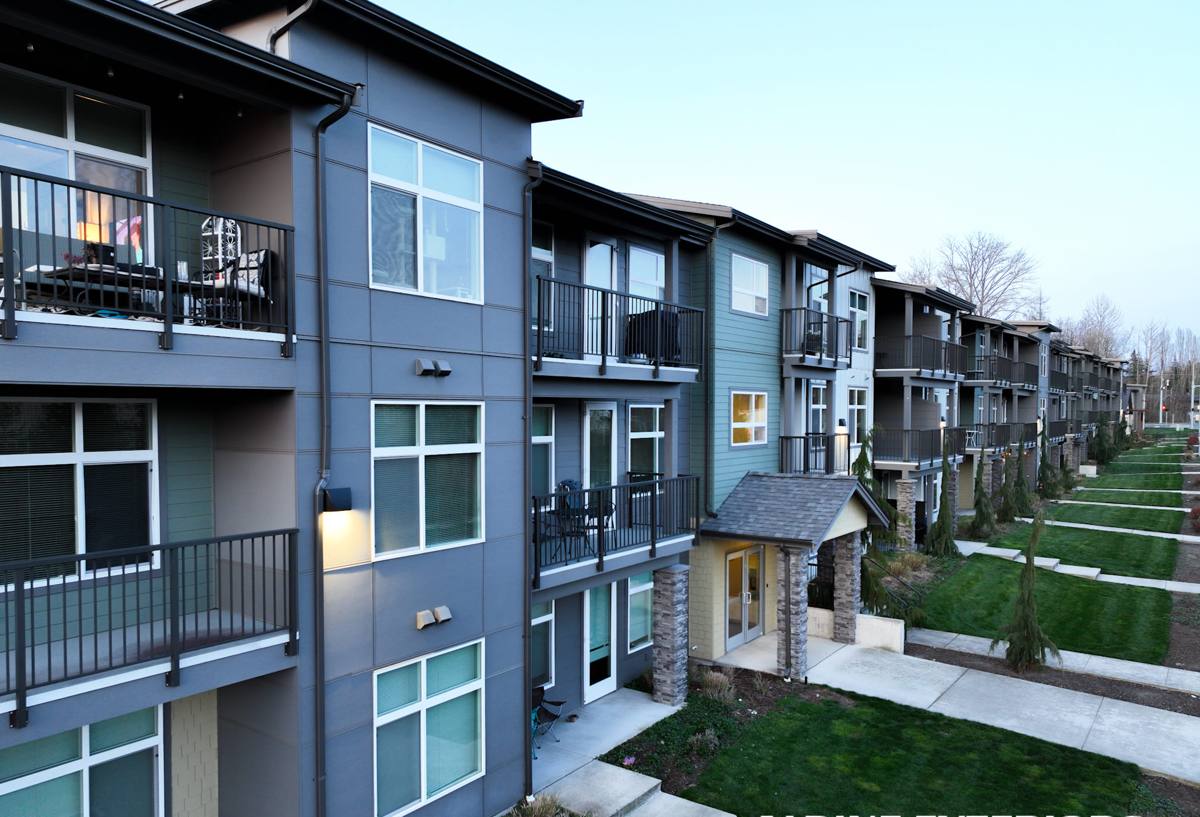
What Salt Air, Driving Rain, and Moss Do to Siding Over Time
None of these three factors is dramatic on its own. Together, over years, they're what separates siding that lasts two decades from siding that needs attention after five or six.
Salt-Influenced Air
Airborne salt doesn't just corrode metal — it's hygroscopic, meaning it pulls moisture out of the air and holds it against whatever surface it settles on. On wood-based siding products, that translates to swelling, softening, and a head start on rot at seams and fastener points. Fiber cement doesn't absorb moisture the same way wood fiber composites do, which is a meaningful advantage for anything within a few miles of Semiahmoo Bay.
Driving, Wind-Blown Rain
Whatcom County rain rarely falls straight down. Wind pushes it sideways into wall assemblies, which means the real test of siding isn't whether it repels water on the face — it's what happens at the laps, the butt joints, and anywhere siding meets trim, windows, or the foundation. Poorly detailed installations fail here first, regardless of what material is on the wall.
A Long Moss and Algae Season
Shade, moisture, and moderate temperatures are exactly what moss and algae need, and this region offers all three for most of the year. Moss doesn't just look bad — where it takes hold on siding, it holds water against the surface and can work into seams and fastener holes over time. Siding with a factory-applied, baked-on finish resists staining and holds up to washing far better than field-painted or unfinished siding.
Why We Only Install James Hardie Fiber Cement Here
We don't install vinyl, LP SmartSide, primed wood siding, cedar, or other fiber cement brands like Allura or Cemplank. That's a deliberate standard, not a lack of options. Vinyl expands, contracts, and can warp with temperature swings, and its seams are a weak point in wind-driven rain. Wood-based and engineered wood products need the exterior coating to stay intact to keep moisture out, and once that finish is compromised, water gets into the substrate and doesn't dry out quickly in this climate. Other fiber cement brands are reasonable products, but we've standardized on James Hardie because of the consistency of the ColorPlus factory finish, the depth of the HardieZone engineering behind their product lines, and the strength of their transferable warranty when a job is installed to their specification.
Fiber cement itself is a mix of cement, sand, and cellulose fibers, pressed and cured into boards or panels. It doesn't rot, it isn't a food source for the moss and algae that thrive in this climate, and it holds paint and factory finish far longer than wood-based alternatives. For a property near Semiahmoo Bay, that's the difference between repainting every five to seven years and going fifteen or more before a homeowner needs to think about a fresh coat.
HardieZone HZ5: Siding Engineered for the Pacific Northwest
James Hardie designs its siding for different climate zones, and most of Washington — including Whatcom County — falls into their HZ5 zone, built specifically for regions with freeze-thaw cycles and sustained damp conditions. HZ5 products are formulated for moisture and temperature performance that a generic, one-size-fits-all siding product isn't tested against. When we quote a Wiser Lake project, we're specifying HZ5-engineered Hardie products, not a version of the siding meant for a drier climate.
What a Correct Fiber Cement Installation Involves
Fiber cement is only as good as the installation behind it. A rushed or under-detailed job can undercut even the best siding material, especially in a climate that gives water every opportunity to find a way in.
Moisture Management Behind the Siding
Correct installation starts with a weather-resistive barrier and, in most cases, a rain screen gap that lets any moisture that does get behind the siding drain and dry rather than sit against the sheathing. This is the part of the job a homeowner never sees once it's finished, and it's also the part that matters most over a 20-30 year timeline.
Fastening and Clearances
Hardie specifies fastener type, spacing, and placement, and it specifies minimum clearances from grade, roof lines, and decks. Skipping these details voids manufacturer warranty coverage and gives wind-driven rain and splash-back a path into the wall assembly — exactly the failure point this climate tends to find.
Joints, Flashing, and Caulking
Every horizontal joint, corner, and penetration is a potential entry point for water. Correct flashing at windows, doors, and roof intersections, along with proper joint treatment between boards, is what keeps driving rain out of the wall rather than behind it.
Factory-Finished ColorPlus vs. Field Painting
ColorPlus finish is baked on at the factory under controlled conditions, which gives it better adhesion and UV resistance than paint applied on-site after installation. We install ColorPlus products whenever a homeowner's color choice allows for it, because it holds up better to this region's moss and algae exposure and reduces how soon repainting becomes necessary.
Our Process for Wiser Lake Projects
- On-site assessment. We look at existing siding condition, moisture damage, trim and flashing details, and anything specific to the property's exposure to wind and shade.
- Product and color selection. We walk through Hardie's plank, panel, and shingle-style options and ColorPlus color choices based on the home's style and the homeowner's preference.
- Written estimate. A clear scope covering removal of old siding, any sheathing repair needed, rain screen and moisture barrier work, and the siding installation itself.
- Installation to manufacturer spec. Fastening, clearances, flashing, and joint treatment all follow James Hardie's published installation requirements, which is what keeps the warranty valid.
- Final walkthrough. We go over the finished work with the homeowner before considering the job complete.
What Influences the Cost of a Fiber Cement Siding Project
Every home is different, and we don't publish blanket per-square-foot pricing because it's rarely accurate once the specifics of a house are factored in. What we can tell homeowners is which factors move the number most.
| Factor | Why It Matters |
|---|---|
| Existing siding removal and disposal | Tear-off adds labor, and any damaged sheathing found underneath needs repair before new siding goes on |
| Home size and wall complexity | More corners, dormers, and trim details mean more cutting, flashing, and labor time |
| Product line (lap, shingle, panel) | Different Hardie profiles and textures carry different material costs |
| ColorPlus vs. primed for field paint | Factory finish costs more upfront but reduces repainting frequency over the siding's life |
| Moisture barrier and rain screen scope | Proper drainage detailing behind the siding is labor-intensive but directly affects longevity in this climate |
| Access and site conditions | Tree cover, slopes, and tight property lines around Wiser Lake can add setup and safety considerations |
Why Hiring a Crew That Already Works Wiser Lake Matters
Siding installation isn't uniform across climates, and a crew that mostly works drier regions of the state can miss details that matter here. A contractor familiar with Whatcom County conditions already knows to prioritize rain screen detailing, understands how moss and shade patterns affect a given lot, and isn't guessing at how much clearance a property needs from grade or landscaping. That local pattern recognition shows up in fewer callbacks and siding that actually performs the way it's supposed to for the length of its warranty.
It also matters for something more basic: accountability. A crew working this area regularly has a reputation to protect with neighbors, referrals, and repeat customers in the same communities — which is a different incentive structure than a traveling crew passing through on a one-off job.
Signs Your Wiser Lake Home May Need New Siding
- Visible moss or algae staining that returns quickly after washing
- Soft spots, bubbling, or warping, especially near the ground or under roof lines
- Paint that's peeling or chalking well ahead of its expected repaint cycle
- Gaps opening up at seams, corners, or trim boards
- Visible water staining on interior walls near exterior corners
- Siding that feels damp or spongy to the touch after a dry stretch
Any one of these on its own isn't necessarily urgent, but a few together usually mean moisture has been getting past the siding for a while.
Maintenance Once James Hardie Siding Is Installed
Fiber cement is low-maintenance compared to wood or vinyl, but "low-maintenance" doesn't mean zero. A periodic rinse to keep moss and pollen from building up, prompt attention to any caulking that starts to crack at joints or trim, and keeping vegetation trimmed back from the wall to allow airflow all go a long way toward getting the full lifespan out of the material — particularly in a climate that gives moss every advantage it needs.
If you're weighing siding options for a home in the Wiser Lake area, we're happy to take a look and walk through what James Hardie siding would involve for your specific property — no pressure, no obligation. Request a free estimate below and we'll schedule a time to assess your home's siding and talk through the details in person.