 Semiahmoo Siding
 Roofing in Sumas Has to Answer to the Weather
Sumas sits in a part of Whatcom County where the weather doesn't take a day off. Homes here deal with a long wet season, driving rain that comes in sideways off the Pacific systems moving through the region, and salt-tinged air that drifts in from the Sound and works its way inland on windy days. Add in the shade from mature trees and the extended stretch of damp, low-sun months, and you've got a near-perfect setup for moss, algae streaking, and slow-motion water damage that most homeowners don't notice until it shows up as a stain on a ceiling.
A roof that's correctly installed for this climate isn't just about the shingles you can see. It's about what's underneath them — the underlayment, the flashing, the ventilation, and the details at every valley, edge, and penetration. Get those wrong and even a good-looking roof will fail early. Get them right and the roof will do its job quietly for decades, which is really all anyone wants from it.
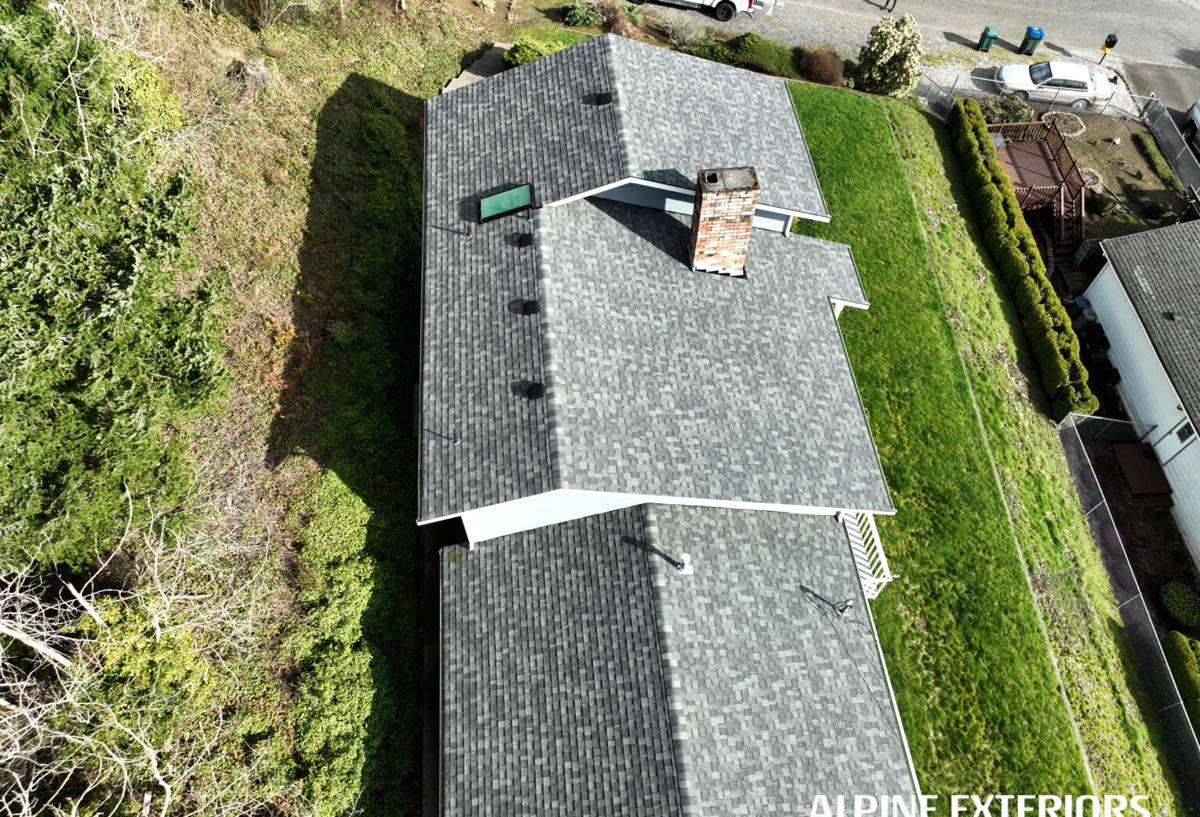
What Local Homes Actually Need From a New Roof
Every roof needs to shed water. But in a climate like ours, a roof needs to do more than that — it needs to keep shedding water even when wind-driven rain is pushing up under the shingle tabs, and it needs to resist the moss and moisture that build up during the long stretches of gray, wet weather between storms. A few things matter more here than they would in a drier climate:
- Wind-driven rain resistance: proper shingle nailing patterns, sealed tabs, and correctly lapped underlayment so water can't work its way backward under the courses.
- Moss and algae resistance: material choice and, where it makes sense, algae-resistant shingle granules, plus roof design details that reduce the shaded, slow-drying areas moss prefers.
- Ventilation that actually balances: intake at the eaves and exhaust at the ridge, sized to move air through the attic so moisture doesn't condense on the underside of the sheathing.
- Ice-and-water shield at vulnerable points: eaves, valleys, and around chimneys and skylights, where standing water and wind-driven rain do the most damage.
- Salt-air-aware metal components: flashing, fasteners, and vents chosen for corrosion resistance rather than the cheapest option, since coastal-influenced air will find and attack weak metal over time.
None of this is exotic. It's standard best practice — but it only works if it's actually followed, and that's where a lot of roofs quietly go wrong.
Why "Just Replacing Shingles" Isn't Enough
A tear-off and reroof is a chance to fix problems that a simple overlay would just bury. If the decking has soft spots, if the ventilation was never right, or if flashing was cut short around a chimney or skylight years ago, none of that gets better by laying new shingles over it. A correct installation means pulling the old roof off, inspecting the deck, replacing anything compromised, and rebuilding the water-management system from the deck up — not just the top layer.
Choosing a Roofing Material for This Climate
There's no single "best" roofing material — there's the right material for your home, your budget, and how much long-term maintenance you're willing to take on. Here's how the common options stack up for a Whatcom County home like yours:
| Material | Moss/Moisture Behavior | Maintenance | Typical Lifespan |
|---|---|---|---|
| Architectural asphalt shingle | Good with algae-resistant granules; needs periodic cleaning in shaded areas | Low to moderate | 25–30+ years |
| Standing seam metal | Sheds water and moss very well due to smooth, steep-shedding surface | Low | 40–50+ years |
| Cedar shake | Attractive but absorbs moisture and is prone to moss and rot without diligent upkeep | High | Varies widely with maintenance |
| Synthetic/composite shingle | Resists moisture well; performance varies by manufacturer | Low | 30–50 years (product dependent) |
We don't push cedar shake as a go-to recommendation for this area. It can look great, but it demands a level of ongoing maintenance — cleaning, treating, monitoring for rot — that most homeowners underestimate, and in a climate this wet, that maintenance gap shows up as decay faster than people expect. That's a trade-off worth knowing before you commit, not after.
Our New Roof Installation Process
The process is the same whether it's a straightforward single-story home or something more complex, but the details matter at every stage:
- On-site inspection and estimate. We look at the existing roof, attic ventilation, decking condition where visible, and any trouble spots — valleys, chimneys, skylights — before we ever quote a number.
- Material selection. We walk through the honest trade-offs between shingle types, colors, and warranty tiers so you're choosing based on facts, not sales pressure.
- Tear-off. Full removal of the old roofing down to the deck, with the deck inspected and any damaged sheathing replaced — not skipped.
- Water management layer. Ice-and-water shield at eaves, valleys, and penetrations; synthetic underlayment across the field for a consistent moisture barrier.
- Flashing and ventilation. New flashing at every wall, chimney, and valley; intake and exhaust ventilation balanced for the attic's size.
- Roofing installation. Shingles, metal panels, or the chosen material installed to manufacturer spec, with attention to nailing pattern and exposure — the details that determine whether a roof holds up to wind-driven rain.
- Cleanup and final walkthrough. Job site cleared, magnetic sweep for stray fasteners, and a walkthrough so you know exactly what was done and what to expect going forward.
Signs a Sumas Home May Need a New Roof
Roofs rarely fail all at once — they give warning signs first. Worth checking for, especially after a hard winter:
- Granules collecting in gutters or at downspouts
- Shingles that are curling, cracking, or missing at the edges
- Heavy moss growth, particularly on north-facing or shaded slopes
- Dark streaking that doesn't wash off with light rain
- Soft spots or noticeable sagging when viewed from the ground
- Daylight visible through the attic roof deck
- Water stains on interior ceilings or upper walls
- A roof that's 20+ years old and has never been fully replaced
Any one of these on its own isn't necessarily an emergency, but a few of them together usually means it's time for a real inspection rather than another patch.
What Affects the Cost of a New Roof
Every roof is priced based on its own specifics, but the main variables are consistent from job to job:
| Factor | Why It Matters |
|---|---|
| Roof size and pitch | More square footage and steeper slopes mean more material, labor, and safety setup |
| Number of layers to remove | Tear-off of multiple old layers takes more time and disposal than a single layer |
| Deck condition | Rotted or soft sheathing needs replacement before new roofing can go down |
| Material choice | Standing seam metal and premium shingles cost more upfront than standard asphalt |
| Roof complexity | Valleys, dormers, skylights, and chimneys all add flashing work and labor time |
| Ventilation upgrades | Adding or correcting intake/exhaust venting is worth doing during a reroof, not after |
We give straightforward, itemized estimates so you can see exactly what's driving the price, rather than a single lump number you have to take on faith.
Why It Matters That We Already Work in This Area
A crew that's worked roofs throughout Whatcom County knows what this climate does to a roof over time — where moss actually builds up first, which details tend to get shortchanged on cheaper installs, and how to sequence a tear-off around a weather forecast that can turn quickly. That familiarity also extends to the practical side: knowing local permitting requirements, working efficiently with the inspection process, and understanding what building codes apply to a full roof replacement in this jurisdiction.
It also means we're not disappearing after the job is done. A local crew has a reason to stand behind its work — we're going to be roofing houses down the street from yours for years to come, and that only works if the roofs we install hold up.
After the Install: Keeping Moss and Moisture at Bay
A correctly installed roof still benefits from basic upkeep in a climate like this. A few habits go a long way:
- Keep gutters clear so water isn't backing up under the roof edge
- Trim back overhanging branches to reduce shade and let the roof dry between rains
- Have moss gently removed rather than pressure-washed, which can strip granules and shorten shingle life
- Schedule a quick visual check after major storms or once a year
None of this replaces professional inspection, but it does reduce the chances of small issues turning into deck damage down the line.
Ready for a Straight Answer About Your Roof
If your roof is showing its age or you just want an honest read on where it stands, we're glad to come take a look. There's no pressure and no upsell script — just a real assessment and a clear estimate for a new roof built to handle what Sumas weather actually throws at it. Fill out the form below to get started.