 Semiahmoo Siding
 Why Siding Repair Looks Different in Blaine and Semiahmoo
Blaine sits right on Semiahmoo Bay, a few minutes from Drayton Harbor and the Semiahmoo spit, which means homes here take on a combination of weather that inland Whatcom County houses simply don't deal with. Salt-laden air moves off the water and settles on exterior surfaces every day, not just during storms. Add in the driving, wind-blown rain that comes through in fall and winter, and a moss season that can stretch from October into May, and you have a climate that is genuinely harder on siding than most of the Pacific Northwest.
That combination changes what "siding repair" means in this area. A repair that would hold up fine in a drier, inland neighborhood can fail within a couple of seasons here if it doesn't account for salt exposure, wind-driven moisture, and constant dampness. We've repaired enough siding around Blaine and Semiahmoo to know which failure patterns show up first, which repairs actually last, and which ones are just a patch on a problem that's going to come back.
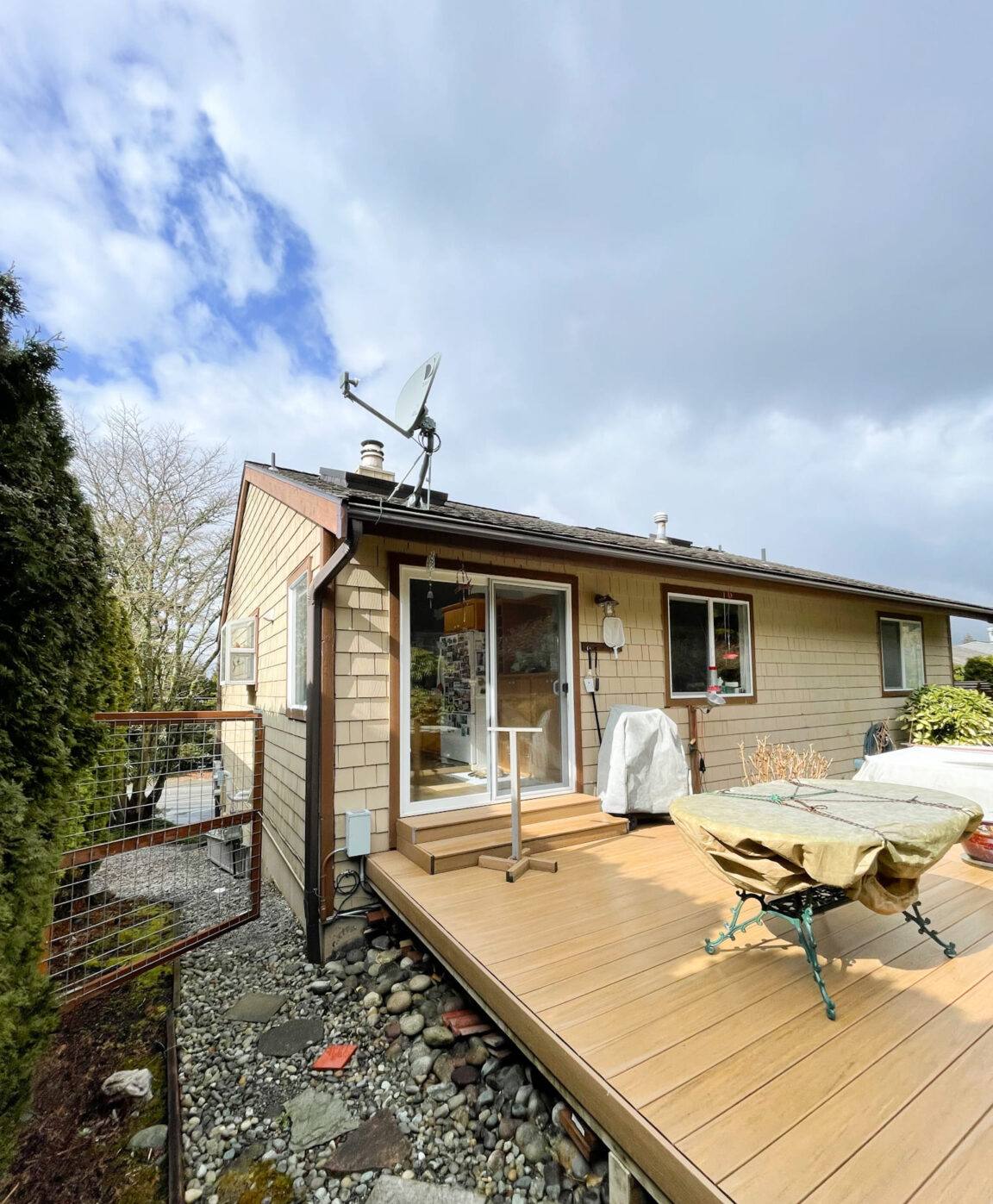
What Salt Air, Rain, and Moss Actually Do to Siding
Each of these three factors attacks siding in a different way, and most of the damage we find is a combination of two or three working together.
Salt Air
Airborne salt is corrosive to fasteners and metal trim, and it accelerates the breakdown of paint films and caulking. On wood-based sidings, salt exposure speeds up surface checking and finish failure. It's a slower, quieter kind of damage than a storm — you often don't notice it until fasteners start bleeding rust streaks or caulk joints go brittle and crack.
Driving Rain
Blaine's storms don't just fall straight down — wind pushes rain sideways into siding, especially on west- and southwest-facing walls. That kind of wind-driven rain finds every gap in flashing, every open seam, and every spot where caulking has failed, and pushes water behind the siding instead of just running off the surface. Once water gets behind the cladding, the damage happens where you can't see it, in the sheathing and framing.
Moss and Sustained Dampness
A long, mild, wet season means siding surfaces stay damp for extended stretches, which is exactly what moss, algae, and mildew need to establish. Moss holds moisture against the siding surface far longer than open air would, which keeps the material wet even between rain events. On absorbent materials, that constant dampness is a slow path to rot, swelling, and finish failure.
How Common Siding Materials Hold Up Locally
| Material | Salt Air Exposure | Wind-Driven Rain | Moss / Sustained Dampness |
|---|---|---|---|
| Cedar / wood siding | Finish breaks down faster; needs frequent refinishing | Vulnerable at seams, laps, and end grain | Absorbs moisture, prone to rot under moss |
| Vinyl siding | Fasteners and trim more exposed to corrosion | Water can travel behind panels through weep gaps | Moss grows on the surface but material itself doesn't rot |
| LP SmartSide (engineered wood) | Edge and cut-panel exposure is a known weak point | Swelling risk where water reaches unsealed edges | Sustained dampness at moss-covered areas can trigger swelling |
| James Hardie fiber cement | Non-combustible, doesn't corrode; factory finish resists salt-driven fading | Engineered profiles and correct flashing shed wind-driven rain well | Doesn't absorb moisture or rot from surface moss |
We work on all of these materials when it comes to repair — most Blaine homes we're called to don't have Hardie siding yet, and a repair job is about fixing what's there correctly, not a sales pitch. But when damage points to a material that's fundamentally struggling with this climate, we'll tell you that plainly rather than patch it and let you find out again next winter.
Signs Your Blaine Home Needs a Siding Repair Now, Not Later
Because a lot of moisture damage in this climate happens behind the siding before it shows up on the surface, waiting for obvious damage usually means the repair got more expensive while you waited. Here's what we tell Blaine homeowners to watch for:
- Soft or spongy spots when you press on siding, especially near the bottom courses or around windows and doors
- Paint or finish that's peeling, bubbling, or checking in a localized area rather than evenly across the wall
- Persistent moss or algae growth that keeps coming back within weeks of cleaning
- Visible gaps, cracks, or separation at seams, corners, and trim joints
- Rust streaking below fasteners or metal flashing
- Warping, buckling, or panels that look wavy rather than flat
- Musty odors or discoloration on interior walls that back up to exterior siding
- Caulking that's cracked, shrunk, or pulled away from joints
Any one of these on its own might be minor. Several showing up in the same area, especially on a wall that faces the water or takes the brunt of prevailing wind, usually means there's moisture intrusion behind the surface that needs to be traced back to its source before it's patched.
What a Correct Siding Repair Actually Involves
A siding repair that's done right is not just cutting out a damaged section and nailing up a new piece. In a climate like Blaine's, a repair that skips the underlying causes tends to fail again within a season or two. Here's what we consider non-negotiable on every repair:
Find the Real Source, Not Just the Symptom
Visible siding damage is often the end result of a flashing failure, a caulk joint that gave out, or a grading issue pushing moisture up against the wall. We trace damage back to its cause before we cut into anything, because replacing a rotted board without fixing what let water in just buys you a repeat repair.
Check What's Behind the Siding
Once damaged siding is removed, we look at the house wrap or building paper, the sheathing, and the framing underneath. If water has been getting behind the siding for a while, there may be damage in those layers that needs to be addressed before new siding goes back on — patching over compromised sheathing just hides the problem.
Match Materials and Profiles Correctly
Repairs need to match the existing siding's profile, reveal, and fastening pattern, or they'll stand out and create new water paths at the transition. On older siding, an exact material match isn't always available, which is part of the conversation we have with you about repair versus a larger replacement.
Flash and Seal Properly
Every repair needs correct flashing at windows, doors, and horizontal joints, and the right sealant applied to the right surfaces. This is the step that gets rushed on quick patch jobs and is exactly what determines whether a repair holds up through a Blaine winter or fails again by spring.
Repair or Replace? How We Make That Call
Not every siding problem needs a full re-side, and we don't push replacement when a proper repair will genuinely hold. But there's a point where repeated repairs cost more over time than doing the job once, correctly.
| Factor | Favors Repair | Favors Replacement |
|---|---|---|
| Extent of damage | Isolated to one or two areas | Spread across multiple walls or elevations |
| Age of existing siding | Relatively young, otherwise sound | Near or past its expected service life |
| Moisture history | One identifiable, now-fixed cause | Recurring intrusion from multiple points |
| Material match availability | Matching material and profile available | Discontinued profile or mismatched material |
| Underlying sheathing condition | Sound once exposed | Widespread rot or compromised wrap |
When a home's siding is failing broadly rather than in one spot, we'll say so honestly. That's also the point where we talk about James Hardie fiber cement, which is the only siding product we install for full re-sides. It's non-combustible, holds its factory-applied ColorPlus finish far longer than field-painted materials in salt air, and is engineered with product lines built for exactly this kind of wet, coastal climate. We won't pressure a Blaine homeowner into replacement over a legitimate repair — but when replacement is the right call, we want you to know what a well-built, climate-appropriate siding system actually looks like.
Our Siding Repair Process
- Inspection. We walk the exterior, note every trouble spot, and check likely water-entry points around windows, doors, and horizontal transitions.
- Diagnosis. We explain what's causing the damage — not just what's visible — so you understand what you're actually paying to fix.
- Written scope. You get a clear explanation of what will be repaired, what will be replaced, and why, before any work starts.
- Removal and inspection behind the siding. Damaged material comes off and we assess the wrap, sheathing, and framing underneath.
- Repair of the underlying issue. Flashing, house wrap, or sheathing damage gets addressed first — always before new siding goes back up.
- Matched, properly flashed repair. New material is installed to match existing profiles, with correct flashing and sealant at every joint.
- Final check. We walk the repair with you and point out what to watch for going forward.
Why It Matters to Hire a Crew That Already Works Blaine and Semiahmoo
Siding repair mistakes in this region are usually mistakes of assumption — a crew used to drier inland conditions treats a Blaine repair like any other job, and misses how much salt exposure and wind-driven rain change the equation. A crew that regularly works this specific stretch of Whatcom County already knows which elevations take the worst weather, how moss re-establishes itself here, and which repair shortcuts simply don't hold up through a winter this wet.
That familiarity shows up in small decisions — which sealant actually performs in salt air, how much lap and flashing detail a given wall really needs, when a "small patch" is actually masking a bigger moisture problem. It's the difference between a repair that lasts and one you're paying for again in two years.
Get a Straight Answer About Your Siding
If you're seeing soft spots, persistent moss, cracked caulking, or peeling finish on your Blaine or Semiahmoo home, it's worth having someone look at it before another wet season sets in. We'll give you a clear, honest assessment of whether it's a repair or something bigger — no pressure, no upsell. Request a free estimate below and we'll take a look.