 Semiahmoo Siding
 Why Siding on the Spit Wears Differently
Homes in Semiahmoo Resort sit in one of the more demanding exposure zones in Whatcom County. The community sits right on the water, which means siding here isn't just dealing with normal Pacific Northwest rain — it's absorbing salt-laden air off the bay, near-constant wind exposure with nothing to break it up, and a long, wet moss season that can run from fall through spring. Siding that would hold up fine ten miles inland can show fatigue years earlier out here.
That combination — salt air, driving rain, and moss — is why we treat siding replacement in this neighborhood differently than a standard job elsewhere in the county. It's not about scare tactics. It's about understanding what the material, the fasteners, the flashing, and the finish actually have to survive, year after year, in this specific microclimate.
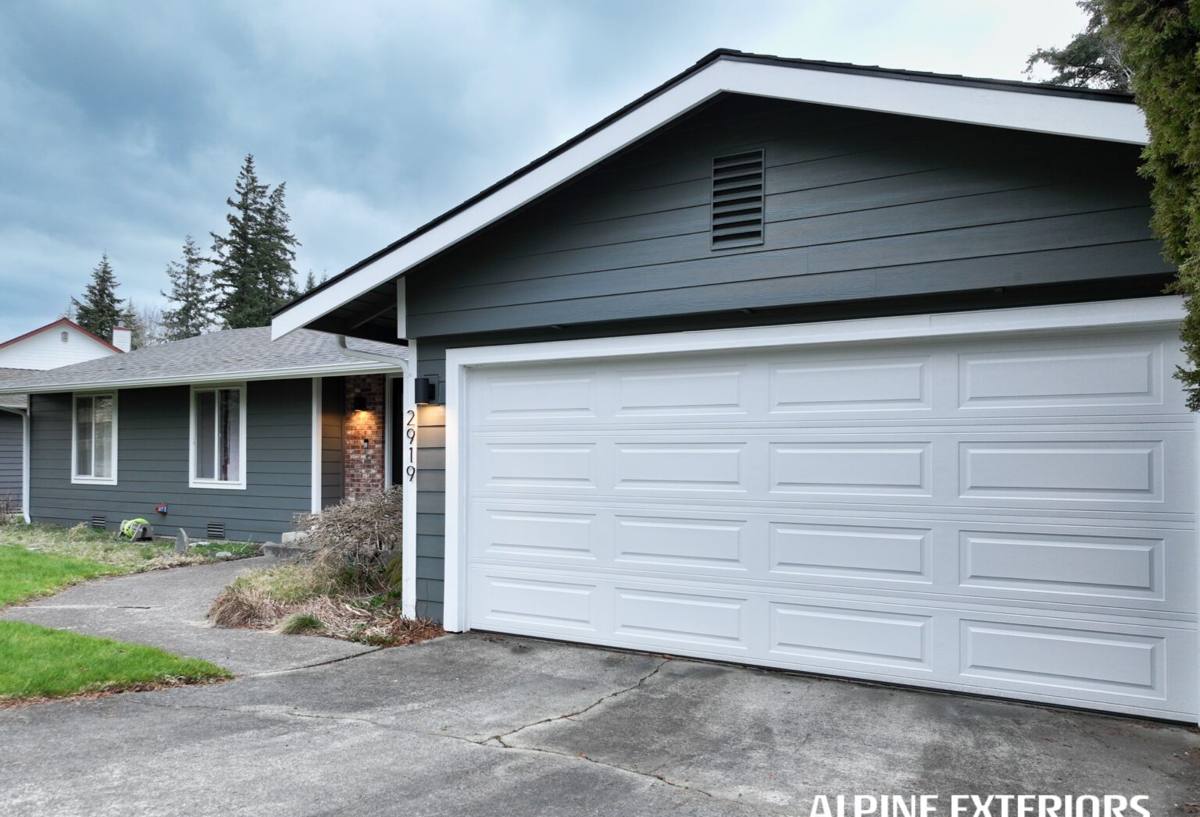
What Salt Air, Driving Rain, and Moss Actually Do to Siding
Salt Air
Airborne salt is corrosive to exposed metal — fasteners, flashing edges, trim connectors — and it accelerates the breakdown of paint films and lower-grade composite products. On a resort-adjacent property, that exposure is constant, not occasional. Materials and hardware that aren't rated for coastal use will show pitting, staining, or premature fastener failure well before a comparable inland home.
Driving Rain
Wind off the water doesn't just bring rain down — it pushes it sideways, into laps, seams, and butt joints that a calmer climate would never test. Any weakness in the water-resistive barrier, flashing details, or caulking gets found fast under wind-driven rain. This is where most "premature" siding failures actually originate: not the siding material itself, but a install detail that couldn't handle sideways water.
Moss and Algae
Semiahmoo's mix of shade, moisture, and mild temperatures creates ideal moss and algae conditions for a large part of the year. Moss holds moisture directly against the siding surface, which is a problem for any material that isn't dimensionally stable or that can absorb water at the substrate level. Left unaddressed, moss growth extends drying time after every rain event and shortens the useful life of paint, caulking, and the siding itself.
What a Correct Siding Replacement Involves Here
A siding replacement done for this exposure has to address more than the visible surface. The details underneath the siding matter as much as the product on top of it. A correct job includes:
- Full removal of old siding and inspection of the sheathing underneath for hidden rot or moisture damage before anything new goes up
- A continuous, properly lapped weather-resistive barrier — not patched around old penetrations
- Corrosion-resistant fasteners and flashing rated for coastal exposure, not standard-grade hardware
- Correct flashing and kick-out details at every roofline, window, and door intersection, since these are the most common points of wind-driven water intrusion
- Proper starter strip, panel gapping, and caulking per manufacturer specification — not "close enough" gaps that trap moisture
- A factory-cured finish system that doesn't depend on field-applied paint to resist moisture and UV
Skipping any one of these on a standard inland home might not show up for years. Skipping them on a home exposed to salt air and driving rain can show up in a single wet season.
Why We Install James Hardie — Not Vinyl, Not Wood, Not Composite Alternatives
We install James Hardie fiber cement siding exclusively. That's a deliberate standard, not a default. In an exposure like Semiahmoo's, the material choice matters more than almost anywhere else in the county, and a few characteristics make Hardie the product we're willing to put our name behind here:
- Fiber cement is dimensionally stable — it doesn't expand, contract, or warp the way wood and some composite products can when they take on and release moisture repeatedly through a wet-dry cycle.
- ColorPlus factory finish is baked on under controlled conditions, which holds up to salt air and UV exposure better than field-applied paint that has to cure in variable outdoor conditions.
- Non-combustible material — a real advantage for coastal and wooded properties alike, and increasingly relevant to insurance conversations.
- HZ5 and HZ10 product engineering specifically addresses moisture and freeze-thaw performance in wetter climate zones, which is the exact stress profile a bay-front property deals with.
- A strong, transferable warranty backed by a manufacturer with decades of Pacific Northwest installation data, not a shorter or narrower warranty tied to a smaller regional player.
We're not saying every other siding product is worthless everywhere — we're saying that for the specific combination of salt exposure, wind-driven rain, and moss that Semiahmoo Resort homes deal with, Hardie fiber cement is the material we trust to perform without a maintenance fight every year.
How Common Siding Materials Hold Up in This Exposure
| Material | Salt Air / Moisture Behavior | Moss & Algae Resistance |
|---|---|---|
| James Hardie fiber cement | Dimensionally stable; factory finish resists salt and UV breakdown | Holds up well; smooth surface options resist buildup, cleans easily |
| Vinyl siding | Can become brittle and fade faster under UV and salt exposure; panels can warp in heat/cold swings | Prone to trapping moss and algae in laps and J-channels |
| Untreated or primed wood/cedar | Absorbs moisture readily; salt air accelerates paint and finish breakdown | High — organic surface is a natural growth medium, needs frequent treatment |
| Lower-grade composite panels | Performance varies widely by product; moisture-sensitive cores can be a risk near water | Depends on surface texture and finish quality |
Our Process for Semiahmoo Resort Projects
- On-site assessment — we walk the exterior, check current siding condition, look for signs of hidden moisture damage, and note wind and moss exposure specific to the lot's orientation.
- Written scope and product selection — we spec the Hardie product line, profile, and finish that fit the home and the exposure, and put the full scope of work in writing before anything starts.
- Removal and substrate inspection — old siding comes off and we inspect sheathing before covering anything back up. Any rot or damage gets addressed, not sealed over.
- Weather barrier and flashing installation — this is the step that determines whether the new siding actually holds up to driving rain, and we don't rush it.
- Siding installation to manufacturer spec — correct fastening, gapping, and caulking, using coastal-rated hardware.
- Final walkthrough — we review the completed work with the homeowner and go over basic care specific to a salt-air, high-moss environment.
Signs Your Semiahmoo Resort Home May Need Siding Replacement
- Visible cracking, buckling, or separation at panel seams and corners
- Soft spots or give when pressing on the siding near ground level or below windows
- Persistent moss or algae staining that returns quickly after cleaning
- Peeling or bubbling paint, especially on wall sections facing the water or prevailing wind
- Rusting or corroded fasteners and trim pieces visible at seams
- Rising interior humidity, musty smell, or staining near exterior walls
- Siding that's more than 20-25 years old and has never been fully replaced or inspected underneath
Any one of these on its own isn't necessarily an emergency. Several together, especially on a wind- or water-facing wall, are worth having looked at before the next wet season.
What Affects the Cost of a Siding Replacement Here
| Factor | Why It Matters |
|---|---|
| Extent of hidden substrate damage | Rot found under old siding has to be repaired before new siding goes on — this is the biggest source of cost variance on older homes |
| Home size and wall complexity | More corners, gables, and window/door penetrations mean more flashing detail and labor time |
| Siding profile and finish selection | Lap width, texture, and ColorPlus finish tier affect material cost |
| Site access and wind exposure during install | Water-facing lots can require more careful scheduling around weather windows |
| Trim and accessory scope | Whether trim, fascia, or soffit work is bundled into the same project |
We give a full written estimate after the on-site assessment — not a ballpark over the phone — because the substrate condition and wall complexity affect price more than square footage alone.
Caring for New Siding in a Coastal Moss Climate
Even the right material benefits from a little seasonal attention here. A yearly rinse to clear moss buildup before it takes hold, keeping gutters clear so water isn't overflowing onto wall sections, and trimming back vegetation that keeps siding shaded and damp all go a long way toward protecting the investment. Hardie's factory finish reduces how much of this is truly necessary compared to field-painted materials, but no siding in this exposure is entirely maintenance-free.
Why Hire a Crew That Already Works in Semiahmoo Resort
A crew that hasn't worked this exposure before will often detail a job the same way they would for an inland property — and that's exactly where wind-driven rain finds the gaps. Working in this community regularly means knowing which walls take the worst of the wind, how much moss pressure to plan for, and which flashing and fastening details actually matter here versus elsewhere in Whatcom County. That local pattern recognition is difficult to replace with a generic install approach, however competent the crew is in general.
If your Semiahmoo Resort home's siding is showing wear, or you're planning ahead of the next wet season, we're happy to take a look and give you a straightforward, no-pressure written estimate — no obligation, just an honest read on what your home actually needs.