 Semiahmoo Siding
 Why Point Roberts Roofs Wear Differently
Point Roberts sits on its own peninsula, surrounded by water on three sides and cut off from the rest of Whatcom County by the international border. That geography is exactly why roofs here take a different kind of beating than roofs a few miles inland. Salt-laden air moves off the water and settles on shingles, flashing, and fasteners day after day. Wind-driven rain off the Strait doesn't just fall straight down — it gets pushed sideways under shingle tabs, around chimney flashing, and into any gap that a drier climate would never test. And because so many Point Roberts lots sit under mature conifers with limited afternoon sun, roofs stay damp longer after every storm, which is exactly what moss needs to take hold.
None of this means a Point Roberts roof is doomed to fail early. It means repairs have to account for conditions that a generic roofing checklist doesn't cover. A patch that would hold up fine in a dry, inland part of Whatcom County can fail within a season out here if it doesn't account for salt exposure and near-constant moisture.
Signs a Point Roberts Roof Needs Repair, Not Just Cleaning
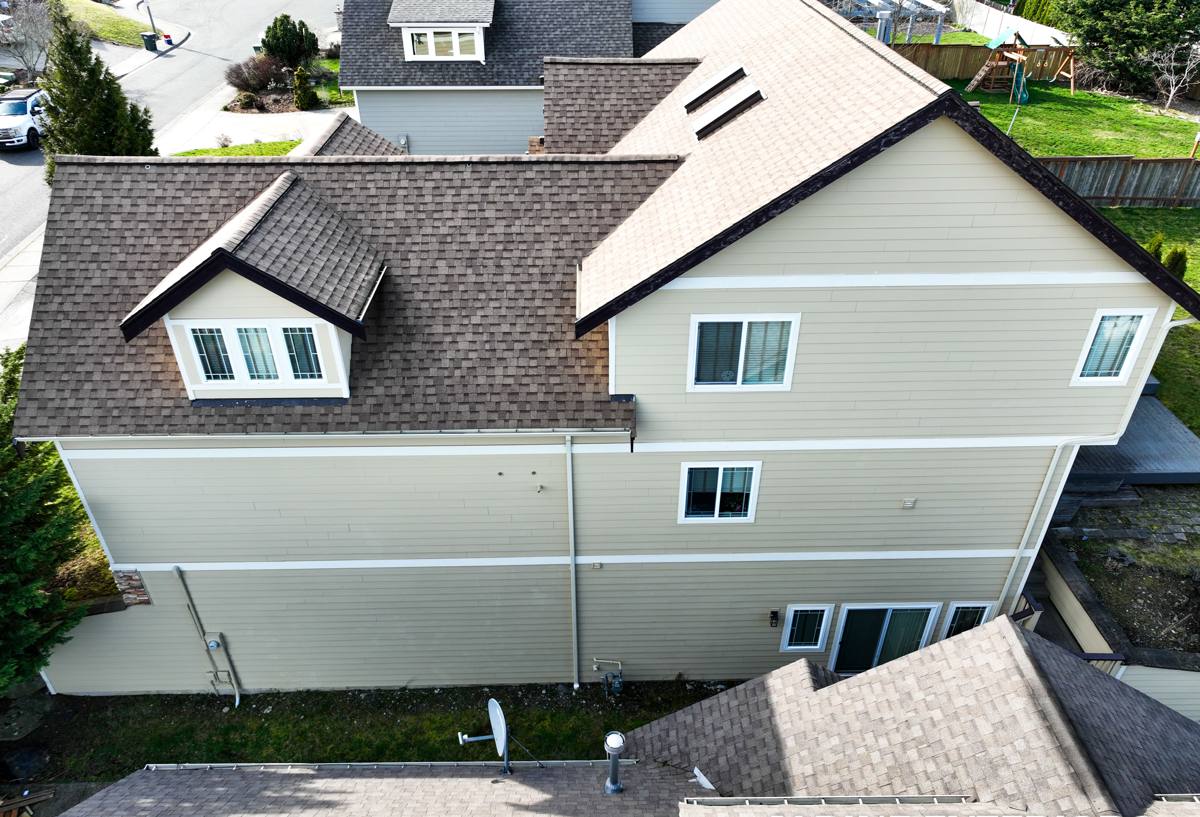
Homeowners often call about a leak, but by the time water shows up inside, the roof has usually been compromised for a while. Catching problems earlier keeps a repair a repair, instead of letting it turn into a full re-roof. Watch for:
- Granules collecting in gutters or at downspout outlets, a sign shingles are wearing thin
- Dark streaking or thick moss mats, especially on north-facing or shaded slopes
- Curling, cupping, or lifted shingle edges along roof edges exposed to prevailing wind
- Rust staining or soft spots around chimney, vent, or skylight flashing
- Daylight visible through the attic roof deck, or damp insulation below a specific spot
- Ceiling stains that appear only during wind-driven storms, not calm rain
- Corroded, loosened, or missing fasteners around metal flashing and roof penetrations
Any one of these on its own might be minor. Two or three together, especially on a roof that's seen several wet winters, usually means it's worth a closer look before the next storm season.
What a Correct Repair Actually Involves
A roof repair that's built for this coastline does more than swap out a few damaged shingles. It addresses the layer underneath, the flashing around it, and the fasteners holding it all together — because in a salt-air, high-rain environment, those are usually where the real failure started.
Underlayment and Decking
Once shingles are pulled back, we check the underlayment and the wood decking beneath it. Damp, delaminating decking or saturated underlayment gets replaced, not just covered over. Skipping this step is the single most common reason a "repair" fails again within a year or two — the new shingles look fine, but the water damage underneath was never actually addressed.
Flashing
Flashing around chimneys, skylights, vent pipes, and roof-to-wall transitions is where wind-driven rain finds its way in. On a repair, we re-bed or replace flashing rather than caulk over gaps, since caulk alone breaks down fast under constant salt exposure and UV.
Fasteners and Hardware
Standard fasteners corrode faster in coastal air. For repair work in Point Roberts, we use corrosion-resistant fasteners and hardware rated for marine or coastal exposure, so the repair doesn't develop new leak points from rusted-out nails a couple of winters down the line.
Moss and Debris Removal
Before any repair is finished, we clear moss, needles, and debris from the repair area and surrounding roof plane. Moss left in place holds moisture against the shingle surface and will undermine even a well-executed repair over time.
The Moss and Long Wet Season Problem
Whatcom County's wet season runs long, and Point Roberts' tree cover and marine humidity stretch it further than many inland neighborhoods experience. Moss isn't just a cosmetic issue — its root structure lifts shingle edges and holds water against the roof surface, which accelerates granule loss and can work moisture into the decking over multiple seasons.
Chemical moss treatments and zinc or copper control strips can slow regrowth, but they work best as maintenance on a roof that's already sound. If moss has been established for years, a repair visit is also the right time to assess how much damage it's already caused underneath, not just to knock the moss back.
Repair or Replacement: How We Help You Decide
Not every damaged roof needs to come off. But a repair only makes sense if the rest of the roof has enough life left to justify it. We walk homeowners through the honest trade-offs rather than defaulting to the bigger job.
| Factor | Repair Is Usually the Right Call | Replacement Is Worth Considering |
|---|---|---|
| Age of roofing material | Well within its expected service life | Near or past manufacturer-rated lifespan |
| Extent of damage | Localized to one area, flashing, or a few shingle runs | Multiple slopes affected, or damage keeps recurring |
| Decking condition | Solid, dry decking under the damaged area | Soft, delaminated, or repeatedly wet decking |
| Moss and granule loss | Surface-level, hasn't compromised the mat | Widespread thinning across most of the roof |
| History of leaks | First or isolated occurrence | Recurring leaks in different spots each season |
We'll always tell you plainly which column your roof falls into, with our reasoning, rather than pushing toward whichever job is bigger.
Materials Suited to a Salt-Air, High-Rain Repair
Product choice matters as much as workmanship on a coastal repair. We favor materials with proven performance in marine exposure over materials that simply look right at install but struggle with the maintenance burden this climate demands. That can mean a synthetic or self-adhered underlayment in vulnerable areas instead of standard felt, corrosion-resistant flashing metals, and fastener coatings rated for coastal use. These choices cost a little more up front but hold up to repeated wetting and salt cycling far better, which matters most in a spot repair that needs to last as long as the surrounding roof.
Our Point Roberts Repair Process
- On-site inspection of the damaged area and a check of the broader roof for related issues, including flashing and moss buildup
- Plain-language explanation of what we found, what's causing it, and whether repair or replacement makes sense
- A written estimate covering scope, materials, and timeline before any work starts
- Removal of damaged shingles, underlayment, or decking as needed, with all failed material replaced rather than covered
- Flashing repair or replacement at chimneys, vents, and roof-to-wall transitions
- Moss and debris clearing in the work area, plus a check of drainage paths and gutters nearby
- Final walkthrough so you can see exactly what was done before we consider the job complete
Why Local Point Roberts Experience Matters
Point Roberts is geographically part of Whatcom County but physically separated from it, accessible only by crossing the international border or by water. That's not a small detail when it comes to roofing repair. A crew unfamiliar with the area can lose a day just navigating border crossings for a return trip on materials, tools, or a follow-up visit. It also means it's worth confirming any lumber, shingles, or fasteners needed are on the truck before that first crossing — running back for a missed item costs real time on this peninsula in a way it wouldn't a few miles inland.
A crew that already works Point Roberts regularly plans around that reality: consolidated trips, materials staged in advance, and scheduling that accounts for weather windows between storms rather than assuming a quick same-day fix is always realistic. That local familiarity, on top of understanding how salt air and moss behave on roofs specific to this peninsula, is what keeps a repair job efficient instead of dragging out over multiple partial visits.
Keeping a Repaired Roof Sound Between Visits
Once a repair is done, a little seasonal attention goes a long way in this climate. Clear moss and debris from valleys and shaded slopes before the wet season sets in, keep gutters and downspouts flowing so water isn't backing up under roof edges, and have flashing points checked after any unusually hard windstorm off the water. Catching a lifted shingle or a loose flashing seam early is a five-minute fix; ignored through another wet season, it's a much bigger repair.
If you're seeing any of the warning signs above, or just want an honest read on how much life is left in your roof, we're happy to take a look. Reach out for a free, no-pressure estimate using the form below, and we'll give you a straight assessment of what your Point Roberts roof actually needs.