 Semiahmoo Siding
 Why Point Roberts Roofs Wear Differently
Point Roberts sits on its own peninsula at the very tip of Whatcom County, surrounded by water on three sides and exposed to weather that inland Semiahmoo-area homes simply don't see as often. A roof here isn't just fighting rain — it's fighting salt-laden air off Boundary Bay and the Strait of Georgia, wind that comes in with nothing to break it, and long stretches of damp shade that keep moss thriving most of the year. Two roofs installed on the same day, one in Point Roberts and one a few miles inland, will not age the same way. That's not a sales pitch — it's just what we see when we're up on these roofs.
A correct roof installation in this area has to account for all of that from the start: material choice, ventilation, flashing, and underlayment all matter more here than in a milder microclimate. Get any one of those wrong and you're not looking at decades of service — you're looking at premature granule loss, hidden rot, or a roof that needs attention again in half the time it should.
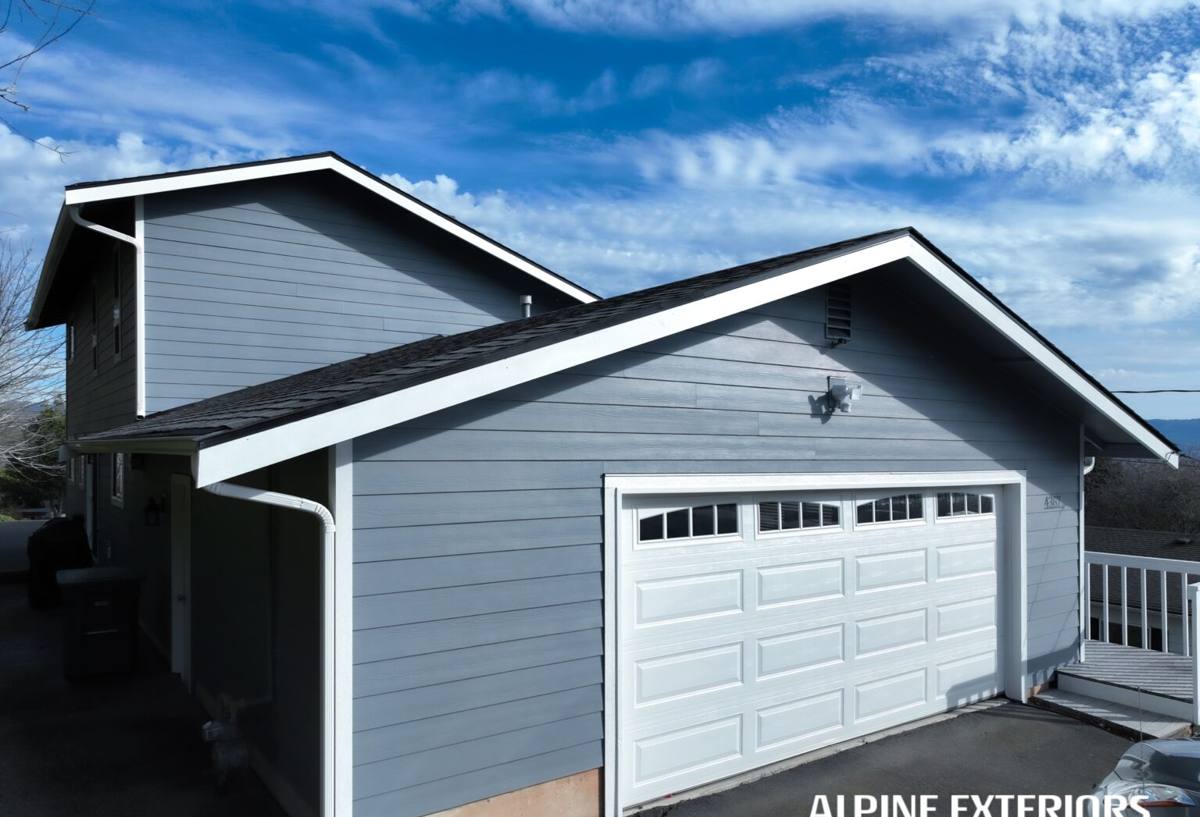
What Salt Air, Driving Rain, and Moss Actually Do to a Roof
Salt Air and Wind-Driven Rain
Salt in the air accelerates corrosion on anything metal — flashing, fasteners, gutters, vents, and drip edge. Cheaper or mismatched metal components can start showing rust streaks and pitting years before they should. Wind-driven rain is the other half of the problem: instead of falling straight down, rain gets pushed sideways and up under shingle edges, around vents, and into any gap in the flashing that wouldn't be an issue in a calmer location. This is why flashing detail and fastener choice matter so much more here than the shingle brand printed on the wrapper.
Moss and Trapped Moisture
Point Roberts gets shaded, damp conditions for long stretches of the year, which is exactly what moss needs to take hold. Moss itself isn't just cosmetic — it holds moisture against the roof surface, lifts shingle edges as it grows, and keeps the deck underneath wetter for longer after every rain. Over years, that trapped moisture is what leads to soft decking, granule loss, and eventually leaks that show up far from where the actual problem started.
Signs Your Roof Needs Replacement, Not Another Repair
Repairs make sense when a roof has isolated damage and is otherwise sound. Replacement makes sense when the roof's overall condition means repairs are just delaying the inevitable — and in a climate like this, that point often arrives sooner than homeowners expect. Watch for:
- Shingles that are curling, cupping, or losing granules across large sections, not just one spot
- Moss or algae that keeps coming back within a season or two of cleaning
- Soft or spongy spots when walking the roof, which usually means the decking underneath is compromised
- Rusted or lifting flashing around chimneys, vents, and valleys
- Daylight visible through the roof deck from inside the attic
- A roof that's approaching or past the manufacturer's expected service life for its material
- Multiple past repairs in different areas within just a few years
If you're only seeing one or two of these, a repair may still be the right call. If several apply at once, a replacement is usually the more cost-effective path — it stops you from paying for repeated patch jobs on a roof that's already failing underneath.
Roofing Materials That Hold Up in This Climate
There's no single "best" roofing material for every home — it depends on your roof's exposure, your budget, and how the house is built. Here's how the common options compare for a Point Roberts property specifically:
| Material | How It Handles Salt Air & Rain | Moss Resistance | Typical Lifespan |
|---|---|---|---|
| Architectural asphalt shingles | Good with proper flashing and corrosion-resistant fasteners | Moderate — benefits from zinc/copper strips | 25–30 years |
| Standing seam metal | Excellent when coated finish and fasteners are rated for coastal exposure | Very good — sheds moisture quickly | 40–60 years |
| Composite/synthetic shingle | Good, doesn't absorb moisture the way organic materials do | Good | 30–50 years |
| Cedar shake | Requires diligent maintenance in damp, salty conditions | Poor without regular treatment | 20–30 years with upkeep |
We don't push cedar shake on exposed, shaded Point Roberts lots as a first recommendation — not because it's a bad product, but because it demands a maintenance schedule most homeowners underestimate in a climate this damp. If you already have cedar and want to stay with it, that's a conversation about upkeep, not a reason to avoid the material entirely.
What a Correct Installation Actually Involves
Tear-Off and Deck Inspection
We don't install over an old roof. A full tear-off lets us see the actual deck condition — soft spots, rot, or old damage that's been hidden under the existing layer. Any compromised decking gets replaced before anything new goes down. Skipping this step is one of the most common shortcuts in the trade, and it's the one that causes the most expensive problems later.
Underlayment and Ice-and-Water Protection
Given how much wind-driven rain this area gets, we pay close attention to underlayment coverage — especially at eaves, valleys, and low-slope sections where water is most likely to work its way backward under shingles. Self-adhered ice-and-water membrane goes in the vulnerable areas, not just where code minimums require it.
Flashing Details
Flashing around chimneys, skylights, sidewalls, and valleys is where most roof leaks actually originate — not in the field of the shingles themselves. We use corrosion-resistant metal and proper step and counter-flashing techniques, which matter more here given the salt content in the air.
Ventilation
A roof that can't breathe traps heat and moisture in the attic, which shortens shingle life and can contribute to moss and mold issues from the inside out. We check that intake and exhaust ventilation are balanced as part of every installation, not as an afterthought.
Our Installation Process, Start to Finish
- On-site inspection and estimate — we walk the roof, check the attic, and give you a straightforward assessment of what's actually needed
- Material selection — we go over the tradeoffs for your specific home, budget, and exposure, without steering you toward whatever's easiest for us
- Scheduling around weather — we plan installation windows carefully, since a roof torn open in a surprise rain event is a real risk in this area
- Tear-off and deck repair — full removal of old roofing, with any damaged decking replaced before moving forward
- Underlayment, flashing, and material installation — done to manufacturer specification, not just "close enough"
- Final walkthrough — we review the finished roof with you, including ventilation and any details specific to your home
The Point Roberts Factor: Why Local Logistics Matter
Point Roberts is geographically separated from the rest of Whatcom County — the only land route in and out crosses through Canada. That's not a small detail when it comes to roofing. Material deliveries, equipment, and crew scheduling all have to account for border crossings, which is exactly the kind of logistics problem an out-of-area contractor doesn't plan for until it's already slowing your project down. A crew that regularly works Point Roberts builds that into scheduling from day one, instead of discovering it mid-job.
This is also why it pays to work with a contractor who already has a track record in this specific pocket of Whatcom County, rather than a company that treats it as an afterthought tacked onto a Semiahmoo or Blaine service area.
What a New Roof Costs in Point Roberts
Exact pricing depends on your roof's size, pitch, existing condition, and the material you choose — we won't quote a number without seeing the roof. But the main cost drivers are consistent across most jobs:
| Cost Factor | Why It Matters |
|---|---|
| Roof size and complexity | More valleys, dormers, and penetrations mean more flashing work and labor time |
| Deck condition | Rotted or soft decking found during tear-off adds material and labor to repair before install |
| Material choice | Asphalt, metal, and composite options span a wide price range with different lifespans |
| Roof pitch and access | Steeper or harder-to-access roofs require more safety setup and time |
| Logistics | Point Roberts' border-crossing access can affect delivery scheduling and timeline |
Cheap bids are usually cheap because a step got skipped — often the tear-off, the underlayment coverage, or the flashing detail. Those are exactly the corners that cost the most to fix once they fail in this climate.
Keeping Your New Roof Performing Long-Term
A well-installed roof still benefits from basic upkeep, especially given the moss pressure in this area. A few habits go a long way:
- Have moss and debris cleared before it builds up, rather than after it's visibly taken hold
- Keep gutters clear so water isn't backing up under the roof edge
- Trim back overhanging branches that keep sections of the roof shaded and damp
- Have flashing and vents checked periodically, since these are the first places salt air causes wear
- Address minor issues — a lifted shingle, a small leak — promptly rather than waiting for them to spread
If you're weighing whether your current roof needs to be replaced or could hold on a bit longer with a repair, or you're ready to move forward with a new roof built for Point Roberts conditions, we're happy to take a look and give you a straightforward assessment. Reach out for a free, no-pressure estimate using the form below.