 Semiahmoo Siding
 The Peace Arch Climate Challenge: Salt Air, Rain, and Moss
Homes in the Peace Arch area sit in one of the more exposed corners of Whatcom County. You're close to open water, close to the international border, and squarely in the path of Pacific storm systems that roll through fall, winter, and spring with very little to slow them down. That combination — salt-laden air off the bay, driving wind-blown rain, and a moss season that can stretch six months or more — is hard on exterior building materials in ways that homeowners further inland simply don't deal with.
Salt air is corrosive to metal fasteners and trim if they aren't rated for the exposure. Driving rain doesn't just wet a wall surface — it gets pushed sideways and upward into laps, seams, and butt joints that a calmer climate would never test. And moss doesn't just grow on roofs; given a damp, shaded wall surface with the wrong siding material, it will colonize siding too, holding moisture against the wall long after a storm has passed. Any siding product you put on a Peace Arch home needs to hold up against all three at once, year after year, not just look good on installation day.
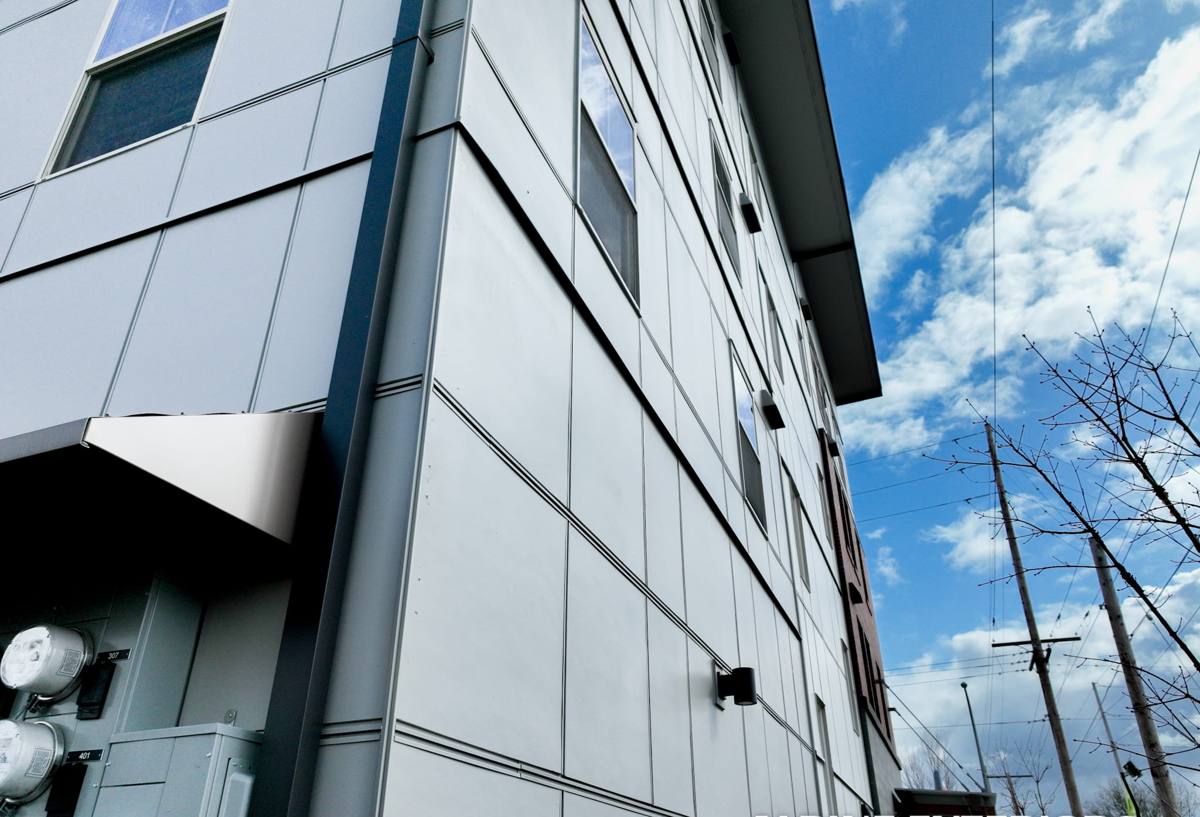
Why Fiber Cement Is the Right Material for This Exposure
Fiber cement was engineered specifically for problems like these. It's a composite of cement, sand, and cellulose fiber, which makes it dimensionally stable — it doesn't expand and contract with moisture the way wood does, and it doesn't warp, cup, or delaminate the way some engineered wood products can when they take on water at a cut edge or a fastener hole. It's also non-combustible, which matters less for moss and rain but is still a real advantage over wood-based siding in any coastal Pacific Northwest community.
What fiber cement does especially well in a climate like this is resist the slow water damage that ruins other materials. It doesn't rot. It doesn't feed mold or fungal growth the way wood fiber can. And a factory-applied finish holds up to years of salt spray and rain exposure far better than a field-applied paint job, because the coating is cured under controlled conditions rather than sprayed or brushed on-site in variable weather.
Why We Only Install James Hardie
We install James Hardie fiber cement siding exclusively — we don't install LP SmartSide, vinyl, Cemplank, Allura, primed spruce, or cedar. That's not a marketing position, it's a decision based on what we've seen hold up in this specific climate over time. Hardie's HZ5 product line is engineered for climates with freeze-thaw cycles and sustained moisture exposure, which describes a Peace Arch winter well. The ColorPlus factory finish is baked on and backed by its own finish warranty, which removes the weak point that field-painted siding always has: the finish is only as good as the weather conditions on the day it was applied. We'd rather stand behind one product system we know performs here than offer a menu of options with different trade-offs and different failure points.
What Correct Installation Looks Like on a Peace Arch Home
Fiber cement siding is only as good as the installation behind it. The product itself is durable, but a job that ignores water management or fastening specifications will fail early regardless of the material — and in a climate that pushes rain sideways for months at a time, shortcuts show up faster here than they would somewhere drier.
Flashing and Water Management
Every window, door, and roof-to-wall transition needs proper flashing and a drainage plane behind the siding, not caulk used as a substitute for it. A weather-resistant barrier with a rainscreen or drainage gap lets any water that does get past the siding drain and dry out instead of sitting against the wall sheathing. This is the single biggest factor in how long a siding job lasts near open water, and it's invisible once the job is done — which is exactly why it has to be done right the first time.
Fastening and Gaps
James Hardie specifies stainless steel or hot-dip galvanized fasteners for coastal exposure, correct nail placement relative to the plank edge, and specific gaps at butt joints and trim to allow for the board's minor expansion without cracking the caulk joint. Using the wrong fastener in a salt-air environment leads to corrosion and staining well before the siding itself would ever fail.
Finish and Color
Because ColorPlus is a factory finish, field-cut edges need to be treated with Hardie's touch-up product rather than left raw or painted with a mismatched exterior paint. Done correctly, the finish resists fading and holds color uniformity across the whole wall for years — which matters on a home that's going to spend a lot of its life under grey coastal skies where color and texture do a lot of the work.
How Siding Materials Compare in This Climate
| Material | Salt air / moisture behavior | Moss and organic growth | Long-term maintenance |
|---|---|---|---|
| James Hardie fiber cement | Dimensionally stable, factory-cured finish resists salt spray | Doesn't feed mold or fungal growth; surface can be gently cleaned | Occasional wash; caulk joints checked periodically |
| Cedar / primed wood | Absorbs moisture at end grain and fasteners; prone to swelling | Organic material can support moss and mildew in shaded, damp areas | Regular repainting and sealing to keep ahead of moisture |
| Vinyl | Doesn't rot, but can warp or become brittle with UV and temperature swings | Growth can develop in seams and behind panels with poor ventilation | Low maintenance but panels can crack and aren't repairable in sections |
| LP SmartSide (engineered wood) | Wood-strand core is vulnerable if the factory coating is breached | Damaged or worn coating exposes wood fiber to moisture and growth | Requires prompt repair of any coating damage to prevent swelling |
Our Process From Estimate to Finished Job
We start with an on-site assessment of the home's current siding, water damage history, and exposure — a wall facing prevailing weather off the water gets evaluated differently than a sheltered side of the same house. From there we walk through product selection within the Hardie lineup (plank profile, texture, and color) based on the home's style and your preferences.
Once a project starts, we remove the old siding and inspect the sheathing underneath for any rot or damage that needs to be addressed before new siding goes on — this is often where problems from a previous installation surface. We install a proper weather-resistant barrier and drainage plane, then install the Hardie siding to manufacturer fastening and clearance specifications, followed by trim, caulking at appropriate joints only, and a final cleanup that leaves the site as we found it.
We don't skip the sheathing inspection step to save time, and we don't install over problems that will just resurface in a few years. In this climate, what's behind the siding matters as much as the siding itself.
Cost Factors for Fiber Cement Siding Projects
| Factor | How it affects the project |
|---|---|
| Home size and wall complexity | More corners, dormers, and trim details mean more cutting, fitting, and labor time |
| Condition of existing sheathing | Rot or water damage found during tear-off adds repair scope before new siding goes on |
| Siding profile and accessories | Lap width, trim style, and accent details affect material and labor cost |
| Exposure and access | Wind exposure near the water and site access can affect scaffolding and scheduling |
| Existing siding removal | Full tear-off versus siding over an existing layer (not something we recommend on fiber cement) changes labor scope |
We provide project-specific numbers after the on-site assessment rather than a flat per-square-foot figure, because the factors above vary enough from house to house in this area that a generic estimate isn't useful to you.
Maintenance: What Moss Season Really Requires
One advantage of fiber cement over wood is how little ongoing maintenance it needs, but "little" isn't "none." A long, damp Whatcom County winter still calls for basic upkeep to get the full lifespan out of the product.
- Rinse siding periodically, especially on shaded or north-facing walls where moisture lingers longest
- Keep gutters clear so overflow doesn't run down the wall surface repeatedly
- Trim back vegetation and shrubs that trap moisture against the siding
- Check caulk joints at trim and penetrations annually and re-caulk if you see cracking or gaps
- Touch up any field-cut edges or fastener scratches with Hardie touch-up paint to protect exposed material
Signs Your Current Siding Is Already Losing the Fight
- Soft or spongy spots when you press on the siding, especially near the bottom courses
- Persistent green or black staining that returns quickly after cleaning
- Paint that's peeling or bubbling rather than just fading
- Visible gaps, warping, or buckling at seams and butt joints
- Rust streaks below fasteners or trim
- A musty smell near exterior walls inside the home
Any one of these on its own isn't necessarily an emergency, but on a home in this exposure, they tend to compound quickly once moisture gets a foothold behind the siding.
Why Hiring a Crew That Already Works the Peace Arch Area Matters
Siding crews that mostly work drier, more sheltered parts of the region don't always build the same habits around drainage planes, fastener choice, and joint detailing that this exposure demands — habits that don't show up as a problem until a few winters have passed. Working regularly in the Peace Arch area and the wider Semiahmoo waterfront means we're used to designing for wind-driven rain and salt exposure as the baseline, not the exception, and we make those decisions on every job rather than treating them as upgrades.
If you're considering fiber cement siding for a home in the Peace Arch area, we're glad to walk the property with you, look at what your current siding is telling us, and put together a clear, no-pressure estimate for a James Hardie installation built for this exposure. There's no obligation — just an honest look at what your home needs.