 Semiahmoo Siding
 Building Decks in Marietta for Real Coastal Conditions
Marietta sits right up against the marine air coming off Semiahmoo Bay and Drayton Harbor, and that air is harder on a deck than most homeowners expect. Salt-laden moisture, long stretches of driving rain, and a moss season that can run from fall through spring all work on a deck's fasteners, framing, and surface at the same time. A deck built with generic, inland assumptions tends to show corrosion streaks, soft spots, and slick moss patches within a few seasons. A deck built for this specific stretch of Whatcom County coastline is a different story, and the difference comes down to material choices and detailing, not luck.
This page is about one service, in one place: deck building for Marietta homes. We'll walk through what the local climate actually does to a deck, what a correctly built deck involves from the footings up, how we run the job, and why it matters to hire a crew that already works this specific stretch of coastline.
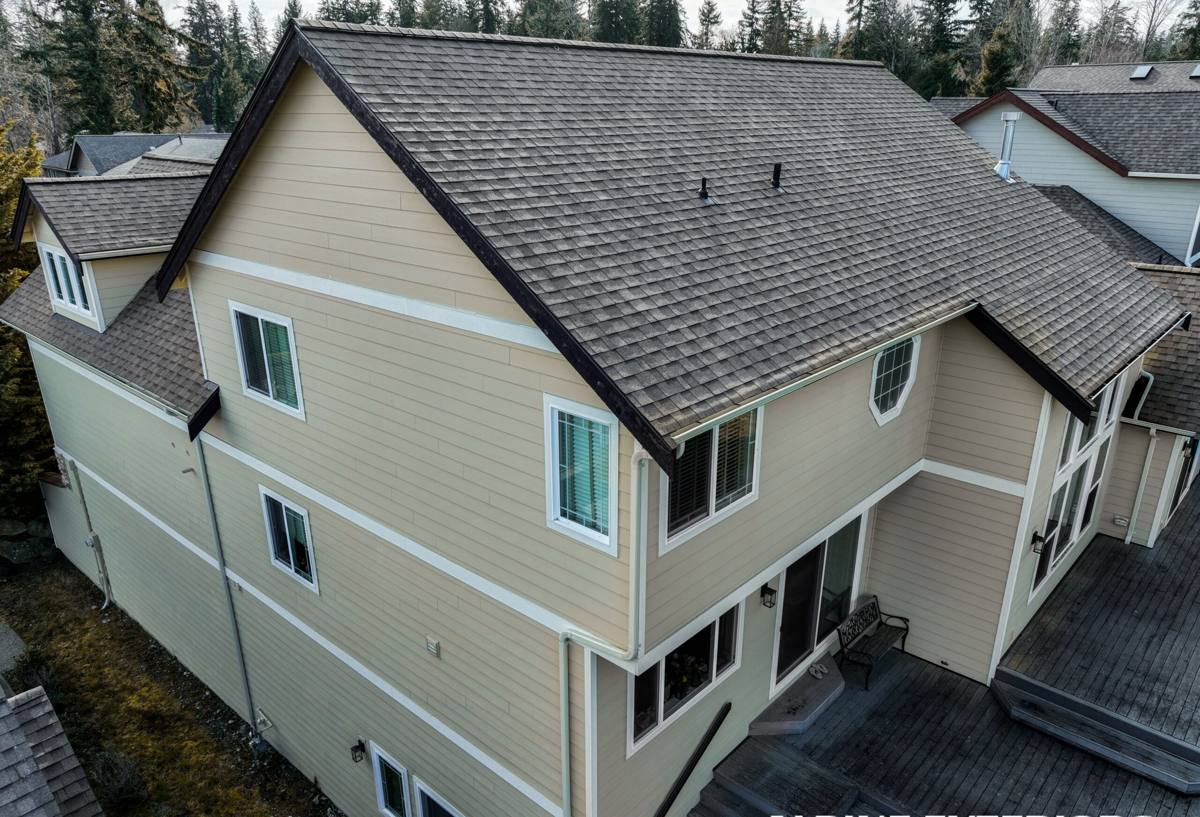
What Salt Air and Driving Rain Actually Do to a Deck
It helps to understand the failure patterns before talking about the fix. Three things drive most of the deck problems we see in and around Marietta:
- Salt air corrosion: airborne salt from Semiahmoo Bay accelerates rust on standard fasteners, brackets, and hardware, especially anything not rated for coastal or marine exposure.
- Driving rain intrusion: wind-driven rain off the water doesn't just fall on a deck, it gets pushed sideways into ledger connections, post bases, and any gap in flashing, which is where hidden rot starts.
- Moss and algae growth: low winter sun angles, shade from mature trees, and near-constant moisture give moss a long season to establish itself on decking surfaces, stair treads, and railings, which turns into a slip hazard fast.
None of these three problems are dramatic on their own in year one. They compound quietly, which is exactly why so many decks in this area look fine from a distance right up until a board fails or a railing post wobbles.
Choosing Decking Material for This Climate
There's no single "best" decking material for every budget and every homeowner, but there is a best material for a given set of priorities. Here's how the common options actually perform under Marietta's conditions, not in a showroom.
| Material | How It Handles Salt Air & Rain | Moss Resistance | Maintenance Load |
|---|---|---|---|
| Pressure-treated lumber | Good with proper fasteners and sealing; end cuts need re-treatment | Needs regular cleaning, texture holds moss | Annual cleaning and re-sealing |
| Cedar | Naturally decay-resistant but softer surface, benefits from finish coats | Moderate; smooth grain sheds moss easier than rough-sawn | Periodic oiling or staining |
| Composite / capped composite | Excellent; won't rot or corrode from moisture | Better shedding than wood, still needs occasional washing | Low; mostly rinsing and light cleaning |
| PVC decking | Fully moisture-proof, no organic material to break down | Best resistance, smoothest surfaces | Lowest; occasional soap and water |
Composite and PVC cost more upfront, and we tell homeowners that plainly rather than steering them toward the higher-margin option. Where a tighter budget calls for pressure-treated or cedar, the honest trade-off is a shorter maintenance cycle and more attention to the framing details underneath, which is where we put extra care regardless of the surface material chosen.
Framing and Fasteners That Actually Hold Up
The decking boards get all the attention, but the framing underneath is what determines whether a deck is safe in ten years or fifteen. In a salt-air environment, standard galvanized fasteners corrode faster than they would a few miles inland, and once a fastener starts rusting, it weakens the connection it's supposed to hold. We use stainless steel or heavy-duty coated fasteners rated for coastal and marine exposure on structural connections, not just the visible hardware. Joists get treated for ground contact where they're within a few inches of grade, and any cut end of pressure-treated lumber gets a field-applied sealant, because factory treatment doesn't reach a fresh cut.
We also pay attention to joist protection tape over the top of the framing lumber. It's a small material cost that keeps standing water from sitting directly on top of a joist under the decking boards, which is one of the most common places we find hidden rot on older decks in this area.
Footings, Ledger Attachment, and Moisture Management
Two structural details separate a deck that lasts from one that doesn't, and both are invisible once the project is finished.
Footings
Whatcom County soil in low-lying, near-water areas like Marietta can hold moisture longer than soil further inland, which matters for footing depth and drainage. We set footings below frost depth per local code and make sure the surrounding soil can actually drain, rather than pouring into a hole that will hold standing water against the concrete and post base all winter.
Ledger Board Flashing
The ledger board, where the deck attaches to the house, is the single most common source of hidden water damage on any deck, coastal or not. Driving rain off the bay makes this worse here than in a sheltered inland yard. Proper flashing, correctly lapped with the house's existing weather barrier and sealed at every fastener penetration, keeps water from tracking behind the siding and into the wall framing. This is not an area to shortcut, and it's one of the first things we check when a homeowner asks us to look at an existing deck that's showing problems.
Railings, Stairs, and Code Requirements
Railing height, baluster spacing, and stair geometry are governed by Washington state building code and enforced through Whatcom County permitting, and we build to those requirements as a baseline, not an upsell. Beyond code minimums, a few choices matter more here than elsewhere:
- Stair treads with a textured or grooved surface hold up better against moss and algae than smooth boards, especially on north-facing or shaded stairs.
- Metal railing components should match the fastener standard used in the framing — mixing standard steel hardware into an otherwise coastal-rated build just moves the corrosion problem to the railing.
- Post bases at grade level are a common spot for water pooling; proper standoff hardware keeps the post end out of standing water.
Our Process, Start to Finish
We keep the process straightforward because homeowners deserve to know what's happening and when.
- On-site assessment: we look at the site, existing structure if there is one, drainage patterns, and sun/shade exposure that will affect moss growth.
- Material and design discussion: we go over decking material trade-offs honestly, based on your budget and how much maintenance you want to take on.
- Permitting: we handle the Whatcom County permit process for the scope of work that requires it.
- Footings and framing: built to the depth, drainage, and fastener standards described above.
- Decking, railings, and stairs: installed per code with attention to slip resistance and long-term moisture behavior.
- Final walkthrough: we go over basic maintenance expectations for the specific material you chose.
Keeping Moss and Algae Under Control Long-Term
No decking material is completely moss-proof if it sits in shade with constant moisture, but design and maintenance choices make a real difference. A few things we build in or recommend:
- Gaps between decking boards sized to allow proper drainage and airflow underneath
- Trimming back overhanging branches where possible to reduce shade and leaf litter
- Choosing textured or capped composite surfaces in the shadiest sections of a deck, even if the sunnier areas use a different material
- An annual cleaning with a deck-safe cleaner before moss gets established, rather than pressure-washing it off after it's taken hold
- Keeping gutters and downspouts near the deck clear so runoff isn't dumping extra water onto the deck surface
A Realistic Maintenance Schedule
Homeowners often ask what upkeep actually looks like once the deck is finished. It depends on material, but here's a general guide for this climate.
| Task | Pressure-Treated / Cedar | Composite / PVC |
|---|---|---|
| Surface cleaning | 1-2 times per year | 1-2 times per year |
| Sealing or staining | Every 1-3 years | Not required |
| Fastener/hardware check | Annually | Annually |
| Ledger flashing inspection | Every 2-3 years | Every 2-3 years |
The hardware and flashing checks apply regardless of decking material, since those are structural elements, not surface finishes.
Why Hire a Crew That Already Works Marietta
A deck built by a crew that primarily works dry, inland conditions will often use standard fasteners, skip the joist protection tape, and treat ledger flashing as a formality rather than the critical detail it is here. None of that shows up as a problem on day one. It shows up two or three winters later, after the salt air and driving rain off Semiahmoo Bay have had time to work on the weak points. We build decks in this specific climate regularly, which means the coastal-rated hardware, proper drainage detailing, and moss-conscious material choices aren't upgrades we pitch, they're the baseline we start from.
If you're planning a new deck in Marietta, or you've got an existing one that's showing rust streaks, soft spots, or a moss problem that keeps coming back, we're happy to take a look and talk through honest options. Reach out for a free, no-pressure estimate using the form below.