 Semiahmoo Siding
 Whatcom County Weather and What It Does to a Roof in Lynden
Lynden sits inland from the coast, but the weather patterns that move through Whatcom County don't stop at the water's edge. The same wet air masses that bring salt-laden storms onto the coastline keep pushing east across the flat farmland around Lynden, dropping long stretches of rain from fall through spring. Add wide-open agricultural terrain with fewer windbreaks than you'd find in town, and roofs here take on driving, wind-pushed rain rather than rain that simply falls straight down.
That combination matters for roofing decisions. A roof that only has to shed water works fine in a dry climate. A roof that has to resist wind-driven rain being forced sideways and upward under laps, flashing, and fastener heads is a different engineering problem. Metal roofing, installed correctly, handles that problem better than most materials — but "installed correctly" is doing a lot of work in that sentence, and it's where a lot of roofs in this area fall short.
On top of the rain, Lynden gets the long, low-sun, high-humidity stretch of a Pacific Northwest winter and spring that lets moss and algae take hold on any roof surface that stays damp and shaded. A roof here isn't just fighting water — it's fighting standing moisture and organic growth for months at a time.
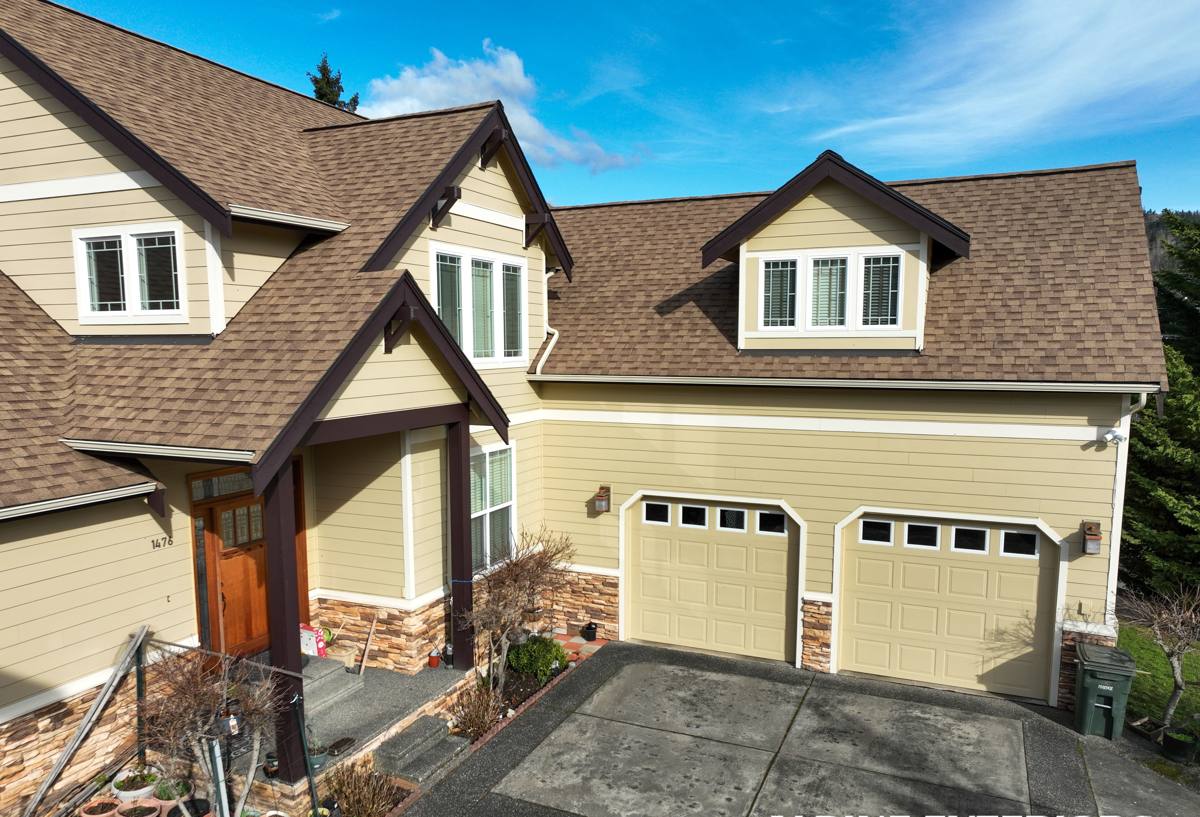
What a Correctly Installed Metal Roof Looks Like
Metal panels themselves are extremely water-resistant. Most metal roof failures we see aren't failures of the panel — they're failures of everything underneath and around it. Getting this right is the difference between a roof that lasts decades and one that leaks within a few winters.
Underlayment and Moisture Barriers
A metal roof needs a synthetic or self-adhered underlayment rated for the temperature swings and moisture exposure metal panels create underneath them. In a climate that stays wet for months at a stretch, this layer is your backup system if wind ever drives water past a seam or fastener. Skipping a proper underlayment, or using one meant for asphalt shingles, is one of the most common shortcuts we see on older or poorly done metal roofs.
Fasteners, Flashing, and Seams
Every penetration — vent pipes, chimneys, skylights — is a potential entry point for wind-driven rain. Flashing has to be formed and lapped correctly, not just caulked over. On exposed-fastener panels, the screws themselves need to be the right length, driven straight, with intact rubber washers; a slightly overdriven or underdriven screw is enough to let water in over time. On standing seam systems, the seams are mechanically locked rather than screwed through the panel face, which removes that failure point entirely — one of the main reasons we recommend it for the more wind-exposed properties around Lynden.
Ventilation
Metal roofs need airflow underneath them, both to manage condensation on the underside of the panel and to keep the attic space from trapping moisture. In a climate with long damp seasons, an under-ventilated roof deck can hold moisture against the wood long after the rain has stopped, which shortens the life of everything above it. Ridge vents, soffit intake, and proper baffling are part of a correct install, not an upgrade.
Choosing a Panel System for Your Lynden Home
The two systems we install most often are standing seam and exposed-fastener panels. Both are legitimate options — the right one depends on your roof's exposure, your budget, and how hands-off you want to be with maintenance.
| Feature | Standing Seam | Exposed Fastener |
|---|---|---|
| Fasteners | Hidden under interlocking seams | Visible screws through the panel face |
| Wind-driven rain resistance | Excellent — no exposed penetrations | Good, if fasteners are correctly installed and maintained |
| Upfront cost | Higher | Lower |
| Long-term maintenance | Minimal | Fastener washers should be checked periodically and replaced as they age |
| Typical use | Primary residences, roofs with high wind exposure | Shops, outbuildings, budget-conscious re-roofs |
For a lot of open, wind-exposed properties around Lynden — where farmland offers little wind break — we lean toward recommending standing seam for the main house and reserving exposed-fastener panels for outbuildings or barns where the lower cost makes more sense and the consequences of a slow leak are lower.
Moss, Algae, and Long-Term Maintenance
Metal doesn't feed moss the way organic shingle granules do, which is one of its real advantages in this climate. But moss and debris can still build up on a metal roof, especially in valleys, at the base of dormers, and anywhere leaves and needles collect and stay wet. Left alone, that debris holds moisture against the panel and its fasteners far longer than the roof would otherwise stay wet, and it can start to trap grit that wears at factory finishes over time.
A metal roof in this area still benefits from being kept clear of debris, especially heading into the wettest months. Unlike asphalt, you won't need chemical moss treatments to protect the roofing material itself — the maintenance here is mostly about keeping water moving off the roof rather than fighting growth on the surface.
- Clear valleys and low-slope sections of needles and leaf litter each fall
- Check that gutters aren't backing water up under the drip edge
- Look at exposed fasteners every year or two for washer wear on exposed-fastener panels
- Confirm flashing around vents and chimneys is still sealed and unlifted after major windstorms
- Watch for any panel movement or oil-canning that could signal a fastening issue underneath
What Affects the Cost of a Metal Roof
Metal roofing costs more upfront than asphalt shingles, but the range within metal roofing itself is wide, and a handful of factors drive most of that difference. We'll walk through your specific roof during an estimate, but here's what generally moves the number.
| Factor | Why It Affects Price |
|---|---|
| Roof pitch and complexity | More valleys, dormers, and penetrations mean more custom flashing and labor |
| Panel system | Standing seam runs higher than exposed-fastener panels due to material and installation time |
| Tear-off vs. re-roof | Removing an old roof down to the deck adds cost but is often necessary to inspect and repair sheathing |
| Deck condition | Rot or soft sheathing found underneath an old roof needs to be replaced before new panels go on |
| Ventilation and accessories | Ridge vents, snow retention, and upgraded trim add to material and labor costs |
Be cautious of quotes that are dramatically lower than others for the same scope — it usually means underlayment, flashing detail, or fastener quality is being cut to hit a price, and those are exactly the corners that cause leaks in a climate this wet.
Our Installation Process
We approach every metal roof in Lynden the same methodical way, because the details are what determine whether it performs for the next 30-plus years.
- On-site inspection of the existing roof, deck condition, and ventilation setup
- Written estimate covering panel system, underlayment, flashing detail, and ventilation upgrades
- Tear-off (when needed) and deck repair before any new material goes down
- Installation of moisture barrier and underlayment rated for the climate
- Panel installation with attention to fastening, seam locking, and edge detail
- Custom flashing at every penetration, valley, and transition
- Final walkthrough so you understand what was done and what to watch for over time
Signs It's Time to Replace Your Roof
Metal roofs give warning signs before they fail outright, and catching them early usually keeps a repair from turning into a full replacement.
- Visible rust starting at cut edges, fastener heads, or scratches in the coating
- Loose or lifted panels after a windstorm
- Water stains on the underside of the roof deck or in the attic
- Streaking or staining that keeps returning even after cleaning
- Fastener washers that have hardened, cracked, or backed out
If you're seeing any of these, it's worth having it looked at before the next stretch of wet weather rather than waiting until there's an active leak inside the house.
Why Local Experience in Lynden Matters
A roof designed for a drier climate, or installed by a crew that mostly works in a different region, often misses the details that matter here — the flashing overlap that accounts for wind-driven rain, the ventilation that keeps a long wet season from trapping moisture in the deck, the fastener spacing that holds up on an open, exposed property. Crews who work Whatcom County roofs regularly have already seen where those roofs fail and build around it from the start, rather than learning it from a callback.
We also know that a roof over a working farm property, a shop, or a full residence in Lynden isn't just a weather barrier — it's protecting the building and everything in it through months of rain every year. That's the standard we install to.
If you're weighing a metal roof for your Lynden property, we're happy to walk the roof with you and put together a straightforward, no-pressure estimate — just fill out the form below to get started.