 Semiahmoo Siding
 Roofing on Drayton Harbor: A Different Climate Than a Few Miles Inland
Homes along Drayton Harbor sit right where marine air off the water meets everything a Pacific Northwest roof has to survive: driving rain that comes in sideways during winter storms, salt-laden air that never really stops working on exposed metal and fasteners, and a moss and algae season that, in this part of Whatcom County, can run nearly year-round in shaded or north-facing sections of a roof. A roof here works harder than the same roof would fifteen or twenty miles inland, and it shows in how these roofs age — faster granule loss, more moss buildup in valleys and under overhangs, and more corrosion at flashing and fasteners than you'd expect from the roof's age alone.
That's the backdrop for every roof replacement conversation we have with Drayton Harbor homeowners. The right roof for this location isn't necessarily the cheapest option or the most popular one inland — it's the one that's specified and installed with this specific exposure in mind.
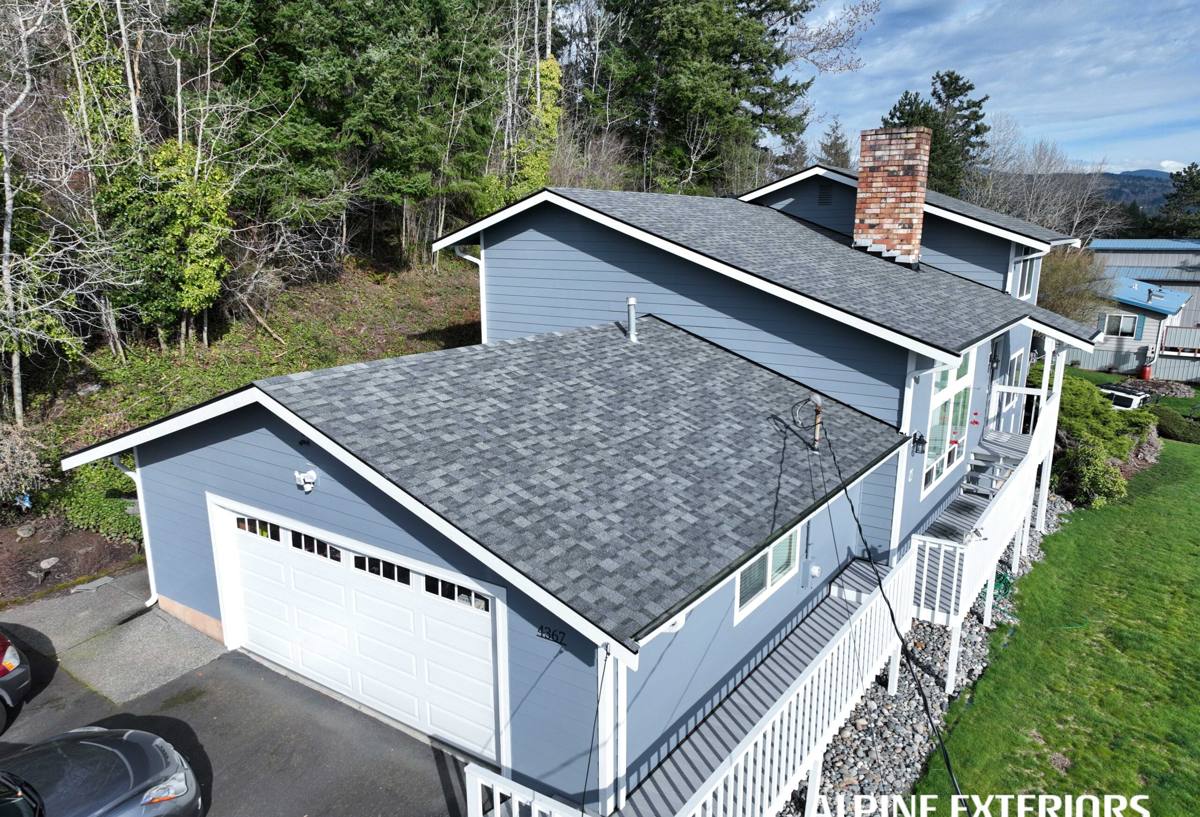
Signs a Drayton Harbor Roof Has Reached the End of Its Life
Not every roofing problem here means a full replacement. But there's a point where patching stops making sense and a new roof system becomes the more honest, more economical answer. Watch for:
- Granules collecting in gutters or at the base of downspouts in noticeable amounts, season after season
- Shingles that are cupping, curling at the edges, or cracking when you look closely at slopes exposed to sun and wind
- Moss that keeps returning to the same areas within a year or two of cleaning, even after treatment
- Soft spots, sagging, or visible deflection anywhere in the roof plane
- Rust staining or corrosion at flashing, vent boots, or metal valleys
- Daylight visible through the roof deck from the attic, or water staining on attic sheathing
- Multiple past repairs in different areas rather than one contained problem
A roof showing two or three of these signs at once is usually past the point where spot repairs buy you meaningful time. We'll always tell you honestly if a repair is the smarter move — replacement is a bigger investment and we don't recommend it lightly.
What a Correct Roof Replacement Actually Involves
Tear-Off and Deck Inspection
A proper replacement starts with a full tear-off down to the roof deck, not an overlay. Overlaying new shingles on old ones traps moisture, hides deck problems, and shortens the life of the new roofing — it's a shortcut we don't take. Once the old roofing is off, the deck gets inspected board by board. Any soft, delaminated, or water-damaged sheathing gets replaced before anything new goes down. Skipping this step is one of the most common ways a "new roof" fails early.
Underlayment and Water Management
Given how much wind-driven rain this area sees, underlayment choice matters more here than in drier parts of the state. We use synthetic underlayment as the standard water-resistive barrier, with self-adhering ice-and-water membrane at vulnerable spots — eaves, valleys, around chimneys and skylights, and anywhere two roof planes meet. These are the places where wind-driven rain actually finds its way under shingles, and they're worth over-building rather than treating as an afterthought.
Flashing and Ventilation
Flashing is where most roof leaks originate, not the field of the roof itself. Every penetration — vent pipes, chimneys, skylights, sidewalls — gets new, correctly lapped flashing as part of a replacement, not reused old metal. Proper intake and exhaust ventilation also gets addressed, since a roof that can't breathe traps moisture from the inside, which accelerates deck rot and shortens shingle life regardless of how good the shingles are.
Choosing a Roofing Material for This Location
There's no single "best" roofing material — there's a best fit for your home's exposure, roof pitch, budget, and how much long-term maintenance you're willing to take on. Here's how the common options stack up specifically for a Drayton Harbor property:
| Material | Salt air / corrosion resistance | Moss resistance | Maintenance burden |
|---|---|---|---|
| Architectural asphalt shingle | Good with proper flashing metals | Moderate — benefits from algae-resistant granules | Low to moderate |
| Standing seam metal | Very good with marine-grade coatings | Very good — sheds moss easily on steeper pitches | Low |
| Cedar shake/shingle | Fair — needs vigilant maintenance near salt air | Poor without regular treatment | High |
| Synthetic composite shingle | Good | Good | Low |
Architectural asphalt shingles with algae-resistant granules remain the most common and cost-effective choice for most Drayton Harbor homes, and we install them with the flashing and ventilation details built for this exposure. Standing seam metal is worth serious consideration on steeper roofs where moss and moisture are persistent problems — the smooth surface and steep shed angle make it harder for moss to establish. We're generally cautious about cedar this close to the water; it can look excellent, but it demands a maintenance schedule most homeowners underestimate once salt air and shade are both working against it.
Moss and Algae: Managing a Long Season
Moss isn't just cosmetic — it holds moisture against the roofing material, lifts shingle edges, and works its way into fastener penetrations over time. In this climate, north-facing slopes, areas under tree canopy, and low-slope sections are the most at risk. A correctly installed new roof addresses this three ways: algae-resistant shingle granules where asphalt is used, zinc or copper strips at the ridge on some systems to inhibit regrowth, and simply making sure the roof has enough slope and airflow that water and debris don't sit. None of this eliminates the need for occasional gentle cleaning, but it substantially reduces how often you need to think about it.
Our Roof Replacement Process
- On-site inspection and estimate. We walk the roof, check the attic where accessible, and give you a straightforward assessment — repair or replace, and why.
- Material selection. We walk through options suited to your roof's pitch, sun/shade exposure, and budget, without pushing a product that isn't right for the house.
- Scheduling around weather. Roofing work here gets scheduled with realistic attention to forecasted rain windows, so tear-off and dry-in happen in the same work period whenever possible.
- Tear-off, deck repair, and dry-in. Old roofing comes off, the deck is inspected and repaired as needed, and underlayment goes down the same day to protect the home.
- Installation. New roofing, flashing, and ventilation components are installed to manufacturer specifications and local code.
- Cleanup and final walkthrough. Job site debris and nails are cleared, and we walk the finished roof with you before calling the job complete.
Cost Factors to Expect
Every roof is priced individually, but the variables that move the number most are consistent. This gives you a realistic sense of what drives cost up or down before you get a specific quote:
| Factor | Effect on cost |
|---|---|
| Roof size and number of planes | Larger and more complex roofs mean more material and labor |
| Pitch and accessibility | Steep or hard-to-access roofs increase labor time and safety measures |
| Deck condition | Rotted or damaged sheathing found during tear-off adds material and labor |
| Material choice | Asphalt is typically the most economical; metal and cedar cost more upfront |
| Number of penetrations | More vents, skylights, and chimneys mean more flashing work |
| Layers being removed | Multiple existing layers add disposal and labor time |
We give written estimates that spell out what's included, so you're not guessing at what a number covers.
Why a Crew That Already Works Drayton Harbor Matters
A roofer who mostly works drier, inland jobs can still do competent work, but they're often making judgment calls about underlayment coverage, flashing metals, and ventilation on the fly, without a track record of what actually holds up against this specific combination of salt air, wind-driven rain, and moss pressure. Working this area regularly means we've seen which details matter here — where wind-driven rain actually gets in, which flashing metals hold up against salt exposure, and how much ventilation a roof in this microclimate really needs. That's not a marketing point; it's the difference between a roof that's built to spec and one that's built for where it actually sits.
Questions to Ask Before You Hire a Roofer Here
- Are you licensed and insured to work in Washington State, and can you provide proof?
- Will you do a full tear-off, or are you proposing an overlay?
- What underlayment and ice-and-water membrane will you use, and where specifically?
- How will you handle flashing at chimneys, skylights, and sidewalls — reused or replaced?
- What's your plan for roof ventilation, and will it meet code requirements?
- What warranty covers the materials, and separately, what warranty covers your workmanship?
- Can you provide a written estimate that itemizes what's included?
A contractor who answers these clearly and specifically, without vague reassurances, is one worth trusting with a roof over your head for the next few decades.
If your roof near Drayton Harbor is showing its age or you just want an honest read on where it stands, we're glad to come take a look. Estimates are free, there's no pressure, and you'll get a straight answer about repair versus replacement — use the form below to get started.