 Semiahmoo Siding
 Roofs on Drayton Harbor Work Harder Than Most
Homes around Drayton Harbor sit close enough to the water that the roof over your head is dealing with conditions most inland Whatcom County houses never see. Salt-laden air off the harbor speeds up corrosion on anything metal — nail heads, flashing, gutter fasteners, vent caps. Driving rain that comes in sideways during winter storms finds the smallest gap in flashing or underlayment and turns it into an active leak. And the long, damp moss season here — often eight or nine months of the year — means organic growth is working on your shingles almost constantly, not just in a short spring window.
None of that means every roof needs to be torn off and replaced. Most of the calls we get for roof repair near Drayton Harbor are for problems that are very fixable when they're caught and diagnosed correctly — the key word being correctly. A patch that doesn't address why the leak started in the first place just buys you a year or two before the same spot fails again.
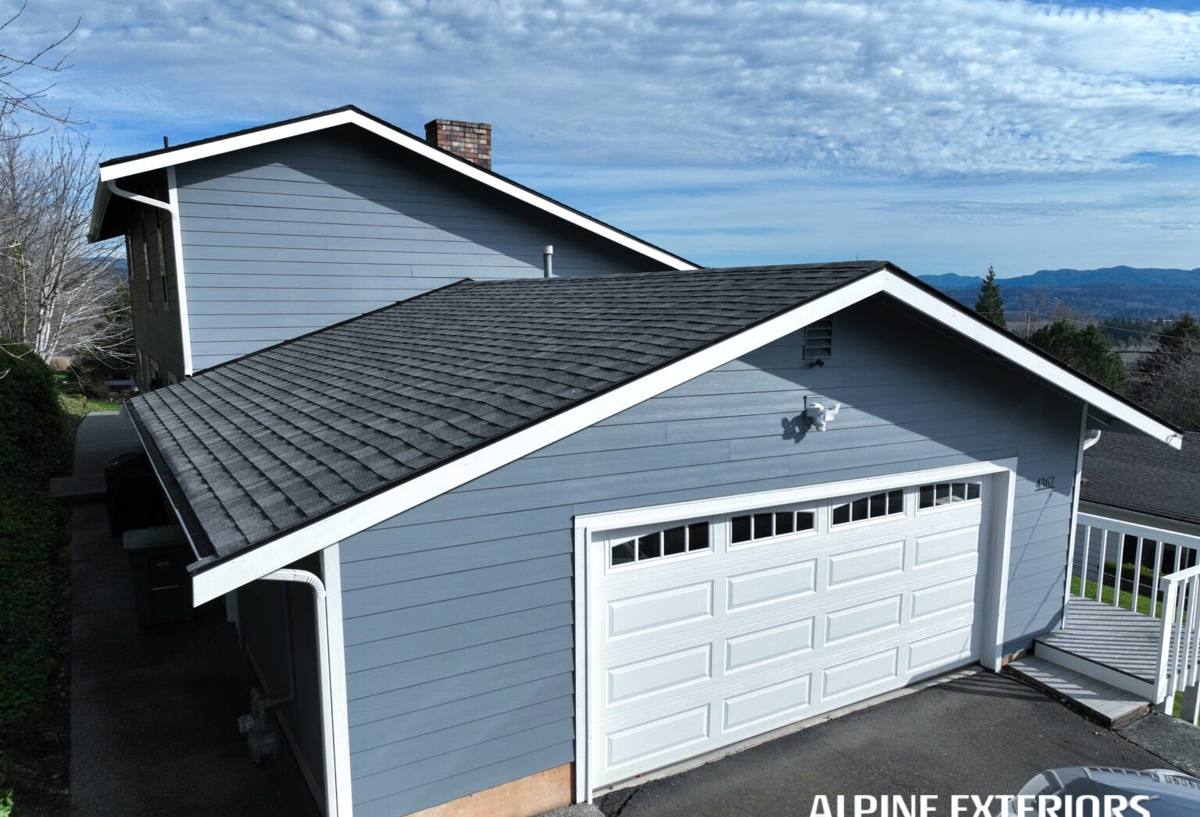
What This Climate Actually Does to a Roof
Salt Air and Corrosion
Coastal exposure accelerates rust on exposed fasteners, flashing seams, and lower-quality gutter hardware. A roof that would hold up fine 15 miles inland can show flashing corrosion years earlier this close to the harbor. This is why the metal and fastener choices in a repair matter as much as the shingles themselves.
Driving Rain and Wind-Driven Water
Storms off the water don't always drop rain straight down — wind pushes it sideways and even slightly uphill under shingle edges and around penetrations. Leaks in this area frequently show up at valleys, chimney flashing, skylight curbs, and anywhere two roof planes meet, because that's where wind-driven rain has the best chance of getting past a marginal seal.
Moss, Algae, and Trapped Moisture
A long wet season with mild temperatures is exactly what moss and algae need to thrive. Left alone, moss lifts shingle edges, holds moisture against the roof deck, and creates channels for water to travel sideways instead of running off. By the time moss is visible in thick mats, it's often already caused granule loss and small lifts in the shingles underneath.
Signs Your Drayton Harbor Roof Needs Repair Now
Catching problems early is what keeps a repair a repair, instead of it becoming a replacement. Watch for:
- Dark streaking or thick moss growth, especially on north-facing slopes that stay shaded and damp longer
- Granules collecting in gutters or at downspout outlets
- Shingles that look curled, cupped, or lifted at the edges
- Rust staining or visible corrosion on flashing around chimneys, vents, or skylights
- Water stains on interior ceilings, especially after a windy rainstorm rather than a calm one
- Soft or spongy spots when walking the roof, which point to decking damage underneath
- Daylight visible through the attic roof deck, or damp insulation near the eaves
If you're seeing more than one of these, it's worth having it looked at before the next storm season rather than after.
The Repair Calls We See Most Often in This Area
Because of the specific combination of salt air, wind, and moisture here, certain problems come up again and again on Drayton Harbor homes:
Flashing failures. Corroded or improperly lapped flashing at chimneys, valleys, and wall intersections is one of the most common leak sources we find. It's often mistaken for a "roof leak" when the shingle field itself is fine — the flashing detail is what failed.
Wind-lifted or missing shingles. After a hard blow off the water, it's common to find a handful of shingles cracked, lifted, or gone entirely near ridges and roof edges, where wind uplift is strongest.
Moss-related granule loss and soft spots. Long-term moss growth that's been ignored for a few seasons can leave shingles thin and brittle in patches, sometimes with early decking softness underneath.
Gutter and edge metal issues. Clogged or corroded gutters back water up under the first course of shingles, which shows up as staining along fascia boards and soffits.
Sealant and pipe boot failures. Rubber pipe boots and old sealant around penetrations degrade faster in this climate and are a frequent, low-cost fix that prevents a much bigger repair later.
What a Correct Repair Actually Involves
A roof repair done right isn't just caulking a visible gap or nailing down a loose shingle. It starts with figuring out the actual cause, not just the symptom.
1. Full Diagnosis, Not a Guess
We look at the leak or damage location from both the roof surface and, when accessible, the attic side, tracing water paths back to their real entry point. Water often travels along the underlayment or decking before it shows up as a stain, so the visible drip inside is rarely directly below the actual failure.
2. Matching Materials and Technique
Repair shingles should match the existing roof as closely as possible in type, weight, and color line so the patch doesn't stand out or perform differently than the surrounding field. Flashing repairs use metal suited to coastal exposure, properly lapped with the shingle courses rather than just sealed over the top with caulk.
3. Addressing Moss and Ventilation Together
If moss is part of the problem, we treat the growth and clear it without stripping granules or damaging the mat, and we look at whether poor attic ventilation is contributing to the damp conditions that let moss thrive in the first place. Fixing the surface without addressing airflow underneath is a temporary win at best.
4. Checking the Decking
Any soft spot gets checked for decking damage before new shingles go back down. Covering rotten decking with new shingles is one of the most common shortcuts in bad repair work, and it fails fast.
Repair or Replacement — How to Tell
Not every roof issue near Drayton Harbor calls for a full replacement, but some do. Here's a general way to think about it:
| Factor | Points Toward Repair | Points Toward Replacement |
|---|---|---|
| Roof age | Under roughly 15-20 years, or well-maintained | At or past the material's expected lifespan |
| Extent of damage | Isolated to one area, flashing, or a few courses | Widespread across multiple slopes |
| Decking condition | Solid, no soft spots found | Soft, delaminated, or rotted in several areas |
| Moss/algae history | Recent or first-time growth | Years of untreated growth with granule loss |
| Leak pattern | Single, traceable source | Multiple unrelated leak points |
When a roof falls in the middle — say, moderate age with one damaged slope — we'll walk you through the honest trade-offs rather than push toward the bigger job by default.
Materials and Methods We Use for Coastal Conditions
Given the salt air and moisture load here, we lean toward materials and details that hold up specifically in this environment rather than a generic inland approach:
- Corrosion-resistant flashing and fasteners suited to coastal exposure, rather than standard galvanized hardware that pits and rusts faster near the harbor
- Ice-and-water shield style underlayment reinforcement at valleys, chimneys, and eaves — the spots where wind-driven rain concentrates
- Algae-resistant shingle lines when a full slope or patch is being replaced, which slow down regrowth compared to standard shingles in a high-moss climate
- Proper pipe boot and sealant products rated for long-term UV and moisture exposure, not generic hardware-store caulk
None of these choices are about chasing the newest product on the market — they're about picking what holds up given what this specific location does to a roof over time.
Our Process, From Call to Finished Repair
- Inspection. We walk the roof and check the attic where accessible, documenting what we find and why we believe it's causing the issue.
- Honest scope and estimate. You get a clear explanation of what needs to happen, what it will cost, and why — including if we think repair is the right call over replacement, or vice versa.
- Scheduling around weather. Roof repair work depends on dry conditions to do it right, so we schedule with an eye on the forecast rather than rushing a patch into wet weather.
- The repair itself. Damaged materials come out, decking is checked and replaced if needed, and new materials go in matched to your existing roof and detailed for this climate.
- Cleanup and walkthrough. We clear debris and nails from the yard and gutters, and walk you through exactly what was done.
Why It Matters to Hire a Crew That Already Works This Area
Roof repair isn't identical everywhere. A crew that mostly works dry, inland roofs may not think twice about flashing metal choice or moss-driven ventilation problems, because it's simply not the daily reality where they usually work. Around Drayton Harbor and the broader Semiahmoo area, wind exposure, salt air, and moss pressure are the norm, not the exception — and repairs that don't account for that tend to need doing again sooner than they should.
Working regularly in Whatcom County's coastal pockets also means fewer surprises with permitting, weather windows for scheduling, and knowing which parts of a roof in this area tend to fail first based on orientation and exposure. That familiarity shows up in fewer callbacks and repairs that actually last through a full winter storm season.
Get a Straightforward Look at Your Roof
If you're dealing with a leak, moss buildup, storm damage, or just want an honest opinion on the condition of your roof, we're happy to take a look. Fill out the form below for a free, no-pressure estimate — we'll tell you plainly what we find and what it would take to fix it right.