 Semiahmoo Siding
 Drayton Harbor sits right where the weather comes off the water. Homes here take a steady diet of salt-laden air, wind-driven rain, and long stretches of gray, damp months that keep moss and algae in business nearly year-round. Siding that works fine forty miles inland can fail early here — not because it's a bad product everywhere, but because it was never built for this specific combination of salt, moisture, and shade. This page covers what fiber cement siding needs to do for a Drayton Harbor home, what a correct installation actually involves, and why we've standardized on one manufacturer instead of offering a menu of options.
What Makes Drayton Harbor Tough on Exterior Siding
Three things stack up against exterior materials in this part of Whatcom County. First, salt air off the harbor accelerates corrosion of fasteners, trim metal, and any coating that isn't formulated to resist it. Second, driving rain off the water doesn't just fall straight down — wind pushes it sideways and up under laps, trim, and penetrations, which punishes any siding system with weak water-management details. Third, the long moss season, roughly October through April, keeps north- and shade-facing walls damp for days at a stretch, especially under mature evergreen cover common in this area.
None of that is exotic information to a siding crew that's actually worked Drayton Harbor before. But it changes real decisions: fastener choice, flashing sequence, gap tolerances, and even which siding profile sheds water best on a wall that rarely gets a full day of sun to dry out.
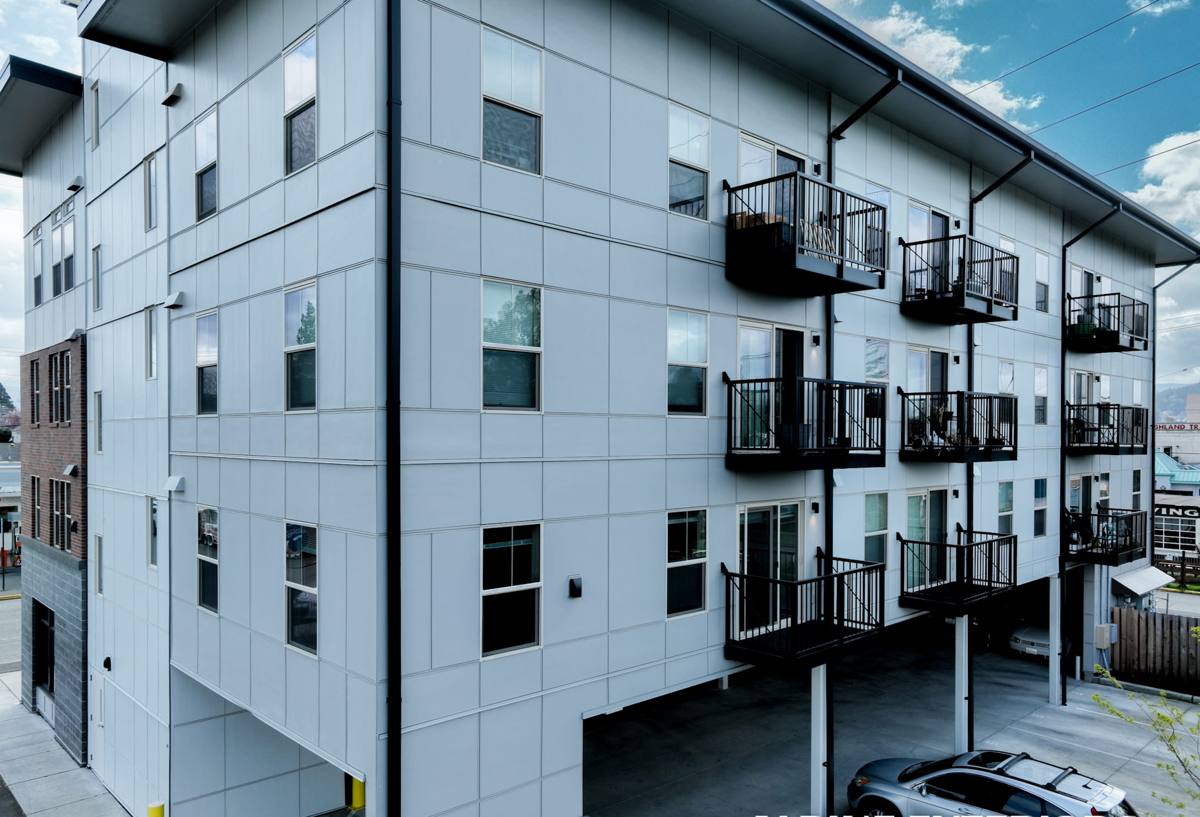
What a Correct Fiber Cement Job Requires Here
Fastening and Clearances
Fiber cement is dimensionally stable, but it still needs room to do its job. Manufacturer specs call for minimum clearances above rooflines, decks, and grade, and those numbers matter more in a wet climate than a dry one — a siding edge sitting too close to a deck surface stays damp longer after every storm. Fasteners need to be corrosion-resistant stainless or hot-dipped galvanized, driven to the correct depth — not overdriven, which cracks the board's edge and opens a path for water.
Flashing and Water Management
Every window, door, and penetration is a place water wants to get behind the siding. Correct flashing means head flashing over openings, proper weather-resistive barrier lapping (upper courses always over lower), and kick-out flashing anywhere a roofline meets a wall. In a driving-rain environment, a missed kick-out flashing is one of the most common causes of hidden rot we see when we tear off old siding.
Caulking and Joint Treatment
James Hardie's own installation instructions specify which joints should be caulked and which should be left as designed rain-screen gaps. Over-caulking a system that's meant to breathe traps moisture instead of shedding it — a mistake that looks tidy on day one and causes problems two winters later.
Why We Standardized on James Hardie
We install James Hardie fiber cement siding exclusively. We don't install vinyl, LP SmartSide, Cemplank, Allura, primed spruce, or cedar, and we think homeowners deserve the honest reasoning behind that instead of a sales pitch.
Vinyl is inexpensive and low-maintenance, but it's a petroleum-based product that can warp in heat, becomes brittle in cold, and simply can't offer the same wind and impact resistance as fiber cement in a coastal storm. Cedar and primed spruce are handsome materials, but wood siding in a moss-prone, high-moisture climate demands a maintenance schedule — recoating, caulk checks, rot inspection — that most homeowners don't want to sign up for indefinitely. LP SmartSide is an engineered wood product; it performs well in many climates but relies on factory treatment and careful field sealing of every cut edge to resist moisture, which raises the installation-sensitivity bar in a wet marine environment. Cemplank and Allura are also fiber cement, and reasonable products in their own right — we simply chose to build our entire crew's training, tooling, and warranty relationships around one manufacturer rather than splitting expertise across several.
James Hardie is non-combustible, engineered specifically for climate zones like ours, finished at the factory rather than in the field, and backed by a warranty that transfers with the home. For Drayton Harbor's salt air and rain load, that combination is what we're willing to put our name behind.
The HZ5 Climate-Engineered Product Lines We Use
James Hardie builds regional formulations under its HZ5 designation for climates like the Pacific Northwest, engineered against moisture-driven cracking and freeze-thaw stress. The table below covers the profiles we install most often on Drayton Harbor homes.
| Product | Typical Use | Why It Fits This Climate |
|---|---|---|
| HardiePlank Lap Siding | Primary wall cladding | Traditional lap profile sheds driving rain efficiently; most common choice on this coastline |
| HardiePanel Vertical Siding | Accent walls, gables | Clean modern look; fewer horizontal laps for water to work behind |
| HardieShingle | Accent or full-wall shingle look | Staggered or straight-edge profile for homes wanting a coastal cottage appearance |
| HardieTrim Boards | Corners, fascia, window trim | Matches expansion rate of the field siding, reducing joint gaps over time |
All of these come pre-finished with ColorPlus Technology, a factory-baked finish that resists fading and doesn't require field painting immediately after install — a real advantage when field painting windows are limited by our rainy stretches.
Our Process for Drayton Harbor Siding Projects
- On-site assessment. We look at wall exposure, existing water damage, moss and algae staining patterns, and how the home is sited relative to prevailing wind and rain.
- Tear-off and sheathing inspection. Old siding comes off and we check the sheathing and weather-resistive barrier underneath for rot before anything new goes up — a step that's non-negotiable in this climate.
- Water-resistive barrier and flashing. We install or repair the barrier system, then flash every window, door, and roof-to-wall intersection before a single piece of siding is hung.
- Fiber cement installation. Boards go up to Hardie's fastening, clearance, and joint-treatment specifications, matched to the wall's actual exposure.
- Trim, caulk, and final detail. Corners, trim, and designed joints are finished per spec — not over-sealed, not under-sealed.
- Walkthrough. We go over what was done and what maintenance, if any, the homeowner should expect going forward.
Fiber Cement Compared to Other Siding Options in a Marine Climate
| Factor | James Hardie Fiber Cement | Vinyl | Cedar / Primed Wood |
|---|---|---|---|
| Salt air / corrosion resistance | High — non-combustible, engineered finish | Moderate — can chalk and become brittle over time | Low to moderate — depends heavily on upkeep |
| Driving rain / moisture behavior | Strong when installed to spec | Can warp or gap at seams under wind load | Prone to swelling, checking, and rot without regular maintenance |
| Moss / algae resistance on shaded walls | Good — factory finish resists staining longer | Fair — surface can host growth in damp shade | Poor — organic material feeds growth without regular treatment |
| Maintenance | Occasional wash; no repainting for years | Low, but limited repair options if damaged | Ongoing — recoating, caulking, rot checks |
| Fire resistance | Non-combustible | Can melt or deform near heat sources | Combustible |
What Maintenance Looks Like for a Drayton Harbor Home
Correctly installed fiber cement is low-maintenance, not no-maintenance. In this climate, a short annual routine keeps it performing the way it's supposed to:
- Rinse salt residue and airborne grime off exterior walls once or twice a year, especially on sides facing open water
- Walk the exterior each fall before the wet season and check caulking at windows, doors, and trim joints for cracking or separation
- Look at north- and shade-facing walls for early moss or algae growth and clean gently before it takes hold
- Check that gutters and downspouts are clear so overflow isn't running down wall surfaces
- Confirm clearance is maintained where decks, patios, or landscaping have grown up against the siding over time
Cost Factors for a Drayton Harbor Fiber Cement Project
Every home is different, and we don't quote sight-unseen, but the same handful of factors drive cost on most projects in this area:
| Factor | Why It Matters Here |
|---|---|
| Extent of existing water damage | Hidden rot behind old siding is more common on wave-exposed walls and adds sheathing repair time |
| Wall exposure and access | Waterfront-facing and multi-story walls take longer to flash and finish correctly |
| Siding profile chosen | Lap, panel, and shingle profiles differ in material and labor time |
| Trim and detail complexity | Homes with more corners, gables, and window trim require more precise cutting and flashing |
| Tear-off scope | Full removal of old siding versus partial repair changes both cost and timeline |
Why Local Experience in Drayton Harbor Matters
A crew that's already worked walls exposed to Semiahmoo's wind and salt knows where the moss builds up first, which elevations take the worst of the driving rain, and how much clearance actually holds up here versus on paper. That's the difference between a siding job that looks right on install day and one that's still performing correctly five winters later.
If you're weighing a re-side or new construction siding project on your Drayton Harbor home, we're glad to walk the property with you, point out anything we notice, and put together a straightforward, no-pressure estimate using the form below.