 Semiahmoo Siding
 Why a Deck Replacement in Lynden Takes More Than a New Set of Boards
Most decks in Lynden don't fail from the top down. By the time the decking itself looks worn — gray, cupped, or soft underfoot — the framing, fasteners, and the connection to the house have usually been dealing with moisture for years already. Whatcom County's climate is part of why: marine air moves inland with most weather systems here, rain tends to come in sideways rather than straight down, and the region's long stretch of mild, damp weather gives moss a season that runs most of the year on any surface that stays shaded or damp. A deck sits outside with no roof over it, right in the middle of all of that.
A correct deck replacement in Lynden accounts for what's actually happening underneath the surface, not just what boards look best in the yard. This page covers what wears out an older Lynden deck, how to tell when replacement is the right call instead of another repair, what a proper rebuild involves, and how our process works for this job in this part of Whatcom County.
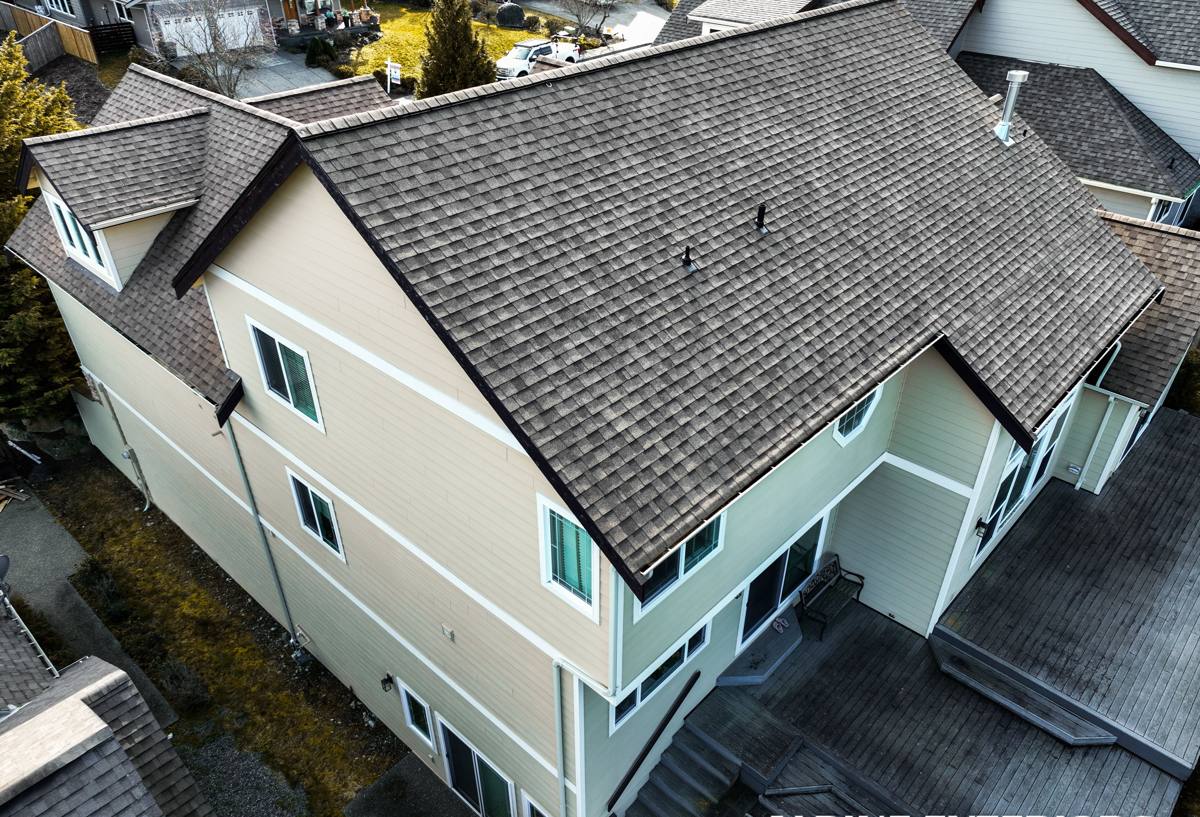
What's Actually Wearing Out Under an Older Lynden Deck
Ledger Board and Framing Rot
The ledger board — the framing member that ties the deck to the house — is one of the most common failure points on an older deck and one of the hardest to check without pulling boards. Years of rain working behind a poorly flashed or unflashed ledger connection lets moisture sit against that member and the rim joist behind it. By the time staining or softness shows up on the inside, the wood has typically been compromised for a while already.
Corroding Fasteners and Hardware
Joist hangers, post bases, carriage bolts, and deck screws take a steady dose of the moisture and marine-carried air common to this part of Washington, and standard hardware corrodes faster here than it would in a drier climate. Corrosion doesn't have to be visible to matter — a joist hanger that's lost holding strength from years of rust can look intact from a few feet away while no longer doing the job it was installed to do.
Moss and Trapped Moisture on the Surface
Horizontal surfaces hold moisture longer than walls or rooflines, and Whatcom County's mild, damp stretches give moss plenty of time to take hold — especially on shaded decks or ones tucked under trees. Moss and organic buildup between boards traps water against the decking and the framing below it, which speeds up the same rot and corrosion described above rather than just being a surface nuisance.
Signs Your Lynden Deck Has Reached Replacement, Not Repair
A repair makes sense when the problem is isolated — one soft board, one loose post, one worn section. Replacement is the right call once the damage is structural or spread across enough of the deck that patching it just means chasing the same problem in a new spot next year. Signs worth taking seriously:
- Soft, spongy, or springy decking in more than one area
- Visible gaps, staining, or softness where the deck meets the house at the ledger board
- Rust streaks running down from fasteners, hangers, or post hardware
- A railing that flexes, wobbles, or feels less solid than it used to
- Deck posts that have shifted, or footings that look cracked or heaved
- A deck older than 15-20 years that's had the surface refinished but the framing never inspected
- Moss or dark staining that comes back within weeks of cleaning
If more than one or two of these show up, the framing underneath is usually the real problem, and new boards over the same substructure just delays the same issue for a season or two.
What a Correct Deck Replacement Involves
A full replacement is a chance to fix what was wrong with the original build, not just swap in newer-looking material on the same setup. Done properly, that means:
- A structural inspection of posts, footings, and framing before deciding what actually gets reused
- Correct ledger flashing at the house connection — the single most common point of moisture intrusion on an older deck
- Corrosion-resistant fasteners and hardware sized for the real loads and spans, not leftover hardware pulled from the old deck
- Joist spacing matched to whatever decking product goes down, since span ratings differ by material
- Proper board gapping for drainage and material movement
- Railing and post attachment sized for the site's actual exposure, not just code minimums
- Grading and airflow underneath the deck so moisture doesn't sit against the new framing between storms
Choosing Decking Material for a Lynden Rebuild
Material choice matters more here than it would in a drier, more sheltered location, because the gap between a well-suited product and a poorly-suited one shows up faster. The main options homeowners weigh are pressure-treated or cedar wood, capped composite, and cellular PVC.
| Material | Upfront Cost | Moisture & Moss Resistance | Typical Maintenance |
|---|---|---|---|
| Pressure-treated wood | Lowest | Weak without regular sealing | Sealing or staining every 1-2 years |
| Cedar | Moderate | Fair when sealed and kept up with | Oiling or sealing yearly |
| Capped composite | Moderate-high | Strong — cap layer resists moisture and staining | Occasional washing |
| Cellular PVC | Highest | Excellent — no wood fiber to absorb moisture | Occasional washing |
Wood costs less upfront but asks the most of the homeowner afterward — skip a season of sealing and it shows. Capped composite and PVC cost more to install but hold up against sustained moisture and moss with far less upkeep, which matters in a climate where the wet season isn't short. We'll install whichever material fits the budget; our standard is making sure the framing, fasteners, and flashing underneath are right regardless of what decking sits on top.
Permits and Code for a Deck Replacement in Whatcom County
Most jurisdictions in Whatcom County, including the City of Lynden, require a permit for a full deck replacement — especially once framing, footings, or the ledger connection are being redone rather than just the surface boards. The details that actually matter here are things like guard height (typically 36-42 inches depending on the deck's height and use), baluster spacing built so a small child can't pass through the gap, and footing depth suited to the site. These aren't paperwork formalities; they're the difference between a deck that passes inspection and one that gets flagged partway through the job. We handle permitting and inspection scheduling as part of the project rather than leaving it on the homeowner's plate.
How Our Deck Replacement Process Works
- Site visit and structural assessment — we look at the existing deck's framing, footings, and ledger connection to see what's actually failing versus what's still sound
- Straight talk about repair versus full replacement, based on what the assessment turns up, not a default push toward the bigger job
- Material selection and a clear scope, matched to budget and how the space actually gets used
- Permitting, handled on our end
- Tear-off of the old deck and any compromised framing, footings, or ledger connection
- Rebuild — framing, ledger flashing, and hardware first, sized and fastened for the site's actual exposure
- Decking, railing, and any stairs installed to the chosen material's spec
- Final walkthrough covering inspection sign-off and what your specific decking material needs going forward
Why It Matters That We Already Work Lynden
A crew that occasionally builds a deck out this way can still do competent work, but a Lynden replacement has details that don't come up as often elsewhere in Whatcom County — which building department handles permitting for a given address, how drainage and grade tend to run on lots in this area, and which decades and deck-building patterns show up most often in the older homes here. Working this area regularly means we're not guessing at those things on your project. We've seen which fastener grades and framing details are worth the extra time on a Lynden rebuild, and which ones are just an upsell.
Keeping a New Deck From Repeating the Same Problems
Even a properly rebuilt deck in the right material still needs some routine attention in this climate to get its full lifespan. Worth keeping in mind once the new deck is in:
- Rinse the deck surface periodically to clear pollen, debris, and organic buildup before it works into the surface or cap layer
- Keep gaps between boards clear so water and airflow can move through as designed
- Check railing posts and hardware once a year for early corrosion or loosening, especially heading into the wet season
- Trim back branches or plants that hold moisture against the deck or block sun and airflow
- Address any soft framing or standing water underneath right away — that's structural, not cosmetic, and it doesn't improve on its own
If your Lynden deck is showing any of the signs above, or you just want an honest read on whether it needs a repair or a full replacement, we're glad to take a look. Reach out below for a free, no-pressure estimate.