 Semiahmoo Siding
 Windows Built for the Cherry Point Coastline
Cherry Point sits right on the Strait of Georgia, and that location shapes everything about how a window should be built, sealed, and maintained here. Homes along this stretch of Whatcom County take a steady diet of salt-laden air, wind-driven rain that hits glass and trim sideways instead of straight down, and a wet season that can stretch on long enough to grow moss on anything that holds moisture. A window that performs fine in a sheltered inland neighborhood can fail early out here if it wasn't chosen and installed with this specific exposure in mind.
This page covers what we've learned installing and replacing windows for Cherry Point homeowners: what the climate actually does to a window over time, what separates a correct installation from a corner-cut one, and how we approach the job so it holds up through another decade of Whatcom County weather.
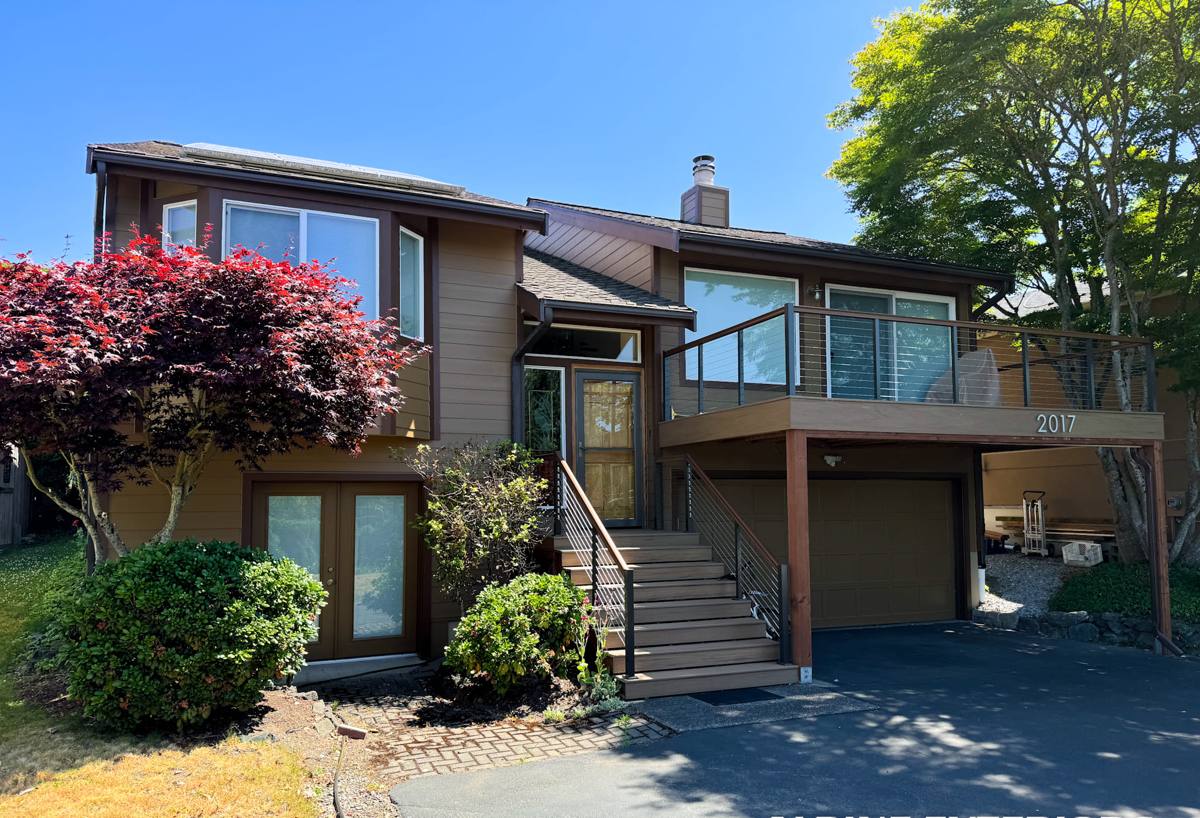
What Salt Air, Driving Rain, and Moss Actually Do to a Window
Salt Air
Airborne salt from the Strait settles on every exterior surface, including window frames and hardware. It's corrosive to unprotected or poorly coated metal components — hinges, locks, balance systems, and screen frames — and it accelerates the breakdown of cheaper finishes on aluminum and some composite products. Salt exposure doesn't ruin a window overnight; it's a slow, cumulative wear pattern that shows up first as pitting, chalking, or stiff hardware, usually within the first several years on lower-grade products.
Driving Rain
Wind off the water doesn't let rain fall straight down — it pushes it sideways into siding and window openings under real pressure. That means the flashing and sealant details around a window matter as much as the window unit itself. A well-built window installed with sloppy flashing will still leak. Water that gets behind the frame in a wind-driven rain event can travel a surprising distance before it shows up as a stain on an interior wall, which is why so many "mystery leaks" trace back to window details rather than the window itself.
Long Moss Season
Whatcom County's wet season keeps horizontal and shaded surfaces damp for months at a stretch. Window sills, trim, and anywhere water can pool or linger are prime spots for moss, algae, and mildew growth. Beyond the cosmetic issue, sustained moisture against wood trim or an improperly sealed frame edge is what eventually leads to rot and frame failure — moss is often the visible warning sign of a moisture problem that's already begun underneath.
Choosing the Right Window Material for This Climate
There's no single "best" window material for every home — it depends on your budget, the home's style, and how much upkeep you want to take on. Here's how the common options stack up specifically against Cherry Point's coastal conditions:
| Material | Salt Air Resistance | Maintenance | Notes for This Area |
|---|---|---|---|
| Vinyl | Good — won't corrode | Low | Solid value option; verify UV and impact-rated glazing packages for coastal wind exposure |
| Fiberglass | Very good | Low | Dimensionally stable in temperature swings, holds paint and finishes well over time |
| Wood (clad exterior) | Good on clad side, vulnerable where cladding is compromised | Moderate to high | Warm interior look; exterior seams and joints need careful detailing and regular inspection |
| Aluminum | Poor to fair unless marine-grade finish | Moderate | We're selective here — standard finishes can pit and chalk faster in salt air than other options |
Our general approach for Cherry Point homes: vinyl or fiberglass for most full-replacement projects, and clad-wood where the homeowner wants a specific interior wood look and understands the added upkeep. We'll walk you through the honest trade-offs for your specific home rather than pushing one product line.
Glazing and Weatherproofing Details That Matter Here
The glass package and the seal around it do most of the real work in a coastal climate.
- Dual or triple-pane glazing — reduces condensation risk and improves comfort near the glass on cold, damp Whatcom County days
- Low-E coatings — help manage heat loss and solar gain through our long gray-sky season
- Warm-edge spacers — the material separating the glass panes affects how well the seal holds up over years of temperature and moisture cycling; this is a detail worth asking about on any quote
- Corrosion-resistant hardware — locks, hinges, and balance systems rated for coastal or marine exposure last longer than standard-grade hardware here
- Impact and wind-load rating appropriate to open coastal exposure — homes with a direct water-facing exposure benefit from a higher-rated package than a sheltered inland lot would need
What a Correct Installation Actually Involves
The window unit itself is maybe half the job. The other half is everything around it — and it's the part that's invisible once the trim goes back on, which is exactly why it's where corners get cut.
Removal and Opening Prep
We check the rough opening, sheathing, and framing for existing moisture damage before anything new goes in. Installing a new window into a water-damaged opening just seals the problem behind new trim.
Flashing
Proper flashing directs any water that gets past the exterior cladding back out, not into the wall cavity. This is layered correctly — sill pan first, then side flashing, then head flashing — so each layer sheds water onto the one below it, shingle-style. On a driving-rain coastline like this one, flashing sequence is not optional detail work; it's the difference between a window that stays dry and one that leaks in year three.
Sealing and Insulation
Gaps around the frame get properly insulated and air-sealed, and exterior joints get sealant rated for the movement and moisture cycling of this climate — not a bead of whatever caulk was on the truck.
Final Weatherproofing and Trim
Exterior trim and any wood components are sealed on all exposed sides, including cut ends, before final paint or finish — a step that's easy to skip and is exactly where moss and rot get their start on trim that looks fine from the street.
Our Process for Cherry Point Homeowners
- On-site assessment — we look at your existing windows, openings, and any signs of moisture or rot before recommending anything
- Honest product recommendation — matched to your home's exposure, budget, and style, not a one-size-fits-all pitch
- Written estimate — clear on materials, scope, and timeline, no surprise add-ons
- Careful removal and opening prep — including addressing any hidden moisture damage we find
- Correct flashing and sealing sequence — done the same way regardless of whether it'll ever be visible again
- Final inspection and walkthrough — we show you the finished work and how to care for it
Living With Windows on the Whatcom County Coast: Maintenance That Actually Matters
Even a correctly installed window benefits from a little seasonal attention out here. A short annual routine goes a long way toward getting the full lifespan out of your investment:
- Rinse salt residue off frames and glass periodically, especially after storms with onshore wind
- Clear debris and check that sills and trim are draining and drying properly, not holding standing water
- Gently remove moss or algae from sills and trim before it holds moisture against the surface long-term
- Check and lightly lubricate hardware — locks, hinges, balance systems — so salt air doesn't seize them up
- Inspect exterior caulk lines yearly and have any cracked or separated sealant redone before the wet season sets in
What Windows Typically Cost — and What Drives the Range
Exact pricing depends on your home, but the factors below are what generally move a project up or down in cost. We'll give you specific numbers for your home during a free estimate rather than a generic figure that doesn't account for your actual conditions.
| Cost Factor | How It Affects Price |
|---|---|
| Material (vinyl vs. fiberglass vs. clad-wood) | Vinyl is typically the entry point; fiberglass and clad-wood run higher |
| Glazing package | Upgraded Low-E coatings, triple-pane, or higher wind/impact ratings add cost but improve durability here |
| Number and size of openings | More scales roughly with the project; larger custom shapes and sizes cost more per unit |
| Existing damage found during removal | Rotted framing or sheathing discovered during the job requires repair before the new window goes in |
| Trim and exterior finish work | Full trim replacement and repainting adds labor beyond the window swap itself |
Why Hiring a Crew That Already Works Cherry Point Matters
Window installation isn't identical everywhere, and a crew that mostly works drier, more sheltered inland areas can miss details that matter on this stretch of coast. We work throughout Semiahmoo and the surrounding Whatcom County shoreline, so we've seen firsthand how salt air ages hardware, how driving rain finds the gaps in a rushed flashing job, and how quickly moss takes hold on a sill that isn't shedding water correctly. That experience shapes every recommendation we make and every install we do — we're not guessing at what this coastline does to a window, we're building around it.
If you're weighing a window replacement or a custom window project for your Cherry Point home, we're happy to take a look and give you a straight, no-pressure estimate — what we'd recommend, why, and what it would cost. There's no obligation, and no pressure to decide on the spot. Just fill out the form below and we'll get in touch.