 Semiahmoo Siding
 Building a Deck That Actually Holds Up in Point Roberts
Point Roberts sits on its own peninsula, surrounded by water on three sides and cut off from the rest of Whatcom County by the international border. That geography is part of what makes it a beautiful place to own a home — and part of what makes it a hard place to build an outdoor structure that lasts. A deck built with the same materials and details you'd use inland will show its age faster here. Salt-laden air off Boundary Bay and the Strait of Georgia, driving rain that comes in sideways during fall and winter storms, and a moss season that can stretch from October into May all work against a deck year-round. Building one correctly the first time isn't optional in this location — it's the difference between a deck that needs real repair in five years and one that's still solid in twenty.
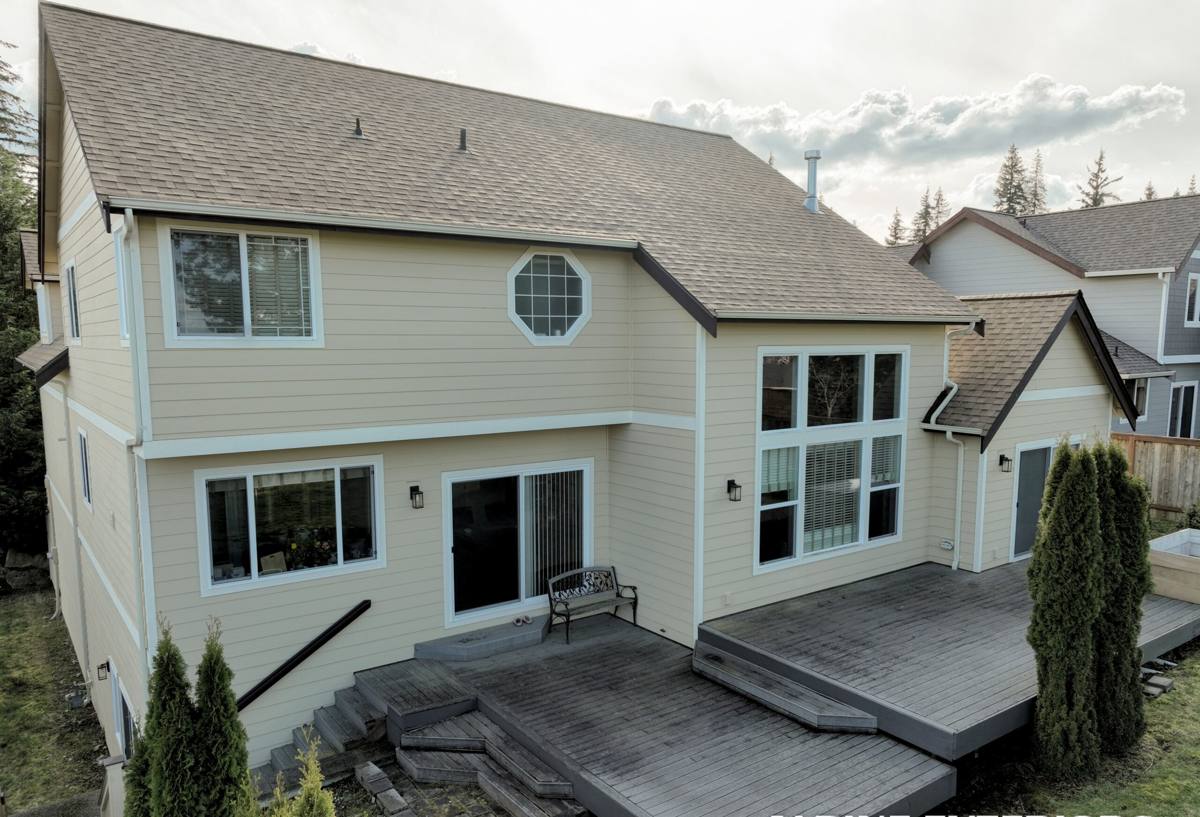
What Salt Air, Driving Rain, and Moss Season Actually Do to a Deck
Salt Air and Corrosion
Airborne salt doesn't need a storm to do damage — it settles quietly on every exposed surface, day after day. On a deck, that means fasteners, joist hangers, post bases, and railing hardware are under constant chemical attack. Standard zinc-coated or electro-galvanized screws and brackets that would last decades in a drier inland town can start rusting within a few years this close to the water. Once a fastener corrodes, it loses holding strength long before it looks obviously bad, which is exactly why so many deck failures start invisibly, underneath the decking boards, at the connections nobody checks.
Driving Rain and Standing Water
Whatcom County's weather doesn't just rain straight down — wind-driven rain off the water pushes moisture sideways, into ledger connections, under railing posts, and into any gap where flashing was skipped or done half-heartedly. Combined with our long wet season, that means any spot on a deck where water can collect instead of shed will stay damp for weeks at a stretch. Wood rot, coating failure, and slippery algae growth almost always start at these low points — a ledger board without proper flashing, a post base sitting in a puddle, a board gap that's too tight to drain.
Moss and Prolonged Dampness
Moss doesn't just grow on roofs here. On a shaded, north-facing, or tree-covered deck, moss and algae will colonize decking boards, railings, and even structural framing if conditions stay damp long enough. Beyond being slippery and unattractive, moss holds moisture directly against the wood or composite surface, which accelerates rot in real wood and can void warranties on some composite products if it's left untreated. A deck built with airflow and drainage in mind resists this far better than one that traps moisture underneath.
Choosing the Right Decking Material for This Climate
There's no single "best" decking material for every home — it depends on budget, how much upkeep you want to do, and how exposed the deck is to sun, wind, and salt spray. Here's how the common options compare specifically for a Point Roberts environment:
| Material | Moisture Behavior | Maintenance | Typical Lifespan Here |
|---|---|---|---|
| Pressure-treated lumber | Absorbs and releases moisture; prone to cupping/splitting if not sealed regularly | Annual cleaning and re-sealing/staining recommended | 10-15 years with upkeep, less without it |
| Cedar | Naturally rot-resistant but still needs sealing against salt air and standing water | Sealing every 1-2 years; graying occurs quickly near the water without maintenance | 15-20 years with consistent care |
| Composite decking | Won't rot or absorb water, but lower-quality or older composite can still trap moisture at fastener points | Occasional washing to prevent algae buildup; no staining or sealing required | 20-25+ years, backed by manufacturer warranty |
| PVC/capped decking | Fully moisture-resistant surface; best resistance to salt exposure and standing water | Lowest maintenance of the group; periodic cleaning only | 25-30+ years, backed by manufacturer warranty |
For a deck that gets direct salt spray or sits low and shaded where moisture lingers, we generally steer homeowners toward composite or PVC decking — not because wood is a bad product, but because the ongoing sealing and staining schedule required to keep real wood performing well in this climate is a genuine commitment. If you want the look and feel of wood and are prepared to stay on top of maintenance, cedar is still a solid choice. We'll walk through the honest trade-offs for your specific site during the estimate rather than pushing one product line.
The Structural Details That Matter More Here Than Elsewhere
The parts of a deck you can see are only half the job. In a salt-air, high-rainfall environment, the connections and hidden components are where a deck earns — or loses — its lifespan.
- Ledger board flashing: The board that attaches a deck to the house needs a properly layered flashing system, not just caulk, to keep wind-driven rain from working its way behind the siding.
- Fastener and hardware grade: Stainless steel or heavy-duty coated fasteners rated for coastal or high-corrosion use matter far more here than in a typical inland build. This applies to joist hangers, structural screws, and railing hardware alike.
- Footings and frost depth: Post footings need to be set to the correct depth and properly cured before load is applied — skipping this step is invisible until the deck starts to shift.
- Drainage and slope: Decking should be installed with a slight slope away from the house and enough gap between boards to let water and debris pass through instead of collecting.
- Joist protection tape: A moisture barrier over the tops of joists keeps water from soaking into end grain, which is one of the most common hidden rot points on older decks.
Permitting in Whatcom County
Most elevated decks, and any deck with guardrails over a certain height, require a building permit and inspection under Whatcom County's building codes, even in an unincorporated area like Point Roberts. Permitting exists to catch exactly the kind of structural shortcuts that cause problems later — footing depth, ledger attachment, and guardrail height and spacing are all checked. We handle the permit application and coordinate inspections as part of the job rather than leaving it for the homeowner to sort out, and we design to code from the start so nothing gets flagged partway through construction.
Our Process, Start to Finish
Site Assessment and Design
We walk the property, look at sun and wind exposure, drainage patterns, and how close the deck will sit to salt spray or shaded, damp ground. That assessment shapes both the layout and the material recommendation — a deck tucked against a windbreak has different needs than one facing open water.
Permitting and Planning
Once the design is set, we prepare and submit the permit package and schedule the required inspections so construction isn't delayed waiting on paperwork.
Construction
Footings go in first and are given proper cure time before framing continues. Framing uses coastal-grade fasteners and hardware throughout, ledger flashing is installed in layers, and joist tops are protected before decking goes down. We build the structure to handle the load and the weather, not just to pass a quick look.
Railings, Sealing, and Finish Work
Railings, stairs, and any wood surfaces get sealed or finished before we walk the site with you. We check every fastener, every gap, and every drainage point before calling the job done.
Why a Crew That Already Works in Point Roberts Matters
Point Roberts isn't like the rest of Whatcom County logistically. Every trip in or out means clearing the border, and that changes how a job should be staged. A crew that doesn't regularly work in Point Roberts often has to build in extra trip charges, longer lead times for forgotten materials, and guesswork about which hardware actually holds up in this specific exposure. A crew that already works the peninsula on a regular basis has that logistics problem solved — materials get staged correctly the first time, border crossing delays don't stall the schedule, and if a warranty question comes up two years later, getting someone back out to look at it isn't a special trip. That local familiarity also extends to knowing which parts of Point Roberts get the harshest direct salt exposure versus which are more sheltered, which directly affects the fastener grade and material recommendation we make for your specific lot.
Keeping a Coastal Deck Looking Good Year After Year
A well-built deck in this climate still needs seasonal attention. None of it is difficult, but skipping it is how small issues turn into structural ones.
- Sweep debris and standing leaves off the decking surface regularly, especially in fall when moss and algae take hold fastest.
- Rinse salt residue off railings and decking a few times a year, particularly after storms with strong onshore wind.
- Check fastener heads and hardware annually for early rust staining, which shows up before structural failure does.
- Re-seal or re-stain real wood decking on the schedule the product calls for — don't wait until it visibly grays and cracks.
- Keep gutters and downspouts near the deck clear so runoff isn't dumping extra water onto or under the structure.
- Trim back vegetation that's shading the deck and keeping it damp longer than the surrounding area.
Getting a Deck That's Actually Right for Your Lot
Every Point Roberts property faces this climate a little differently — how close you are to open water, how much shade and tree cover you have, and which direction your deck faces all change what the right material and hardware choices are. There's no substitute for walking your specific site before recommending a plan. If you're planning a new deck or replacing one that's showing its age, we're glad to come take a look, talk through honest options for your lot, and put together a free, no-pressure estimate.