 Semiahmoo Siding
 Cherry Point Sits Right at the Edge of the Weather
Cherry Point is shoreline property in Whatcom County, and shoreline property gets a different weather bill than a house ten miles inland. Homes here take on salt-laden air off the water, wind-driven rain that hits siding sideways instead of falling straight down, and long stretches of the year when surfaces barely dry out between storms. That combination is exactly what shortens the life of ordinary siding — and it's why we treat a Cherry Point siding job differently than a job in a drier, more sheltered part of Whatcom County.
None of this means Cherry Point is a bad place to build or maintain a home. It means the siding system has to be chosen and installed with the local conditions in mind, not just picked off a shelf because it's the cheapest option at the yard. This page walks through what that actually looks like for James Hardie fiber cement siding — the only siding system we install — on Cherry Point homes.
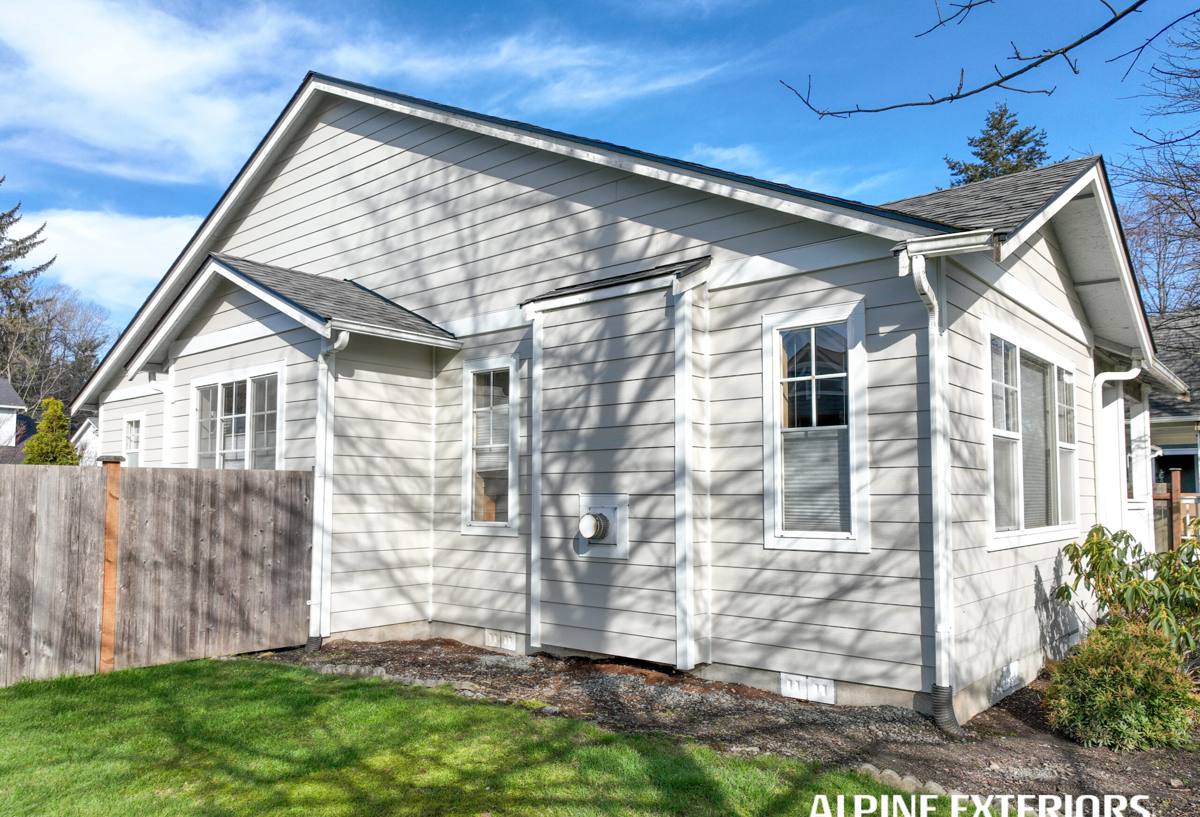
What Salt Air, Rain, and Moss Actually Do to Siding Over Time
Salt air is corrosive to exposed metal fasteners, trim flashing, and hardware, and it accelerates the breakdown of coatings that aren't built to handle it. On siding materials that rely on paint film or a thin factory coating for protection, salt exposure means the finish chalks, fades, and fails faster than the same product would inland.
Driving rain is a different problem. When rain comes in at an angle instead of straight down, it gets pushed up under laps, into seams, and behind trim in ways that vertical rain never would. Any siding system with weak joints, undersized overlaps, or gaps around penetrations is going to take on moisture in these conditions — and once moisture gets behind siding, it stays there far longer than it would in a drier climate.
Then there's moss. Western Washington's long wet season, combined with shade from mature trees and north-facing walls that never fully dry, creates ideal conditions for moss and algae to colonize siding surfaces. Moss holds moisture against the wall, and constant moisture against wood-based or moisture-sensitive siding materials is a slow but steady path toward rot, delamination, and paint failure.
Put those three factors together — salt, driving rain, and moss — and you get a climate that punishes any siding material with a weak point. Fiber cement done correctly doesn't have those weak points the way some other materials do.
Why James Hardie Fiber Cement Fits This Climate
James Hardie siding is fiber cement — a mix of cement, sand, and cellulose fiber that is dimensionally stable and doesn't absorb and release moisture the way wood-based products do. That matters enormously in a climate where the material rarely gets a long dry stretch to recover between rain events.
Hardie also engineers its products by climate zone. The HZ5 formulation, built for regions with freeze-thaw cycles and sustained moisture exposure, is the version suited to Pacific Northwest conditions like Cherry Point's. It's not a cosmetic difference — the formulation is adjusted for how the board performs when it's repeatedly wet and cold.
On top of the substrate itself, ColorPlus finish is a factory-applied, baked-on coating that resists fading and chalking far better than field-applied paint, which matters when salt air is working against the finish every day. It also means touch-ups and future color changes are handled with a matched process rather than guesswork at a paint counter.
None of this makes Hardie siding maintenance-free. It makes it a material that starts from a much stronger position against the specific stresses Cherry Point throws at a house.
What a Correct Installation Involves Here
The product is only half the equation. A huge share of siding failures — on any brand, including Hardie — trace back to installation shortcuts rather than the material itself. In a marine, high-rain environment, the installation details matter more than they would somewhere drier.
The details we don't skip
- Correct clearance between the bottom of the siding and grade, decks, and roof lines, so splash-back and standing water don't sit against the board
- Proper flashing at every window, door, and penetration — the single most common source of hidden moisture intrusion
- Manufacturer-specified fastener spacing and type, since undersized or improperly placed fasteners loosen over time and open a path for water
- Correct panel and lap overlap, sized for wind-driven rain rather than the minimum spec
- A functioning weather-resistive barrier and rainscreen gap behind the siding, so any moisture that does get past the surface can drain and dry instead of sitting against the wall sheathing
- Sealed and caulked joints using products rated for the exposure, not just whatever caulk is on the truck
James Hardie backs its siding with a strong transferable warranty, but that warranty depends on installation to their specification. A rushed or generic install can technically use Hardie boards and still fail early — which is why the crew doing the work matters as much as the product they're holding.
Hardie Product Lines We Use on Cherry Point Homes
Not every Hardie product is the right fit for every wall, roofline, or architectural style. Part of a proper estimate is matching the product line to the house.
| Product | Best Use | Why It Fits This Climate |
|---|---|---|
| HardiePlank Lap Siding | Primary wall siding, most home styles | Traditional lap profile sheds driving rain well when installed with correct overlap |
| HardiePanel Vertical Siding | Accent walls, modern styles, gable ends | Fewer horizontal seams for water to work into on exposed elevations |
| HardieShingle Siding | Accent sections, dormers, gables | Adds visual texture without sacrificing the moisture performance of fiber cement |
| HardieTrim Boards | Corners, window and door trim, fascia | Matches the wall system's stability so trim and siding move together, reducing gap and caulk failure |
Color and texture selection is part of the estimate conversation, but the underlying product choice comes first — the wrong profile in the wrong location is a maintenance headache waiting to happen, regardless of color.
How the Job Actually Runs
Every project starts with an in-person look at the house, not a phone estimate. We check the existing siding and sheathing condition, look for any signs of past moisture intrusion, and identify problem areas — north-facing walls with moss buildup, low-clearance sections near grade, and spots where past trim or flashing work was cut short.
From there we walk through product and color selection, confirm scope in writing, and schedule the work. During tear-off, we inspect the sheathing underneath before anything new goes on — if there's hidden rot or moisture damage from the old siding, that gets addressed before a single piece of Hardie board is hung. Covering up a problem with new siding just delays it and makes it more expensive to fix later.
Installation follows manufacturer spec on fastening, flashing, and clearances as described above. We walk the finished job with the homeowner before calling it done, and we register the warranty paperwork so it's on file, not something you have to track down later.
Cost Factors for a Cherry Point Siding Project
Every house is different, so we don't publish blanket prices, but the factors that move cost up or down are consistent from job to job.
| Factor | How It Affects Cost |
|---|---|
| Existing siding removal | Full tear-off costs more than a straightforward re-side, but skipping it to save money hides sheathing problems |
| Sheathing or framing repair | Only discovered once old siding is off; moisture damage near grade or under old flashing adds cost but has to be fixed |
| Home size and wall complexity | More corners, dormers, and roof intersections mean more flashing and trim detail work |
| Product mix | Combining lap siding with panel or shingle accents costs more than a single product but adds architectural interest |
| Trim and detail scope | Full HardieTrim replacement versus reusing sound existing trim changes the total materially |
The only way to get real numbers is a walk-through — anything quoted without seeing the house is a guess.
Why a Crew That Already Works Cherry Point Matters
A contractor who mostly works drier, inland jobs can still install Hardie siding competently on paper and still miss the details that matter specifically here — the clearance a Cherry Point wall needs versus an inland wall, where moss tends to establish first on local roof and wall lines, or how much slower a north-facing elevation dries in this exact microclimate. Local, repeated experience in this specific environment is what turns generic "correct installation" knowledge into installation that's actually tuned to the conditions the house will face for the next several decades.
It also matters for accountability. A crew that works Whatcom County's shoreline communities regularly has a reputation to protect in that same community — which is a different incentive than a crew passing through for a one-off job.
Ongoing Care Checklist for Hardie Siding in a Marine Climate
Hardie siding is low-maintenance compared to wood, but "low-maintenance" isn't "no-maintenance," especially with Cherry Point's exposure. A short annual routine keeps it performing the way it's designed to.
- Rinse siding once or twice a year with a garden hose to clear accumulated salt residue, dust, and pollen, especially on ocean-facing walls
- Check north-facing and shaded sections each fall for early moss or algae growth and treat it before it spreads
- Inspect caulking around windows, doors, and trim joints annually and re-caulk any cracked or separated seams promptly
- Keep gutters clear so overflow doesn't run down the face of the siding repeatedly during heavy rain
- Trim back vegetation and tree cover that keeps walls shaded and slow to dry
- Watch for any soft spots, staining, or bubbling at trim joints or low-clearance areas, which can signal moisture getting behind the siding
Catching small issues during this kind of routine check is far cheaper than dealing with hidden moisture damage a few years down the road.
Get a Straight Answer for Your House
If you're planning a siding project on Cherry Point or anywhere nearby in Whatcom County, we're happy to walk the house, point out what we actually see, and give you a straightforward estimate — no pressure, no upsell into a product we wouldn't put on our own homes. Use the form below to get started.