 Semiahmoo Siding
 Why Board & Batten Fits the Cherry Point Waterfront
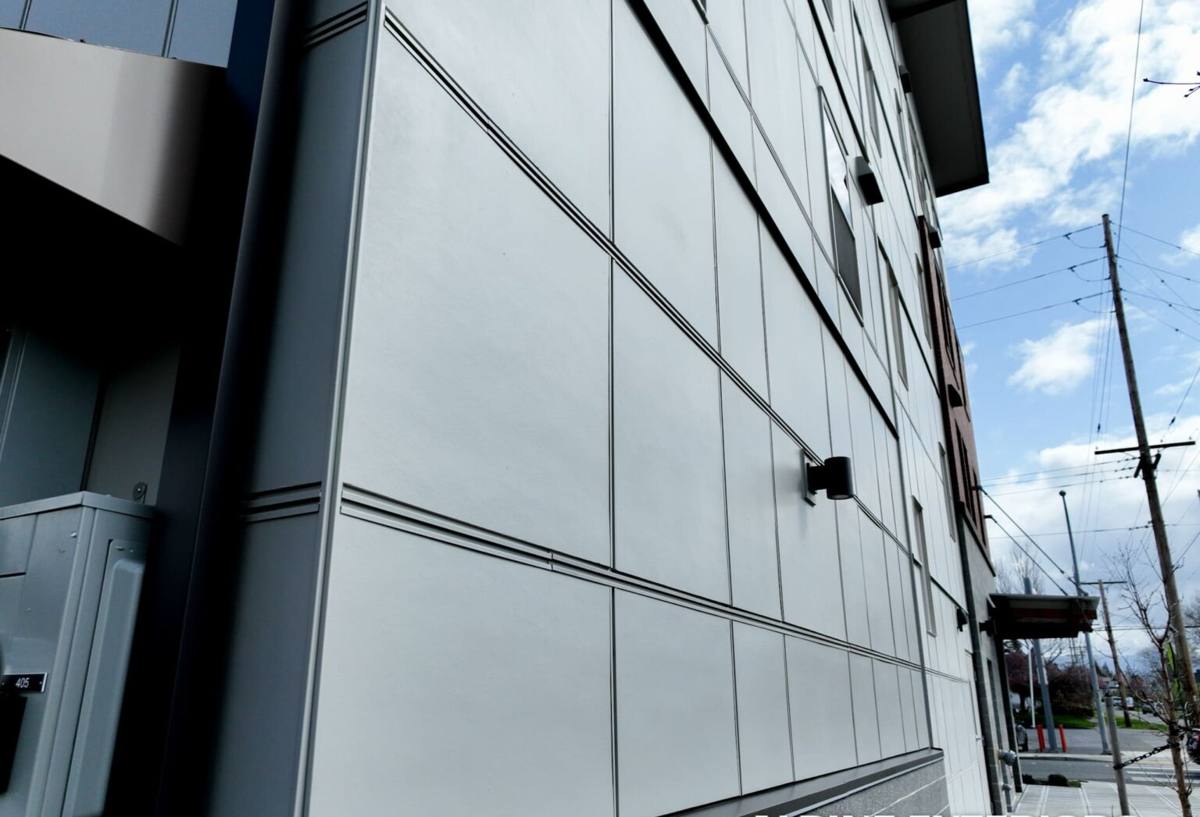
Cherry Point sits right up against the marine air coming off the Strait of Georgia, and that setting shapes what works on a house here and what doesn't. Board and batten — wide vertical panels with narrow strips covering the seams — has become one of the most requested siding profiles for homes in this part of Whatcom County, and not just because of the look. The vertical lines shed water differently than lap siding, the reduced number of horizontal laps means fewer places for standing moisture to collect, and the style reads well against the mix of shoreline lots, wooded acreage, and open pasture you find around Semiahmoo and Cherry Point. It also pairs naturally with the barns, farmhouses, and modern coastal builds that make up a lot of the housing stock out here.
That said, board and batten is not a forgiving style if it's built with the wrong material or installed loosely. The wide, flat panel faces show every flaw, and the batten strips create dozens of extra seams and fastener points compared to standard lap siding. Get it right and it's one of the best-looking, most durable options for this stretch of coastline. Get it wrong and you've built a maintenance problem with a lot of extra places for water to find its way in.
What Cherry Point's Climate Actually Does to Vertical Siding
Salt Air and Corrosion
Homes close to the water at Cherry Point take on a steady dose of salt-laden air, and that air doesn't stop at the wall — it works its way into fasteners, flashing, and any exposed metal trim. Standard electro-galvanized nails and staples corrode faster here than they would ten miles inland, and once a fastener starts to rust, it can bleed through paint and eventually lose its grip. Anything installed at Cherry Point needs corrosion-resistant fasteners and flashing as a baseline, not an upgrade.
Wind-Driven Rain
Storms coming off the Strait don't just drop rain straight down — they push it sideways, and a vertical siding profile with dozens of batten seams gives wind-driven rain more opportunities to find a gap than a horizontal lap profile does. Every seam, every batten-to-panel joint, and every penetration for a light fixture or hose bib is a place water will test first during a hard blow.
A Long Moss Season
Shaded lots, tree cover, and the persistent damp that settles in through fall, winter, and spring add up to a moss season that runs long around here. Moss and algae need moisture and a surface to hold onto, and a siding material that absorbs water or has a rough, porous face gives them exactly that. Anything installed at Cherry Point needs to resist water absorption at the panel itself, not just rely on paint to keep moisture out.
Why We Only Install James Hardie Fiber Cement for This Profile
Board and batten can be built out of a number of materials, and we've made a deliberate decision to install it only in James Hardie fiber cement. Fiber cement doesn't absorb water the way wood-based products do, it won't rot, and it holds up to direct salt air exposure far better than materials that depend on a surface coating alone to stay protected. Hardie's HZ5 product line is engineered specifically for climates like this one — cold, wet, and coastal — with a formulation built to resist moisture-related damage over the long term.
The factory-applied ColorPlus finish matters just as much as the substrate. It's baked on under controlled conditions rather than sprayed on site, which gives it better adhesion and color retention against sun, salt, and driving rain than field-applied paint typically achieves. For a profile with as many exposed seams and edges as board and batten has, starting with a finish that's already proven against coastal weather is a real advantage over site-applied coatings.
What a Correct Board & Batten Installation Involves
Rainscreen and Drainage Plane
Board and batten should never go directly against the sheathing. A drainage gap — created with a vertical furring strip or a purpose-built rainscreen product — lets any moisture that gets past the outer surface drain and dry out instead of sitting against the wall. This is especially important with a vertical profile, since water tends to travel down the panel face and needs somewhere to go besides straight into the wall assembly.
Fastening and Batten Placement
Battens need to land over structural framing, and both the wide panels and the narrow battens need to be fastened with corrosion-resistant nails at the spacing Hardie specifies for this climate zone. Loose batten spacing or fasteners that miss the framing are two of the most common shortcuts we see on vertical siding jobs, and both lead to panels that work loose or buckle over time.
Flashing and Trim Details
Every window, door, and roofline intersection needs flashing that directs water out and away from the wall, not just caulk covering a gap. Caulk fails; properly lapped flashing doesn't rely on adhesion to keep water out. Around a house exposed to driving rain off the Strait, this detail work is where a job either holds up for decades or starts leaking within a few winters.
Panel and Batten Sizing
Panel width, batten width, and reveal spacing all affect how the wall reads visually and how much expansion and contraction the assembly has to manage. We size these to the specific elevation and to Hardie's engineering guidance, not to whatever happens to be easiest to install.
| Factor | What It Affects | Why It Matters at Cherry Point |
|---|---|---|
| Rainscreen / furring depth | Drainage behind the siding | More rain reaching the wall means more water that needs a path to drain and dry |
| Fastener material | Long-term hold, rust staining | Salt air accelerates corrosion of standard fasteners |
| Batten spacing and count | Number of seams, visual rhythm | Every seam is a potential entry point in wind-driven rain |
| Prep and tear-off scope | Whether hidden sheathing damage gets addressed | Long moss season often means hidden moisture behind old siding |
| Trim and flashing detail | Water management at penetrations | Driving rain finds any shortcut at windows, doors, and rooflines |
Our Process for a Cherry Point Board & Batten Job
We treat every board and batten project as a full wall-assembly job, not just a facelift. Here's what that looks like in practice:
- On-site assessment of the existing wall, sheathing condition, and any moss, algae, or moisture staining already present
- Full removal of old siding so we can inspect and repair sheathing rather than siding over hidden damage
- Installation of a code-compliant weather-resistive barrier and rainscreen gap suited to the exposure at your specific lot
- Corrosion-resistant fastening of James Hardie panels and battens at manufacturer-specified spacing
- Properly lapped flashing at every window, door, and roofline intersection — not caulk-only shortcuts
- Final inspection of seams, fastener lines, and trim before we consider the job complete
- Warranty registration so the transferable Hardie product warranty is on file from day one
Why a Crew That Already Works Cherry Point Makes a Difference
A contractor who only occasionally works this close to the water can miss things that a crew familiar with Cherry Point catches automatically — how much heavier the fastener corrosion protection needs to be on a shoreline-facing wall, which elevations take the worst of the wind-driven rain, and how long moss and algae take hold on shaded, tree-covered lots compared to more open sites. That familiarity shows up in the small decisions: where extra flashing gets added even though it's not strictly required, which fastener spec gets used without having to look it up, and how the job gets sequenced around the wet stretches of the year that are common here.
It also matters for permitting and code compliance specific to Whatcom County, and for knowing realistically how a board and batten wall on a Cherry Point lot will look and perform five or ten winters down the road — not just on installation day.
Living With Board & Batten in a Salt Air, High-Moss Environment
Fiber cement board and batten with a factory finish needs far less upkeep than wood-based alternatives, but it isn't zero-maintenance. A yearly rinse to knock down moss, algae, and salt residue keeps the ColorPlus finish looking like it should and prevents organic growth from getting a foothold in batten seams. Keeping gutters clear and vegetation trimmed back from the walls also reduces how much moisture and shade sit against the siding — both of which shorten moss season on your specific walls even if they can't shorten it for the whole neighborhood. Checking caulked joints at trim and penetrations once a year, and having any damaged panel replaced promptly rather than left, keeps small issues from becoming wall-assembly problems.
Ready to Talk Through Your Cherry Point Project?
If you're weighing board and batten for a home at Cherry Point or elsewhere around Semiahmoo, we're glad to walk the property, talk through what your specific elevations are exposed to, and give you a straight answer on what the job actually involves. Fill out the form below for a free, no-pressure estimate.