 Semiahmoo Siding
 Why Decks in Blaine Harbor Wear Out Faster Than Inland Homes
A deck in Blaine Harbor works harder than a deck a few miles inland. The combination of salt-laden air off Semiahmoo Bay and Drayton Harbor, driving wind-blown rain off the Strait, and a moss season that can stretch from October through May puts constant pressure on fasteners, framing, and decking surfaces. Salt air accelerates corrosion in anything less than fully rated hardware, and the region's persistent damp keeps wood decking wet longer after every storm than homeowners further from the water typically deal with. If your deck was built with standard interior-grade screws, untreated framing lumber, or a design that traps water instead of shedding it, you're likely seeing the effects years earlier than a manufacturer's warranty would suggest.
We replace decks specifically in this environment, which is different from general deck work. A deck that would hold up fine in a drier part of Whatcom County can fail structurally at the ledger board or support posts here in half the time if it wasn't built with coastal exposure in mind.
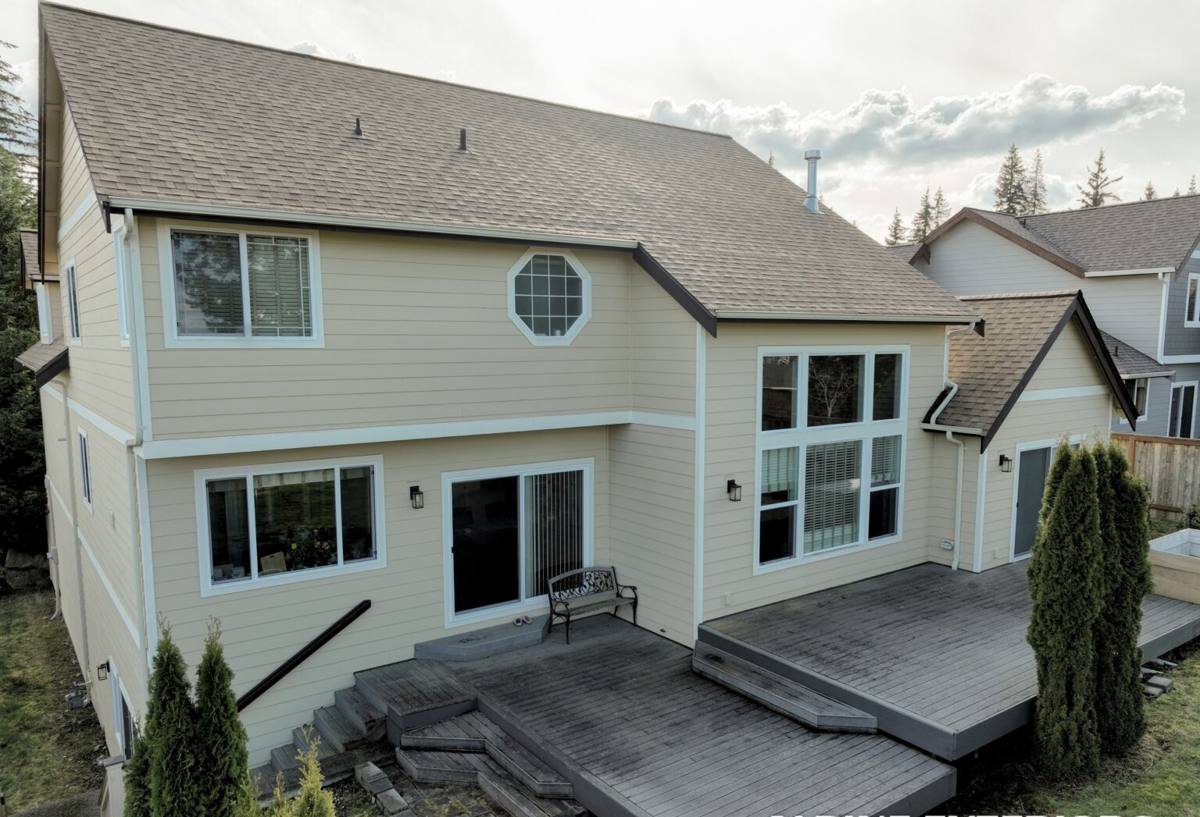
Signs a Blaine Harbor Deck Needs Replacement, Not Repair
Not every tired-looking deck needs to come out. But there's a point where patching boards or re-staining stops being worth it and full replacement becomes the honest recommendation. Here's how we tell the difference on site.
Repair Is Usually Enough When:
- Surface boards are cupping or graying but the frame underneath is solid and dry
- A handful of boards have isolated rot from a specific water intrusion point
- Railings are loose but the posts themselves aren't soft or rotted at the base
- Fasteners are rusting on the surface but structural connections are still sound
Replacement Is the Right Call When:
- The ledger board attachment to the house shows rot, rust streaking, or gaps — this is the connection that keeps a deck attached to your home and it's not a spot to patch
- Support posts or beams are soft, spongy, or show visible checking below the waterline of splash-back
- Joist hangers are rusted through rather than just surface-stained
- More than a third of the decking boards show rot, delamination, or structural softness
- The deck was built without proper flashing at the house connection, which in this climate almost guarantees hidden moisture damage over time
A deck that fails the ledger or framing test isn't a cosmetic problem — it's a load-bearing safety issue, and it's the single most common reason we recommend full replacement over repair in coastal Whatcom County homes.
What a Correct Deck Replacement Involves
Framing and Ledger Attachment
The framing is where a coastal deck earns or loses its lifespan. We use pressure-treated lumber rated for ground contact even on elevated framing, because splash-back and condensation from salt-humid air reach framing members that would stay dry in a drier climate. The ledger board — the piece bolted to your house that carries a large share of the deck's load — gets proper flashing to keep water from wicking behind it into your home's sheathing, which is a common failure point on older Blaine Harbor decks that were never flashed correctly in the first place.
Fasteners and Hardware
This is the detail that separates a deck that lasts from one that doesn't near the water. Standard galvanized fasteners corrode faster in salt air than their rated lifespan suggests. We use stainless steel or high-grade coated fasteners and connectors rated for coastal and treated-lumber exposure throughout, not just on the visible surface boards. It costs more up front than mixed-grade hardware, but it's the difference between a deck that needs re-fastening in five years and one that doesn't.
Decking Material Selection
Whether we recommend wood, composite, or PVA decking depends on your maintenance appetite, budget, and how exposed the deck is to direct salt spray versus general humidity. We'll walk through the honest trade-offs for your specific site rather than pushing one product line.
Decking Material Options for a Salt-Air Climate
| Material | How It Handles Salt Air & Rain | Maintenance | Typical Lifespan Here |
|---|---|---|---|
| Pressure-treated wood | Needs consistent sealing to resist moisture absorption; performs well when maintained | Annual cleaning, re-sealing every 1-3 years | 10-15 years with upkeep |
| Cedar | Naturally rot-resistant but still needs sealing near the water; grays without it | Sealing every 2-3 years | 15-20 years with upkeep |
| Capped composite (e.g. Trex, TimberTech) | Resists moisture absorption and salt staining well; won't rot | Periodic washing, no sealing needed | 25-30+ years, backed by manufacturer warranty |
| PVC decking | Fully synthetic, handles damp and salt exposure with minimal issue | Occasional washing | Similar to or longer than composite |
Composite and PVC cost more per square foot up front, but for a deck facing direct exposure off the water, the reduced maintenance burden and moisture resistance often make them the more practical long-term choice. Wood remains a reasonable option for covered or less-exposed decks where you're comfortable keeping up with sealing.
Moss, Drainage, and Under-Deck Considerations
Moss season is a real design factor here, not just a cleaning nuisance. Moss and algae growth on decking surfaces holds moisture against the boards, which accelerates rot in wood decking and can make composite surfaces slick and discolored if left unaddressed. When we replace a deck, we look at three things that most repair jobs never touch:
- Board spacing and orientation — proper gapping lets water and debris pass through instead of pooling, which matters more in a climate with months of steady drizzle than in drier regions
- Grade and slope beneath the deck — poor drainage under a low-clearance deck keeps the ground damp for months, feeding moss and accelerating post rot from the bottom up
- Airflow around framing — enclosed skirting without ventilation traps humidity against the frame; we build in airflow where the design allows it
None of these are expensive add-ons — they're just details that get skipped when a deck is built or rebuilt without accounting for this specific climate.
Our Deck Replacement Process
- On-site assessment — we inspect the existing deck's framing, ledger connection, and posts to confirm what's actually driving the failure, not just what's visible on the surface
- Material and design conversation — we go over decking material trade-offs, railing options, and any layout changes you want, based on your budget and how the deck gets used
- Written estimate — a clear scope covering demolition, framing, fasteners, decking, and railing, so there are no surprise line items mid-project
- Demolition and disposal — full removal of the old deck, checked for any hidden rot at the house connection before new framing goes up
- Framing and flashing — treated framing, proper ledger flashing, and coastal-rated hardware throughout
- Decking and railing installation — installed to the spacing and fastening spec appropriate for your chosen material
- Final walkthrough — we go over the finished deck with you, including basic care guidance specific to the material you chose
Permits and Whatcom County Considerations
Deck replacement projects, especially those involving structural framing changes or decks above a certain height, typically require a permit under local building code. Requirements can also differ depending on how close your property sits to the shoreline, since shoreline setback rules apply in parts of the Semiahmoo and Blaine Harbor area. We handle the permit process as part of the job so you're not left tracking down requirements yourself, and we build to code rather than cutting corners to speed up the timeline.
Why Hire a Crew That Already Works Blaine Harbor
A contractor who mostly builds decks inland will default to specs that work fine in a drier part of the state but fall short here. Knowing to flash a ledger board for salt-humid conditions, to spec stainless fasteners instead of standard galvanized, and to grade for drainage under a low-clearance deck isn't guesswork — it's pattern recognition from seeing what actually fails on homes exposed to Semiahmoo Bay and Drayton Harbor conditions year after year. That local experience shows up in fewer callbacks and a deck that's still sound well past when a generically-built one would need attention.
What to Check Before You Hire Anyone for Deck Work
- Do they specify stainless or coated fasteners rated for coastal exposure, or just "standard" hardware?
- Will the ledger board connection be flashed, and can they explain how?
- Are they pulling the required permit, or asking you to skip it?
- Do they give you a written scope of work before starting, not just a verbal price?
- Can they explain the maintenance trade-offs between wood and composite honestly, without steering you toward whatever they have on hand?
If you're planning a deck replacement in Blaine Harbor, we're glad to come take a look and give you a straightforward, no-pressure estimate — just fill out the form below and we'll get in touch.