 Semiahmoo Siding
 Birch Bay Windows Have a Harder Job Than Most
A window in Birch Bay isn't just holding back weather the way a window would inland. Sitting this close to the water means homes here take on salt-laden air, wind-driven rain coming straight off the Strait, and a wet season that stretches on long enough to grow moss on anything that stays shaded and damp. Windows are one of the few building components that have to seal against water, block wind, and hold up under all of that year after year without maintenance most homeowners think to do. When a window fails in Birch Bay, it's rarely the glass. It's almost always what's happening around the frame — the flashing, the sealant, the way the unit was tied into the wall.
This page is about window installation specifically for Birch Bay homes: what the local climate does to a window opening, what a correct installation actually involves, and why the install matters more than the window brand.
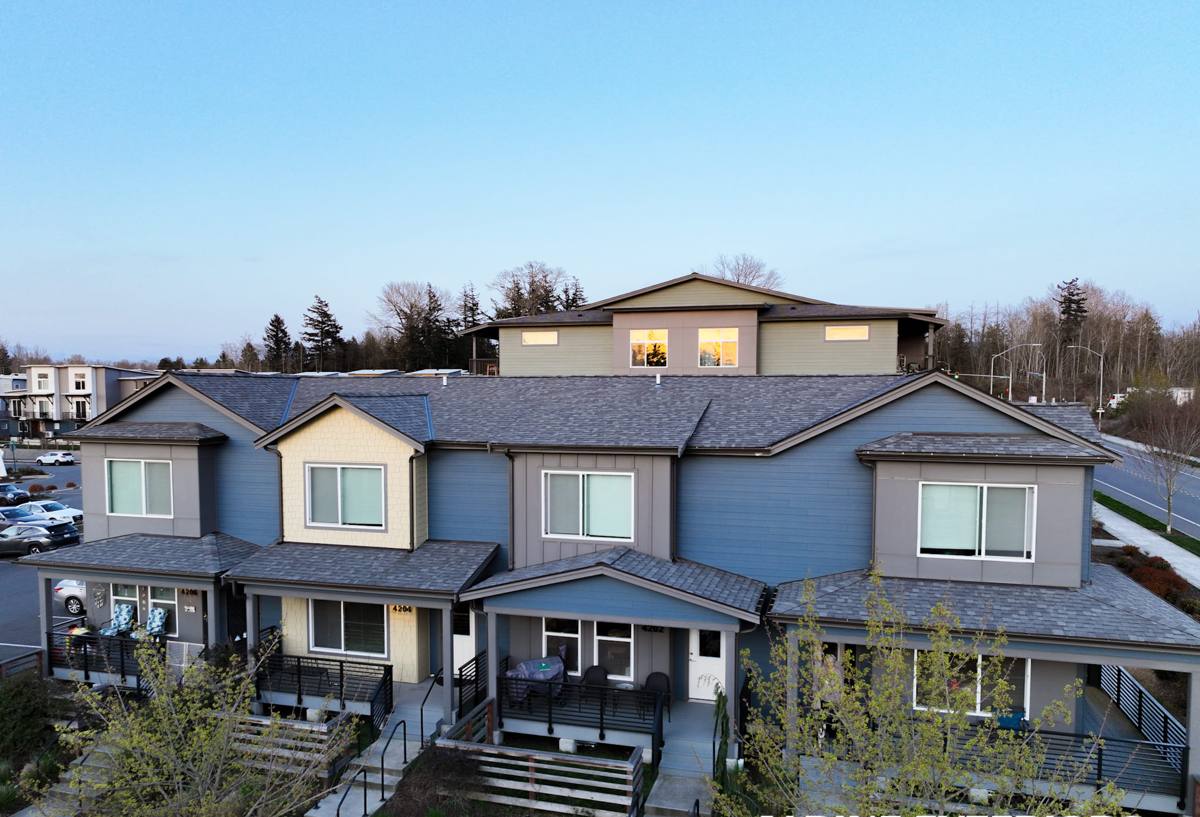
What Salt Air, Rain, and Moss Actually Do to a Window Opening
Salt Air and Metal Components
Airborne salt from the water doesn't just sit on glass — it settles into hardware, weep holes, and any exposed fasteners. Over time it accelerates corrosion on lower-grade hardware, pits aluminum components, and can work into gaps around poorly sealed frames. This is why the metal quality of hinges, cranks, and locking hardware matters more here than it would thirty miles inland.
Wind-Driven Rain and Flashing
Rain in Whatcom County rarely falls straight down near the water. Wind off the Strait pushes it sideways and up under trim, which means a window opening has to be flashed to shed water that's coming from an angle, not just from above. A standard installation that only relies on caulk at the exterior trim — instead of proper flashing integrated with the house wrap — is exactly the kind of shortcut that looks fine for a year or two and then shows up as a stain on the interior sill or soft trim around the frame.
Moss, Shade, and Trapped Moisture
Birch Bay's tree cover and long damp season create ideal conditions for moss and algae on anything that doesn't dry out between rains. On windows, that usually shows up on north-facing trim, sills, and mulled units where water can sit in a corner. Moss itself isn't structural damage, but it holds moisture against wood trim and cladding, which shortens the life of paint, caulk, and eventually the trim itself if it's never cleaned off.
Signs a Birch Bay Home Needs Window Attention
Most window problems here show up gradually. Homeowners usually notice one or two of these before they realize the window itself is the source:
- Fogging or a permanent haze between panes (failed seal on a double- or triple-pane unit)
- Soft or discolored wood on the interior sill or jamb
- Visible gaps, drafts, or whistling during windier weather
- Moss or dark streaking building up on exterior trim year after year
- Difficulty locking, latching, or fully closing a sash
- Peeling paint or bubbling caulk specifically around the window, not the wider wall
- A musty smell near a window that doesn't clear up with cleaning
Any one of these on its own might be minor. Several together, especially on the side of the house facing prevailing wind and rain, usually means the original installation — not just the window unit — is due for a look.
What a Correct Window Installation Actually Involves
The window itself is a manufactured, tested product. What varies enormously from crew to crew is how it gets installed, and that's where almost all long-term problems originate. A correct installation for a marine climate like Birch Bay includes:
- Opening inspection — checking the rough opening, existing sheathing, and framing for hidden rot or moisture damage before anything new goes in.
- Sill pan flashing — a sloped, waterproof pan under the window that directs any water that gets past the frame back outside instead of into the wall cavity.
- Proper integration with the water-resistive barrier — flashing tape and house wrap layered so water always sheds downward and outward, shingle-style, never trapped behind a layer.
- Correct shimming and fastening — the unit set square, plumb, and level, with fasteners placed per the manufacturer's instructions so the frame isn't stressed or bowed.
- Insulation without over-packing — the gap between frame and rough opening filled with a low-expansion foam or backer rod and sealant, not stuffed with fiberglass that can hold moisture.
- Exterior sealant as a backup, not the primary defense — caulk should be the last line of defense against water intrusion, not the only one.
Skip any one of these steps and the window can still look perfect from the street while quietly letting water into the wall assembly. That's the failure mode we see most often on homes near the water — cosmetically fine windows sitting in openings that were never properly flashed.
Comparing Window Frame Materials for a Birch Bay Property
Frame material matters more here than in a drier, inland climate because of the combination of salt air, sustained moisture, and UV exposure off the water. Here's how the common options generally compare for this environment:
| Frame Material | Moisture & Salt Air Behavior | Maintenance | General Notes |
|---|---|---|---|
| Vinyl | Doesn't corrode or rot; performs well in salt air | Low — occasional cleaning | Good value; frame color and hardware quality vary widely between manufacturers |
| Fiberglass | Very stable in temperature swings and moisture; strong resistance to warping | Low | Higher upfront cost, often longer warranty on the frame itself |
| Aluminum | Prone to corrosion pitting near salt air unless well-coated | Moderate to high near the water | Best suited to specific architectural applications, not general residential replacement here |
| Wood / Wood-clad | Attractive but sensitive to sustained moisture and shade-driven moss growth | High — regular painting/sealing | Can work well with disciplined upkeep; higher risk if neglected near the water |
None of these is universally "right" — it depends on the home's exposure, the owner's appetite for upkeep, and the look they want. Our job is to walk through those trade-offs honestly rather than push whatever we happen to stock.
Our Process for Birch Bay Window Installations
We keep the process straightforward because most of the value is in doing the unglamorous parts correctly, not in the sales pitch:
- On-site assessment — we look at the actual openings, not just measurements, and flag any hidden moisture or rot before quoting.
- Honest scope and estimate — a clear breakdown of what's insert replacement versus what needs a full-frame approach because of underlying damage.
- Removal and opening prep — old units come out carefully so we can inspect and, if needed, repair the sheathing and framing underneath.
- Flashing and installation — sill pan, house wrap integration, and fastening done to hold up against wind-driven rain, not just pass a quick visual check.
- Interior and exterior finish work — trim, caulking, and cleanup so the result looks finished, not just functional.
- Final walkthrough — we operate every window with you before calling the job done.
Cost Factors for Window Installation in Birch Bay
Every home is different, so we don't quote by phone, but these are the main factors that move the price up or down on most jobs in this area:
| Factor | Why It Matters |
|---|---|
| Insert vs. full-frame replacement | Full-frame costs more but is often required when trim or sheathing has moisture damage |
| Frame material and glass package | Vinyl, fiberglass, and upgraded glass coatings all carry different price points |
| Number and size of openings | Larger units and multi-window projects have per-unit efficiencies but higher total cost |
| Wall condition behind the window | Hidden rot or inadequate flashing found during removal adds repair scope |
| Access and height | Second-story or hard-to-reach openings take more time and equipment |
| Trim and finish detail | Custom trim profiles or matching existing millwork adds labor |
Why It Matters That We Already Work in Birch Bay
A crew that mostly works drier, inland areas can install a window perfectly well by general standards and still get it wrong for this location, because they're not used to designing for wind-driven rain off the water or planning around a moss season that lasts most of the year. Working Birch Bay regularly means we already know which orientations take the worst weather, which older homes in the area tend to have flashing details that need extra attention, and what actually holds up here versus what just looks good on installation day.
It also means we're not guessing about permitting or code requirements for Whatcom County — we handle that as a normal part of the job, not an afterthought.
A Straightforward Next Step
If you're dealing with drafty windows, fogged glass, moss buildup on your trim, or you just want a second opinion on whether your current windows are actually doing their job, we're happy to take a look. There's no pressure and no obligation — just a straightforward assessment from a crew that installs windows in this exact climate every week. Use the form below to request a free estimate.