 Semiahmoo Siding
 Why Bellingham Roofs Take More Punishment Than Inland Homes
A roof in Bellingham doesn't fail the same way a roof in a dry inland climate does. It's rarely one dramatic storm that does the damage. It's the accumulation: months of driving rain pushed sideways by wind off the water, salt-laden air drifting in off Bellingham Bay and the Whatcom County coastline, and a moss season that can run nine months out of the year in shaded, north-facing sections of a roof. Each of those factors attacks a roof differently, and each one shortens the life of materials that were never built with this exact combination in mind.
Salt air accelerates corrosion on exposed metal — fasteners, flashing, valleys, vent caps — well before the shingles themselves give out. Driving rain finds the weak points in a roof system that would never leak in a calmer climate: shallow flashing laps, under-driven nails, poorly sealed penetrations. And moss doesn't just sit on top of shingles looking bad. Its root structure lifts shingle edges and holds moisture directly against the roof deck, which is a slower but more expensive problem than most homeowners realize until they're already dealing with rot.
None of this means Bellingham homeowners are stuck fighting a losing battle. It means the replacement has to be built for these specific conditions from the deck up, not just re-covered with whatever product is cheapest that week.
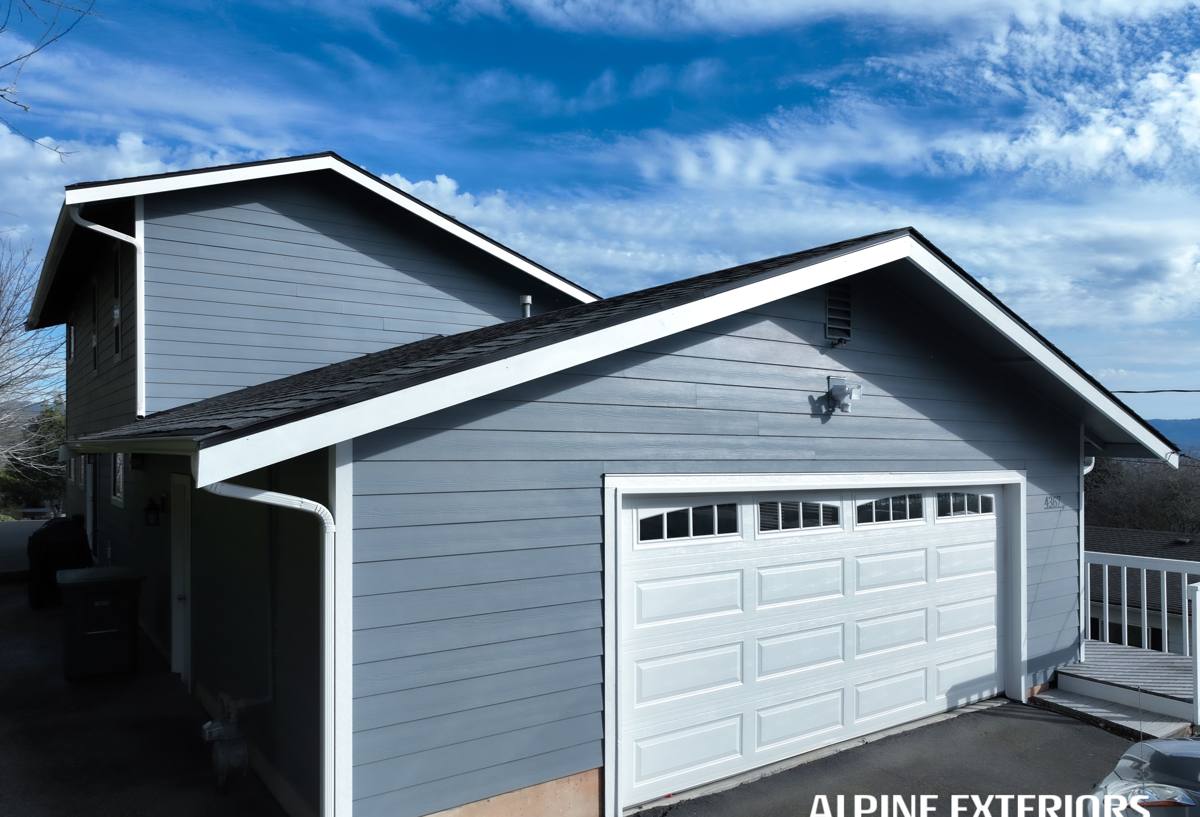
Signs Your Roof Is Due for Replacement, Not Another Repair
Repairs make sense when a roof has isolated damage and years of usable life left. Replacement makes sense once the underlying materials — the decking, the underlayment, the flashing system — are failing in more than one place at once. In our experience working Whatcom County roofs, these are the signals that tip a home from "patch it" to "replace it":
- Shingles that are cupping, curling, or losing their granules in patches rather than just at the ridge
- Moss that returns within a season or two of being cleaned, especially on north- and west-facing slopes
- Dark streaking or soft, spongy spots underfoot when walking the roof
- Daylight visible through the attic sheathing, or damp insulation after a heavy rain
- Rusted or lifting flashing around chimneys, skylights, and valleys
- A roof that's already had two or more repair visits in the last few years for different issues
- A roof approaching or past 20-25 years old for asphalt shingle, especially if it's never had a tear-off
Any one of these alone might just need attention. Several together usually mean the roof system as a whole is past the point where repair is the economical choice.
What a Correct Roof Replacement Actually Involves
A roof replacement is more than swapping old shingles for new ones. In a climate that sees this much rain and moisture pressure, the parts nobody sees on the outside matter more than the finished look.
Tear-Off and Deck Inspection
We remove the existing roofing down to the deck rather than layering over it. That's the only way to actually see the plywood or OSB underneath — and in older Bellingham homes, it's common to find sections of decking that have softened from years of slow moisture intrusion. Soft or delaminated decking gets replaced before anything new goes down. Roofing over a compromised deck just hides a problem that will resurface, usually as a leak, within a few years.
Underlayment and Flashing
Underlayment is the roof's real waterproofing layer, and it matters more here than in drier regions. We use synthetic or self-adhered underlayment in the areas most exposed to wind-driven rain — valleys, eaves, and low-slope sections — because standard felt alone doesn't hold up as well against sustained wet-dry cycling. Flashing around chimneys, skylights, sidewalls, and vent penetrations gets replaced, not reused, and installed with proper step and counter-flashing so water sheds correctly instead of relying on caulk to do the work.
Fastening and Wind Resistance
Correct nailing pattern and fastener placement matter for wind resistance, and salt air means the fasteners themselves need to be corrosion-resistant — not just galvanized, but rated for coastal exposure where that's called for. Under-driven or over-driven nails are one of the most common causes of early shingle failure, and it's not something you can see from the ground.
Choosing Roofing Materials for a Marine Climate
There's no single "best" roofing material for every Bellingham home — it depends on the roof's slope, sun exposure, budget, and how much long-term maintenance the homeowner wants to take on. Here's how the common options actually compare for this climate specifically:
| Material | Moss/Algae Resistance | Typical Lifespan Here | Maintenance Needs |
|---|---|---|---|
| Standard 3-tab asphalt shingle | Low — needs algae-resistant granules to help | 15-20 years | Periodic moss removal, especially shaded slopes |
| Architectural (dimensional) asphalt shingle | Moderate, better with algae-resistant option | 20-30 years | Lower than 3-tab, still benefits from cleaning |
| Metal (standing seam or panel) | High — sheds moss and debris well | 40-50+ years | Low; occasional fastener/seam check |
| Synthetic/composite shingle | Moderate to high depending on product | 30-50 years | Low to moderate |
Architectural asphalt shingle remains the most common choice for Bellingham homes because it balances upfront cost with reasonable durability, and today's algae-resistant versions hold up noticeably better against the region's damp, shaded conditions than older shingle lines did. Metal roofing costs more up front but makes sense on steep, heavily shaded roofs where moss has been a repeat problem, since moss and standing debris have a much harder time gaining a foothold on a smooth metal surface. We'll walk through the honest trade-offs for your specific roof rather than push one product across the board.
Ventilation and Moisture — The Part Nobody Sees
Attic Airflow
A roof replacement is also the right time to correct attic ventilation, and in our experience it's the single most overlooked factor in premature roof failure around here. Warm, moist air trapped in an attic condenses against the underside of cold decking during Whatcom County's long wet season, which rots sheathing from the inside — a problem that has nothing to do with the shingles themselves and everything to do with balanced intake and exhaust venting.
Moss and Trapped Moisture
Moss thrives specifically where a roof stays damp longest — shaded slopes, valleys, and areas with poor airflow underneath. Correcting ventilation doesn't eliminate moss on its own, but it does reduce how long the roof deck and shingle undersides stay saturated, which slows regrowth and protects the structure even where some surface moss is unavoidable given the tree cover common on Bellingham lots.
Our Bellingham Roof Replacement Process
- On-site assessment. We inspect the roof, attic, and existing flashing in person and walk you through what we find, including anything that isn't visible from the ground.
- Written estimate and material selection. You get a clear scope of work and pricing before anything is scheduled, with honest input on which materials fit your roof and budget.
- Tear-off and deck inspection. Full removal of the old roofing, with any damaged decking identified and replaced before underlayment goes down.
- Underlayment, flashing, and ventilation work. The waterproofing layer, all flashing, and any needed intake/exhaust vent corrections are installed to spec.
- New roofing installation. Shingles or panels installed with correct fastening and exposure for wind and rain performance.
- Final walkthrough and cleanup. We inspect the completed roof with you, confirm everything meets spec, and make sure the site is cleared of debris and nails.
Keeping Moss and Algae From Coming Back
No roof in this climate is permanently moss-proof, but a few things make a real difference after a replacement. Zinc or copper strips installed near the ridge release trace metal ions with each rain that inhibit moss and algae growth on the slopes below — a low-cost addition worth including at install time rather than as an afterthought. Keeping overhanging branches trimmed back reduces both shade and the steady drop of organic debris that gives moss something to root into. And a light annual rinse (never pressure-washing, which strips granules and shortens shingle life) keeps buildup from establishing in the first place. We're happy to point out which parts of your specific roof will need the most attention going forward.
Why a Crew That Already Works Bellingham Matters
Roofing crews that work primarily in drier climates tend to default to standard practices that don't account for what actually happens to a roof here over ten or twenty years. A crew that works Bellingham and the surrounding Whatcom County area regularly already knows which underlayment holds up to the region's rain patterns, which flashing details actually stop water intrusion instead of just meeting minimum code, and which parts of a roof are worth the extra attention based on sun exposure, tree cover, and proximity to the water. That local pattern recognition doesn't come from a manual — it comes from having replaced and repaired enough roofs in this specific climate to know where problems actually start.
It also matters for the practical side of the job: knowing local permitting requirements, working efficiently around Whatcom County's weather windows, and being reachable afterward if a question comes up — not a crew that did one job in the area and moved on.
What Affects the Cost of a Bellingham Roof Replacement
Every roof is different, but the same handful of factors drive most of the cost variation we see on Bellingham homes:
| Factor | Why It Matters |
|---|---|
| Roof size and number of slopes | More square footage and complexity mean more material and labor |
| Current layer count | Removing multiple old layers costs more than a single tear-off |
| Deck condition | Rotted or soft sheathing found during tear-off adds replacement cost |
| Material choice | Asphalt, metal, and synthetic products carry different material and install costs |
| Roof pitch and access | Steep or hard-to-access roofs require more time and safety setup |
| Ventilation corrections | Adding or upgrading intake/exhaust venting adds modest cost but pays off long term |
We won't know your exact numbers until we've actually looked at the roof, but we'll always explain what's driving the price rather than handing over a number with no context.
If your roof is showing its age or you just want an honest read on how much life it has left, we're glad to take a look. Reach out for a free, no-pressure estimate — we'll tell you what we actually see, not just what sells a job.