 Semiahmoo Siding
 Decking Built for Life Around Wiser Lake
Homes near Wiser Lake spend most of the year damp. Between lake moisture, shaded tree cover, and the long, gray stretch of Whatcom County winters, a deck here works harder than a deck in a drier climate ever would. Semiahmoo Siding Company installs composite decking specifically with that reality in mind — not as a generic outdoor upgrade, but as a system built to handle standing moisture, algae growth, and freeze-thaw cycling without falling apart in five years.
This page covers what composite decking actually needs to hold up around Wiser Lake, what a correct installation involves, and why the crew doing the work matters as much as the material itself.
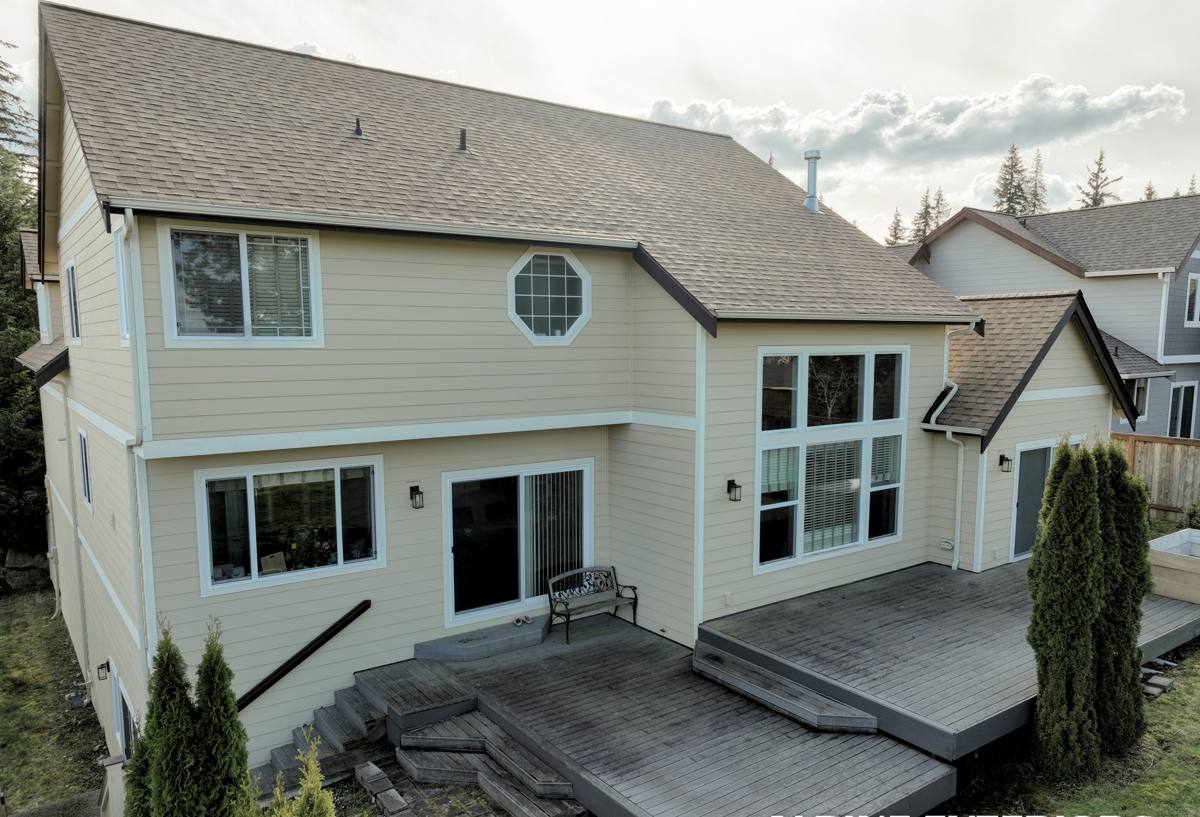
Why Wiser Lake Is a Tougher Environment Than It Looks
A lakefront or near-lake property looks peaceful, but the conditions that make it beautiful are the same ones that break down outdoor building materials. Wiser Lake homes typically deal with:
- Persistent surface moisture from lake humidity and morning fog, even on days without rain
- Shade from mature trees that slows drying time on deck boards for hours after a storm passes
- A long moss and algae season — often eight or nine months a year in this part of Whatcom County
- Driving rain that gets pushed sideways under railings, against ledger boards, and into fastener holes
- Occasional freeze-thaw swings in winter that stress any material with hidden trapped moisture
None of this is unique to Wiser Lake — it's the broader climate Semiahmoo Siding Company works in across the region, including the salt air and driving rain that come off Semiahmoo Bay. But properties close to standing fresh water get a concentrated version of it: more humidity, more shade, more moss pressure, for more months of the year.
What "Correct" Composite Decking Looks Like in This Climate
Ventilation Comes Before Material Choice
The single biggest mistake we see on lake-adjacent decks isn't the board brand — it's airflow. Composite decking doesn't rot the way wood does, but joists, framing, and the underside of the deck absolutely can if air can't move underneath. A deck built low to the ground, over damp soil, with no cross-ventilation, will trap moisture regardless of what's screwed to the top. We plan for clearance and airflow first, then pick the board system.
Hidden Fasteners, Done Right
Hidden fastener clip systems give a cleaner look and eliminate the screw-head pockets where moss and standing water like to collect. The tradeoff is that they demand more precision during installation — gapping has to be exact, and clips have to be seated correctly on every board or the deck develops squeaks and slight lift over a wet winter. This is where installation quality matters more than the marketing on the board itself.
Substructure Materials That Match the Boards
Composite decking is only as good as what's underneath it. In a damp, shaded environment like this, we frame with either pressure-treated lumber rated for ground contact or composite/PVC substructure components, and we flash ledger boards properly where the deck ties into the house. A beautiful composite surface on a rotting or corroding frame is a problem waiting a few years to show up.
Moss, Algae, and Long-Term Maintenance
Composite decking resists moss and algae far better than wood, but "resists" isn't "immune." In a shaded, humid spot near the lake, organic growth will still find a foothold in low spots, board grooves, and anywhere water sits instead of draining. Two things control this over the life of the deck:
- Slope and drainage — the deck has to be built with a slight pitch away from the house so water actually leaves the surface instead of pooling
- Board texture — heavily embossed, deep wood-grain textures look great but hold more moisture and debris than a moderate texture; we help homeowners weigh appearance against how often they want to clean the deck
Routine maintenance for a composite deck in this climate is light compared to wood — no staining or sealing — but it's not zero. A seasonal rinse and an occasional soft-wash to clear pollen, needles, and algae film keeps the surface performing and looking right through the wet months.
Comparing Composite to the Alternatives, Honestly
We install composite decking because, for a property like a Wiser Lake home, it holds up to the specific conditions better than the alternatives — not because one material is universally "best." Here's how the tradeoffs actually shake out:
| Material | Moisture Behavior | Moss/Algae Resistance | Long-Term Upkeep |
|---|---|---|---|
| Composite decking | Won't rot; can retain surface moisture if drainage is poor | Good, especially with moderate texture and proper slope | Periodic cleaning; no staining or sealing |
| Pressure-treated wood | Absorbs and releases moisture constantly; prone to cupping and splitting in shade | Poor without regular sealing and cleaning | Annual staining/sealing recommended |
| Cedar | Naturally moisture-tolerant but still absorbs water over time | Moderate; better than treated pine, still needs care | Regular sealing to maintain appearance and lifespan |
| PVC/vinyl decking | Fully moisture-resistant, similar to composite | Good | Low; can look and feel less natural underfoot |
For most Wiser Lake homeowners, it comes down to composite versus wood: composite costs more upfront but avoids the yearly sealing cycle that wood demands in a climate this wet. We'll walk through where PVC or a wood option might genuinely make more sense for a specific project — this isn't a one-size answer.
Our Process for a Wiser Lake Composite Deck
1. On-Site Assessment
We look at sun exposure, tree canopy, existing drainage patterns, and how close the deck sits to grade or to the lake itself. This tells us how aggressive the ventilation and slope plan needs to be.
2. Framing and Substructure
We build or evaluate the substructure for proper joist spacing (composite often requires tighter spacing than wood), correct flashing at the house connection, and adequate ground clearance for airflow.
3. Board Installation
Boards are installed with correct expansion gaps — composite expands and contracts with temperature more than people expect — and hidden fastener clips are seated and checked row by row, not just at a glance.
4. Railing, Stairs, and Edge Detailing
Edges, stair stringers, and railing posts are where water intrusion problems usually start. We detail these connections carefully rather than treating them as an afterthought once the field of the deck is down.
5. Final Walkthrough
We check for level, secure railings, consistent gapping, and proper drainage before calling the job finished — not just that the boards are down.
What to Ask Before Hiring Anyone for This Job
Composite decking looks straightforward from a distance, which is exactly why a lot of installation mistakes don't show up until year two or three, after moss, moisture, or poor drainage have had time to work on a poorly built substructure. Before hiring a crew for a Wiser Lake project, it's worth asking:
- How will you handle drainage and slope given the shade and humidity on this specific lot?
- What substructure material are you framing with, and is it rated for the ground contact and moisture level here?
- How do you handle expansion gapping on composite boards, and what happens if it's done wrong?
- What's the warranty structure — on the material, and separately, on your labor?
- Have you worked on other homes in the Wiser Lake or greater Whatcom County area before?
A crew that already understands this specific climate won't need to relearn it on your project. That's the difference between a deck that needs attention every year and one that quietly does its job through a decade of wet Whatcom County winters.
Why Local Experience Matters Here Specifically
A composite deck installed the same way in a dry climate and a shaded, lake-adjacent lot in Semiahmoo will age differently, even with identical materials. The framing decisions, drainage slope, and even board texture choice should reflect the moss season, the driving rain, and the moisture patterns unique to this part of Whatcom County. Semiahmoo Siding Company works this climate year-round, which means the decking work we do accounts for conditions we've actually seen play out on nearby properties — not conditions read off a spec sheet.
Get a Straightforward Estimate
If you're planning a new composite deck or replacing one that's struggled with moisture or moss near Wiser Lake, we're happy to take a look and give you an honest read on what your property needs. There's no pressure and no obligation — just a straight assessment and a clear estimate using the form below.