 Semiahmoo Siding
 Why Marietta Siding Wears Out Faster Than the Manual Says
Marietta sits close enough to the water that "coastal exposure" isn't a marketing phrase here — it's what your siding deals with every single day. Salt-laden air off the Salish Sea corrodes fasteners and finishes faster than manufacturers' national averages assume. Driving rain off Bellingham Bay hits the west and south walls of most homes at an angle, not straight down, which means it gets up under trim, behind butt joints, and into any gap a builder-grade install left open. And then there's the moss season — which in this part of Whatcom County isn't really a season so much as most of the year. Shade, humidity, and mild temperatures are ideal moss-growing conditions, and moss doesn't just sit on top of siding. It holds moisture against the surface for weeks at a time, which is exactly the kind of sustained dampness that rots wood-based products and delaminates poorly bonded ones.
None of this means Marietta homes are doomed to constant siding trouble. It means the product and the installation both have to be chosen for this specific exposure, not for a generic "Pacific Northwest" spec sheet. That's the whole premise of this page.
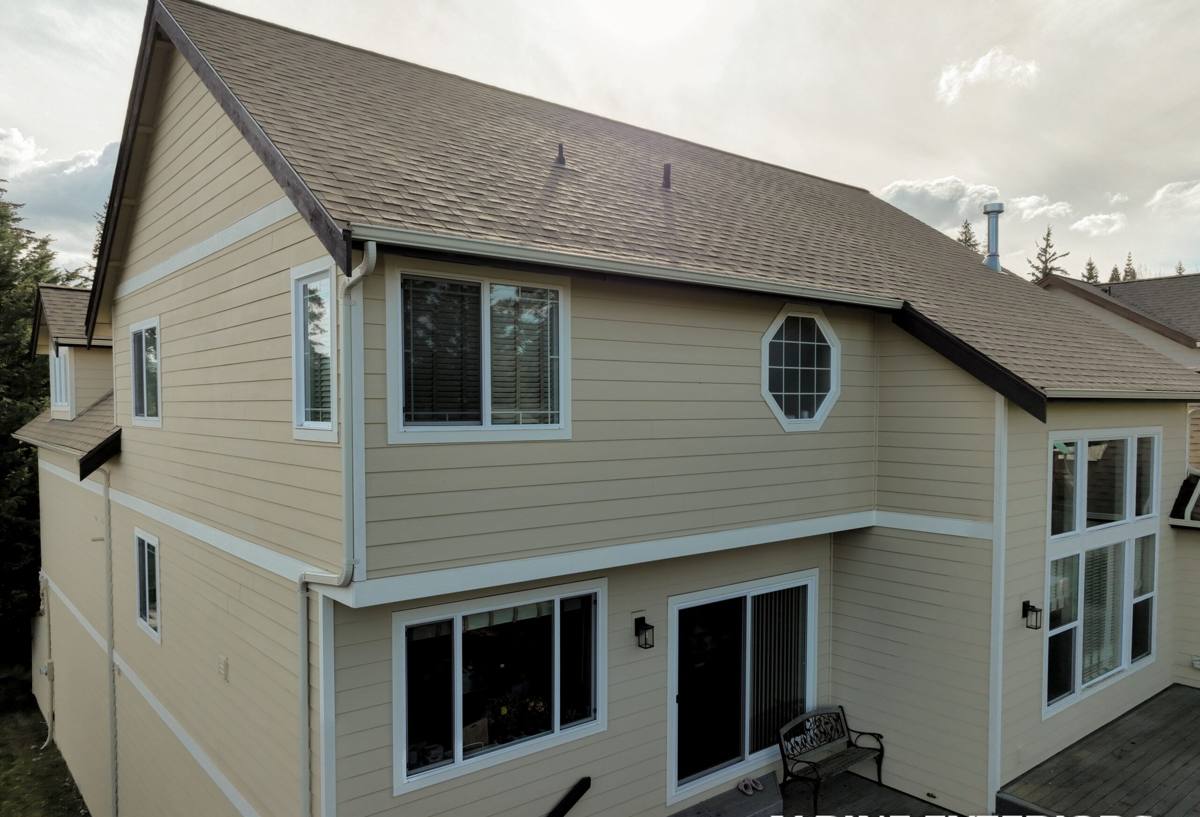
Signs a Marietta Home Actually Needs Replacement, Not Repair
Not every siding problem calls for a full tear-off. But a few signs mean patching is just delaying a bigger bill:
- Soft or spongy spots when you press on the siding, especially near the bottom courses and around window trim
- Paint that's bubbling or peeling in sheets rather than just fading — a sign moisture is trapped behind the finish
- Persistent moss or algae staining that comes back within a season of cleaning, even after a wash
- Visible gaps, warping, or cupping boards, particularly on the walls that catch the most weather
- Rising heating bills or noticeably drafty rooms along exterior walls
- Siding that's original to a home built more than 20-25 years ago and has never been fully replaced
If you're only seeing one or two isolated spots, targeted repair may still make sense. If you're seeing several of these at once, or the damage is spread across multiple walls, that's usually the water intrusion has been happening longer than the visible symptoms suggest — and it's worth a full assessment before more of the wall assembly is affected.
Why This Company Installs Only James Hardie Fiber Cement
We get asked why we don't offer vinyl, LP SmartSide, or the other fiber cement brands like Cemplank or Allura. The honest answer is that we standardized on one product line because we got tired of repeat callbacks on the others, and Marietta's climate is exactly the kind of environment where those differences show up fastest.
Vinyl siding is affordable and low-maintenance, but it's a petroleum-based product that expands and contracts with temperature swings, and in sustained salt air and driving rain it's the seams and J-channels — not the panels themselves — that tend to let water in over time. Engineered wood products like LP SmartSide use a treated wood strand core, which performs well in many climates but is still wood at its core; in a moss-heavy, high-moisture coastal environment, the edges and cut ends are the vulnerable points if they're not sealed perfectly and kept that way. Other fiber cement brands aren't inherently bad products, but we don't have the same long-term track record and factory-finish consistency with them that we have with Hardie, and we'd rather stand behind one system we know cold than offer several we don't.
James Hardie fiber cement is non-combustible, doesn't support the kind of moss growth that rots wood-based siding, and comes with a factory-applied ColorPlus finish that's baked on rather than field-painted — which matters a lot in an area where UV, salt, and moisture all attack a painted surface at once. It's also engineered in climate-specific formulations (the HZ5 line, built for the Pacific Northwest's freeze-thaw and moisture cycles), which is a level of regional engineering the other products in this category don't offer.
What a Correct Siding Replacement Actually Involves
Fiber cement siding is only as good as the assembly behind it. A rushed install with the right material can still fail; a careful install is what actually delivers the 30+ year lifespan people expect from Hardie. Here's what that means in practice:
Full Tear-Off and Wall Inspection
We remove the old siding down to the sheathing rather than installing over it. That's the only way to actually see what's underneath — soft sheathing, hidden rot, or old water staining that a re-side-over-existing approach would just seal in. In Marietta, where sustained moisture is common, this inspection step catches problems that would otherwise surface again in a few years.
Weather-Resistive Barrier and Flashing
A correctly installed drainage wrap gives any water that gets past the siding a path to drain back out instead of sitting against the sheathing. Every window, door, and penetration gets properly integrated flashing — installed in the right shingle-lap sequence so water sheds downward and outward, not into the wall cavity. This is the step that matters most for driving rain off the bay, and it's also the step that's easiest to shortcut if a crew is moving fast.
Fastening and Clearances
Hardie specifies exact fastener types, spacing, and clearances from grade, decks, and roof lines. Skipping the minimum ground clearance, for example, is a common mistake that invites moisture wicking and moss growth right at the bottom courses — the exact failure point we see most often on older installs in this area.
Joints, Caulking, and Touch-Up
Butt joints get properly flashed or backed, not just caulked and hoped for. Any field-cut edges get sealed with the correct primer so the factory finish's protection isn't compromised at the cuts — an easy detail to miss and one of the most common causes of early paint failure on fiber cement.
Our Process, Start to Finish
- On-site assessment — we walk the exterior, check for soft spots and moisture damage, and measure exposure on each wall face
- Written estimate — product line, color, trim details, and total scope, with no vague allowances
- Tear-off and inspection — old siding removed, sheathing checked, any rot repaired before anything new goes up
- Weather barrier and flashing — drainage wrap and flashing installed at every window, door, and penetration
- Hardie installation — panels, plank, or shingle installed to manufacturer fastening and clearance specs
- Trim, caulking, and cut-edge sealing — finish details completed and every field cut properly sealed
- Final walkthrough — we review the completed job with you and clean up the site fully before we leave
Choosing the Right Hardie Line for Marietta's Exposure
James Hardie offers several product formats, and the right one depends on your home's style and which walls take the worst weather:
| Product | Best For | Notes for Marietta |
|---|---|---|
| HardiePlank lap siding | Traditional and craftsman-style homes | Most common choice; works well on exposed walls when properly lapped and flashed |
| HardiePanel vertical siding | Modern builds, accent walls, gable ends | Fewer horizontal joints where water can find its way in |
| HardieShingle | Cottage or shingle-style homes | Textured look; needs careful installation at exposure-heavy elevations |
| HZ5 climate formulation | All of the above, in this region | Engineered for Pacific Northwest freeze-thaw and moisture conditions |
Cost Factors for a Marietta Siding Replacement
We won't quote a number without seeing the home, but here are the variables that actually move the price:
| Factor | Why It Matters |
|---|---|
| Amount of hidden damage | Rotten sheathing or framing found during tear-off adds repair scope before new siding goes up |
| Home size and wall complexity | More corners, gables, and trim details mean more labor and material cuts |
| Product format chosen | Plank, panel, and shingle profiles carry different material and labor costs |
| Story height and access | Multi-story walls and difficult access increase labor time and equipment needs |
| Trim and detail work | Custom trim, soffit, and fascia work add to scope beyond the field siding itself |
The biggest cost swing we see isn't the siding material — it's what a crew finds once the old siding comes off. That's exactly why a full tear-off and inspection, not an estimate from the curb, is the only honest way to price the job.
Why a Crew That Already Works Marietta Matters
A siding crew that only occasionally works this stretch of coastline can install a product correctly on paper and still get the details wrong for this specific exposure — under-flashing a wall that catches more wind-driven rain than the spec sheet assumes, or under-estimating how much bottom-course clearance a moss-prone yard actually needs. A crew that regularly works Marietta and the surrounding Semiahmoo and Whatcom County area has already seen which walls fail first on older homes here, which details matter most given the salt air and rain patterns, and how to size ventilation and drainage for local conditions rather than a generic climate zone. That local pattern recognition is hard to replace with a spec sheet alone.
Protecting Your Investment After Installation
A correctly installed Hardie exterior needs far less upkeep than wood or vinyl, but "low-maintenance" isn't "no-maintenance," especially here. A simple annual routine keeps it performing for decades:
- Rinse the exterior annually to clear salt residue and early moss growth before it takes hold
- Trim back vegetation and tree cover that keeps walls shaded and damp longer than necessary
- Check caulking at trim joints and penetrations every couple of years and re-seal if it's cracking
- Watch the bottom courses near grade for any staining or moss return, since that's the most common early warning sign
- Repaint only if and when the ColorPlus finish is due — most homeowners go many years before that's needed
Ready to Talk About Your Home
If your Marietta home is showing signs of wear from years of salt air, driving rain, or moss, we'll walk the exterior with you, give you an honest read on what's actually going on, and lay out what a correct Hardie replacement would involve — no pressure, no inflated scope. Fill out the form below for a free estimate.