 Semiahmoo Siding
 Lynden's Climate Is Harder on Siding Than Most Homeowners Realize
Lynden sits inland from the water compared to Semiahmoo and Blaine, but "inland" in Whatcom County doesn't mean dry. The Nooksack River valley traps moisture, storms roll through with driving, wind-pushed rain, and the region's long gray stretches from fall through spring keep exterior walls damp for months at a time. Add in salt-tinged air that moves inland off the Strait of Georgia and Boundary Bay during storm systems, and Lynden's siding deals with a combination of near-constant moisture exposure and slow-building corrosion pressure that drier inland climates never see.
That combination is exactly what wears out the wrong siding material fastest. Wood-based products absorb water at cut edges and seams. Vinyl expands, contracts, and eventually cracks or fades under repeated freeze-thaw and UV cycling. And almost anything on a Whatcom County home will grow moss and algae if it can't dry out between rain events. Siding replacement here isn't just a cosmetic upgrade — it's a decision about which material and which installation details will actually hold up to this specific climate for the next few decades.
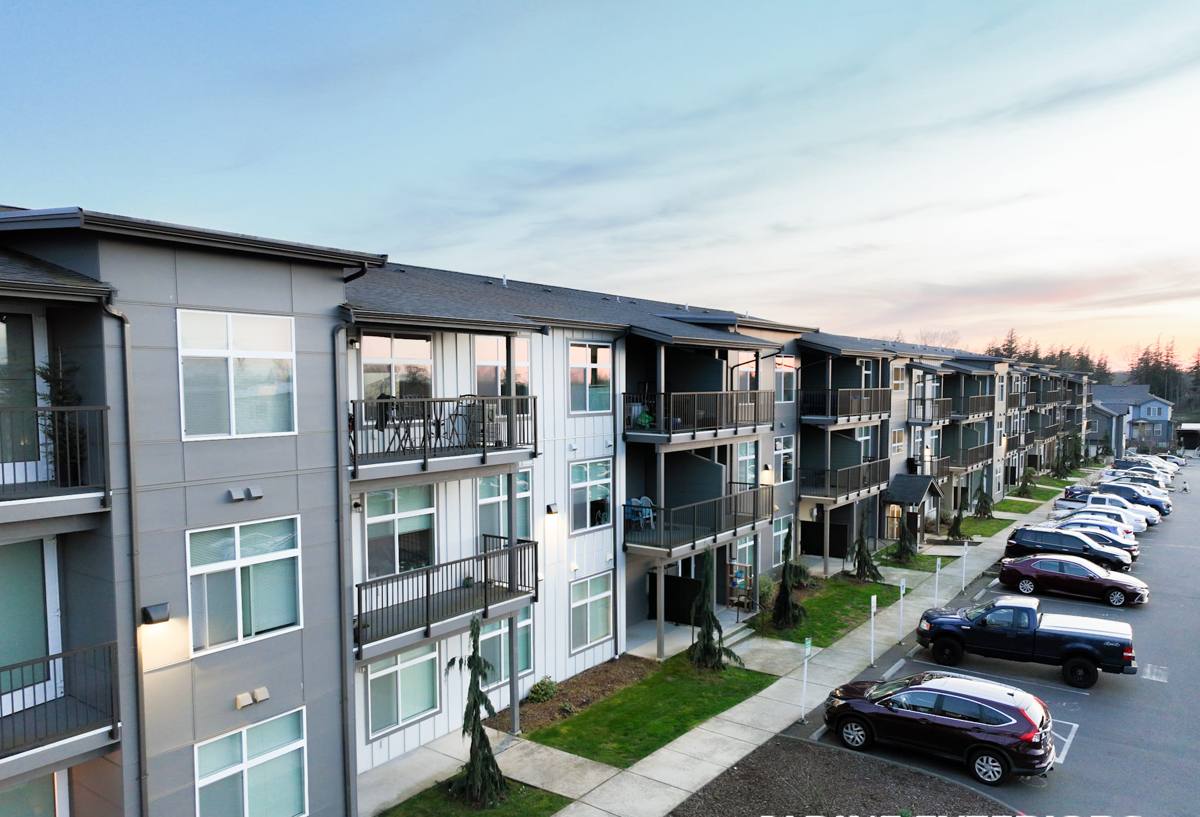
Signs a Lynden Home Needs Siding Replacement, Not Just Repair
Some damage is a patch job. Other damage means the siding system underneath has already failed, and patching it just delays a bigger repair bill. Here's what we look for during an inspection:
- Soft, spongy, or crumbling siding when pressed, especially near the bottom of walls and around window and door trim
- Persistent black or green moss and algae streaking that comes back within weeks of cleaning
- Paint that's blistering, peeling, or won't hold more than a couple of years between coats
- Visible gaps, warping, or buckling panels, particularly on walls that face prevailing wind and rain
- Water stains, musty smells, or soft drywall on interior walls that back up to exterior siding
- Siding that's original to a home built more than 20-25 years ago, especially wood-based products
If you're only seeing one or two of these in a small area, a repair may still make sense. Widespread moss, soft board, or interior moisture signs almost always mean the water-resistive barrier behind the siding has been compromised, and that calls for full replacement done correctly rather than a cosmetic fix layered over a failing wall.
What a Correct Siding Replacement Actually Involves
Pulling old siding off a Lynden home is the easy part. What happens next determines whether the new siding lasts 5 years or 40. A correct replacement isn't just swapping the visible surface — it's rebuilding the whole water-management system behind it.
What's Underneath Matters More Than What's on Top
Once old siding is off, we inspect the sheathing for rot, soft spots, and existing moisture damage before anything new goes on. Any compromised sheathing gets replaced — installing new siding over a damaged wall just hides the problem for another few years. We then install a proper water-resistive barrier (WRB) designed to shed the driving rain typical of Whatcom County storms while still letting the wall breathe and dry.
Flashing and Clearances Are Where Most Failures Start
Nearly every premature siding failure we see traces back to flashing details: window and door heads, deck ledgers, roof-to-wall transitions, and the bottom edge of the siding itself. Every one of those needs proper flashing and a drainage gap so water sheds outward instead of pooling behind the cladding. We also hold siding to the manufacturer-specified clearance above grade, decks, patios, and roof lines — a detail that's easy to skip and one of the most common causes of early rot in this climate.
Fastening and Gapping to Spec
Fiber cement siding has to be fastened and gapped exactly to the manufacturer's published specifications for our climate zone — correct nail placement, correct joint gaps, correct caulking at butt joints. Skipping these steps voids the manufacturer's warranty and, more importantly, lets moisture into the wall assembly regardless of how good the material itself is.
Why We Install Only James Hardie Fiber Cement
We made a deliberate decision to install one siding system: James Hardie fiber cement. We don't install vinyl, LP SmartSide, cedar, or primed spruce, and we don't install other fiber cement brands. That's not a marketing position — it's the product we're willing to stand behind on a Whatcom County home.
Vinyl is inexpensive and low-maintenance, but it's a thin, flexible plastic product that can crack in impact, warp under heat, and fade over time with no way to refinish it short of full replacement. Cedar and primed spruce look great new, but they're organic materials in a climate that stays damp for most of the year — they demand ongoing painting, caulking, and moisture vigilance to avoid the rot and moss problems we see constantly on older Lynden homes. LP SmartSide is an engineered wood product, which means it still relies on factory treatment and careful field sealing of every cut edge to resist moisture; any gap in that protection is an entry point for water.
James Hardie fiber cement is cement, sand, and cellulose fiber — it doesn't rot, it isn't attractive to pests, and it's non-combustible, which matters for wildfire-adjacent insurance considerations even in a wet climate. Hardie's HZ5 product line is engineered specifically for regions with the kind of moisture cycling and freeze-thaw swings Whatcom County gets. The factory-applied ColorPlus finish is baked on under controlled conditions, holds color far longer than field-applied paint, and comes with its own finish warranty on top of Hardie's product warranty. It's a system built for exactly the conditions Lynden homes are up against.
How the Options Compare
| Material | Moisture Resistance in Whatcom County | Maintenance Burden | Typical Lifespan |
|---|---|---|---|
| James Hardie fiber cement | Excellent — cement-based, engineered HZ5 line for this climate | Low — factory finish, occasional wash | 30-50+ years with proper install |
| Vinyl | Fair — doesn't rot but can warp, crack, and trap moisture behind panels | Low, but no refinishing option once faded | 20-30 years |
| LP SmartSide / engineered wood | Good if every cut edge is sealed and maintained; vulnerable where sealing fails | Moderate — repainting and edge sealing over time | 15-30 years, install-dependent |
| Cedar / primed spruce | Fair — organic material, prone to moss and rot without diligent upkeep | High — regular painting, caulking, moisture checks | 10-25 years, highly maintenance-dependent |
Our Siding Replacement Process for Lynden Homeowners
We keep the process straightforward and transparent from first visit to final walkthrough:
- On-site assessment — we look at your current siding, note problem areas, and check for underlying moisture or sheathing damage where possible without opening up walls.
- Written estimate — a clear scope covering material, tear-off, any sheathing repair, and installation, with the James Hardie product line and profile specified.
- Tear-off and inspection — old siding comes off, sheathing is inspected and repaired as needed before anything new goes up.
- Water-resistive barrier and flashing — a new WRB, correctly detailed flashing at every penetration and transition, and proper drainage gaps.
- Hardie installation to spec — fastening, gapping, and clearances installed to James Hardie's published requirements for our climate zone.
- Cleanup and walkthrough — site cleared of debris and old material, and a final walkthrough so you know exactly what was done and why.
What Affects the Cost of Siding Replacement in Lynden
Every home is different, but the same handful of factors drive most of the cost variation we see on Lynden projects:
| Cost Factor | Why It Matters |
|---|---|
| Home size and wall square footage | More surface area means more material and labor, straightforwardly |
| Existing sheathing condition | Rot or moisture damage found during tear-off adds repair work before new siding can go on |
| Siding profile and trim detail | Lap siding, panel systems, and trim boards each have different material and labor costs |
| Number of stories and access | Two-story walls, steep grades, and limited access add equipment and labor time |
| Window, door, and penetration count | Every opening needs flashing and trim work, which adds up on complex facades |
We don't quote broad ballpark numbers without seeing the home, because the sheathing condition alone can swing a project significantly. What we will always do is give you a clear, itemized estimate before any work starts, with no surprise add-ons buried in vague line items.
Why Hiring a Crew That Already Works in Lynden Matters
Siding installation done to spec looks similar on paper anywhere in the country, but the details that actually matter — flashing choices, drainage planning, clearance heights — should reflect the climate the home sits in. A crew that regularly works Whatcom County homes has already seen how moss builds up on north-facing walls, how driving rain finds gaps that drier climates never test, and where local building departments focus their attention during inspection. That familiarity shows up in fewer callbacks and a siding system that's actually built for what Lynden weather does to a house, not just what a spec sheet says on paper.
It also matters for something less visible: manufacturer warranty compliance. James Hardie's warranty terms depend on installation following their published requirements. A crew that installs Hardie regularly in this exact climate zone knows those requirements cold — not as a document to reference, but as the way every job already gets done.
Caring for Your Siding After Replacement
New Hardie siding is low-maintenance, not zero-maintenance. A simple annual routine keeps it performing the way it's designed to:
- Rinse siding gently once or twice a year to keep moss and algae from taking hold, especially on shaded or north-facing walls
- Keep gutters clear so overflow doesn't run down siding or pool at the base of walls
- Trim back vegetation and landscaping that traps moisture against the siding surface
- Check caulking at trim, windows, and joints periodically and have any gaps addressed before they let water in
- Address any impact damage or cracked boards promptly rather than waiting
If you're weighing siding replacement for a Lynden home and want a straight answer on what condition your current siding is really in, we're glad to take a look. The estimate is free, there's no pressure, and you'll get a clear explanation of what we find — just fill out the form below to get started.