 Semiahmoo Siding
 Roofs on the Semiahmoo Spit Work Harder Than Most
A roof over a home near Semiahmoo Resort deals with a different set of stresses than a roof twenty miles inland. The spit sits right where salt air off Drayton Harbor and the Strait of Georgia meets whatever weather is rolling down from the north. That combination — constant marine air, driving rain that comes in sideways more often than straight down, and a shoulder season that barely dries out before the next system arrives — wears on roofing materials in specific, predictable ways. Salt-laden air accelerates corrosion on exposed metal fasteners, flashing, and vents. Wind-driven rain finds gaps that a calmer climate would never expose. And the shade, humidity, and mild temperatures that make this stretch of Whatcom County beautiful also make it one of the better environments in the state for moss and moisture-loving growth to take hold on a roof deck.
None of that means a roof here is doomed to constant problems. It means repairs have to account for those conditions instead of treating every leak or worn spot as a generic fix. That's the approach we bring to roof repair work around Semiahmoo Resort — we're already familiar with how homes in this specific pocket of the county age, and we repair accordingly.
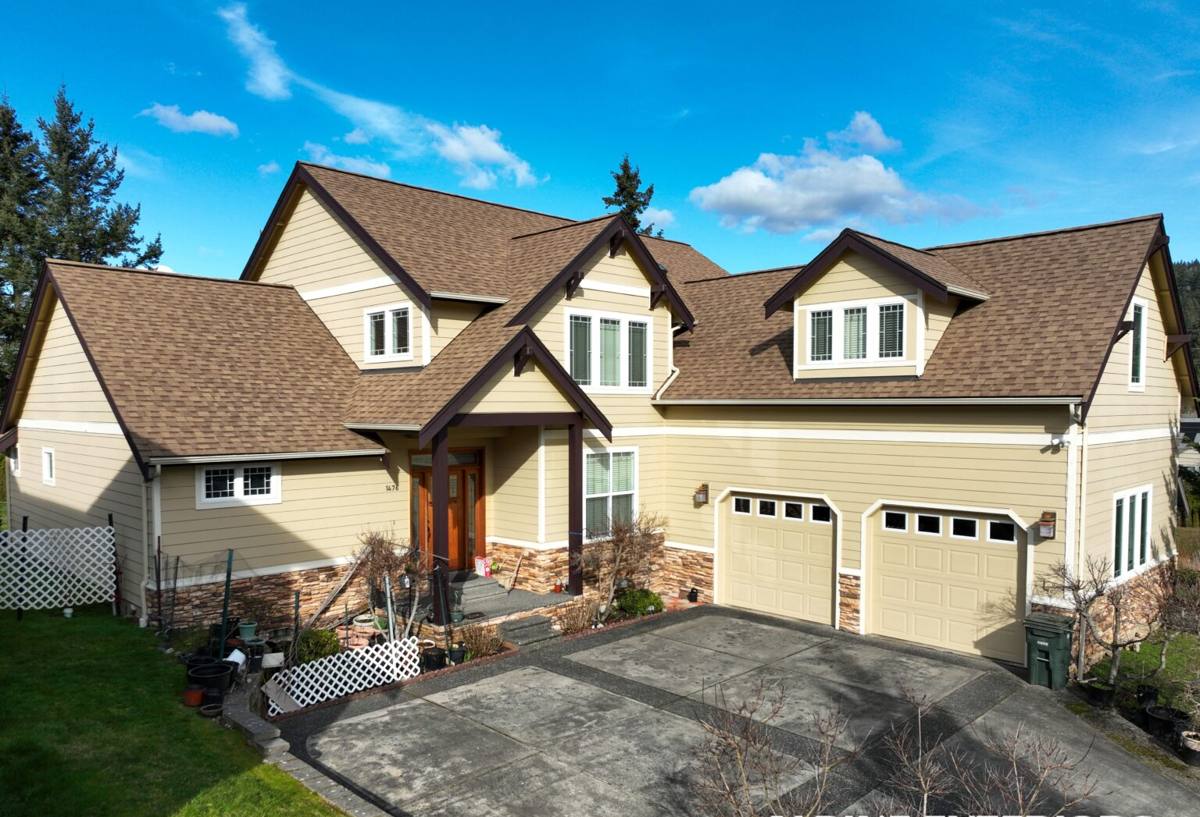
What Salt Air, Rain, and Moss Actually Do to a Roof
Salt Air and Corrosion
Airborne salt doesn't just affect homes right on the water — it travels well inland on wind, especially in a spit or peninsula setting like Semiahmoo. Over years, it accelerates rust on exposed nail heads, metal flashing, vent boots with metal collars, and gutter hardware. A fastener that would last decades in a drier inland climate can start showing surface corrosion much sooner here. Repairs that don't account for this — using standard fasteners instead of corrosion-resistant hardware, for example — tend to fail again within a few years.
Driving Rain and Wind-Driven Water Intrusion
Rain that comes in at an angle behaves differently than rain that falls straight down. It gets pushed up under shingle edges, into valleys, and around penetrations like chimneys, skylights, and plumbing vents. A repair that only addresses the visible damage — replacing a shingle without checking the underlayment or flashing beneath it — often misses the actual entry point. On a site exposed to wind off the water, flashing detail and underlayment condition matter as much as the surface material.
Moss, Moisture, and a Long Growing Season
Whatcom County's mild, wet climate gives moss a long window to establish itself, and roofs with any shade from trees or a north-facing slope are especially prone to it. Moss holds moisture against the roofing material, which shortens the life of asphalt shingles, promotes rot in wood shakes, and can lift shingle edges enough to let water underneath. Left alone, what starts as a cosmetic issue becomes a structural one.
Signs a Semiahmoo Resort Home Needs Roof Repair, Not Just a Cleaning
- Granule buildup in gutters or downspouts, or bald patches on asphalt shingles
- Moss or dark streaking concentrated on shaded or north-facing roof sections
- Soft or spongy spots when walked (only assessed by a professional — never test this yourself)
- Staining on interior ceilings or in the attic, especially near chimneys, skylights, or vent stacks
- Curling, cracked, or missing shingles after a windy system
- Rust streaks below metal flashing or exposed fasteners
- Sagging gutters or gutters pulling away from the fascia, which redirects water into the roof edge
- Daylight visible through the roof deck from inside the attic
Any one of these on its own might be minor. Several together, or any sign paired with interior staining, usually means water has already found a way in and the repair needs to happen before the next heavy rain, not after.
What a Correct Repair Actually Involves
A roof repair that holds up in this climate isn't just swapping damaged material for new material. It requires a few things done in order, every time:
1. Diagnose Before Patching
Visible damage and the actual source of a leak are often in different spots — water travels along the underlayment or decking before it shows up as a stain. We trace the path before deciding what gets repaired.
2. Check the Decking
If moisture has been sitting under damaged shingles for a while, the plywood or OSB decking underneath may be soft or delaminating. Patching over compromised decking is a short-term fix that fails again, usually within a season or two.
3. Correct the Flashing, Not Just the Field
Most leaks near chimneys, skylights, vents, and roof-to-wall transitions come from flashing that's corroded, improperly lapped, or was never sealed correctly to begin with. Given the salt exposure here, we look closely at flashing condition on every repair call, even when the reported problem is elsewhere on the roof.
4. Match Materials Correctly
A repair patch that doesn't match the existing shingle profile, color, or exposure will look obviously different and can also behave differently in wind and rain. Where an exact match isn't available, we're upfront about it before starting the work.
5. Address the Moss, Not Just the Symptom
If moss caused or contributed to the damage, a repair that doesn't also treat the moss and improve drainage or airflow to that section is treating the symptom, not the cause.
Roof Types Around Semiahmoo Resort and How Repair Differs by Material
| Roof Type | Common Issue in This Climate | Repair Considerations |
|---|---|---|
| Asphalt/composite shingle | Granule loss, moss on shaded slopes, wind-lifted edges | Most repairable material here; match age and exposure of existing shingles for a clean blend |
| Cedar shake | Moisture retention, rot, moss taking hold between shakes | Individual shake replacement is possible early; widespread rot usually means a larger re-roof, not a patch |
| Metal roofing/panels | Fastener corrosion, seam and flashing wear from salt air | Repairs focus on fastener replacement and resealing seams with corrosion-resistant hardware |
| Flat or low-slope sections | Ponding water, membrane seam failure at roof-to-wall transitions | Requires membrane-specific repair, not shingle-style patching |
Our Roof Repair Process
- Inspection and honest diagnosis. We look at the roof surface, flashing, penetrations, and — when accessible — the attic side, and tell you plainly what we find.
- Written scope before work starts. You know what's being repaired, why, and roughly what it involves before we touch the roof.
- Repair, not over-sell. If a targeted repair will genuinely hold, we say so. If the roof is past the point where repair makes sense, we'll tell you that too, and explain why.
- Weather-aware scheduling. Given how often this stretch of coastline sees rain, we plan repair work around dry windows so materials seal properly instead of being rushed in wet conditions.
- Cleanup and a final check. We clear debris, check the repair holds a seal, and make sure gutters and drainage near the repair are clear so water moves off the roof the way it should.
Why a Crew That Already Works This Area Matters
Semiahmoo Resort and the surrounding spit are a distinct pocket within Whatcom County — different exposure, different microclimate, and often different expectations around exterior appearance than you'd find in a typical inland neighborhood. A crew that's already worked roofs in this area brings a few practical advantages:
- Familiarity with the exposure. We already know which roof orientations here tend to moss out first and which flashing details tend to fail from salt exposure, so diagnosis is faster and more accurate.
- Respect for community appearance standards. Resort and shared-community settings often have expectations about how repairs look from the street or fairway, not just whether they function. We keep that in mind during material matching and cleanup.
- Local logistics. Knowing the access points, weather windows, and typical drive times in this part of the county means fewer scheduling surprises.
Living With Moss Between Repairs
No repair fully "moss-proofs" a roof in this climate — the conditions that grow moss here are ongoing. What does help is keeping gutters and valleys clear, trimming back branches that shade the roof and keep it damp longer than it needs to be, and having moss growth addressed before it lifts shingles rather than after. If you're not sure whether current moss on your roof is cosmetic or already causing damage, that's exactly the kind of thing worth having looked at rather than guessed at.
What Affects the Cost of a Roof Repair Here
| Factor | Why It Matters |
|---|---|
| Extent of decking damage | Sound decking keeps a repair simple; soft or rotted decking adds material and labor |
| Roof material and age | Matching older or discontinued shingle profiles can take more effort to source |
| Flashing condition | Corroded or failed flashing found during the repair often needs replacing alongside the visible damage |
| Roof pitch and access | Steeper slopes and harder-to-reach sections take more time and safety setup |
| Extent of moss or moisture damage | Treatment and drainage correction add scope beyond the patch itself |
We don't quote a number without seeing the roof first — anyone who does is guessing, and a guess isn't useful to you. What we can say honestly is that most straightforward repairs (a section of damaged shingles, a flashing reseal, a vent boot replacement) run well below the cost of a full re-roof, and we'll always tell you if a roof has reached the point where repair no longer makes financial sense compared to replacement.
Get an Honest Look at Your Roof
If you own a home near Semiahmoo Resort and you're seeing moss buildup, a stain on a ceiling, missing shingles after a windstorm, or you just haven't had the roof looked at in a while given how hard this coastline is on roofing, we're glad to come take a look. The estimate is free, there's no pressure to move forward, and you'll get a straight answer about what your roof actually needs.