 Semiahmoo Siding
 Why Peace Arch Roofs Age Differently Than Roofs Inland
The stretch of Whatcom County around the Peace Arch border crossing and the Semiahmoo peninsula sits right where the Salish Sea meets sustained westerly weather. That combination is harder on a roof than most homeowners realize until they're dealing with it. Salt-laden air corrodes exposed metal faster than it does even twenty miles inland. Driving rain off the water doesn't just fall straight down — it gets pushed sideways under wind, which means laps, flashing, and fastener patterns that would be fine in a calmer climate can leak here. And the long, wet, low-sun stretch from fall through spring gives moss and algae months of uninterrupted growing conditions on north-facing slopes and anything shaded by trees.
None of that means asphalt shingles are the wrong choice for a Peace Arch home — they're still the most practical, cost-effective option for the vast majority of houses in this area. It means the installation has to account for those conditions from the start, not patch around them later. A roof detailed the same way you'd detail one in Spokane won't hold up the same way here.
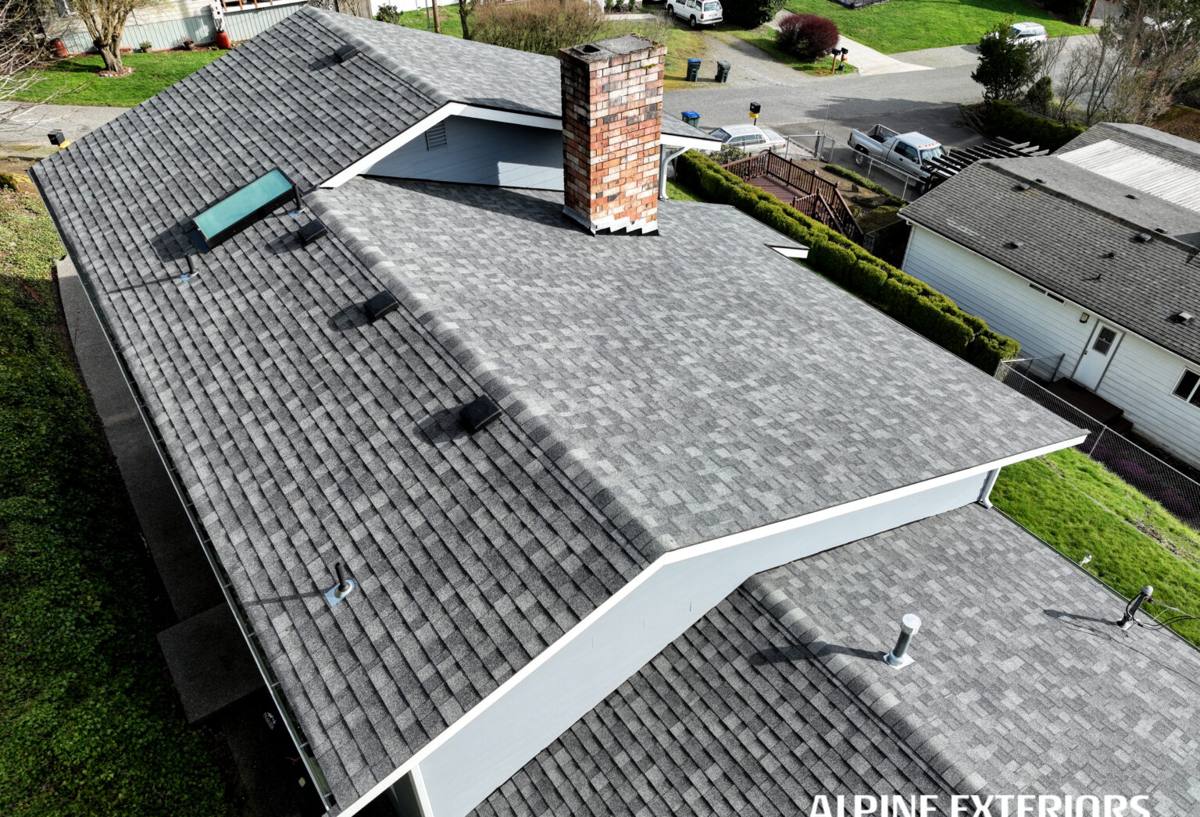
What a Correct Shingle Roof Needs in This Climate
Underlayment That Can Handle Wind-Driven Rain
In a marine climate with regular horizontal rain, a single layer of felt underlayment is doing less work than most people assume. We use synthetic underlayment as standard on Peace Arch roofs because it resists water intrusion better under wind pressure and holds up through the exposure window between tear-off and shingle installation, which matters when weather doesn't cooperate mid-job.
Ice-and-Water Barrier Where It Actually Matters
This isn't a heavy-snow region, but self-adhering membrane still earns its place at eaves, valleys, and around penetrations — not for ice, but for wind-driven rain and the wet debris that collects in valleys during moss season. These are the spots that leak first on an underbuilt roof.
Flashing That Won't Corrode Out From Under the Shingles
Salt air is unkind to bare or lower-grade galvanized flashing over time. We spec flashing material and fastener types with that in mind around chimneys, skylights, sidewalls, and roof-to-wall transitions, since a flashing failure shows up as an interior leak long before the shingles themselves show any wear.
Ventilation Sized for a Wet Climate
Balanced intake and exhaust ventilation keeps moisture from condensing in the attic, which matters as much here as heat does in drier climates. Trapped moisture rots decking from underneath and voids shingle warranties, and it's one of the most common defects we find when we tear off an older roof in this area.
Shingle Options for Semiahmoo Homes
Not every shingle class performs the same way in a wet, salt-exposed, moss-prone environment. Here's how the common tiers stack up for this specific climate:
| Shingle Class | Typical Lifespan Here | How It Handles Moss & Moisture | Best For |
|---|---|---|---|
| 3-Tab (economy) | 15–20 years | Thinner profile traps less debris but has less algae-resistant granule coverage on older product lines | Budget-driven rentals or short-hold properties |
| Architectural / Dimensional | 25–30 years | Thicker mat sheds water better; most current lines include algae-resistant (AR) granules | The standard choice for most Peace Arch homes |
| Premium/Designer Architectural | 30+ years | Heaviest mat, strongest wind rating, best AR granule protection | Exposed, wind-heavy, or waterfront-adjacent lots |
For most homes in the Peace Arch and Semiahmoo area, a mid-to-upper architectural shingle with algae-resistant granules is the right balance of cost and durability. On more exposed lots — open to the water or catching the brunt of prevailing wind — we'll usually recommend stepping up to a heavier product with a higher wind rating rather than relying on extra fasteners alone to compensate.
Our Installation Process
- On-site inspection and roof assessment — we check decking condition, existing ventilation, flashing points, and moss/algae staining patterns before quoting anything.
- Tear-off and deck inspection — old material comes off completely so we can inspect the sheathing underneath; soft or rotted decking gets replaced, not covered up.
- Underlayment and ice-and-water membrane — installed per manufacturer spec at eaves, valleys, and penetrations before a single shingle goes down.
- Flashing replacement — chimneys, skylights, vents, and sidewalls get new flashing rather than reusing corroded or bent originals.
- Shingle installation — nailed to manufacturer and wind-rating spec, not shortcut spacing, which is one of the most common causes of premature failure we see on older local roofs.
- Ventilation check and correction — intake and exhaust balanced for the attic size, adding or adjusting vents where the existing setup falls short.
- Cleanup and final walkthrough — magnetic sweep for debris, gutter check, and a walk-through of what was done and why.
Moss, Algae, and Long-Term Maintenance
Moss season in this part of Whatcom County runs long — realistically from early fall through late spring — and north-facing or tree-shaded roof sections take the brunt of it. A correctly installed asphalt shingle roof with algae-resistant granules and proper ventilation will resist growth far better than an older roof, but "resist" isn't "immune." A few habits go a long way:
- Keep overhanging branches trimmed back so roof sections get more sun and airflow.
- Clear valleys and gutters of needles and leaf litter before the fall rains set in.
- Have moss physically removed rather than pressure-washed off, since pressure washing can strip granules and shorten shingle life.
- Watch for dark streaking, which is usually algae rather than structural damage, but left unaddressed it holds moisture against the shingle surface.
- Schedule a roof check after any major windstorm off the water, since wind-driven debris and lifted shingle edges are easy to miss from the ground.
We're upfront that no shingle roof in this climate is maintenance-free. The goal of a correct install is to minimize how much maintenance it needs and make what maintenance it does need straightforward.
Cost Factors for a Peace Arch Shingle Roof
Every roof is different, but the same handful of factors drive most of the cost variation we see on jobs in this area:
| Factor | Why It Matters Here |
|---|---|
| Roof pitch and access | Steeper or harder-to-access roofs take longer and require more safety setup |
| Decking condition | Moisture-related rot from past ventilation or flashing issues means more plywood replacement |
| Number of penetrations | Chimneys, skylights, and vents each add flashing labor and material |
| Shingle class chosen | Heavier, higher-wind-rated products cost more per square but last longer in exposed spots |
| Layers to remove | Roofs with multiple existing layers take longer to strip and haul off |
We don't quote a price without seeing the roof first — anything given sight-unseen in this business is a guess, and a guess isn't a fair number for either side.
Signs It's Time to Replace, Not Repair
- Granules collecting in gutters or at the base of downspouts in noticeable amounts
- Shingles that are curling, cupping, or cracking rather than lying flat
- Daylight visible through the roof deck from inside the attic
- Recurring leaks in the same spot despite prior patch repairs
- Heavy, persistent moss growth that keeps returning after cleaning
- A roof approaching or past the upper end of its expected lifespan for its shingle class
If a roof shows one or two of these signs, a targeted repair may still make sense. If it shows several at once, repair costs usually start adding up to a meaningful fraction of full replacement anyway, at which point replacement is the more honest recommendation.
Why a Local Peace Arch Crew Makes a Difference
A roofing crew that regularly works the Semiahmoo peninsula and the Peace Arch border area already knows which slopes catch the worst of the wind-driven rain, which neighborhoods deal with heavier moss pressure from tree cover, and which older homes in the area were built with ventilation that hasn't kept pace with current standards. That local pattern recognition shows up in the details — where we add extra membrane, how we detail flashing around a chimney facing the prevailing wind, which shingle class we'll actually recommend for a given lot rather than just the one with the best margin.
It also means we're not driving in from out of the area to handle a warranty callback or a follow-up question. We're working in this part of Whatcom County regularly, and we stand behind what we install here.
Get a Straight Answer on Your Roof
If you're weighing repair against replacement, or just want an honest read on where your roof stands, we're glad to take a look. Use the form below to request a free, no-pressure estimate for your Peace Arch home — we'll tell you what we actually see, not just what sells a job.