 Semiahmoo Siding
 New Roof Installation for Peace Arch Homes
Peace Arch sits close enough to the water that salt air is part of daily life, and that changes what a roof needs to survive here compared to a roof going up further inland. Combine the salt exposure with Whatcom County's long wet season and the moss growth that comes with it, and you have a climate that is genuinely harder on a roof than most manufacturers' warranty language assumes. When a Peace Arch homeowner calls us about a new roof, the conversation starts with what the roof will actually be up against, not just what looks good from the street.
This page covers what a correctly installed new roof looks like for this specific area: the materials that hold up, the details that matter most in driving rain, and how our process is built around the realities of installing here rather than a generic checklist.
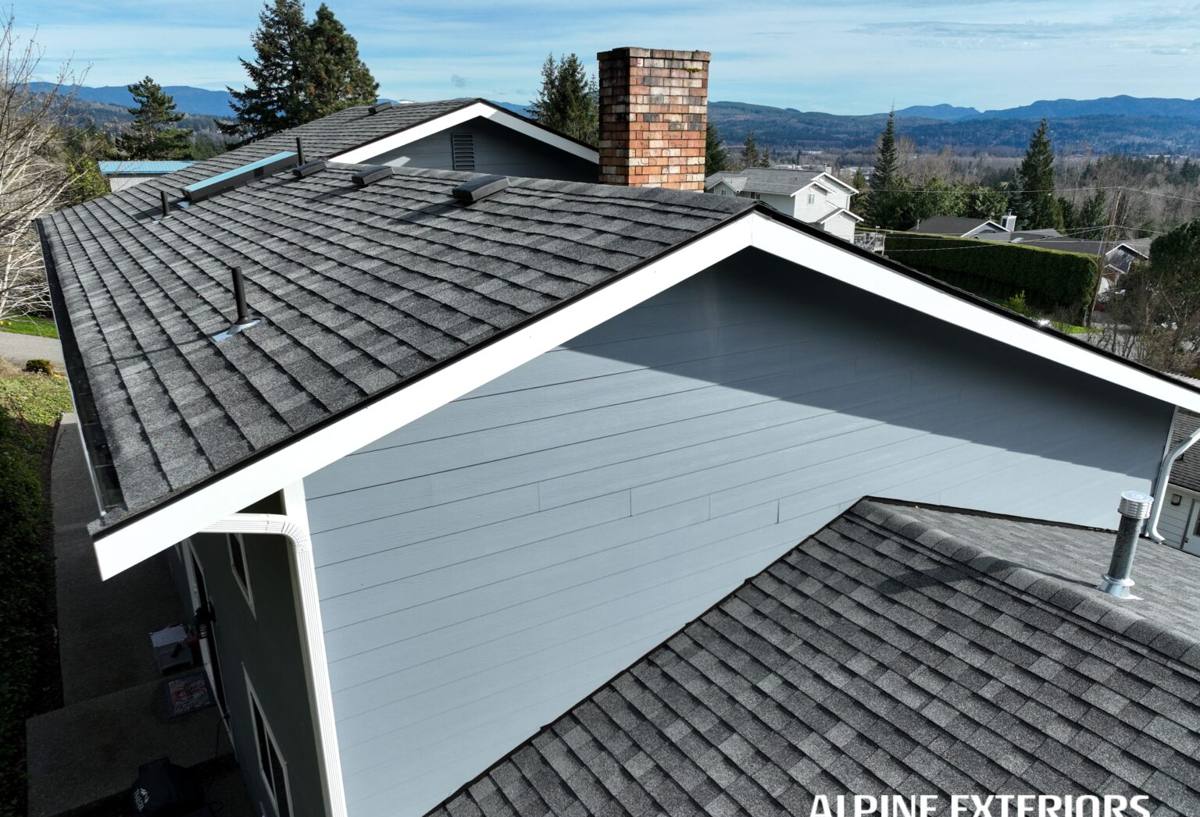
Why Peace Arch's Climate Is Harder on a Roof
Salt Air
Proximity to Semiahmoo Bay means airborne salt settles on every exterior surface, including the roof. Salt is corrosive to exposed metal fasteners, flashing, and hardware. A roof built with unprotected or poorly rated metal components will show rust and premature wear years before an identical roof installed a few miles inland. Fastener and flashing selection is not a cosmetic choice here — it is a durability choice.
Driving Rain
Storms coming off the water often bring rain sideways, not straight down. That matters because a roof isn't just shedding water off a slope — wind-driven rain gets pushed up under shingle edges, into vents, and along ridge lines where a lower-quality install would let it sit. Underlayment coverage, fastening patterns, and edge details all need to account for wind-driven moisture, not just gravity.
Moss Season
Whatcom County's moss season runs long. Shade, moisture, and mild temperatures are exactly what moss wants, and moss doesn't just sit on a roof looking bad — it holds moisture against the roofing material, works into shingle layers, and can lift edges over time. A new roof installed without moss-resistant strategy is starting its moss problem on day one.
What a Correct New Roof Involves Here
A new roof is more than the shingles you see. In a climate like this, the components underneath and around the visible surface often determine whether the roof performs for its full expected lifespan or starts having problems in year five.
- Full tear-off, not overlay: Installing new roofing over old material traps moisture and hides deck problems. We remove down to the deck so we can actually see what's there.
- Deck inspection and repair: Any soft, rotted, or water-damaged decking gets replaced before anything new goes down. Skipping this step means the new roof is sitting on a compromised base.
- Ice-and-water shield at vulnerable points: Eaves, valleys, and roof penetrations get self-adhering waterproof membrane, not just standard felt, because these are the points where wind-driven rain finds a way in.
- Synthetic underlayment across the field: A durable synthetic underlayment gives a second line of defense under the primary roofing material, which matters more in a coastal wind-and-rain pattern than in a drier climate.
- Corrosion-resistant flashing and fasteners: Given the salt air, we spec metal components rated for coastal exposure rather than standard-grade hardware that will corrode faster here.
- Proper ventilation: Balanced intake and exhaust ventilation keeps the attic dry and temperature-regulated, which reduces the moisture buildup that feeds moss and mildew from the underside.
Choosing the Right Roofing Material for This Area
There isn't one "best" roofing material for every home — the right choice depends on your roof's exposure, slope, budget, and how much maintenance you want to take on. Here's how the common options stack up for a coastal, wet-climate property like those in Peace Arch.
| Material | Coastal/Salt Performance | Moss Resistance | Typical Lifespan | Maintenance |
|---|---|---|---|---|
| Architectural asphalt shingle | Good with corrosion-resistant fasteners | Moderate — benefits from algae-resistant granules | 25–30 years | Periodic moss/debris removal |
| Standing seam metal | Excellent with coastal-rated coatings | Strong — moss struggles to grip smooth metal | 40–50+ years | Low |
| Synthetic/composite shake | Good | Good | 30–40 years | Low to moderate |
| Cedar shake | Fair — needs regular treatment near salt air | Weak without ongoing treatment | 20–30 years with upkeep | High |
We'll walk through these trade-offs against your specific roof and budget rather than pushing one product. The right answer for a low-slope roof tucked under trees is often different from the right answer for a wide-open, wind-exposed roof closer to the water.
Design and Slope Considerations for Peace Arch Properties
Roof slope, tree cover, and orientation to the water all affect how a new roof should be detailed. A steeper roof sheds wind-driven rain more effectively but may need more attention at ridge and hip lines. A roof with heavier tree cover will hold moisture longer and needs ventilation and moss-resistant material prioritized. A roof with more direct water exposure needs the flashing and fastener spec taken seriously from the start. Part of our estimate process is looking at your specific roof's geometry and surroundings before recommending a system, not applying the same spec to every job.
Our New Roof Installation Process
1. On-Site Assessment
We inspect the existing roof, deck condition, ventilation setup, and any problem areas — moss buildup, soft spots, flashing wear — and talk through what we find with you directly.
2. Material and Scope Recommendation
Based on your roof's exposure and your goals for lifespan, appearance, and budget, we recommend a system and walk through the honest trade-offs, including what a lower-cost option will and won't hold up against here.
3. Written Estimate
You get a clear, itemized estimate before any work starts — no vague allowances, no surprise change orders for things we could have identified during the assessment.
4. Tear-Off and Deck Repair
Old roofing comes off, decking is inspected, and any damaged sections are replaced and documented.
5. Installation
Underlayment, waterproof membrane at vulnerable points, flashing, ventilation, and the finish material go in per manufacturer specification and the coastal detailing this area needs.
6. Final Walkthrough
We walk the finished roof and the site cleanup with you before calling the job done.
Cost Factors for a New Roof in This Area
Every roof is different, so we don't quote pricing sight-unseen, but these are the factors that most affect cost on a Peace Arch project:
| Factor | Why It Affects Cost |
|---|---|
| Roof size and number of planes | More area and more valleys/hips mean more material and labor |
| Deck condition | Rotted decking found during tear-off adds repair cost not visible before the job starts |
| Material choice | Metal and premium composites cost more upfront than standard asphalt shingle |
| Access and site conditions | Steep slope, limited access, or heavy tree cover affect labor time and safety setup |
| Ventilation and flashing upgrades | Bringing older ventilation or flashing up to current standards adds scope but reduces future risk |
We'll always tell you honestly if a cheaper option is likely to cost more in the long run given this climate — that's a better conversation to have before the roof goes on than after.
Why Hire a Crew That Already Works This Area
A roofing crew that primarily works drier, inland conditions can still do competent work, but they may not default to coastal-rated fasteners, moss-resistant detailing, or wind-driven-rain-specific flashing unless it's flagged for them. A crew that regularly works Semiahmoo and the surrounding Whatcom County coastline already treats those as standard practice, because we've seen what happens to roofs here that were installed without them. That familiarity shows up in fewer callbacks, fewer surprise repairs in year three or four, and a roof that's actually specified for the environment it's sitting in.
Signs You May Need a New Roof
- Shingles that are curling, cracking, or losing granules in large amounts
- Heavy, persistent moss growth that returns quickly after cleaning
- Visible daylight or water stains in the attic, especially near valleys or vents
- Flashing that's visibly rusted, lifted, or separated from the roof line
- Your current roof is approaching or past its material's expected lifespan
- Missing or damaged shingles after a windstorm off the water
Get a Free Estimate for Your Peace Arch Roof
If your roof is showing its age or you're planning ahead rather than waiting for a leak, we're happy to take a look and give you a straight assessment — no pressure, no obligation. Fill out the form below and we'll set up a time to come out and talk through what your roof actually needs.