 Semiahmoo Siding
 Why Marietta Roofs Wear Differently
Marietta sits close enough to the water that salt air is a daily fact of life, not an occasional nuisance. Combine that with the driving rain that comes off Semiahmoo Bay in fall and winter, plus the long, damp moss season that Whatcom County is known for, and you get a roof that's working harder than one 50 miles inland. Fasteners corrode faster near salt air. Shaded, north-facing slopes stay wet longer and grow moss almost year-round. And wind-driven rain finds every weak seam, nail pop, or worn flashing detail a roof has. A roof replacement here isn't just about swapping old shingles for new ones — it's about specifying and installing a system that's built for this specific coastline.
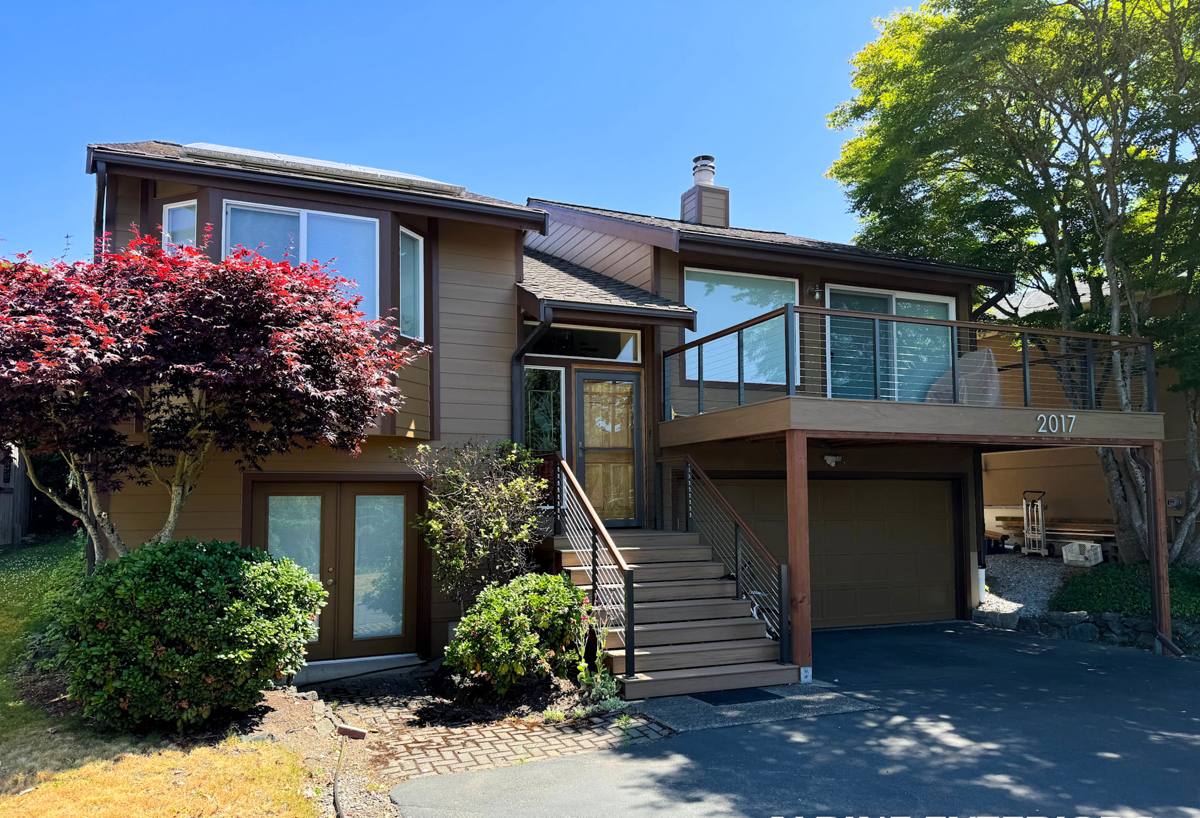
Signs Your Marietta Home Needs a Roof Replacement, Not Just a Repair
Not every roof problem calls for a full tear-off. But there's a point where patching becomes a waste of money, and homes in this climate tend to hit that point sooner than homes in drier parts of the state. Here's what tells us a repair won't hold:
- Granule loss heavy enough that you're finding shingle grit in gutters and downspouts every time it rains
- Shingles that are cupping, curling, or cracking, especially on the sides that catch the most weather
- Moss and algae that keep coming back within months of cleaning, a sign the roof surface has broken down enough to hold moisture
- Soft spots or sagging in the decking, usually found from the attic side before it's visible from the ground
- Rusted or failing flashing around chimneys, vents, and valleys — the most common source of hidden leaks
- A roof that's 20+ years old (asphalt) or showing widespread wear, even if no single spot is leaking yet
If you're only seeing one or two of these in a small area, a repair may still make sense. If you're seeing several at once, replacement is almost always the better value — you stop chasing leaks one at a time and get a roof that's uniformly sound.
What a Correct Roof Replacement Involves Here
Tear-Off and Deck Inspection
We strip the old roofing down to the deck rather than layering over it. That's the only way to actually see what's underneath — and in a climate this wet, it's common to find soft or delaminated plywood, especially near eaves and valleys where water has been sitting. Any damaged decking gets replaced before anything new goes down. Skipping this step is how a roof looks fine for a year or two and then fails from the inside out.
Underlayment and Ice-and-Water Protection
Given how much rain this area gets, we don't treat underlayment as an afterthought. Self-adhering ice-and-water membrane goes at eaves, valleys, and around every penetration — the spots most likely to see wind-driven rain pushed backward under the shingles. The rest of the deck gets a synthetic underlayment rated for the exposure time our weather realistically demands, since it's common for a roof to sit partially open longer than planned when a system rolls through mid-project.
Flashing Details
Flashing failure is the number one cause of "mystery leaks" on roofs that otherwise look fine. Every chimney, skylight, vent pipe, and wall-to-roof transition gets new step flashing, counter-flashing, or pipe boots — not just caulk over the old metal. In salt air, we pay attention to fastener and flashing material choice specifically because standard galvanized hardware corrodes faster this close to the water.
Ventilation
A roof that can't breathe traps moisture in the attic, which shortens the life of the decking and the shingles from underneath. We check intake (soffit) and exhaust (ridge or roof vents) venting as part of every replacement and correct the balance where it's off — a very common issue on older Marietta homes that were built before current ventilation standards.
Moss and Algae Defense
Moss doesn't just sit on a roof — its root structure lifts shingle edges and holds water against the surface, which accelerates rot underneath. On new installs we install zinc or copper strips near the ridge on shaded or north-facing slopes, which release trace metal ions with every rain that inhibit moss and algae growth for years. We also grade material selection toward algae-resistant shingle lines where it makes sense for the home's exposure.
Roofing Material Options for Salt Air and Moss
There's no single "best" roofing material for every home — it depends on budget, roof pitch, and how much shade the roof sits in. Here's how the common options actually perform in this climate:
| Material | Salt Air Performance | Moss Resistance | Typical Lifespan Here |
|---|---|---|---|
| Architectural asphalt shingle (algae-resistant) | Good with proper fasteners | Good, especially with copper/zinc strips | 20–25 years |
| Standard 3-tab asphalt shingle | Fair — shorter-lived hardware | Fair — needs regular cleaning | 15–18 years |
| Metal (standing seam) | Excellent with coastal-rated coatings | Excellent — sheds moss naturally | 40–50+ years |
| Composite/synthetic shake | Good | Good, varies by product | 30–40 years |
Metal carries the highest upfront cost but the least long-term maintenance in exactly the conditions Marietta deals with — salt exposure and constant moisture. Algae-resistant architectural asphalt is the most common choice because it balances cost and performance well for most homes. We'll walk through your roof's specific pitch, shading, and exposure before recommending one over another rather than defaulting to a single product for every house.
Our Roof Replacement Process, Start to Finish
- On-site inspection and estimate. We walk the roof (or use a drone where pitch or access doesn't allow safe foot traffic), check the attic for ventilation and moisture issues, and give you a written scope — not a ballpark guess.
- Material selection. We go over the options above in terms of your actual roof, not a generic pitch, and give you honest tradeoffs on cost versus longevity.
- Scheduling around the weather. We plan tear-off days around forecast windows and stage materials so the roof isn't left exposed longer than necessary.
- Tear-off and deck repair. Old roofing comes off, decking is inspected and replaced where needed, and the site is protected the entire time.
- Underlayment, flashing, and ventilation correction. Every detail above gets installed to spec, not shortcut.
- New roofing installation. Installed to manufacturer specifications, which is what keeps material warranties valid.
- Cleanup and magnetic sweep. Full site cleanup including a nail sweep of the yard and driveway.
- Final walkthrough. We review the finished roof with you before calling the job done.
What Roof Replacement Costs in Marietta
Exact pricing depends on roof size, pitch, existing layers, deck condition, and material choice — we won't quote a number without seeing the roof. But here are the factors that move the price most:
| Cost Factor | Why It Matters |
|---|---|
| Roof size and number of facets | More square footage and more valleys/hips mean more labor and material |
| Deck condition | Rotted or soft decking found during tear-off adds material and labor to replace |
| Pitch and access | Steep or hard-to-access roofs require more safety equipment and time |
| Material choice | Asphalt, metal, and composite carry very different material costs |
| Layers being removed | Tearing off multiple existing layers takes longer than a single layer |
| Ventilation corrections | Adding or rebalancing intake/exhaust venting is often needed but not always priced in generic quotes |
Be cautious of quotes that are dramatically lower than others for the same scope — it's usually a sign that underlayment quality, flashing detail, or deck repair is being left out of the price, only to show up as a change order once the tear-off starts.
Why a Crew That Already Works Marietta Matters
A roofer who works this stretch of Whatcom County regularly already knows which slopes hold moss longest, how far wind-driven rain can push water back under a poorly flashed valley, and which fastener and flashing upgrades are worth the extra cost this close to the water. That's not something you can fully substitute with a generic checklist — it comes from having been on enough Marietta and Semiahmoo-area roofs to know where this climate actually causes failures, versus where it's cosmetic. It also means faster response if a storm damages your new roof and you need someone who's already familiar with your home's layout and roof history.
Maintaining Your New Roof Through Moss Season
A correctly installed roof still needs basic upkeep, especially with the moss pressure this area sees. A little maintenance goes a long way toward hitting the full lifespan of whatever material you choose:
- Keep gutters clear so water isn't backing up under the shingle edge, especially before the fall rains start
- Have moss and debris cleared gently (never pressure-washed directly on shingles) once it starts to build, rather than waiting for it to establish
- Trim back overhanging branches that keep shaded areas of the roof from drying out between rains
- Check attic ventilation isn't blocked by insulation, especially after any attic work
- Schedule a roof check after major windstorms to catch lifted shingles or damaged flashing early
Get an Honest Look at Your Roof
If you're not sure whether your Marietta home needs a repair or a full replacement, the most useful next step is a straightforward inspection — not a sales pitch. We'll tell you honestly what we find, what it means for your timeline, and what your real options are given your roof's condition and your budget. Reach out below for a free, no-pressure estimate.