 Semiahmoo Siding
 Windows Built for Marietta's Coastal Climate
Marietta sits close enough to Semiahmoo Bay that the weather off the water shapes almost every exterior decision a homeowner makes, and windows are no exception. Salt-laden air, driving rain that comes in sideways during winter storms, and a moss season that can stretch for months all put steady pressure on window frames, seals, and glazing. Windows that were fine when installed can start failing years earlier here than they would in a drier inland community, simply because the local climate never really lets a house dry out.
Energy-efficient windows done right aren't just about a lower heating bill, though that matters. In Whatcom County's damp marine climate, the bigger issue is usually moisture and air infiltration working together — a poorly sealed window doesn't just waste energy, it invites the kind of slow water intrusion that rots framing and feeds mold. Getting windows right for a Marietta home means solving both problems at once.
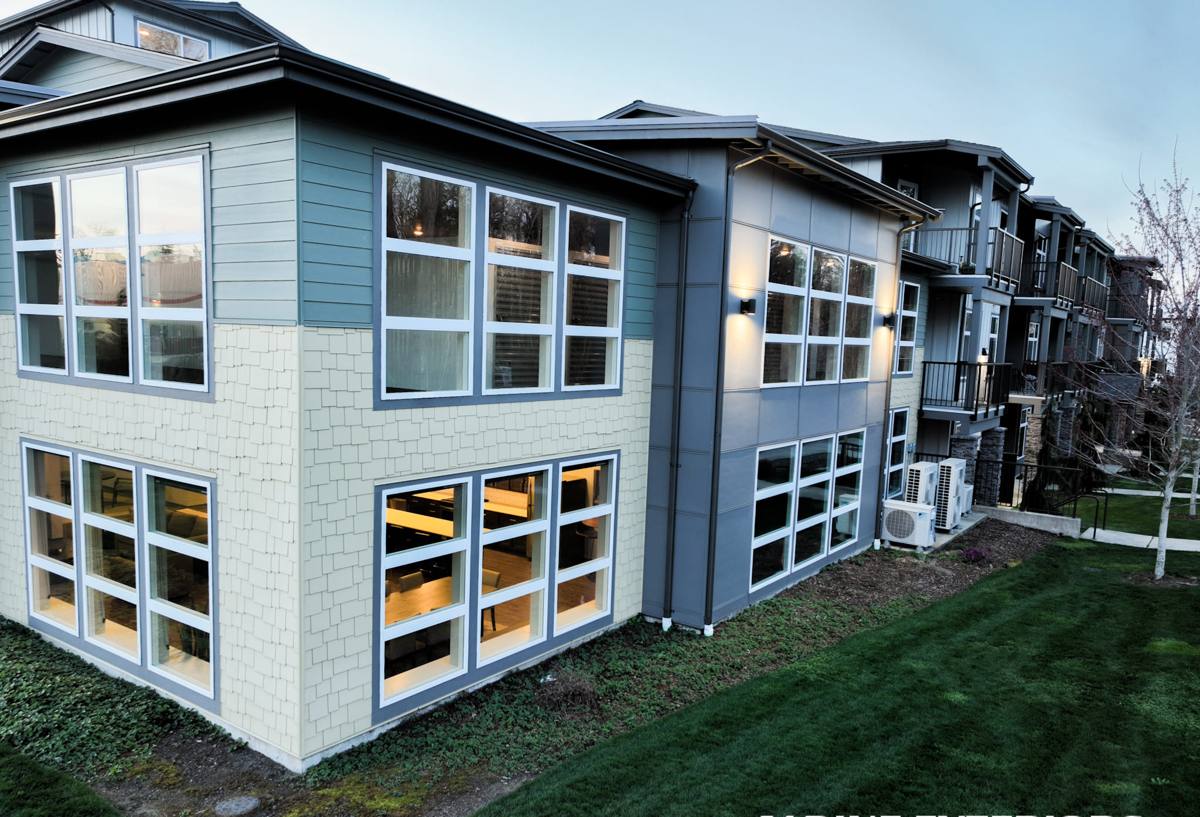
What Salt Air, Driving Rain, and Moss Season Do to Ordinary Windows
Salt Air and Metal Fatigue
Airborne salt accelerates corrosion on hardware, hinges, and unprotected aluminum components. Over years, that corrosion can bind moving parts, pit metal cladding, and break down seals faster than the manufacturer's rated lifespan suggests. It's a slow process, which is exactly why it catches homeowners off guard — the window still looks fine from the yard while the hardware inside is already compromised.
Driving Rain and Wind-Driven Water
Storms coming off the water don't just fall straight down — wind pushes rain sideways and up under trim, sills, and poorly lapped flashing. A window that would perform fine in calmer weather can still leak here if the flashing details weren't built for wind-driven rain specifically. This is one of the most common failure points we see on homes near the bay.
Moss and Prolonged Dampness
A long moss season means more months of the year where wood trim, sills, and caulked joints stay wet rather than drying out between rain events. Moss and algae hold moisture against the surface, which speeds up rot in any wood component and breaks down lower-quality sealants faster than in a drier climate.
What "Energy-Efficient" Actually Means for This Area
Energy efficiency in a window comes down to a handful of measurable properties, and not all of them matter equally in a marine climate like Marietta's.
- U-factor — measures how well the window resists heat transfer. Lower is better for our mild-but-damp winters where the heating season is long even if temperatures aren't extreme.
- Solar heat gain coefficient (SHGC) — matters less here than in sunnier climates, but still affects comfort on the clear days we do get.
- Air leakage rating — arguably the most important number for this area, since a tight seal keeps both heat and wind-driven moisture out.
- Condensation resistance — a window that resists interior condensation matters in a house that already deals with high ambient humidity much of the year.
A window can carry an efficient glass package and still perform poorly here if the frame material or installation doesn't hold up to constant damp exposure. That's why we treat efficiency and durability as one conversation, not two separate ones, when we're speaking with Marietta homeowners.
Choosing the Right Frame Material
There's no single "best" frame material for every home — it depends on your budget, your home's style, and how much maintenance you're willing to take on. Here's how the common options stack up specifically for a salt-air, high-rainfall environment like Marietta's.
| Frame Material | Coastal Durability | Maintenance | Notes for This Area |
|---|---|---|---|
| Vinyl | Good | Low | Won't corrode from salt air; quality varies a lot between manufacturers, so weld quality and reinforcement matter |
| Fiberglass | Very good | Low | Dimensionally stable in temperature and moisture swings; higher upfront cost, longer expected service life |
| Wood-clad | Fair to good | Moderate to high | Interior wood warmth with an exterior clad shell, but any breach in the cladding exposes wood to our wet climate |
| Aluminum | Fair | Low | Prone to corrosion and thermal transfer unless thermally broken; generally not our first recommendation this close to the bay |
For most Marietta homes we lean toward vinyl or fiberglass for the exterior-facing frame, specifically because neither one gives salt air or standing moisture a foothold. That's a professional judgment based on long-term performance in this climate, not a knock on any manufacturer — every material has a place, and we'll walk through the real trade-offs for your specific house rather than push one option across the board.
Glass Packages Worth Discussing
Double-pane windows with a low-E coating and argon fill are the standard efficient option and perform well for most homes here. Triple-pane adds another layer of insulation and sound dampening, which some homeowners value given how much rain and wind noise a bay-facing home deals with, but it comes at added cost and weight that your existing frame and hardware need to be rated for.
What a Correct Installation Involves
The window itself is only part of the equation — a good window installed with the wrong flashing detail will leak just as fast as a cheap one. In this climate, installation quality is often the difference between a window that lasts twenty-plus years and one that needs attention in five.
- Full removal of old flashing and inspection of the rough opening for hidden rot before anything new goes in
- Correct flashing sequence — sill pan first, then side flashing, then head flashing — so water sheds outward and down, never behind the next layer
- A continuous weather-resistive barrier tie-in, not just caulk bridging the gap
- Proper shimming and squaring so the sash operates smoothly and seals evenly for its full lifespan
- Low-VOC, purpose-rated sealant at all exterior joints, sized and applied for this climate's expansion and contraction range
- Interior air sealing at the frame, not just exterior caulk, to control condensation and drafts from both directions
Skipping any one of these steps can hide a problem behind trim for years before it shows up as a soft spot, a musty smell, or a spike in the heating bill. This is the part of the job that doesn't show up in a product brochure but matters more than the glass package in a climate like ours.
How Our Process Works
1. On-Site Assessment
We start by looking at your current windows in place — how they're sealed, whether there's visible or hidden moisture damage around the openings, and what your home's exposure to wind and rain actually looks like from that specific position on the property.
2. Straight Talk on Options
We'll walk through frame material, glass package, and cost trade-offs in plain terms, based on what we've seen hold up in this area over time — not a sales script.
3. Careful Removal and Prep
Old windows come out carefully, and we inspect every opening for rot or water damage before new flashing and windows go in. If we find a problem behind the old trim, we'll show you and talk through the fix before proceeding.
4. Installation to a Coastal Standard
Flashing, sealing, and air-barrier work follow the sequence above on every opening, not just the ones that are easiest to reach.
5. Final Walkthrough
We test operation on every window, check seals, and walk the job with you before we consider it finished.
Signs Your Current Windows Are Costing You Money
Homeowners in Marietta often live with small problems for years before deciding to act, mostly because the signs are easy to write off individually. Together, they usually point to windows that are past their useful life for this climate:
- Visible condensation or fog between panes — the seal has failed and the insulating gas is gone
- Drafts you can feel near the frame even with the window fully latched
- Soft or discolored wood trim around the exterior frame
- Difficulty opening, closing, or latching that wasn't there a few years ago
- A noticeable jump in heating costs without a corresponding change in usage
Any one of these on its own might just need a repair. Several together usually mean it's time to talk about replacement before hidden moisture damage spreads further into the wall.
Why Local Experience Matters
Window installation standards written for a national market assume average conditions — they don't account for what a Whatcom County winter storm does to an unshielded south or west-facing wall near the water. A crew that regularly works Marietta and the surrounding Semiahmoo area already knows which flashing details fail first in this specific wind and rain pattern, which frame materials actually hold up under years of salt exposure, and which older homes in this area tend to have hidden moisture issues behind original trim. That local pattern recognition is hard to substitute with a generic install checklist, and it's the difference between a window that's rated for coastal conditions on paper and one that's actually installed to perform that way here.
Get a Straight Answer for Your Home
Every home in Marietta faces the weather a little differently depending on its orientation and exposure, so the right window and installation approach for your house deserves an actual look rather than a generic recommendation. If you'd like an honest assessment of your current windows and what it would take to fix the real problem, fill out the form below for a free, no-pressure estimate.