 Semiahmoo Siding
 Drayton Harbor sits right where the water meets the neighborhood — and that proximity is exactly why siding here wears differently than siding ten miles inland. Homes along the harbor and the Semiahmoo waterfront take a steady diet of salt-laden air, wind-driven rain off Semiahmoo Bay, and a long, damp moss season that can run from October well into spring. A siding installation done for a subdivision in Bellingham or Ferndale isn't automatically the right installation for a place like this. It needs to be planned for the specific way this harbor treats a building envelope.
This page is about one thing: what a correct siding installation looks like for a Drayton Harbor home, why the details matter more here than in a lot of other Whatcom County neighborhoods, and how we approach the job when we're the crew doing it.
What Drayton Harbor's Climate Actually Does to Siding
It helps to be specific about the stresses instead of just saying "coastal weather is tough." Three things drive most of the siding problems we see near the harbor:
Salt Air and Airborne Moisture
Salt spray and salt-laden humidity off Semiahmoo Bay settle on exterior surfaces year-round, not just during storms. Over years, that steady exposure accelerates corrosion on fasteners, trim flashing, and any metal components in the wall assembly. It also degrades finishes that weren't formulated to handle it — paint films chalk and fail faster, and raw or site-primed wood products absorb moisture unevenly, which is where swelling and cracking start.
Driving, Wind-Driven Rain
Drayton Harbor's exposure to wind off the water means rain doesn't just fall here — it gets pushed sideways into wall assemblies, especially on the water-facing and southwest elevations. That kind of wind-driven rain finds every gap in a siding installation: unsealed joints, poorly lapped house wrap, undersized or missing flashing at windows and penetrations. A product and installation method that only has to shed vertical rain isn't enough for a lot of homes in this area.
A Long Moss and Mildew Season
Shade, humidity, and mild temperatures give moss, algae, and mildew a long runway on this part of the Washington coast. Siding that stays damp longer — because of poor drainage behind it, tight clearance to grade, or a porous surface — grows moss and mildew faster than siding that's detailed to dry out. This is less about the material resisting organic growth outright and more about the installation giving water somewhere to go instead of sitting against the wall.
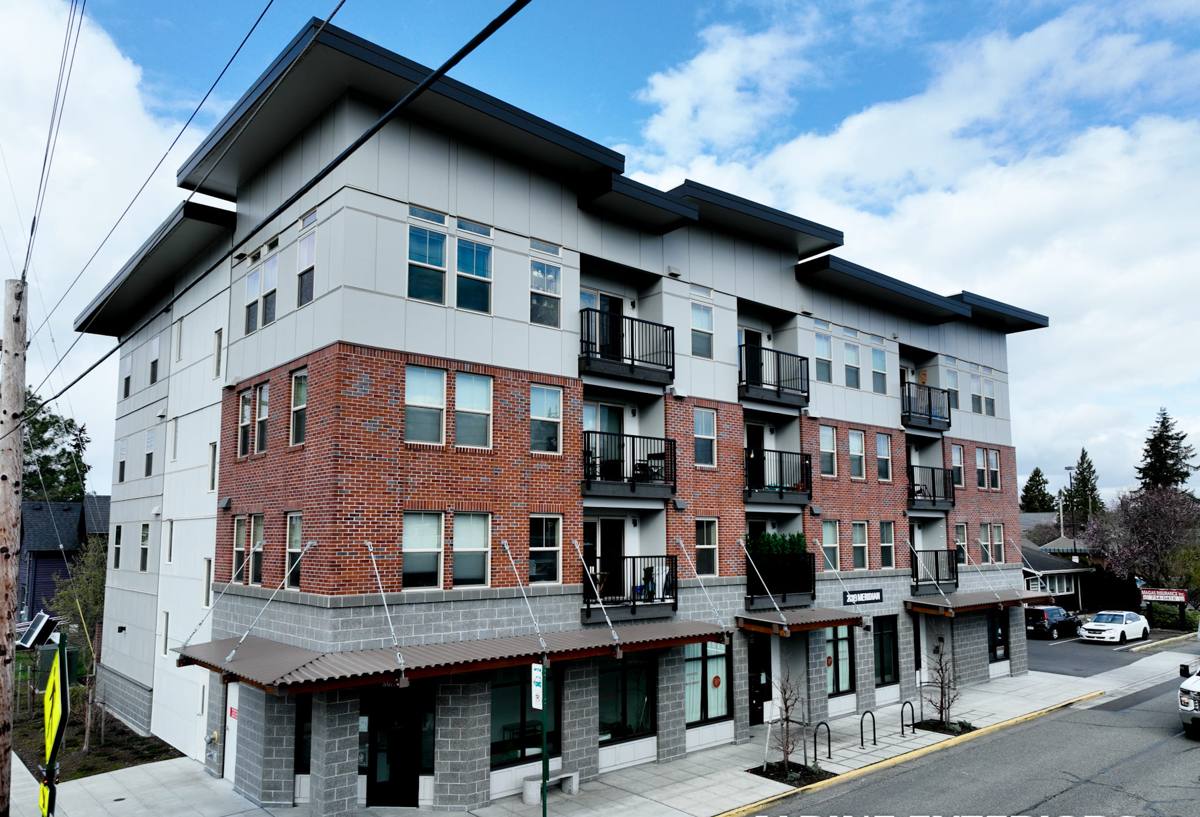
Why the Right Material Matters Here
We install James Hardie fiber cement siding exclusively, and a waterfront neighborhood like Drayton Harbor is a good example of why that standard exists. Fiber cement doesn't absorb moisture the way wood-based products do, and it's non-combustible, which matters on properties with tree cover and seasonal dry spells. Hardie's HZ5 product line in particular is engineered for harsh, moisture-heavy climates — it's a meaningful spec difference from the standard HZ10 line used in milder inland regions, and it's the kind of detail that's easy to miss if a contractor isn't paying attention to zone-specific product selection.
The factory-applied ColorPlus finish also matters more here than in a drier climate. A finish baked on in a controlled factory environment holds up to salt air and UV exposure far better than field-applied paint, and it removes one more point of failure — a coating that was never fully cured before the coastal weather started working on it.
Why We Don't Install Everything on the Market
We get asked why we don't offer vinyl, LP SmartSide, or cedar as options. It comes down to what this environment does to those products over time. Vinyl can warp and become brittle with UV and temperature swings, and its seams give wind-driven rain more opportunities to get behind the cladding. Wood-based and engineered wood siding depend heavily on maintaining an intact factory coating — any breach from impact, poor cutting technique, or a missed caulk joint lets moisture into the substrate, and in a salt-air, high-moisture environment like this one, that problem shows up faster than it would inland. Cedar is a beautiful, legitimate material, but it demands a maintenance commitment — regular refinishing, vigilant caulking, active moss management — that most homeowners underestimate until they're several years in. We'd rather put a product on your home that's engineered for this exact climate than sell you something that looks right for the first year and becomes a maintenance project by year five.
What a Correct Installation Involves
The material is only half the equation. A lot of siding failures we see on coastal homes aren't a product problem — they're an installation problem. For a home in Drayton Harbor, we pay particular attention to:
- Weather-resistive barrier and flashing integration — proper lapping and sealing so wind-driven rain is directed out, not trapped behind the cladding
- Rainscreen or drainage gap detailing where conditions call for it, giving the wall assembly a way to dry out between rain events
- Corrosion-resistant fasteners rated for coastal exposure, since standard fasteners corrode faster in salt air and can streak or fail over time
- Correct clearance from grade, decks, and roof lines so siding isn't sitting in standing moisture or splash-back
- Manufacturer-spec fastener patterns and joint treatment, following James Hardie's published installation guidelines rather than shortcuts that void the warranty
- Caulking and sealant selection rated for the temperature and moisture range this area actually sees, not a generic all-purpose product
None of this is exotic. It's discipline — following the manufacturer's installation instructions to the letter instead of treating them as optional, and adjusting details for a water-facing elevation instead of installing it the same way you'd install it on a sheltered inland lot.
Our Process for a Drayton Harbor Siding Installation
1. On-Site Assessment
We walk the property and look at exposure — which elevations face the water and prevailing wind, where moss and staining are already showing, where the existing siding or trim has failed, and what the current wall assembly looks like once we open it up. This tells us whether standard detailing is enough or whether specific elevations need extra attention.
2. Product and Line Selection
We walk you through the relevant James Hardie product lines and colors for your home, including whether the HZ5 line is warranted for your specific exposure. This isn't a one-size answer — a sheltered side yard and a water-facing gable on the same house can reasonably get different treatment.
3. Tear-Off and Sheathing Inspection
Once old siding comes off, we inspect the sheathing and framing underneath for moisture damage, which is common on older coastal homes where the previous siding wasn't detailed correctly. Any rot or compromised sheathing gets addressed before new siding goes on — installing new cladding over damaged sheathing just hides the problem.
4. Weather Barrier, Flashing, and Installation
We install the weather-resistive barrier, flashing, and fastening per James Hardie's specifications, with the coastal-specific adjustments noted above. This is the stage where most of the long-term performance of the job actually gets decided.
5. Final Walkthrough
We review the completed work with you, confirm caulking and trim details are finished, and make sure you understand basic care — mainly seasonal moss and debris management, which matters more here than it would inland.
Cost Factors for Drayton Harbor Homes
Every project is different, but a few local factors tend to move the price on a Drayton Harbor siding job more than they would elsewhere in Whatcom County:
| Factor | Why It Matters Here |
|---|---|
| Water-facing elevation exposure | May call for additional flashing, drainage detailing, or upgraded fasteners |
| Existing sheathing condition | Older waterfront homes more often need sheathing repair once old siding comes off |
| Product line (HZ5 vs. standard) | Climate-engineered lines cost more but are matched to salt-air, high-moisture exposure |
| Trim and joint detailing | More conservative sealing and lapping takes more labor time than a basic install |
| Site access | Waterfront lots, slopes, and limited staging area can affect labor and equipment costs |
Signs Your Drayton Harbor Home May Need New Siding Soon
- Persistent moss or algae growth that returns quickly after cleaning
- Visible staining, streaking, or discoloration near seams and fasteners
- Soft spots, bubbling, or a spongy feel when you press on siding near the base of the wall
- Paint that's chalking, peeling, or failing faster than it should on a few-year cycle
- Gaps opening up at trim joints, corners, or window and door surrounds
- Visible fastener corrosion or rust streaks running down the siding
Any one of these on its own might not mean much. Several together, especially on a water-facing wall, usually means moisture has been getting behind the siding for a while.
Why Local Experience on This Specific Harbor Matters
A crew that's worked Drayton Harbor and the broader Semiahmoo waterfront already knows which elevations catch the worst of the weather, what the moss and mildew pattern looks like through a Whatcom County winter, and how the county's building requirements apply to coastal exterior work. That's different from general fiber cement installation experience. It means fewer surprises once the old siding comes off, and detailing that's calibrated to this harbor instead of a generic checklist.
If you're weighing a siding replacement on a Drayton Harbor or Semiahmoo home, we're happy to walk the property with you, look at what your current siding is telling us, and put together a straightforward, no-pressure estimate — no obligation, just an honest look at what your home needs.