 Semiahmoo Siding
 Why Decks in Cherry Point Wear Out Faster Than Homeowners Expect
Cherry Point sits right on the water in Whatcom County, and that location is exactly why decks here don't age the way the same deck would a few miles inland. Salt-laden air off the Strait of Georgia works into everything metal on a deck — fasteners, joist hangers, railing brackets — and starts corroding it years before the boards themselves show real damage. Add driving rain that comes in sideways during winter storms, and a moss season that can start in early fall and hang on into late spring, and you've got a structure under near-constant moisture pressure for most of the year.
None of that means a Cherry Point deck is doomed to fail early. It means the build has to account for the conditions from the start — the substructure, the fasteners, the decking material, and the drainage details all matter more here than they would in a milder, drier microclimate. A deck built to a generic spec, without those adjustments, is the one that starts showing soft boards and rusted hardware years ahead of schedule.
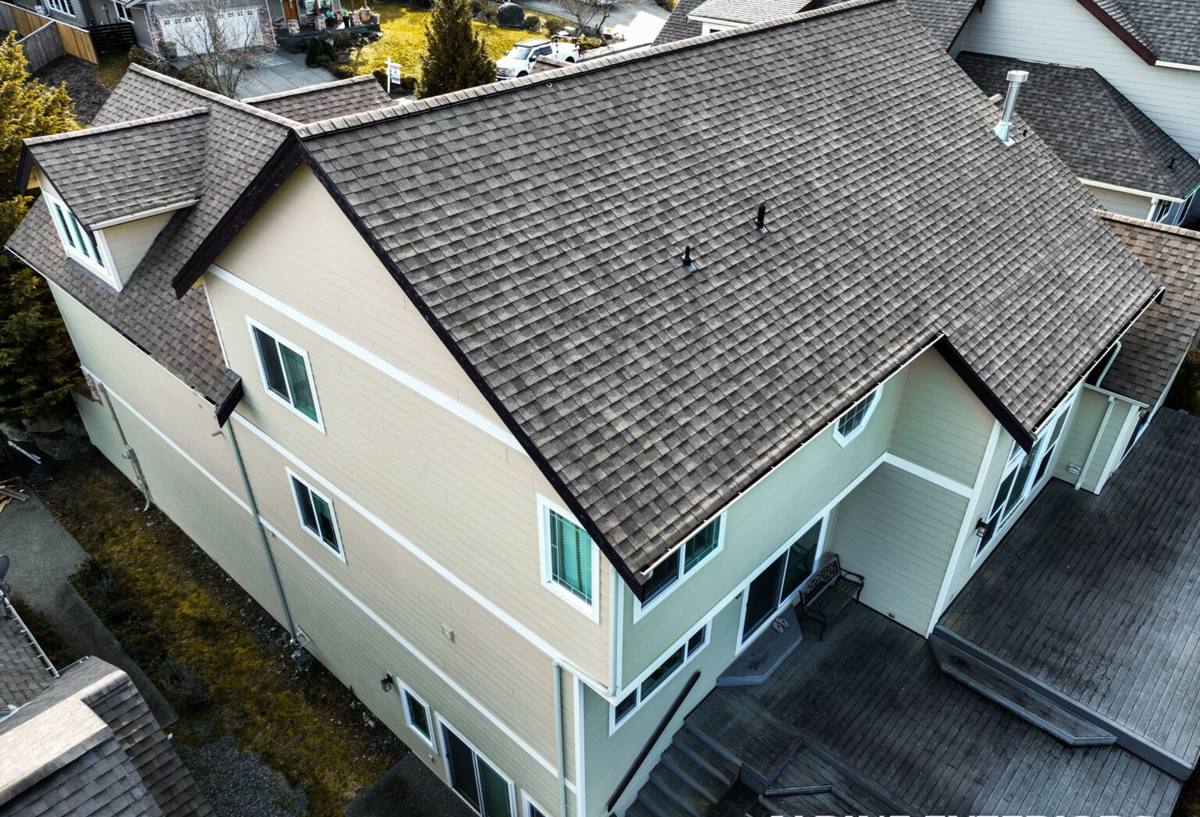
Repair, Refinish, or Full Replacement?
Not every tired-looking deck needs to come out. But there are specific signs that mean repair is only delaying a more expensive replacement down the road:
- Soft, spongy, or spring-feeling boards, especially near the house or at board ends
- Ledger board separation or a visible gap between the deck and the house wall
- Rust streaking or corrosion around joist hangers, bolts, or post bases
- Posts that feel loose or show visible rot at the base, where they sit near or in the ground
- Persistent moss or algae that comes back within weeks of cleaning
- A substructure built to an older code that no longer meets current guardrail, stair, or footing requirements
If the problems are cosmetic — surface graying, a few popped fasteners, mild mildew — a repair or refinish can buy several more years of use. If the framing, ledger connection, or footings are compromised, replacement is the honest call, because new decking on top of a weak structure just hides the problem instead of solving it.
What a Correct Deck Replacement Actually Involves
Done right, a deck replacement in this climate starts below the decking boards, not at them. The parts that fail first — and the parts that determine whether the new deck lasts a decade or two and a half — are the ones nobody sees once the project is finished.
Ledger and Flashing
Where the deck attaches to the house is the most common failure point on decks in wet coastal climates. Flashing has to be installed so water sheds away from the house's band board instead of tracking in behind it. This detail is also the one most often rushed or skipped on cut-rate rebuilds, and it's usually the reason a "new" deck starts rotting at the house wall within a few years.
Footings and Posts
Footings need to be sized and set to current code depth, and posts need a base connection that keeps end grain off wet ground rather than sitting in standing water after a heavy rain. In a high-rainfall area, ground-contact rated material and a proper post-base connector make a real difference in how long the substructure holds up.
Joists, Hangers, and Fastening
Joist spacing has to match the actual span rating of the decking you choose — composite and PVC boards often need tighter spacing than solid wood — and every hanger and structural fastener should be rated for exterior, corrosion-prone use, not just galvanized in name only. We also pay attention to fastening pattern at board ends and picture-frame edges, since that's where boards see the most movement and where poor fastening shows up first as popped screws or curling corners.
Choosing Decking Material for a Salt-Air, High-Rainfall Climate
There's no single "best" decking material — there's the material that fits your budget, your appetite for maintenance, and how much exposure your specific deck gets to wind-driven rain and salt air. Here's how the common options actually perform under Cherry Point conditions:
| Material | Moisture & Salt-Air Behavior | Maintenance | Typical Lifespan Here |
|---|---|---|---|
| Pressure-treated wood | Absorbs moisture readily; prone to swelling, splitting, and cupping without regular sealing | Annual cleaning, re-sealing every 1-2 years | 10-15 years |
| Cedar | Naturally decay-resistant but still moves with moisture; fasteners can leave dark staining | Cleaning and oiling every 1-2 years | 12-18 years |
| Capped composite | Resists moisture absorption well; cap layer sheds surface moss and algae more easily | Periodic washing, no sealing needed | 20-30 years |
| PVC/cellular decking | Doesn't absorb water at all; least affected by the salt-air corrosion that attacks the board surface | Occasional washing | 25-30+ years |
Our standard is to steer homeowners toward capped composite or PVC decking for anything with direct salt-air or heavy rain exposure — not because wood is a poor product, but because the sealing and maintenance schedule wood requires in this climate is more demanding than most homeowners realistically keep up with. Skip a season or two of sealing, and the trade-off shows up as premature graying, splitting, and softening well before the wood's theoretical lifespan is up.
Railings, Fasteners, and Hardware That Actually Hold Up
The decking surface gets most of the attention, but hardware is usually what fails first in a salt-air environment. Stainless steel or coated fasteners rated for coastal exposure cost more upfront than standard exterior screws, but standard hardware can show surface rust within two or three seasons this close to the water. The same goes for railing brackets, post caps, and structural connectors — we spec hardware for the exposure the deck will actually see, not just the minimum a code inspection requires.
Railing material matters just as much. Wood railings need the same sealing schedule as wood decking. Metal railings need a coating rated for marine or coastal exposure, not standard powder coat, or they'll show corrosion at welds and joints faster than the rest of the structure ages.
Moss, Drainage, and Keeping a New Deck Looking Good
Moss doesn't just grow on roofs in Whatcom County — it settles on any shaded, damp surface, and a deck under tree cover or on the north side of a house is a prime candidate. A correct build addresses this at the framing stage, with board spacing and orientation that let water drain through and air move underneath, rather than trapping moisture against the joists where it can't dry out between storms.
Beyond the build itself, a few habits keep a new deck looking good through a Cherry Point winter:
- Clear leaves and debris from between boards before the fall rains set in
- Keep gutters and downspouts clear so roof runoff isn't draining directly onto or under the deck
- Trim back overhanging branches to cut down shade and let the surface dry between rains
- Wash the surface at least once a year to knock back moss and algae before it takes hold
How Our Process Works
We start with an on-site look at the existing deck — not just the decking boards, but the ledger connection, the framing underneath, and the footings wherever we can get access to them. That tells us honestly whether repair is realistic or replacement is the right call, and it shapes what we recommend for materials given that specific deck's sun, wind, and rain exposure.
From there we handle permitting where it's required, demo the old structure, and rebuild from the footings up — flashing the ledger properly, using corrosion-rated hardware throughout, and framing to the actual span requirements of whatever decking material you choose. Older decks in this area were often built to codes that have since changed, particularly around guardrail height and baluster spacing, so a replacement is also a natural point to bring the structure up to current requirements. We walk the finished deck with you before calling the job done, and we're upfront about what maintenance it'll need going forward — a deck sold as "maintenance-free" that isn't is a deck that gets neglected and fails early.
Why It Matters to Hire a Crew That Already Works This Area
A contractor who mostly works inland doesn't run into salt-air corrosion or moss-season drainage problems often enough to build around them by habit. Working the Cherry Point shoreline and the rest of the Semiahmoo area regularly means we've seen which fastener grades actually hold up, which flashing details fail under driving rain, and which material upgrades are worth the extra cost for this specific exposure — and which ones aren't. That kind of judgment only comes from doing the work in these exact conditions, season after season, not from applying a general contracting background to a coastal job after the fact.
What to Ask Before You Hire a Deck Replacement Contractor
Whatever crew you choose, a few questions will tell you quickly whether they're building for this climate or just building a generic deck:
- Will the ledger flashing be replaced and installed to shed water away from the house?
- What fastener and hardware grade is included, and is it rated for coastal or salt-air exposure?
- Are footings being brought up to current code depth and size, or reused as-is?
- What's the realistic maintenance schedule for the decking material being recommended?
- Is the quote itemized enough that you can see what's substructure versus surface finish?
- Do they carry liability insurance and, where required, a verifiable licensed and bonded status?
If a bid can't answer these clearly, it's worth asking again before signing anything — the framing and flashing decisions are the ones you can't easily see or fix once the new decking is down.
If your deck in Cherry Point is showing its age or you're planning a full rebuild, we're glad to take a look and give you a straight, no-pressure estimate — just fill out the form below and we'll go from there.