 Semiahmoo Siding
 Building a Deck That Actually Holds Up in Sumas
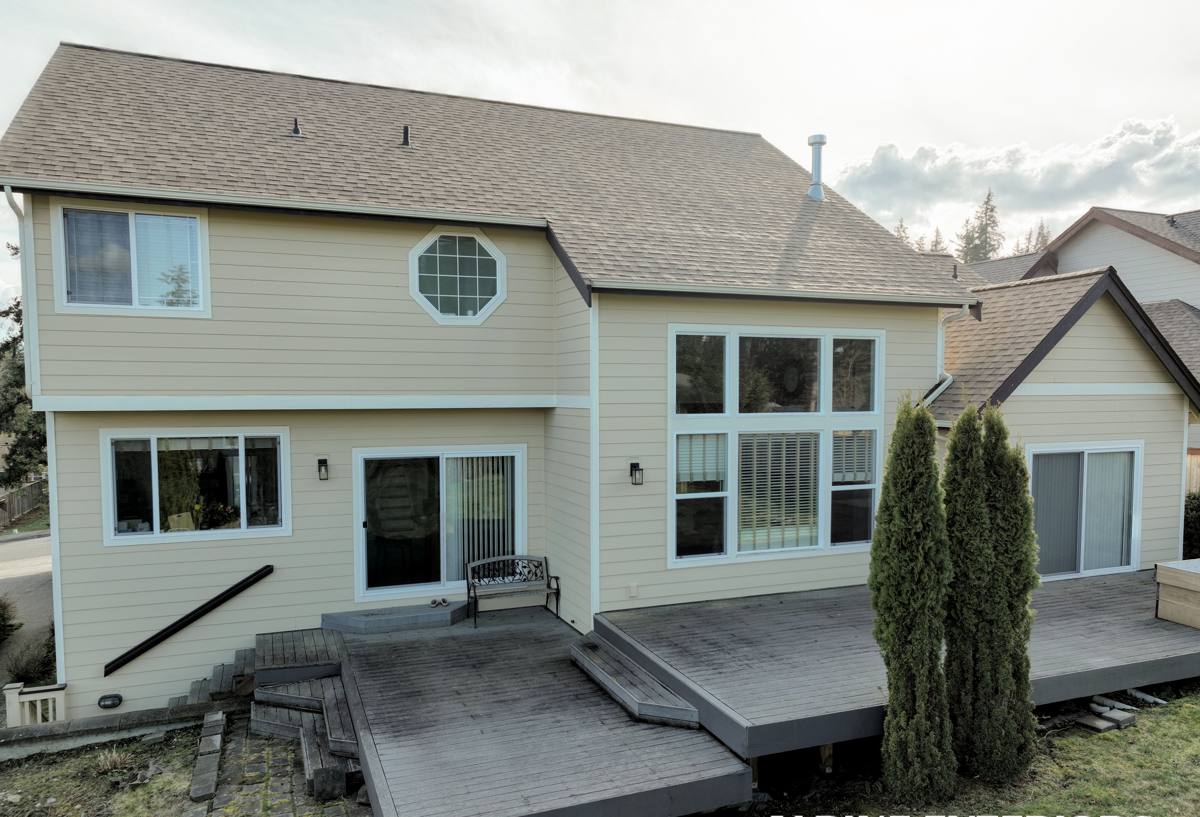
A deck in Sumas has to earn its keep every month of the year, not just on the handful of sunny weekends it gets used the most. Whatcom County's marine-influenced climate means moisture is almost never fully gone from the air, and that changes how a deck should be designed, fastened, and finished compared to a deck built somewhere dry. We've built and repaired enough decks in this corner of Washington to know which details matter and which ones are just extra cost. This page walks through what a correctly built custom deck looks like for a Sumas property, and why the crew doing the work matters as much as the materials on the invoice.
This isn't a general overview of decks everywhere — it's specific to what holds up here, in this climate, on the lot sizes and home styles common around Semiahmoo and the surrounding Whatcom County communities.
What the Local Climate Does to a Deck
Three things drive almost every deck failure we get called out to inspect in this area: salt-tinged air off the Strait, long stretches of driving rain, and a moss season that can run from fall through spring. None of these are dramatic on their own, but stacked together year after year, they find every weak point in a deck's design.
Salt Air and Fastener Corrosion
Proximity to salt water accelerates corrosion on anything less than fully rated hardware. Standard galvanized screws and joist hangers that would be fine forty miles inland can start showing rust streaks and pitting within a few seasons here. That corrosion isn't just cosmetic — a corroded structural fastener loses holding strength, and it's usually hidden under decking boards where nobody sees it until something feels spongy underfoot.
Driving Rain and Water Intrusion
Rain here doesn't just fall straight down — wind-driven rain gets pushed sideways into ledger connections, stair stringers, and any spot where two materials meet. If flashing, gaps, and slope aren't handled correctly at the design stage, water finds its way into the house band joist or pools on the deck surface instead of shedding off. Both problems show up as rot, and rot is expensive to fix once it's behind the siding.
Moss, Algae, and Slip Risk
A long wet season with limited direct sun on north- or shade-facing decks is exactly what moss and algae need to establish. Beyond the maintenance annoyance, moss growth on decking surfaces creates a real slip hazard, and left unchecked it retains moisture against the board surface, which speeds up wear on wood decking specifically.
What a Correctly Built Deck Includes
A deck that's going to perform well in this climate isn't built any differently than a well-built deck anywhere in terms of basic carpentry — but the material choices and detailing at each step should account for what the Whatcom County weather is going to throw at it for the next twenty-plus years.
Footings and Framing
Footings need to be sized and set below frost depth per local code, with post bases that keep wood posts off direct concrete contact — standing water at a post base is a common rot starting point we see on older decks. Framing lumber should be pressure-treated rated for ground contact where it's within a few inches of soil or concrete, and joist spacing should be tightened up if composite decking is going on top, since composite boards generally need closer support than solid wood.
Ledger Attachment and Flashing
Where the deck attaches to the house is the single most failure-prone connection on any deck, and it's also the one most often done wrong on older or DIY builds. Proper ledger flashing — installed so water sheds over it and away from the band joist, not behind it — is not optional in a climate this wet. This is also where lag bolts or structural screws rated for the load matter more than whatever was on hand at the hardware store.
Decking Surface
The board choice on top is where homeowners have the most say, and it's worth thinking through given what this climate does to different materials over time.
Choosing a Decking Material for This Climate
| Material | How it handles wet, mossy conditions | Maintenance | Typical lifespan here |
|---|---|---|---|
| Composite decking | Doesn't absorb water into the board itself; resists rot, but surface can still grow moss/algae film if shaded and un-cleaned | Periodic washing; no staining or sealing | 25+ years, backed by manufacturer warranty |
| Cedar | Naturally rot-resistant heartwood, but exposed cedar decking still needs a maintained finish to shed water well | Re-stain or seal every 1–3 years depending on sun exposure | 15–20 years with consistent upkeep |
| Pressure-treated pine/fir | Treated for ground contact rot resistance, but surface checking and splintering happen faster in constant wet-dry cycling | Seal/stain regularly; more frequent board replacement | 10–15 years, shorter if unmaintained |
| Tropical hardwoods | Very dense, naturally water-resistant, but pricier and installation is less forgiving | Occasional oiling to maintain color; low rot maintenance | 25+ years |
There's no universally "correct" answer here — it depends on how much upkeep a homeowner actually wants to do. What we won't do is install a decking product that looks right in the showroom but is a poor match for a shaded, north-facing deck in a wet climate. We'll walk through the trade-offs honestly before the order goes in, not after.
Railings, Stairs, and Hardware
Railings and stair stringers take a beating from the same wind-driven rain that affects the ledger, often with less attention paid to them. Stainless steel or high-grade coated fasteners are worth the modest upcharge on any hardware that's exposed to direct weather, especially at stair stringer connections and railing posts, which carry real structural load and are hard to inspect once covered. Cable railing systems have become popular for the open sightlines, but the cable ends and hardware need to be rated for coastal/marine exposure or they'll show corrosion faster than the deck itself ages.
Our Process for a Sumas Deck Build
- On-site assessment. We look at drainage patterns, sun/shade exposure, existing structure (if replacing a deck), and how the deck will connect to the house.
- Design and material walkthrough. We go over decking material options, railing style, and layout based on how the space will actually be used, with honest pros and cons for this climate.
- Permitting. Whatcom County and local jurisdictions require permits for most deck construction above a certain height or attached to the structure — we handle that paperwork rather than leaving it to the homeowner.
- Demolition (if applicable). Old decking, framing, and any rotted structure gets removed and the condition of the band joist and posts gets checked before anything new goes up.
- Framing and structural work. Footings, posts, ledger flashing, and joists are built to code with hardware rated for this environment.
- Decking, railing, and finish work. Boards, railings, and stairs go in, followed by final fastener checks and a walkthrough with the homeowner.
Maintenance That Actually Extends a Deck's Life Here
Whatever material is chosen, a few habits make a real difference in Whatcom County's climate:
- Sweep leaves and debris off the deck surface regularly, especially in fall — trapped organic matter is what feeds moss and algae growth.
- Rinse or lightly scrub shaded, low-sun areas a couple times a year before moss gets established, rather than after.
- Check that drainage gaps between boards and at the deck perimeter aren't clogged, so water keeps moving instead of pooling.
- Inspect ledger flashing and any visible fasteners annually for rust streaking or gaps that could let water behind the siding.
- Re-seal or re-stain wood decking on the schedule the finish product recommends — skipping a cycle in this climate compounds fast.
- Keep gutters and downspouts near the deck clear so roof runoff isn't dumping extra water onto or under the structure.
Why Hire a Crew That Already Works in This Area
A deck built to a generic spec sheet can look identical to a properly detailed one on the day it's finished. The difference shows up two, five, and ten years later — in whether the ledger flashing kept water out, whether the hardware corroded, and whether the decking surface is still safe to walk on through a wet Whatcom County winter. A crew that regularly builds and repairs decks around Sumas and the broader Semiahmoo area has already seen which details fail here and builds around them by default, not as an afterthought or upsell. That local experience is worth more than any brand name on the decking package.
Get a Straight Answer on Your Deck Project
If you're planning a new deck or replacing one that's showing its age, we're happy to take a look, talk through material options honestly, and give you a straightforward estimate — no pressure, no upsell on things you don't need. Use the form below to request a free estimate for your Sumas property.