 Semiahmoo Siding
 Decks Built for California Creek's Marine Climate
A deck in California Creek does a different job than a deck fifty miles inland. This corner of Whatcom County sits close enough to the water that salt air is part of daily life, rainfall is frequent and prolonged rather than just heavy, and the low, gray stretches of fall through spring give moss and algae months to take hold on anything that stays damp. A deck built without those conditions in mind will look fine the first summer and start showing problems — soft spots, rust streaks, slick boards, gaps opening at the ledger — within a few wet seasons.
We build and repair decks specifically with this environment in mind, not a generic Pacific Northwest template. That means paying attention to the details that don't show up in a showroom sample but matter enormously once a deck is exposed to Semiahmoo's weather year-round.
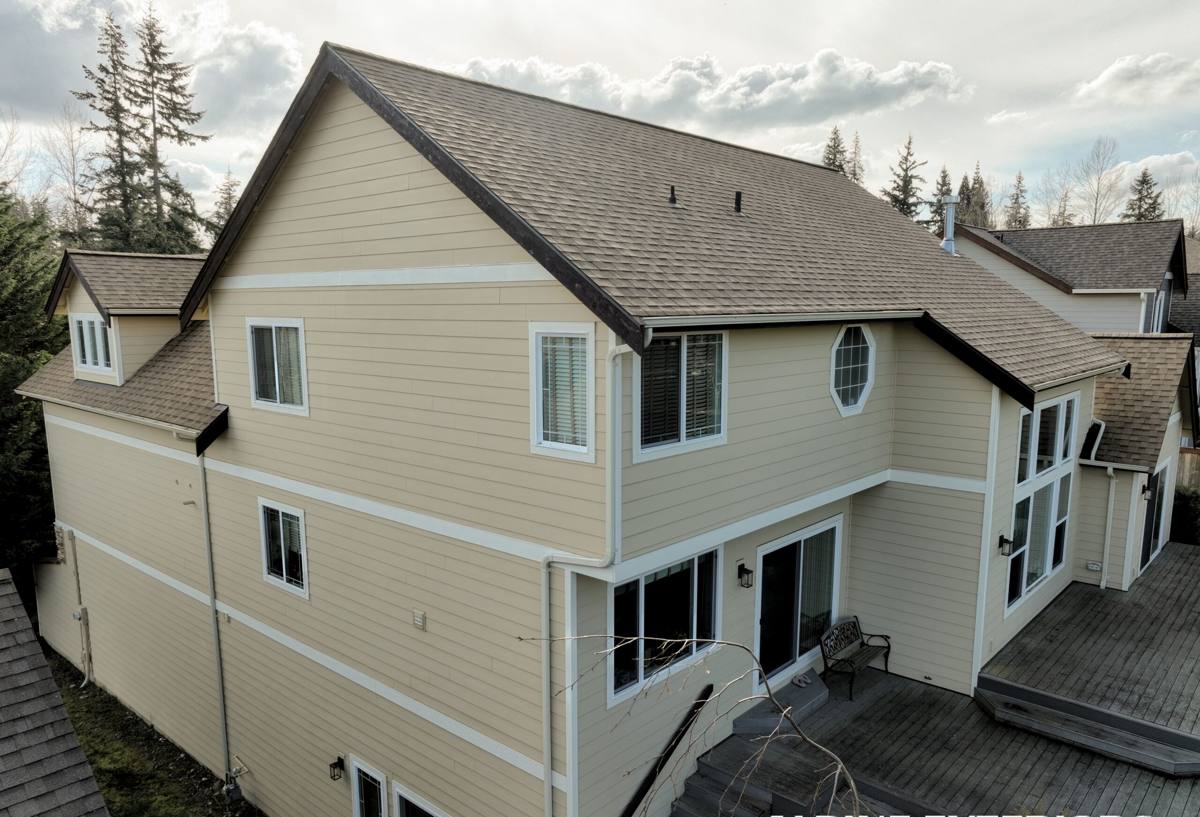
What Makes a Deck Job Different Here
Three local factors drive most of our decisions on a California Creek deck project:
- Salt-influenced air — proximity to Semiahmoo Bay means airborne salt accelerates corrosion on fasteners, connectors, and lower-grade hardware faster than it would inland.
- Driving rain — wind-driven rain doesn't just fall straight down here; it gets pushed sideways into ledger connections, stair stringers, and any horizontal surface that isn't properly flashed or sloped.
- Extended moss season — long stretches of damp, low-light weather let moss, algae, and lichen establish on decking, especially on the north or shaded side of a house, or under tree cover.
None of these are exotic problems, but they compound. A deck that ignores even one of them tends to develop trouble in the areas you can't easily see — the ledger connection, the joist tops, the fastener heads — long before the visible boards look bad.
Decking Material Options for This Climate
There's no single "right" decking material for every California Creek home — it depends on budget, how much upkeep you want to do, and how the deck sits relative to sun, shade, and water exposure. Here's how the common options actually compare in this climate, not just on a spec sheet.
| Material | How it handles salt air & rain | Moss/algae resistance | Upkeep | Relative cost |
|---|---|---|---|---|
| Pressure-treated fir/hem-fir | Good if fasteners and flashing are upgraded; wood itself is durable when sealed | Needs regular cleaning and resealing to resist growth | Higher — annual cleaning, periodic sealing | Lower |
| Western red cedar | Naturally rot-resistant; still needs finish maintenance near salt air | Moderate — natural oils help but don't eliminate growth | Moderate to higher — finish reapplication | Moderate |
| Composite (capped) | Excellent — won't rot, minimal fastener exposure with hidden clips | Good — smoother capped surface sheds moss more easily than wood grain | Lower — occasional washing | Higher |
| PVC decking | Excellent — fully synthetic, unaffected by moisture cycling | Good, though smooth surfaces still need periodic cleaning in shaded areas | Lower | Higher |
We're honest with clients that composite and PVC cost more up front but ask less of you over the life of the deck — a real consideration when the local climate means moss and moisture pressure never really stop. Wood is a legitimate choice too, especially cedar, as long as you're realistic about the maintenance schedule it needs to stay ahead of this weather.
Fasteners and Hardware Matter as Much as the Decking
We see more decks fail from hardware corrosion than from the decking material itself. In a salt-influenced environment, standard galvanized fasteners can start showing rust streaks and weakening well before the boards need replacing. We use stainless steel or heavy-duty coated fasteners rated for coastal exposure, along with corrosion-resistant joist hangers and structural connectors — it costs a bit more at install but avoids a deck that needs its hardware replaced in a decade while the boards are still good.
The Structural Details That Actually Matter
Ledger Board Flashing
The ledger — where the deck attaches to the house — is the single most common source of hidden rot in this region, because it's a horizontal joint exposed to driving rain and it's directly against your siding and wall framing. A correct ledger installation includes proper flashing, a water-resistant barrier behind it, and a slight gap or drainage path so water doesn't pool against the house. Skipping or shortcutting this step is invisible on install day and expensive five years later.
Footings and Frost Depth
Footings need to be sized and set to local frost depth and soil conditions, not guessed at. Undersized or shallow footings lead to deck movement, which in turn stresses ledger connections and railings over time — a slow failure that's hard to notice until it's significant.
Joist Protection
Joist tape or a comparable moisture barrier over the top of each joist keeps rain from soaking directly into cut lumber through fastener holes — a small detail that meaningfully extends the life of the substructure in a climate where the frame rarely gets a chance to fully dry out.
Drainage and Slope
Decking should have a slight slope away from the house and enough gap between boards for water to shed rather than sit. On composite and PVC decks this is largely about layout; on wood decks, board spacing and airflow underneath the deck also help resist the moss and algae buildup that comes with constant dampness.
Railings, Fascia, and Finish Choices
Railings and fascia boards take a lot of direct weather exposure and are often the first place homeowners notice wear, since they're at eye level. We talk through options with clients based on how much maintenance they want:
- Wood railings and fascia — can match a cedar deck well but need the same sealing schedule as the decking to avoid graying, cracking, and moss in shaded corners.
- Composite or PVC trim — pairs naturally with composite decking and holds up with minimal attention.
- Metal or cable railing systems — need corrosion-resistant hardware given the salt air, but offer a low-maintenance, modern look and don't hold moisture the way wood balusters can.
Whatever you choose, we make sure fascia boards have a drip edge or gap where they meet the deck frame — a detail that keeps water from wicking up into the board and causing it to fail from the back side, which is often the last place a homeowner thinks to check.
Our Process, Start to Finish
- On-site assessment — we look at sun/shade exposure, drainage patterns, existing structure (for replacements), and how close the deck sits to salt air and moisture sources.
- Design and material selection — we walk through decking, railing, and fascia options honestly, including trade-offs in upkeep and cost, so you choose based on real information.
- Permitting — most deck projects in Whatcom County require a permit; we handle the application and inspections so you don't have to navigate that process yourself.
- Construction — proper footings, ledger flashing, corrosion-resistant fasteners, joist protection, and correct board spacing and slope, in that order of priority.
- Final walkthrough — we go over the finished deck with you, including what maintenance it will need and roughly how often, based on the materials you chose.
Living With a Deck Through the Moss Season
Even a well-built deck needs some seasonal attention in this climate. Here's a practical checklist we give clients regardless of which contractor built their deck:
- Sweep debris (leaves, needles, seed pods) off the deck regularly — trapped organic matter holds moisture and feeds moss growth.
- Rinse or lightly scrub shaded and north-facing areas at least once or twice during the wet season, where moss establishes fastest.
- Check for standing water after heavy rain — pooling usually signals a slope, spacing, or drainage issue worth addressing before it causes damage.
- Inspect the ledger board area annually for staining, soft wood, or gaps in flashing or caulking.
- For wood decks, reseal on the manufacturer's or installer's recommended schedule — don't wait until graying or cracking is visible.
- Tighten or replace any hardware showing rust streaks before it compromises structural connections.
Why Hire a Crew That Already Works California Creek
A deck built to a generic spec sheet can look identical to one built for this specific climate — until a few wet seasons pass. The difference shows up in the ledger flashing you can't see, the fastener grade holding the frame together, and whether the layout accounts for how sun, shade, and rain actually move across this property type in this part of Whatcom County. We work on homes in the Semiahmoo area regularly, which means we're not guessing at how salt air, driving rain, and a long moss season affect a deck over time — we're building around what we consistently see happen here.
If you're planning a new deck or need an honest look at whether an existing one is holding up the way it should, we're glad to come take a look. Reach out for a free, no-pressure estimate using the form below — we'll walk the property, talk through your options, and give you a straight answer on what your deck actually needs.