 Semiahmoo Siding
 Why Cherry Point Decks Wear Differently
Cherry Point sits close enough to the Salish Sea that salt-laden air is a daily fact of life, not an occasional nuisance. Combine that with Whatcom County's long, wet shoulder seasons and you get a deck-aging recipe that's tougher than what a deck fifty miles inland has to survive. Salt air accelerates corrosion in metal fasteners and connectors. Driving rain off the water finds its way into every joint, seam, and end-grain cut that isn't properly sealed or flashed. And the region's mild, damp winters give moss and algae months on end to take hold on any shaded or north-facing surface.
None of this means a deck near Cherry Point is doomed to fail early. It means the deck has to be built and repaired with those specific stresses in mind. A repair that would hold up fine in a drier climate can fail here in a few seasons if the wrong fasteners or the wrong sequence of flashing was used. We've built our repair process around what actually happens to decks in this exact stretch of Whatcom County, not a generic checklist written for a different climate.
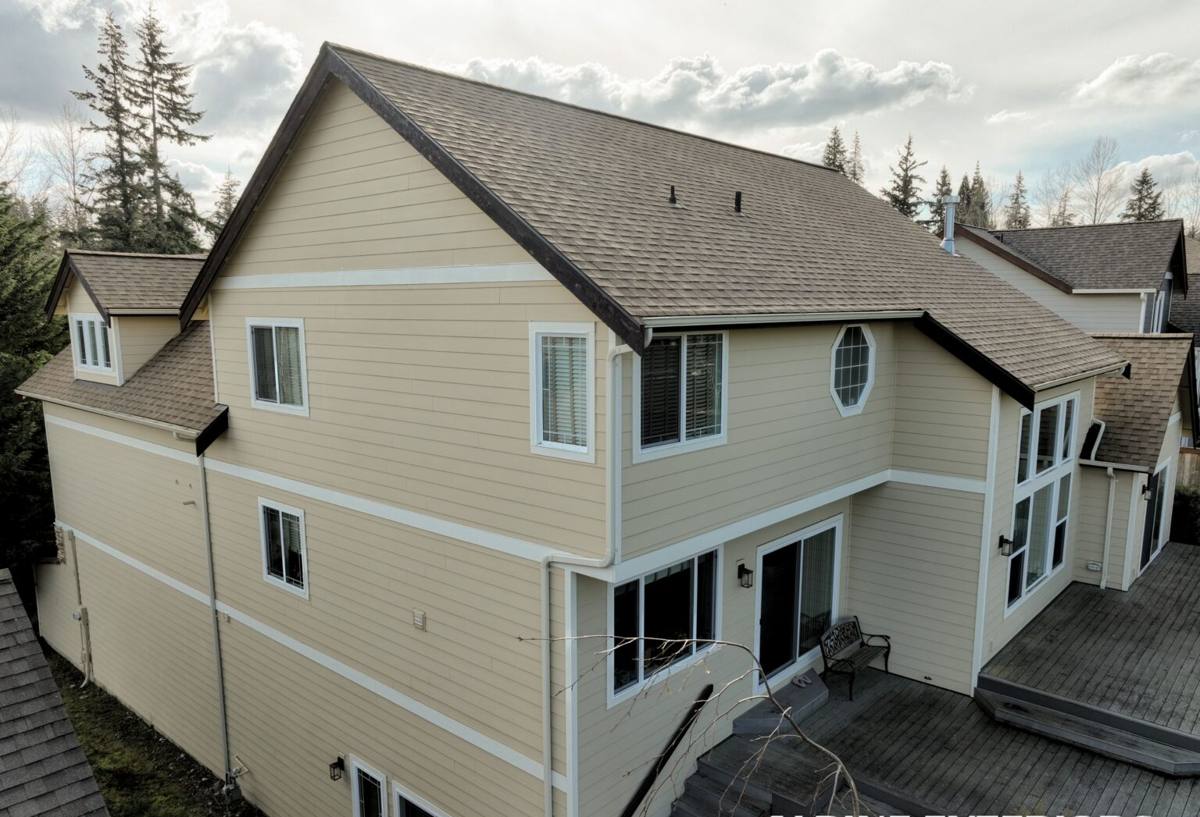
Signs Your Deck Needs Repair — Not Just a Cleaning
A lot of deck problems get masked by a pressure wash and a fresh coat of stain. That's fine for cosmetic upkeep, but it can hide structural issues that get worse underneath. Homeowners usually call us after noticing one or more of the following:
- Boards that feel spongy, springy, or slightly soft when you walk across them
- Visible gaps opening up between the deck and the house at the ledger board
- Rust streaks bleeding out from screw heads or joist hangers
- Persistent moss or dark staining that comes back within weeks of cleaning
- Railings or stair stringers that wiggle more than they used to
- Cracked, split, or cupped boards, especially near the edges and end cuts
- A musty smell coming from underneath the deck, which usually points to trapped moisture
Any one of these on its own might be minor. Several together usually mean water has been getting into the structure for a while, and it's worth having someone look underneath before deciding whether this is a repair or something bigger.
What a Correct Deck Repair Actually Involves
It Starts Below the Surface
Surface boards are the easy part to inspect and the easy part to replace. The parts that actually determine whether a deck lasts are the ledger board connection to the house, the posts and footings, the joists, and the hardware tying it all together. A repair that only replaces worn decking boards without checking the framing underneath is treating the symptom, not the cause — and on a property exposed to salt air and heavy rain, that's a short-term fix at best.
The Ledger Board Is Usually the First Place We Check
The ledger board — the piece bolted to the house that the rest of the deck hangs from — is the single most common failure point on older decks in this region. If it wasn't properly flashed when installed, water runs down the siding, behind the ledger, and sits there season after season. By the time it shows up as a soft spot or a stain on the siding above, the wood behind it can already be compromised. Correcting this properly means pulling the ledger, checking the rim joist and sheathing behind it, and reinstalling with proper flashing that sheds water away from the house rather than trapping it.
Fasteners and Hardware Matter More Here Than Most People Realize
Standard galvanized fasteners can start showing corrosion faster near the water than they would inland. We use fastener and connector hardware rated for coastal and treated-lumber exposure, and we check that hanger nails, screws, and structural bolts are compatible with each other — mixing incompatible metals accelerates corrosion through galvanic reaction, which is a common cause of premature hardware failure on older decks.
Problem Areas We See Most Often on Cherry Point Decks
| Area | What Typically Goes Wrong | Why It Happens Here |
|---|---|---|
| Ledger board | Rot behind the board, gaps forming at the house | Missing or failed flashing lets driving rain track behind it |
| Fasteners & connectors | Rust streaking, weakened hanger nails | Salt air speeds up corrosion on standard-grade hardware |
| Shaded or north-facing boards | Persistent moss, slick surfaces, surface decay | Long damp season gives moss months to establish |
| Footings & posts | Settling, rot at the base, movement underfoot | Saturated soil and poor drainage around post bases |
| Board ends and cut edges | Splitting, cupping, water wicking into the grain | Unsealed end grain absorbs rain faster than the board face |
Repair or Replace? How We Help You Decide
Not every deck problem calls for a full rebuild, and not every deck is worth patching indefinitely. The honest answer depends on what's happening in the framing, not just what the surface boards look like. As a general guide:
| Factor | Leans Toward Repair | Leans Toward Replacement |
|---|---|---|
| Framing condition | Solid, dry, hardware intact | Soft or rotted joists, ledger, or posts |
| Age of structure | Under 15-20 years, built reasonably well | Original construction is decades old or undocumented |
| Scope of damage | Isolated boards, railings, or fasteners | Widespread rot, movement, or corrosion |
| Code/flashing issues | Minor corrections needed | Ledger attachment or footings don't meet current standards |
| Budget goals | Extend usable life affordably | Want to change size, layout, or materials anyway |
When we come out for an estimate, we tell you honestly which category your deck falls into. If a repair will genuinely hold up given the exposure your deck gets near Cherry Point, we'll say so. If the framing is too far gone for a repair to be a good use of your money, we'll say that too.
Our Deck Repair Process
1. Inspection From the Ground Up
We start underneath the deck, not on top of it. That means checking posts, footings, joists, the ledger connection, and the condition of the flashing before we ever talk about which boards look worn.
2. A Clear, Written Scope
You get a plain description of what's actually wrong, what we recommend fixing, and what it will cost — no vague line items. If there are optional versus necessary items, we separate them so you can decide what fits your budget.
3. Structural Repairs First
Any framing, ledger, post, or footing issues get corrected before cosmetic work starts. Rebuilding on top of a compromised structure just hides the problem for a while.
4. Correct Flashing and Fastener Compatibility
Every connection that sheds water — the ledger, stair stringers, post bases — gets flashed or sealed appropriately, and we use hardware matched to the lumber and to each other to avoid galvanic corrosion.
5. Surface Work and Final Detailing
Boards, railings, and stairs get replaced or refastened as needed, edges and end cuts get sealed, and the deck gets a final check for level, secure railings, and safe stair rise/run before we call it done.
Materials: What We Use and Why
Material choice matters more in a salt-air, high-moisture climate than it does elsewhere. A few of the tradeoffs we walk homeowners through:
Pressure-treated lumber is the most economical option for framing and is engineered to resist rot and insects, but it still needs sealed end cuts and proper drainage to perform well long-term near the water.
Cedar has natural rot resistance and a look many homeowners in this region prefer, but it's softer and needs more consistent maintenance — cleaning and resealing — to keep moss and weathering from taking hold.
Composite decking resists moisture and moss better than wood on the surface, which can be a real advantage on shaded, salt-exposed decks, but it comes with a higher upfront cost and its own installation requirements around spacing and fastening that matter for long-term performance.
For hardware, our standard is corrosion-resistant fasteners and connectors rated for treated lumber and coastal exposure. We don't cut corners here — hardware failure hidden inside a deck structure is one of the more expensive mistakes to fix later, because it usually means tearing back into finished work to get at it.
Maintenance That Actually Extends Deck Life Here
A repaired deck still needs the right upkeep to hold up against the salt air and moss season. This is the short list we give every homeowner after a repair:
- Clean moss and algae off shaded areas at least once a year, ideally before it gets a foothold in spring
- Check and reseal exposed end grain and cut edges every couple of years
- Keep gutters and downspouts clear so runoff isn't dumping directly onto or near the deck
- Walk the deck once a year and check for soft spots, loose railings, or rust streaks at fastener heads
- Make sure vegetation isn't crowding the deck and trapping moisture against the framing
- Confirm nothing is blocking airflow underneath the deck, which helps everything dry out between rain events
Why It Matters to Hire a Crew That Already Works Cherry Point
Deck repair isn't one-size-fits-all, and a contractor who mostly works drier inland areas may not think twice about fastener grade, flashing detail, or moss management — because in their usual work area, those things matter less. A crew that regularly works properties near Cherry Point and the rest of Whatcom County's coastline already knows which failure points show up first, what hardware actually holds up, and how to sequence flashing so driving rain doesn't find a way in. That local pattern recognition is the difference between a repair that lasts and one you're revisiting in two years.
We also know this area well enough to give you a realistic answer up front — not every deck needs a full rebuild, and not every soft board means the whole structure is failing. Our job is to tell you which one you're dealing with, plainly.
Get a Straight Answer on Your Deck
If your deck near Cherry Point has soft spots, rust stains, stubborn moss, or just feels less solid than it used to, it's worth having someone look underneath before you decide what to do next. We offer free, no-pressure estimates — we'll tell you honestly what we find and what it would take to fix it right. Use the form below to get started.