 Semiahmoo Siding
 Why Board & Batten Fits Custer
Board and batten shows up a lot in Custer — on farmhouses, newer builds along the county roads, and remodels where an owner wants a cleaner, more vertical look than lap siding gives them. It's a strong style choice: the vertical lines read as taller and more modern, it hides seams well, and it pairs naturally with the mix of rural and semi-rural properties out here between Semiahmoo and the rest of Whatcom County. But board and batten is also one of the siding styles where the difference between a good installation and a bad one shows up fastest, because of how the panels and battens are built up on the wall.
This page is specifically about board and batten siding for homes in the Custer area — what the local climate demands from it, what correct installation actually involves, and how we approach the job when we're out there.
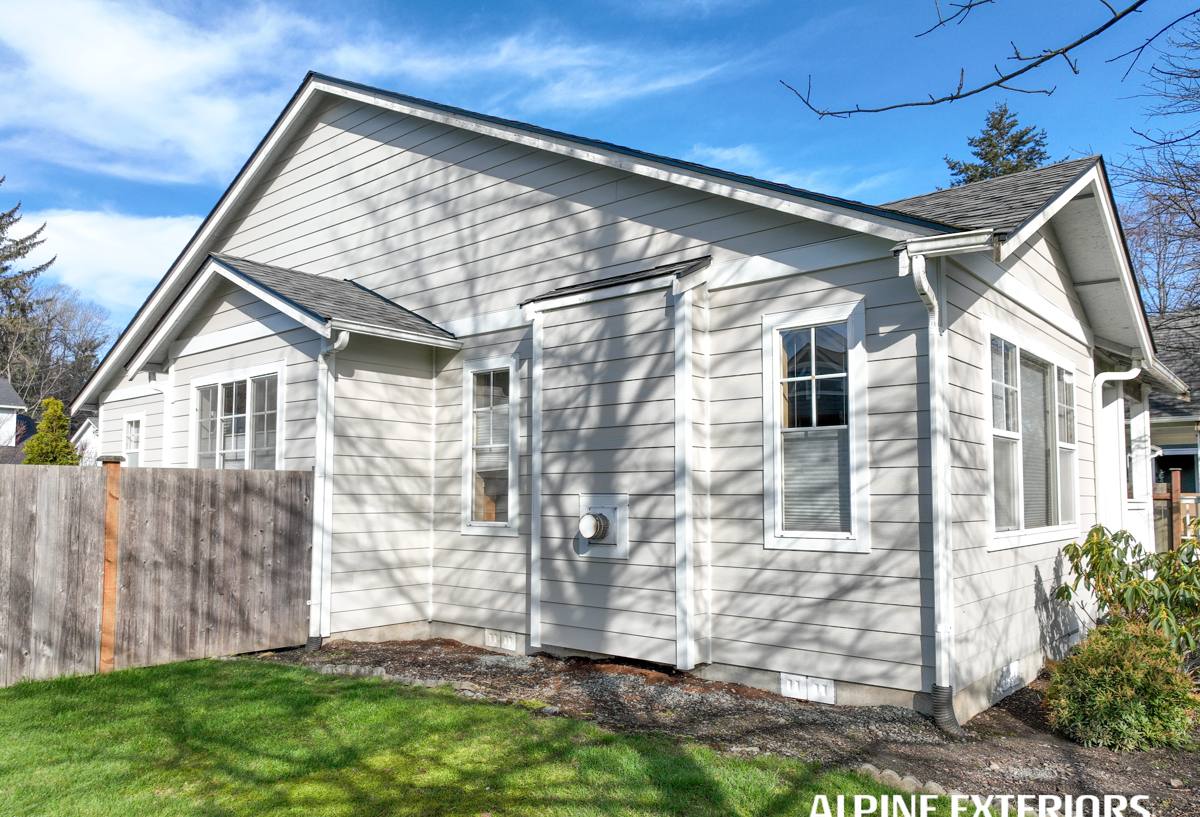
What Whatcom County's Coastal Climate Does to Vertical Siding
Custer sits close enough to the water that salt-laden air is a real factor, not a theoretical one. Add in the driving, wind-pushed rain that comes through in the fall and winter, plus a long moss season where shaded and north-facing walls stay damp for weeks at a time, and you've got a combination that's tough on any exterior wall assembly — but especially tough on board and batten.
Board and batten has more vertical seams and more places where water can get pushed up under a board by wind-driven rain than a standard horizontal lap job does. Every batten joint, every panel seam, and every point where the siding meets a window, door, or the foundation is a spot where moisture can find a way in if the assembly behind it isn't built correctly. In a drier inland climate, a sloppy detail might go unnoticed for years. In Whatcom County, it gets tested constantly.
Salt air also accelerates corrosion on fasteners and trim hardware that aren't rated for it, and it eats away at paint finishes that aren't formulated to hold up in a marine-influenced environment. Moss and algae growth on damp, shaded siding isn't just cosmetic — sustained moisture at the surface is exactly the condition that causes problems for materials that aren't dimensionally stable or that swell and rot when they stay wet.
Board & Batten, Done in James Hardie Fiber Cement
We install James Hardie fiber cement exclusively — no vinyl, no LP SmartSide, no primed spruce or cedar boards, no composite panel products from other manufacturers. For board and batten specifically, that means building the look out of HardiePanel vertical siding as the field material, with HardieTrim boards used as the battens over the panel joints, all finished in Hardie's factory-applied ColorPlus finish.
Fiber cement is the right base material for this style because it doesn't move the way wood does. Traditional wood board and batten — cedar or primed spruce — expands and contracts with moisture and temperature, and in a climate that stays damp as long as ours does, that movement eventually shows up as cupping, checking, or gaps opening at the battens. Fiber cement is dimensionally stable and doesn't absorb water the way wood does, which matters most exactly where board and batten is most vulnerable: at the seams.
ColorPlus factory finish also matters more here than in a drier climate. A factory-baked finish resists fading and holds up to salt air and UV better than field-applied paint, and because it's cured under controlled conditions rather than painted on-site in whatever weather shows up that week, the coverage and adhesion are more consistent. That's a real advantage on a style with this many exposed edges and seams to protect.
What a Correct Board & Batten Installation Involves
The finished look of board and batten is simple — vertical panels with battens over the seams — but what's happening behind that surface is where the job is actually won or lost. This is where most of the failures we see on older or poorly-installed board and batten jobs trace back to.
Rainscreen Gap
Vertical siding in a wet climate does best with a drainage gap — furring strips or a rainscreen product — installed behind the panels. That gap lets any moisture that does get past the surface drain and dry out instead of sitting against the weather-resistive barrier and the sheathing. On a coastal property like a Custer home, skipping this step is one of the most common shortcuts that leads to hidden moisture problems years down the road.
Fastening Pattern
Hardie specifies fastener type, spacing, and placement for a reason — get it wrong and you either compromise the panel's ability to handle the wind and moisture load, or you void the warranty. In a corrosion-prone salt-air environment, using the correct fastener material isn't optional.
Flashing and Seams
Every horizontal transition — above windows, at the top of the wall, at any trim board — needs proper flashing that sheds water outward and down, not into the wall assembly. Batten joints need consistent, correctly-caulked seams using a sealant rated for the exposure. This is detail work, and it's the part of the job that separates a wall that looks right for one season from one that performs for decades.
- Weather-resistive barrier installed and lapped correctly before any furring or siding goes up
- Rainscreen gap behind the panels for drainage and drying
- Corrosion-resistant fasteners at the spacing Hardie specifies
- Flashing at every horizontal transition — windows, doors, wall-to-roof intersections
- Correctly sealed batten and panel joints with an exposure-rated sealant
- Factory-finished cut edges properly sealed or capped, not left raw
Board & Batten Material Comparison
Homeowners in Custer sometimes ask us to bid board and batten in vinyl or engineered wood alongside Hardie fiber cement. We don't install those products, but it's worth understanding why, specifically for this style and this climate.
| Factor | Vinyl Board & Batten | Engineered Wood (LP-type) | James Hardie Fiber Cement |
|---|---|---|---|
| Moisture behavior | Doesn't absorb water, but seams and J-channels can trap it | Absorbs moisture at cut edges and seams if not sealed and maintained | Dimensionally stable, resists moisture-driven swelling and rot |
| Salt air / corrosion resistance | Panel is fine; trim hardware can corrode | Moderate; finish and edge sealing degrade over time | Non-combustible, holds up well with correct fastener choice |
| Dimensional stability | Expands/contracts noticeably with temperature | More stable than solid wood but still moisture-sensitive | Highly stable across temperature and moisture swings |
| Finish longevity | Color molded in, but fades and chalks over time | Factory-primed, requires field paint and repainting cycles | ColorPlus factory finish, warrantied against fading/peeling |
| Typical lifespan when installed to spec | 20-30 years | 20-25 years with regular maintenance | 30-50 years |
Our Process, From Estimate to Finished Wall
We start with a walk-around of the house to look at the existing wall assembly, moisture exposure on each elevation, and how the board and batten pattern should be laid out given the home's window and door placement. From there we put together a written estimate that spells out the materials, the drainage and flashing approach, and the timeline — no surprise line items added mid-job.
On the install itself, we tear off old siding down to the sheathing, address any rot or damage we find before covering it up, install the weather-resistive barrier and rainscreen furring, then run the HardiePanel field material and HardieTrim battens with the fastening and flashing details specified above. We walk the finished job with the homeowner before we call it done, and we stand behind the installation — separate from the manufacturer's product warranty on the materials themselves.
Maintenance in a Salt-Air, Moss-Heavy Climate
A correctly installed Hardie board and batten wall is low-maintenance, but "low" isn't "none" — especially in this climate. A little seasonal attention goes a long way toward getting the full lifespan out of the siding.
- Rinse the siding down once or twice a year, especially shaded and north-facing walls where moss and algae take hold first
- Keep gutters clear so water isn't sheeting down the wall face during heavy rain
- Trim back vegetation and landscaping that keeps siding shaded and damp
- Check caulked joints at trim and battens every couple of years and have any cracked sealant redone before it becomes an entry point for water
- Have any impact damage or fastener issues repaired promptly rather than left through a wet season
Why a Crew That Already Works Custer Matters
Board and batten installed to spec looks nearly identical whether it's done in a dry inland climate or out here near Semiahmoo — right up until the wall assembly gets tested by a few winters of driving rain and salt air. A crew that hasn't worked this specific coastal stretch of Whatcom County doesn't always know to prioritize the rainscreen gap, the right fastener spec, or the flashing details that this climate actually demands. We do this work in Custer regularly, which means we're not guessing at what the weather here does to a wall over time — we've seen it, and we build accordingly.
If you're considering board and batten siding for a home in the Custer area, we're glad to come take a look and put together a free, no-pressure estimate — no obligation, just a straight assessment of what your walls need and what it would take to do the job right.