 Semiahmoo Siding
 Blaine's Climate Is Rougher on Siding Than Most Homeowners Realize
Blaine sits right on Semiahmoo Bay, close enough to the water that salt air is part of daily life for most homes in the area. That's not just a smell — it's a slow chemical process. Airborne salt settles on exterior surfaces, holds moisture against them, and accelerates corrosion on fasteners, trim, and any siding material that isn't built to handle it. Add Whatcom County's driving rain, which comes in sideways off the water during winter storms, and you have moisture actively pushed toward seams, laps, and penetrations rather than simply falling straight down and running off.
Then there's shade and dampness. Mature trees, marine fog, and long stretches of overcast weather keep north- and west-facing walls damp for days at a time. That's exactly the environment moss and algae need to take hold, and once they do, they hold even more moisture against the siding surface. Over years, a siding system that isn't engineered for this combination of salt, wind-driven rain, and prolonged dampness starts showing problems — swelling, delamination, corroded fasteners, or paint that fails years ahead of schedule.
None of this means siding in Blaine is a losing battle. It means the material and the installation both have to be chosen with this specific climate in mind, not a generic "siding is siding" approach.
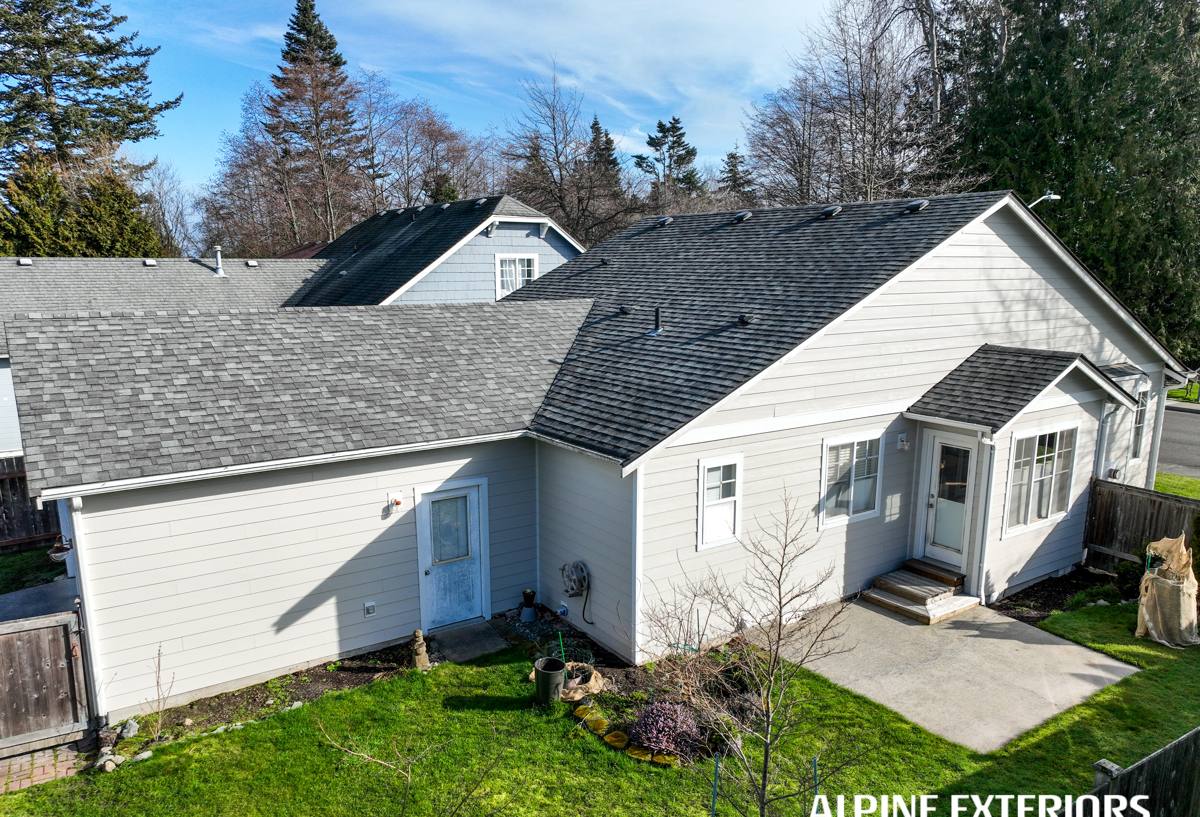
What Correct Siding Installation Actually Involves
Siding is a system, not a single layer. A house with excellent siding material and a sloppy installation will fail faster than a lesser material installed correctly. In a coastal, high-rain environment like Blaine, every layer matters more than it would somewhere drier.
The Layers Behind the Siding
- Water-resistive barrier (WRB): A continuous weather barrier behind the siding that sheds any water that gets past the exterior cladding, lapped correctly so water always drains outward and downward.
- Rainscreen gap: A small air gap between the WRB and the siding lets any moisture that does get through drain and dry out instead of sitting trapped against the wall — critical in a climate where walls stay damp for extended periods.
- Flashing at every penetration: Windows, doors, vents, and anywhere trim meets siding need properly lapped flashing, not just caulk. Caulk is a maintenance item; flashing is the actual water management.
- Correct fastener type and spacing: Fasteners driven at the wrong depth, spacing, or into the wrong substrate are one of the most common causes of early siding failure, especially with fiber cement.
- Proper clearances: Siding held off decks, roof lines, and grade by the manufacturer's specified gap so it isn't sitting in standing water or trapped moisture.
Get any one of these wrong and the siding itself becomes almost irrelevant — water finds the gap.
Why We Only Install James Hardie Fiber Cement
We get asked regularly why we don't offer vinyl, LP SmartSide, primed wood, or cedar as options. It's a fair question, and the honest answer is that we made a standard for our own crews based on what holds up in this specific climate over the long run, not what's cheapest to quote.
Vinyl siding is affordable and low-maintenance in mild climates, but it's a thin material that expands and contracts significantly with temperature swings, and its seams and J-channels give wind-driven rain more opportunities to work behind the panel. In a location that gets real storm-driven rain off the water, that's a real trade-off, not a hypothetical one.
Engineered wood products like LP SmartSide use wood strand technology with a resin-saturated overlay, which is a genuine improvement over older wood siding — but it's still wood-based, meaning any breach in the factory coating or field-cut edge is a moisture entry point. In a salt-air, high-humidity environment, that sensitivity to moisture intrusion is a maintenance burden we don't want to hand a homeowner.
Primed spruce and cedar are traditional, attractive, and still used by some contractors, but they require the homeowner to stay on top of repainting and resealing on a schedule, especially on the weather-facing sides of the house. Miss a cycle in a climate this damp and rot risk climbs fast.
James Hardie fiber cement is non-combustible, dimensionally stable across temperature and humidity swings, and doesn't support rot or insect damage the way wood-based products can. It's not immune to poor installation, but as a material, it's engineered for exactly the kind of exposure Blaine homes deal with. That's why it's the only product we put our name on.
HZ5 Panels and ColorPlus Finish: Built for This Exposure
James Hardie makes climate-specific product lines, and for a coastal, high-moisture region like Whatcom County, the HZ5 line is engineered for wet, cold-to-moderate climates with real exposure to wind-driven rain — which describes Blaine well.
Two things matter most for a home this close to the water:
Factory-Applied ColorPlus Finish
Instead of field-painted siding, ColorPlus is a baked-on, factory-applied finish that's more consistent and more resistant to fading and chipping than paint applied on-site. In a salt-air environment where field paint tends to break down faster on the weather-exposed elevations, starting with a factory finish engineered for UV and moisture resistance is a meaningful advantage — and it comes with its own finish warranty separate from the substrate warranty.
Moisture and Freeze-Resistant Formulation
HZ5 panels are formulated to resist moisture absorption and perform through freeze-thaw cycles better than standard fiber cement formulations, which matters on a wall that may stay damp for days during a wet stretch off the bay.
Our Installation Process
The process doesn't change because the climate is difficult — it just means there's zero room to skip steps.
- On-site assessment: We look at the existing wall assembly, sun and wind exposure on each elevation, moss or moisture staining, and any trouble spots around windows, decks, or roof lines.
- Tear-off and substrate check: Remove existing siding and inspect the sheathing underneath for hidden rot or moisture damage before anything new goes on — this is where problems from years of a failing weather barrier usually show up.
- Weather barrier and rainscreen installation: A continuous, properly lapped WRB, plus a drainage gap so the wall assembly can dry.
- Flashing at every penetration: Windows, doors, vents, hose bibs, light fixtures — anything that breaks the plane of the wall gets flashed correctly, not just caulked.
- Hardie panel installation: Installed to James Hardie's fastening specifications for the HZ5 line, with correct clearances from grade, roof lines, and decks.
- Trim, caulking, and final detailing: Sealed and finished per manufacturer spec so warranty coverage stays intact.
- Final walkthrough: We go over the finished work with the homeowner before calling the job done.
Siding Materials in a Salt Air, High-Rain Climate
| Material | Salt Air Behavior | Moisture Sensitivity | Long-Term Maintenance |
|---|---|---|---|
| Vinyl | Can become brittle; seams allow wind-driven rain intrusion | Low absorption, but poor seam protection | Low, but limited lifespan in storm exposure |
| LP SmartSide / engineered wood | Coating can degrade with prolonged salt exposure | Moderate — cut edges and breaches are vulnerable | Requires monitoring of seams and edges |
| Primed spruce / cedar | Salt accelerates coating breakdown | High — wood absorbs and holds moisture | Regular repainting/resealing required |
| James Hardie fiber cement (HZ5) | Non-combustible, dimensionally stable, factory finish resists salt-driven fade | Engineered for wet climate exposure | Low — no repainting cycle needed for the life of the finish warranty |
Why a Crew That Already Works in Blaine Matters
Installation quality isn't just about following a manual — it's about judgment calls that come from having done this work on homes with the same wind exposure and rain patterns before. A crew that regularly works Blaine and the Semiahmoo Bay area already knows which elevations tend to take the worst of the wind-driven rain, where moss problems tend to start, and how Whatcom County's building department expects permitted exterior work to be documented and inspected. That local familiarity shows up in details a first-time-in-the-area crew might miss — extra attention to flashing on the weather side of the house, or clearance details that matter more here than they would inland.
It also matters for accountability. A contractor with an ongoing presence in the area has a reputation to protect with neighbors, not just a single job to close out and move on from.
Signs Your Blaine Home May Need New Siding
- Persistent moss or algae growth that returns shortly after cleaning
- Visible warping, bubbling, or soft spots, especially on north- or west-facing walls
- Paint that's peeling or chalking well ahead of a normal repaint cycle
- Rust streaking near fasteners or trim
- Gaps or separation at seams, corners, or window trim
- A musty smell or interior moisture signs on exterior-facing walls
- Siding that's original to a home built more than 20-25 years ago
Any one of these can be minor on its own, but a few appearing together is usually a sign the wall assembly behind the siding is starting to take on moisture it shouldn't.
Maintenance and What to Expect Long-Term
One advantage of switching to Hardie fiber cement with a factory-applied ColorPlus finish is how little ongoing maintenance it asks for compared to painted wood siding. There's no repainting cycle to plan around, and the material itself doesn't feed rot or insect activity the way wood-based products can. That said, no siding is maintenance-free in a coastal climate — periodic rinsing to keep salt residue and organic growth from building up, and a visual check of caulking and trim after major storms, go a long way toward getting the full life out of the system. James Hardie also backs its products with a strong transferable warranty on the substrate, separate from the ColorPlus finish warranty, which matters if you sell the home before either coverage period ends.
If you're weighing a siding replacement for a home in Blaine or along Semiahmoo Bay, we're happy to come take a look, walk the exterior with you, and talk through what your specific walls are dealing with. There's no pressure and no cost for a straightforward estimate — just a chance to see what correct installation looks like for your house.