 Semiahmoo Siding
 Windows Built for Blaine Harbor's Waterfront Exposure
Blaine Harbor sits right where the wind comes off Semiahmoo Bay and the Strait of Georgia, and that changes what a window has to survive here compared to a house even a few miles inland. Salt-laden air corrodes hardware and finishes faster than most manufacturers' standard warranties account for. Wind-driven rain doesn't just hit the glass — it gets pushed sideways into the frame joints and flashing details that a cheap or poorly installed window simply isn't built to handle. And Whatcom County's long, damp shoulder seasons mean any window that traps moisture in its frame or sill is growing moss and mildew before summer even shows up.
We've worked on homes throughout this stretch of Semiahmoo long enough to know which failure points show up first in this exact microclimate. Custom windows for Blaine Harbor aren't just about picking a style — they're about specifying the right materials, the right glass package, and the right install details for a house that takes weather from three directions.
What "Custom" Actually Means Here
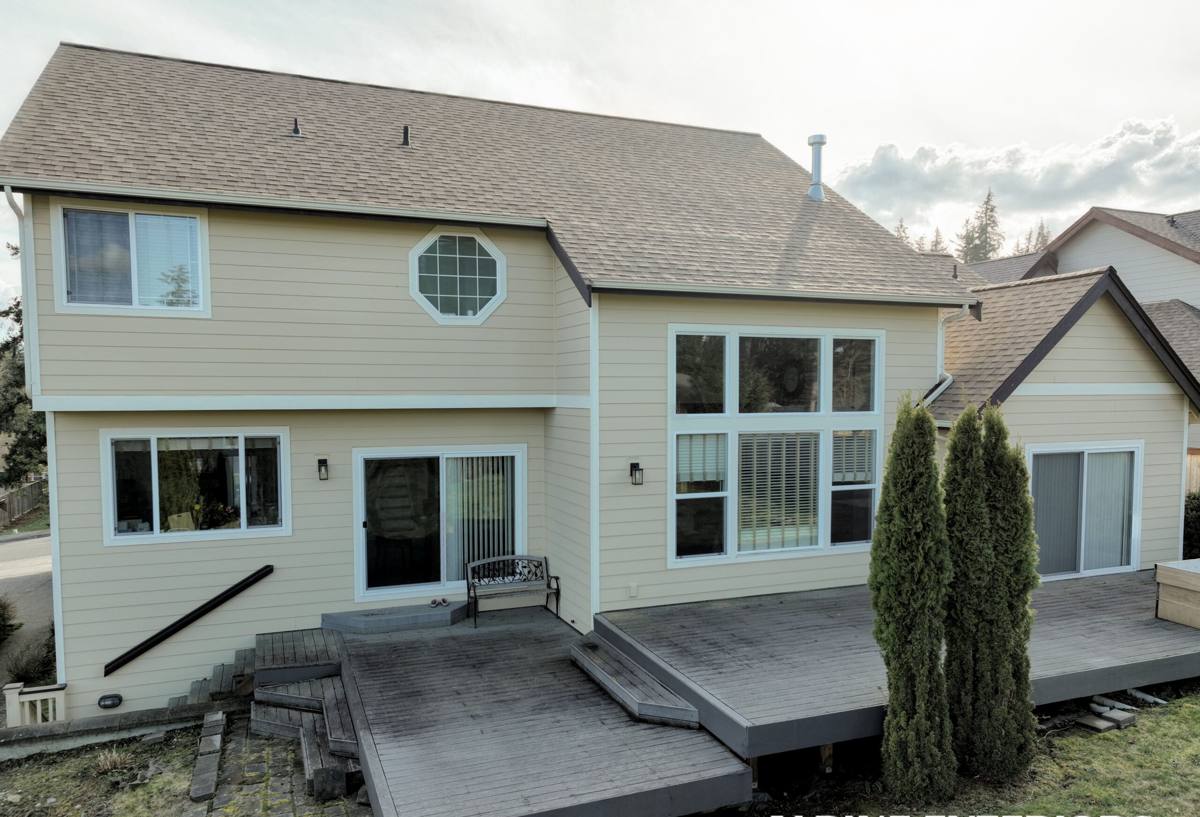
Custom doesn't have to mean expensive or exotic. For most Blaine Harbor homes it means the window is built to the actual rough opening instead of forcing a standard size to fit, and the specs are chosen for this site's exposure rather than a generic checklist. That includes:
- Frame material matched to salt air exposure — some finishes chalk, pit, or corrode faster near open water
- Glass packages selected for wind load and driving rain, not just energy code minimums
- Sill and flashing details built for a house that gets rain from the water side more often than not
- Hardware rated to keep performing after repeated exposure to salt-carrying wind, not just fresh out of the box
- Sizing and shapes built to the opening, including replacing awkward or non-standard windows original to older harbor-area homes
A window that looks identical to one installed in a subdivision twenty minutes inland can perform very differently after five winters at Blaine Harbor. The difference is almost never the glass — it's the frame material, the finish, and how the unit was flashed into the wall.
Where Salt Air Does the Most Damage
Salt exposure doesn't announce itself right away. It shows up first as pitting or dulling on hardware — hinges, locks, and cranks — followed by finish breakdown on frames that weren't specified for coastal exposure. Aluminum-clad and vinyl products vary a lot in how they hold up here; some finishes are genuinely engineered for marine air, others are not, and the difference usually isn't obvious on a showroom sample. We only spec products and finishes we've seen hold up in this exact exposure over years, not just what looks good in a brochure.
The Moss and Moisture Problem
Whatcom County's wet season runs long, and Blaine Harbor's proximity to open water keeps humidity and rainfall on the higher side even by regional standards. Moss doesn't just grow on roofs — it takes hold anywhere organic debris and moisture sit undisturbed, including window sills, frame tracks, and the caulk lines around older units. Once moss and the moisture it holds get into a frame joint or a compromised seal, the wood or composite underneath starts breaking down whether or not anyone notices from the outside.
Correct window replacement addresses this at the install, not after the fact:
- Sills sloped and flashed so water sheds away from the frame instead of pooling
- Sealant details that shed driving rain without trapping moisture behind the trim
- Frame materials that don't feed moss and mildew growth the way bare or degraded wood does
- Clean transitions to house wrap and siding so wind-driven rain can't track behind the window into the wall cavity
Homeowners often call us about a window that "just looks tired," and the real issue is moisture that's been getting behind the frame for a season or two. Replacing the glass alone doesn't fix that — the flashing and sill work have to be right, too.
Our Process for Blaine Harbor Custom Windows
1. On-Site Assessment
We look at each opening individually — not just the window itself, but the flashing, sill condition, and how water has been behaving around that specific spot on the house. Harbor-facing walls often need different detailing than the sheltered side of the same home.
2. Product and Spec Selection
We walk through frame material, glass package, and hardware options with an honest breakdown of how each will hold up specifically in a salt-air, high-rainfall setting — not a generic sales pitch. If a popular option has a known weak point in this climate, we'll tell you before you buy it, not after.
3. Precise Measurement and Ordering
Custom sizing means the window is built to your actual opening, which matters more on older harbor-area homes where original openings are rarely perfectly square or standard-sized.
4. Removal and Structural Check
When we pull the old window, we check the framing and sill for hidden moisture or rot before anything new goes in. Covering up an existing problem with a new window is how small issues become expensive ones.
5. Install with Correct Flashing and Sealing
This is the step that determines whether the window performs for fifteen years or leaks in three. Proper flashing integration with the house wrap, correct sealant placement, and sloped sills aren't optional extras — they're the difference between a window that's weatherproof and one that only looks like it is.
6. Final Walkthrough
We check operation, seal, and finish before we consider the job done, and we're straightforward about any maintenance the specific product you chose will need going forward.
Frame Material Comparison for Coastal Exposure
| Frame Material | Salt Air Performance | Maintenance | Typical Trade-Off |
|---|---|---|---|
| Vinyl | Generally resists corrosion well; quality varies by manufacturer | Low — occasional cleaning | Fewer color/finish options than other materials |
| Fiberglass | Very stable in coastal exposure; low expansion/contraction | Low | Higher upfront cost |
| Aluminum-clad wood | Depends heavily on the clad finish; can perform well or poorly depending on quality | Moderate — exposed wood interior needs upkeep | Wider price range, finish quality matters more than the material label |
| Bare wood | Poor without diligent, ongoing maintenance in this exposure | High | We generally steer harbor-facing homes away from this unless there's a strong preservation reason |
None of these are wrong choices in every situation — the right one depends on the specific wall's exposure, your maintenance appetite, and budget. We'll give you a straight answer on which fits your house, not just the one with the best margin.
Signs Your Blaine Harbor Windows Need Attention
- Visible pitting, chalking, or corrosion on frames or hardware
- Moss or dark staining building up on sills or in frame corners
- Drafts or whistling during storms with wind off the water
- Difficulty opening, closing, or locking that's gotten worse over a season or two
- Condensation between panes, which usually means a failed seal on an older insulated unit
- Soft or discolored trim or siding immediately around the window frame
Any one of these on its own isn't necessarily an emergency, but they tend to compound quickly in this climate. A window that's letting in a small amount of moisture in July is often a bigger problem by the following spring.
Why Local Experience with This Exact Exposure Matters
A lot of window crews can hang a unit correctly on a standard inland home. Fewer have logged real time on homes that take direct wind and salt spray off Semiahmoo Bay through a full Whatcom County wet season. That experience shows up in small decisions — which sealant actually holds up here, how tight the flashing lap needs to be on a harbor-facing wall, which hardware finishes are worth the upcharge and which aren't. Those aren't things you learn from a manufacturer's install guide; they're things you learn from going back to jobs years later and seeing what actually held up.
We're a Whatcom County crew that works this coastline regularly, and we spec and install Blaine Harbor windows the way we would for our own homes here — for the weather that's actually going to hit them, not the weather on a spec sheet written somewhere else.
Get a Straight Answer for Your Home
If you're dealing with drafty, corroding, or moss-stained windows on a Blaine Harbor home, we're happy to take a look and give you an honest read on what's going on and what it'll take to fix it right. Reach out for a free, no-pressure estimate using the form below.