 Semiahmoo Siding
 Why Birch Bay's Waterfront Exposure Changes the Window Conversation
Birch Bay sits right on the water, and that location does more to a window than most homeowners realize. It's not just the glass that has to perform — it's the whole assembly: frame, flashing, sealant, and the wall it's set into. Homes here take wind-driven rain straight off the water, carry a fine coating of salt air that never fully rinses off, and sit under a marine cloud layer for months at a time that keeps everything a little damp and feeds moss and algae growth on sills, tracks, and exterior trim. None of that is dramatic on any single day. It's the accumulation over years that separates a window that still works great after fifteen winters from one that's fogging, sticking, or rotting out around the frame by year eight.
When we talk about "energy-efficient windows" for a Birch Bay home, we're really talking about two things at once: how well the window holds heat in during a cold, damp winter, and how well it sheds water and resists corrosion in an environment that's actively working against it. A window can score well on efficiency paper and still fail here if it wasn't built or installed with the local exposure in mind.
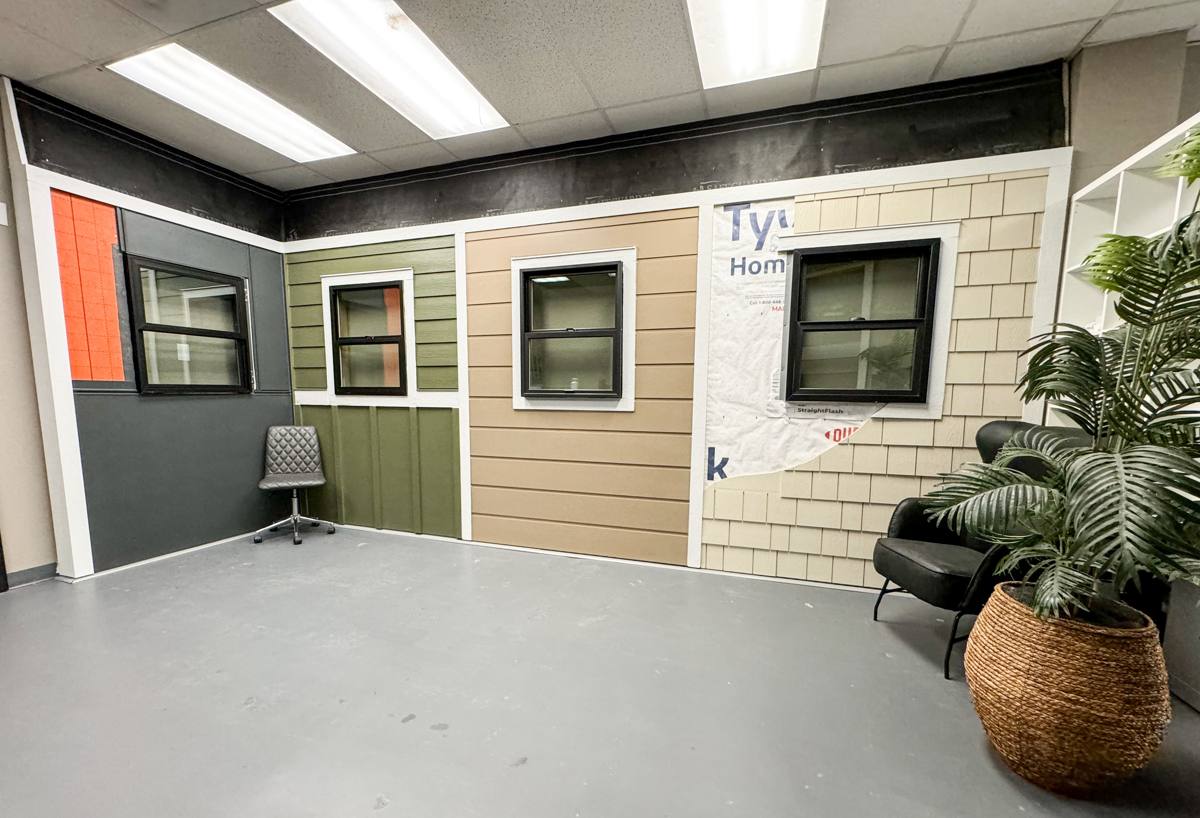
What "Energy-Efficient" Actually Means
Every legitimate replacement window carries an NFRC (National Fenestration Rating Council) label with a few numbers that matter more than any marketing claim on the box:
- U-factor — how well the window resists heat loss. Lower is better. For our climate, you want a U-factor in the 0.27–0.30 range or lower for most walls.
- SHGC (Solar Heat Gain Coefficient) — how much solar heat passes through the glass. In Whatcom County's mild, cloud-heavy climate, a moderate SHGC is usually fine; we're not fighting brutal summer sun the way inland or southern homes are.
- Air Leakage — measured in cfm/ft². Lower means fewer drafts, which matters more here than in a sheltered inland lot because wind pressure off the water pushes harder against every seam.
The Low-E coating on the glass is what does most of the efficiency work — a microscopically thin metallic layer that reflects heat back inside during winter without noticeably darkening the glass. Double-pane with a quality Low-E coating and an argon-filled gap is the standard efficient window today; triple-pane adds another layer of insulation and sound dampening, at added cost and weight, and is worth discussing for north-facing or particularly exposed walls.
Frame Material: The Decision That Matters Most Here
In a marine, salt-air climate, frame material choice affects long-term performance more than almost any other decision. Here's how the common options hold up:
| Frame Material | Salt Air / Moisture Behavior | Maintenance | Notes for Birch Bay |
|---|---|---|---|
| Vinyl | Doesn't corrode or rot; handles moisture well | Low — occasional cleaning | Good value, solid standard choice for most homes here |
| Fiberglass | Excellent — very stable, resists expansion/contraction from temperature and moisture swings | Low | Strong pick for waterfront-exposed walls; higher upfront cost |
| Wood-clad | Vulnerable at any cladding breach — trapped moisture rots the wood core | Higher — needs monitoring at joints and sills | We're cautious recommending this for direct water exposure; better suited to sheltered elevations |
| Aluminum | Conducts cold and can corrode over time in salt air without a quality finish | Moderate | Generally not our first recommendation for this location |
We're not anti-wood or anti-aluminum as a rule — both have legitimate uses. But on a wall that takes direct wind-driven rain off the bay, we lean toward vinyl or fiberglass because they don't give moisture a path to do slow, hidden damage inside the frame. Wood-clad windows can still be the right call on a sheltered, covered elevation where exposure is minimal; it's about matching the material to what that specific wall actually faces, not a blanket rule.
Hardware and Weatherstripping
Locks, hinges, and roller hardware on operable windows take a beating from salt air if they're not corrosion-rated. Cheap hardware is often the first thing to fail on a coastal window — not the glass, not even the frame, but a stiff lock or a track that's started to pit. Ask what hardware finish is spec'd before you commit to a window line.
Installation Is What Actually Prevents Failures
We'll say this plainly: the window product matters, but installation is what determines whether a good window stays good. Most window failures we get called out to inspect in this area aren't a bad window — they're a window that was set without proper flashing, sealed with the wrong product, or left with a gap that let wind-driven rain track behind the trim.
A correct installation in this climate includes:
- Removing old flashing and building paper back far enough to inspect the sheathing underneath for hidden rot before anything new goes in
- Sill pan flashing that directs any water that does get past the window back outside the wall, not into the framing
- Head flashing integrated with the water-resistive barrier in the correct shingle-lap order, so water is always directed down and out
- Sealant appropriate for a marine environment at the perimeter — not just any caulk tube, and not over-sealed in a way that traps moisture with no escape path
- Proper shimming so the frame doesn't rack out of square, which is what eventually causes seals to fail and windows to stick
This is also where moss and algae come back into the conversation. A window sill or lower flashing that stays damp because it wasn't pitched correctly to shed water becomes a growth surface within a season or two in this climate. Getting the slope and drainage right at install time is cheaper than dealing with growth and staining for the life of the window.
Our Process for Birch Bay Replacements
- On-site assessment — we look at each elevation's actual exposure (direct waterfront wind versus a sheltered side wall), current window condition, and any signs of moisture already present around existing frames.
- Product recommendation matched to exposure — we don't spec the same frame and glass package for every wall of the same house. A window facing the water gets different treatment than one on a covered porch elevation.
- Removal and sheathing check — every opening gets inspected once the old window is out. If we find soft sheathing or hidden rot, we flag it and address it before the new window goes in, not after.
- Flashing and sealing to a marine standard — sill pans, proper lap order, and sealants chosen for salt-air, high-moisture exposure.
- Final check and walkthrough — operation, seal, and a look at drainage paths before we call the job done.
Signs Your Current Windows Are Losing the Fight
A quick self-check before you decide whether it's replacement time or just maintenance:
- Fogging or a hazy film between the panes — the seal has failed and the gas fill is gone; this can't be fixed, only replaced
- Sills or lower frames that feel soft, or paint/finish that's bubbling
- Visible moss, algae, or black staining building up on sills or tracks season after season, even after cleaning
- Drafts you can feel with a hand near the frame on a windy day
- Hardware that's stiff, corroded, or doesn't latch tight anymore
- Condensation forming on the inside of the glass regularly in cold weather — often a sign of poor efficiency, not just humidity
- Visibly warped or racked frames, especially on wood-clad units
One or two of these on an older window is normal wear. Several at once, or any sign of soft framing, usually means it's more cost-effective to replace than keep patching.
Cost Factors to Understand Before You Get Quotes
| Factor | Why It Moves the Price |
|---|---|
| Frame material | Vinyl is typically the most affordable; fiberglass and wood-clad cost more upfront |
| Glazing package | Triple-pane and upgraded Low-E coatings add cost but also add performance |
| Number and size of openings | Larger or custom-sized windows cost more than standard sizes |
| Condition behind the old window | Hidden sheathing rot found during removal adds repair time before the new window goes in |
| Exposure and flashing detail | A waterfront-facing wall may need more thorough flashing work than a sheltered elevation |
| New construction vs. retrofit | Retrofit (insert) installs are generally faster and less invasive than full-frame replacement |
We'll always walk through which of these apply to your specific home before giving a number — a broad "windows cost X per unit" figure without seeing the actual openings and their condition isn't a number you should trust either way.
Why Hiring a Crew That Already Works This Coastline Matters
Window installation isn't unique to Birch Bay — but installing correctly for this exposure is a specific skill built from doing it here repeatedly. A crew that mostly works inland or in more sheltered parts of Whatcom County may not default to sill pan flashing, may under-spec sealant for salt exposure, or may not think to check hardware corrosion rating as a matter of course. None of that shows up as a problem on install day. It shows up two or three winters later as a soft sill or a stuck lock.
We work this stretch of Semiahmoo and Birch Bay regularly, which means we're not guessing at how a particular wall or elevation handles wind-driven rain — we've seen how it plays out on homes nearby, and we build the install to match.
If your windows are drafty, fogged, or just due, we're happy to come take a look and give you a straightforward, no-pressure estimate — no obligation, just an honest read on what your home actually needs. Use the form below to get started.